


 Tristar Pictures Logo PNG
This American film company is known not only for its films but also for its unusual emblem. The “Tristar Pictures” logo is literally inspiring. It symbolizes the boundless flight of fantasy, the search for inspiration, daydreaming, and purpose.
TriStar Pictures began with an idea from Victor Kaufman, a senior executive at Columbia Pictures. He persuaded Columbia, HBO, and CBS to share rising film production costs. The joint venture was registered on March 2, 1982, as Nova Pictures. It was renamed Tri-Star Pictures on May 16, 1983, because the PBS science program Nova already used the name. The name referred to its three founders.
Under the original deal, Columbia handled theatrical distribution, CBS received broadcast TV rights, and HBO took cable rights. The studio’s first release, Where the Boys Are ’84, failed at the box office in 1984. Its position improved in 1985 with the release of Rambo: First Blood Part II, produced through a partnership with Carolco Pictures.
CBS sold its stake to Columbia in November 1985 for $48 million, and HBO left in 1986. Columbia gained full control and sold 43% of Tri-Star to investors through a public offering. In late 1986, the studio bought the Loews theater chain for $295 million. On December 21, 1987, Coca-Cola merged Tri-Star with Columbia Pictures Entertainment, then restored Tri-Star as a separate film label on April 13, 1988.
Sony bought Columbia Pictures Entertainment on November 8, 1989, for $3.4 billion, bringing TriStar into its portfolio. The hyphen disappeared from the name on August 7, 1991. In the 1990s, TriStar released Total Recall, Terminator 2, Basic Instinct, Cliffhanger, Philadelphia, Jerry Maguire, and Starship Troopers, competing with Warner Bros. and Paramount Pictures. After Godzilla’s 1998 failure, Sony reduced TriStar’s production role. In 2013, Tom Rothman helped revive the brand through TriStar Productions. Its Pegasus logo, a triangular pyramid, referred to the studio’s three founders.
Meaning and History
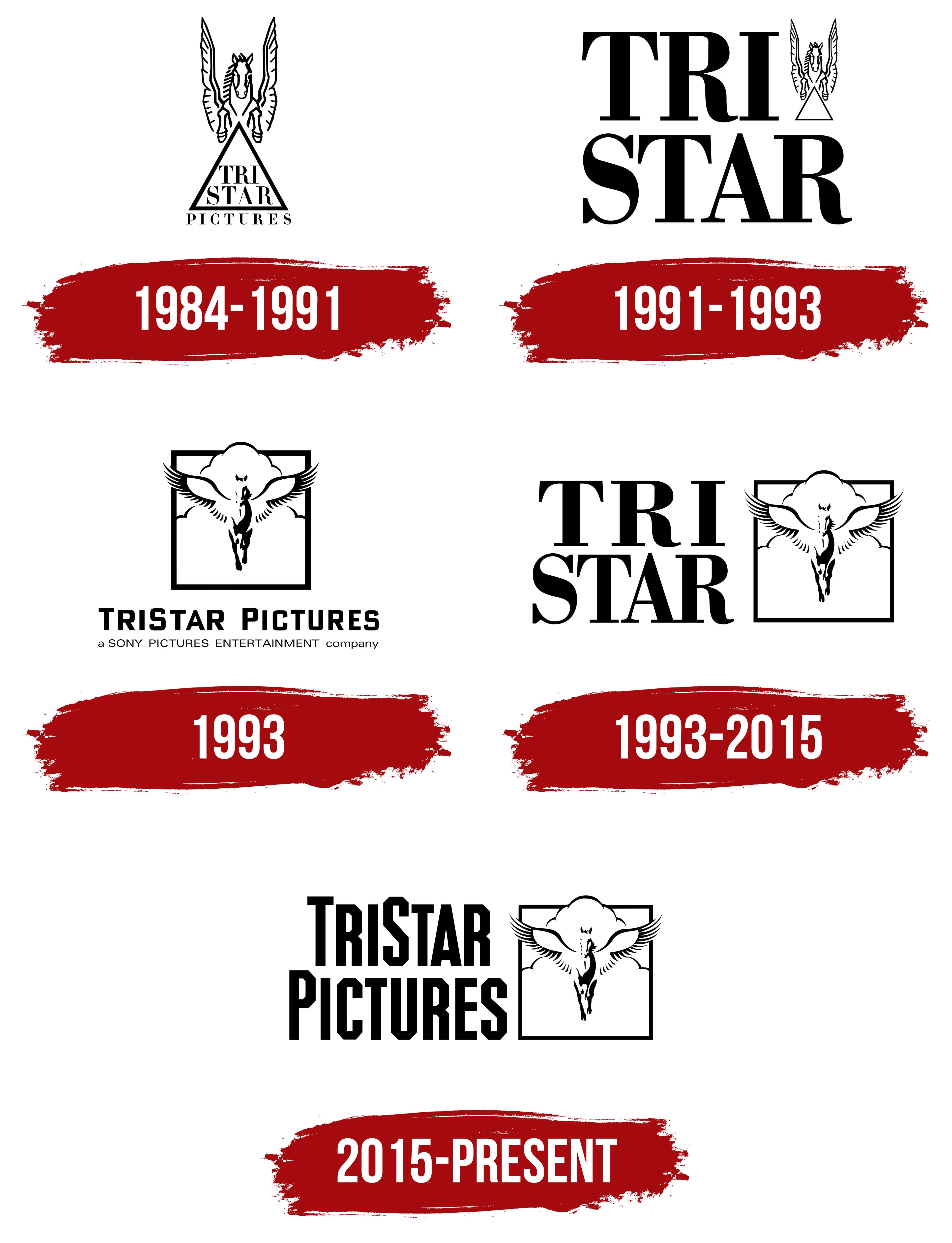
During the company’s film industry activities, it used five logo variants. Changes were generally minimal, but the main element remained indispensable: a Pegasus flying above the clouds.
The company’s history is quite interesting because it was initially called Nova Films, not Tristar Pictures. The name familiar to millions of movie fans appeared only in 1984, when the first logo was shown. It was considered the most promising in the nineties when many popular films were released under the brand. Subsequently, Tristar Pictures’ activity has declined significantly. A new stage in the studio’s development began in 2015, when Sony Pictures made it a subsidiary.
What is Tristar Pictures?
One of the largest operating television companies, whose projects are popular far beyond the United States. Most of Tristar Pictures’ projects gross hundreds of millions of dollars at the box office and become cult favorites over time.
1984 – 1991
The first version of the logo appeared shortly after the company’s founding. It was created in black and white. Despite its simplicity, the brand was instantly recognizable. It consisted of several elements. The familiar Pegasus sits at the top. Below the mythical horse, a triangle contains the company name, “Tristar,” written in two lines.
The first three letters sit on top, and the rest sit on the bottom. Outside the triangle, at the bottom, is the word “Pictures.” The word “inscription” is set in a classic, bold, all-caps sans-serif font.
1991 – 1993
The first major redesign of the logo came in the year that the iconic sequel to The Terminator was released.
The first version saw significant changes, even though the color palette remained black and white. The key element is the brand name “Tristar,” set in two lines in bold, thick-lined capital letters. They were no longer inside the triangle. The Pegasus emblem, located above the geometric figure, was also transferred. Now it sat above the last letter, “R.” Each line contained four elements. At the top are “Tri” and the emblem; at the bottom is “Star.”
1993
The new logo lasted less than a year. Moreover, it differed significantly from previous versions. At a minimum, Pegasus returns as the main element, now inside a square frame. Clouds appear for the first time, symbolizing its movement in the sky. The verbal inscription is located in two lines. At the top is “Tristar Pictures.” The san-geometric style was used at this stage, giving it a confident, progressive look. Moreover, at the bottom is the inscription “a SONY PICTURES ENTERTAINMENT company,” indicating that “Tristar Pictures” is a subsidiary.
1993 – 2015
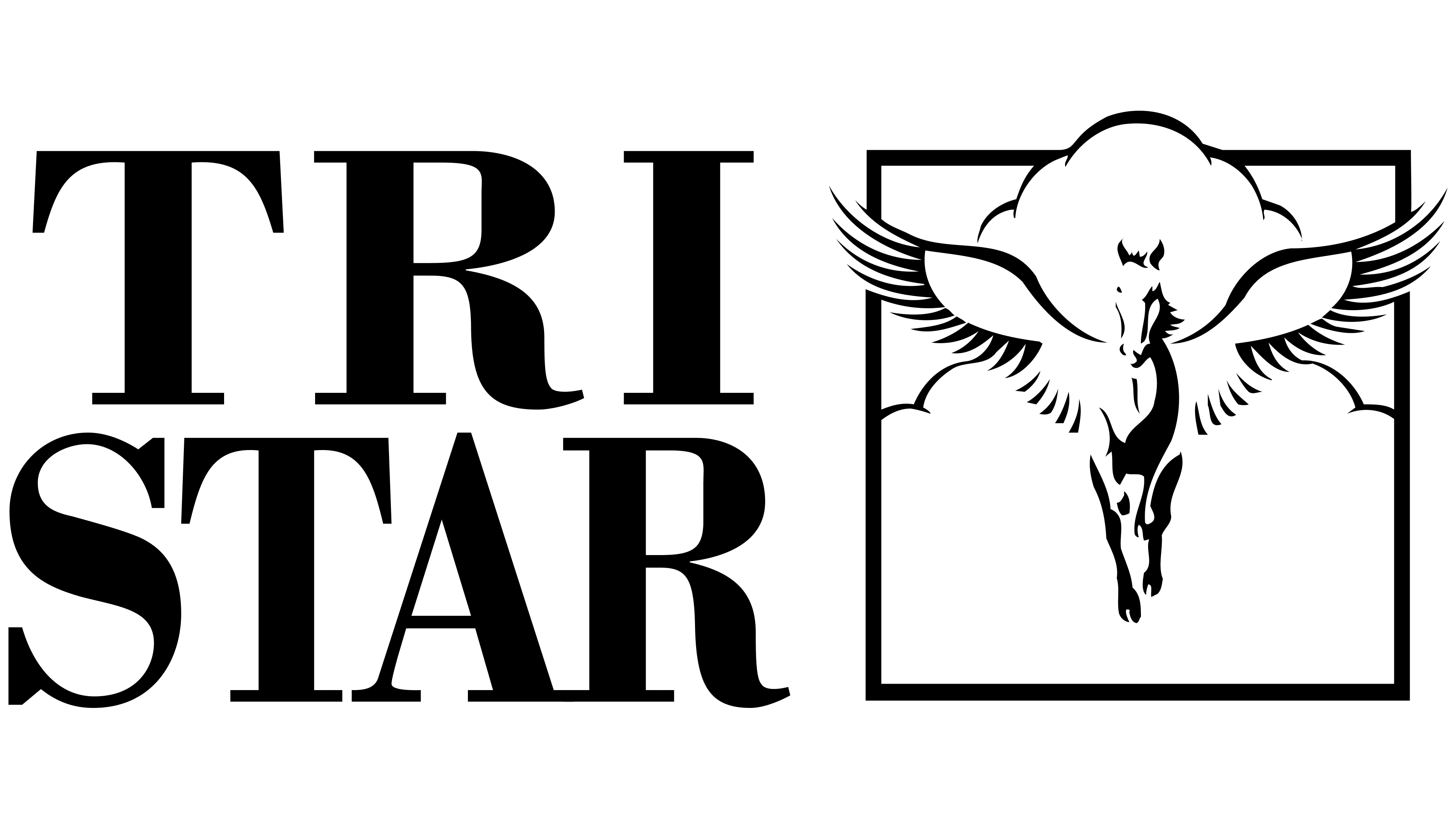
The longest-lived logo is the variant introduced after the 1993 redesign. It lasted for 22 years. The emblem with Pegasus, a square frame, and clouds remained unchanged and moved to the right side of the logo. On the left, the name “Tristar” appeared again, set on two lines. The logo’s typography matched the 1991-1993 version.
2015 – today

The latest logo update marked a new era for Tristar Pictures. Overall, the redesign was minimal. As in the previous version, the emblem remained unchanged and stayed on the right. The name “Tristar Pictures” was on the left side in two lines. The font was changed back to a san-geometric style.
Font and Colors

For word inscriptions, they used two font options. Classic serif and san-geometric sans-serif. With the new redesign, they changed and supplemented them, which did not please fans of the studio’s creativity.
At all stages of the company’s development, a monotonous black-and-white color scheme was used. Although this palette might not evoke positive emotions, Tristar Pictures’ concept still looks harmonious and progressive.