 UOB Logo PNG
United Overseas Bank was founded in Singapore on August 6, 1935, as United Chinese Bank. Its founder, Sarawak-born entrepreneur Wee Kheng Chiang, targeted a gap in financial services for the Chinese trading community, including migrants from Fujian. The bank opened with one million Singapore dollars in authorized capital. It worked from a three-story building on Bonham Street, focusing on trade finance, remittances, and working capital for small businesses.
Operations stopped during World War II, then resumed after the conflict. In 1965, the bank changed its name to United Overseas Bank, the same year Singapore became independent, and opened its first overseas office in Hong Kong. In 1970, UOB was listed on the stock exchanges of Singapore and Malaysia. The next year, it acquired Chung Khiaw Bank, gaining a wider network in Malaysia and Hong Kong, as well as control of Haw Par, the owner of Tiger Balm. Lee Wah Bank followed in 1973.
In 1974, Wee Cho Yaw took over leadership of the family business, and UOB opened its 30-story UOB Building. Offices followed in London in 1975 and New York in 1977. In 1980, UOB installed Singapore’s first 24-hour ATM. By 1983, assets were about 10 billion Singapore dollars. The bank later acquired Far Eastern Bank in 1984 and a majority stake in Industrial & Commercial Bank in 1987.
Through the 1990s, UOB consolidated Lee Wah Bank and Chung Khiaw under its own brand and opened UOB Plaza in 1995. In 2001, it beat DBS in the fight for Overseas Union Bank. It completed integration in 2003, lifting assets above 62 billion Singapore dollars. UOB Mighty launched in 2017, followed by TMRW in 2019. It later acquired Citigroup’s consumer banking business in Malaysia, Thailand, Indonesia, and Vietnam, while competing regionally with DBS and OCBC.
Meaning and History
What is UOB?
This is a well-known international bank headquartered in Singapore. It operates an extensive network of offices and branches across Southeast Asia and beyond, covering major financial centers such as Australia, China, and Hong Kong. The bank offers investment, private, commercial, and personal banking services. It has a strong reputation and specializes in facilitating cross-border transactions in Asia. Supporting small and medium-sized businesses and providing wealth management services to high-net-worth clients are two key priorities for the company.
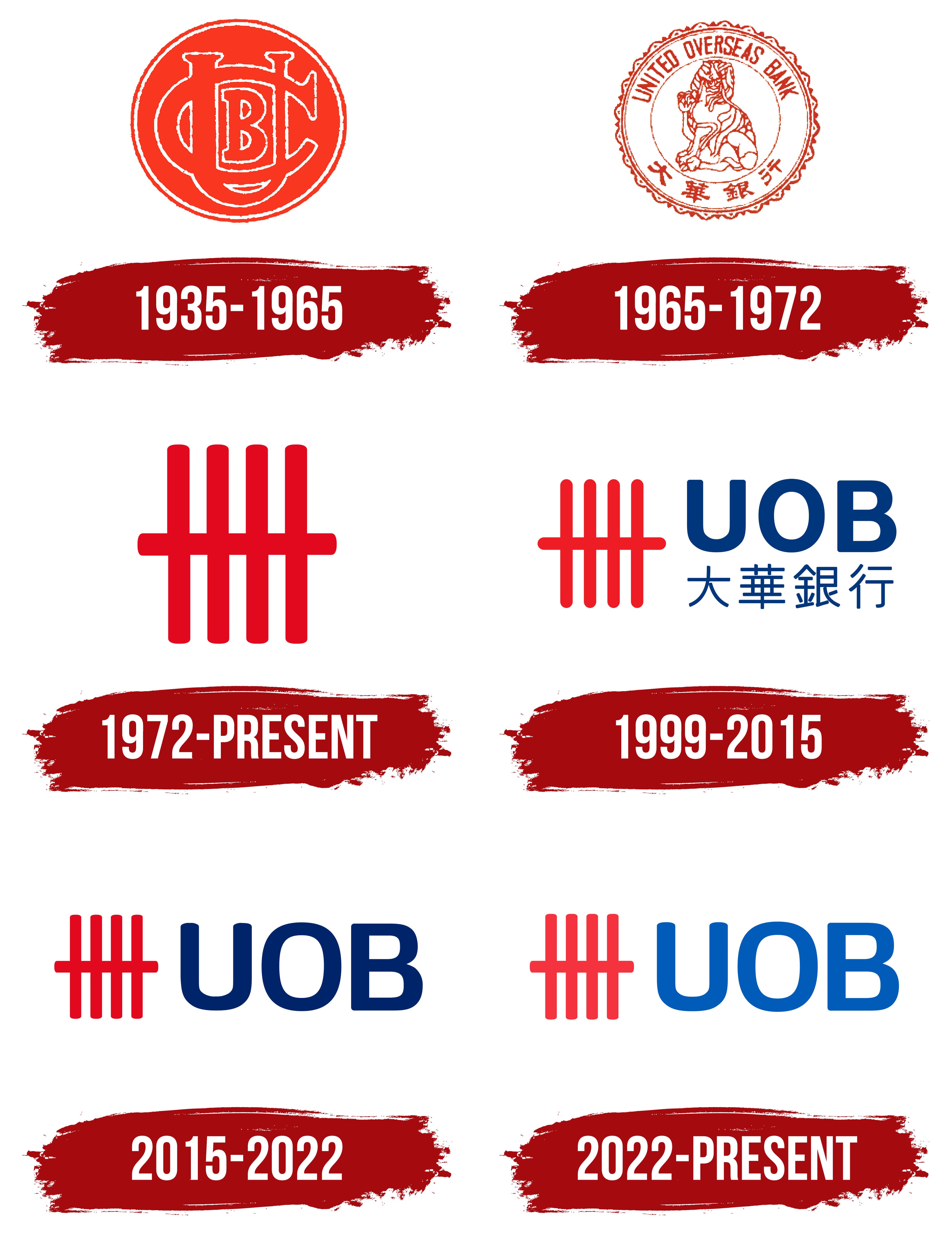
1935 – 1965

1965 – 1972
1972 – today

1999 – 2015

2015 – 2022

2022 – today