


 VK Logo PNG
The VK logo is too abstract to be associated with a social network or a friendly conversation. But the stylish combination of signs attracts attention, so users immediately recognize the logo and the website it belongs to.
VK began on October 10, 2006, when Pavel Durov launched VKontakte on his 22nd birthday. He had recently graduated from Saint Petersburg State University, though he never collected his diploma. The idea came after Durov learned about Facebook from Vyacheslav Mirilashvili. The first working name, Student.ru, was rejected in favor of VKontakte, since Durov believed the project should not be limited to students.
The early investors were Vyacheslav Mirilashvili and Lev Leviev, while Pavel’s brother Nikolai Durov handled the technical side. The network first opened in closed beta, then allowed public registration in October 2006 with real names and photos. To attract users, Durov ran a contest promising an iPod to whoever invited the most friends. By early 2012, VKontakte had more than 150 million registered users.
Corporate conflict started early. In 2007, Yuri Milner’s Digital Sky Technologies bought 24.99% for $16.3 million. In 2008, Alisher Usmanov became DST’s controlling shareholder, and in 2010, the fund became Mail.ru Group. In 2013, Mirilashvili and Leviev sold their stakes to Ilya Shcherbovich’s UCP. In March 2014, Mail.ru Group acquired Durov’s 12% stake through Ivan Tavrin, becoming the largest shareholder.
On April 1, 2014, Durov announced his resignation and later left Russia, moving on to Telegram. In October 2021, Mail.ru Group renamed itself VK, using the name of its main asset. The group later unified VK Music, VK Video, classifieds, and other services under a single brand. By late 2022, VK services had an average daily audience of 73 million users. They reached more than 90% of Russia’s monthly internet audience.
Meaning and History
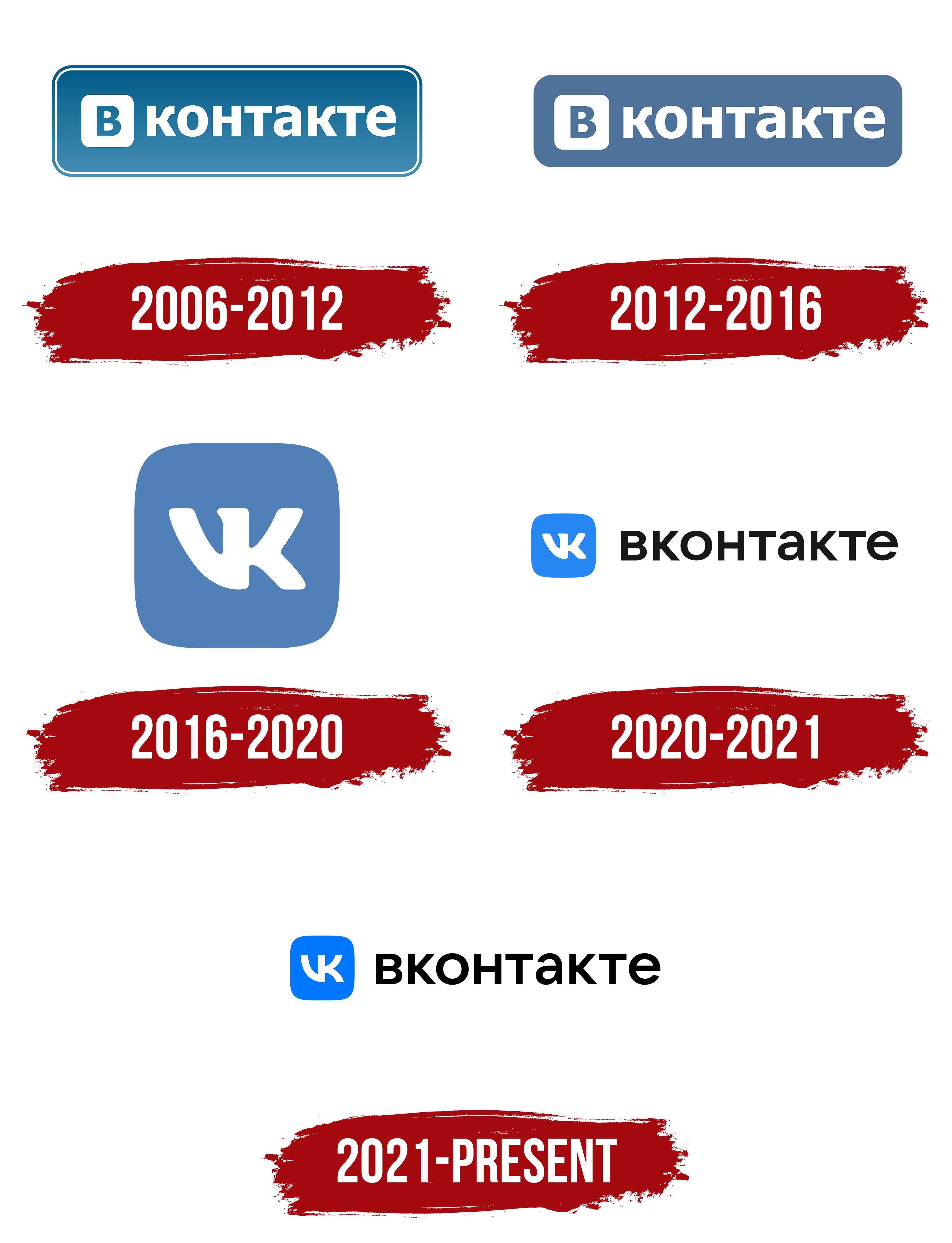
When the VK social network was still a start-up, it was called Studlist.ru to emphasize its focus on students and graduates. But the co-founders abandoned this version because it automatically limited the user base. Pavel Durov took a more difficult path. He heard the phrase “In full contact with information” on the radio and decided to change it. After a significant reduction, the word “VKontakte” remained, consisting of a merged preposition and noun. And from here, the international name has already appeared as VK. This option proved the most successful because it was not associated with any specific stratum of society. On the contrary, “contact” indicates the relationship between different people and the possibility of free interaction.
Another important part of branding was the site’s appearance. Pavel Durov wanted his social network to have a personal user profile on the start page, not a news feed like Facebook. He put the person first, not the content. Therefore, when you click the icon in the upper-left corner of the site, you go to your profile. This icon is part of the VK logo, which has changed several times during redesigns by the service’s owners.
What is VK?
VK is the international name for the social network VKontakte, which is available in 86 languages. Its headquarters are in St. Petersburg. In addition, since October 12, 2021, the Russian corporation Mail.ru Group is also called VK. It was renamed in honor of the popular social network. VK owns its voice assistant, search engine, instant messengers, mail service, and other assets.
2006 – 2012
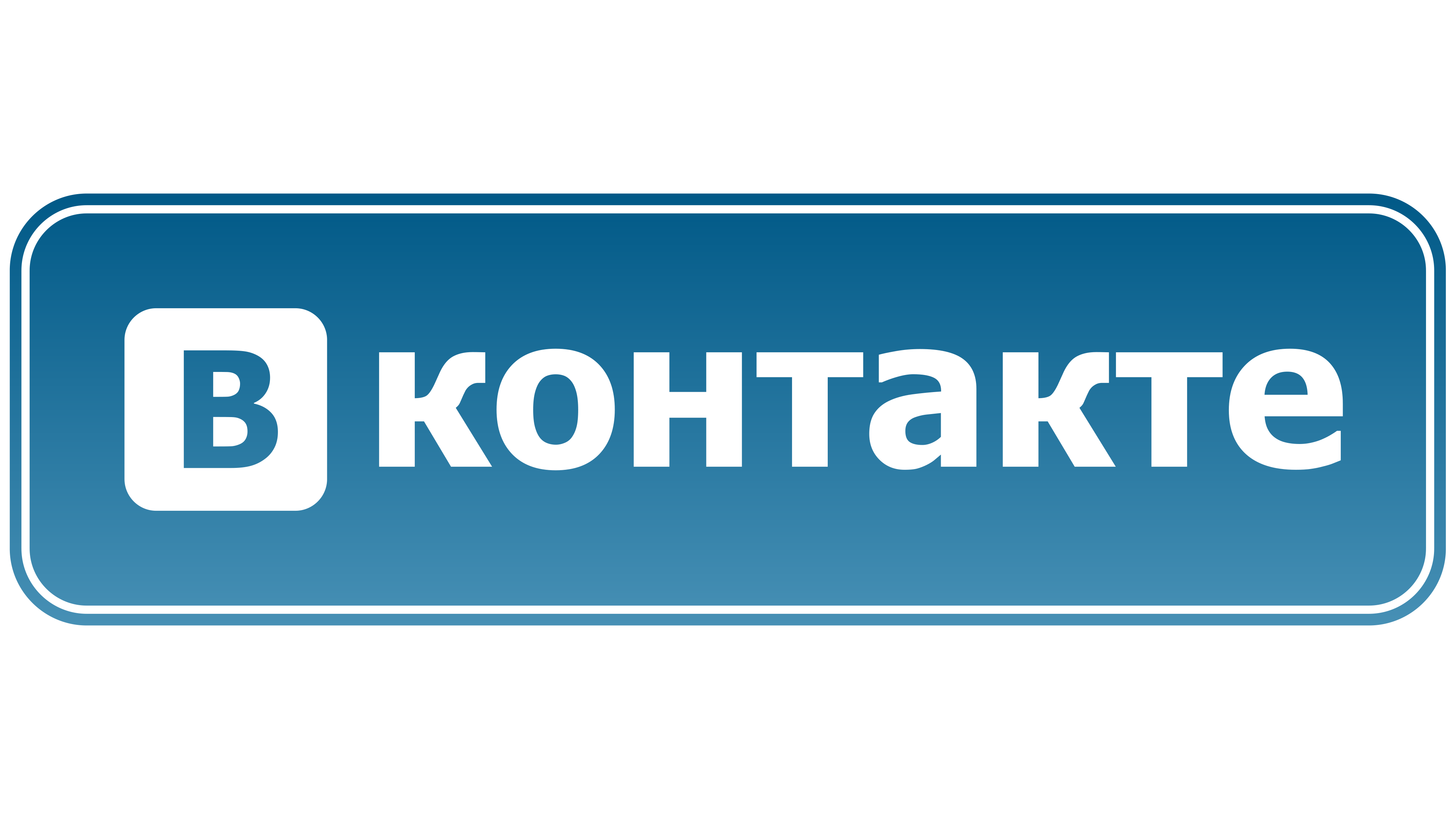
The history of VK began on November 1, 2006, when the social network was opened to a limited number of users. Interestingly, Pavel Durov himself created a logo for it, guided by the principles of conciseness and minimalism. He did it in just three minutes, sitting in front of a computer screen. The co-founder of the online platform typed the word “VKONTAKTE” in the humanistic Tahoma sans-serif font that became famous with Windows 95.
The blue “B” was shown inside a white square with rounded corners. A little to the right, with a slight indentation, was the second part of the name. It was white because a large blue rectangle with rounded corners served as a common base. It was adorned with a thin white frame outlined in blue on the outside. And for the visual volume, a smooth gradient was used.
Pavel Durov chose these colors because he believed gray, white, and blue do not cause negative emotions. He relied on the knowledge gained during his studies when an artist came to the lessons to discuss light, proportions, and great painters. And yet, as Durov admitted in an interview, it was an attempt to partially borrow the Facebook logo’s design.
2012 – 2016
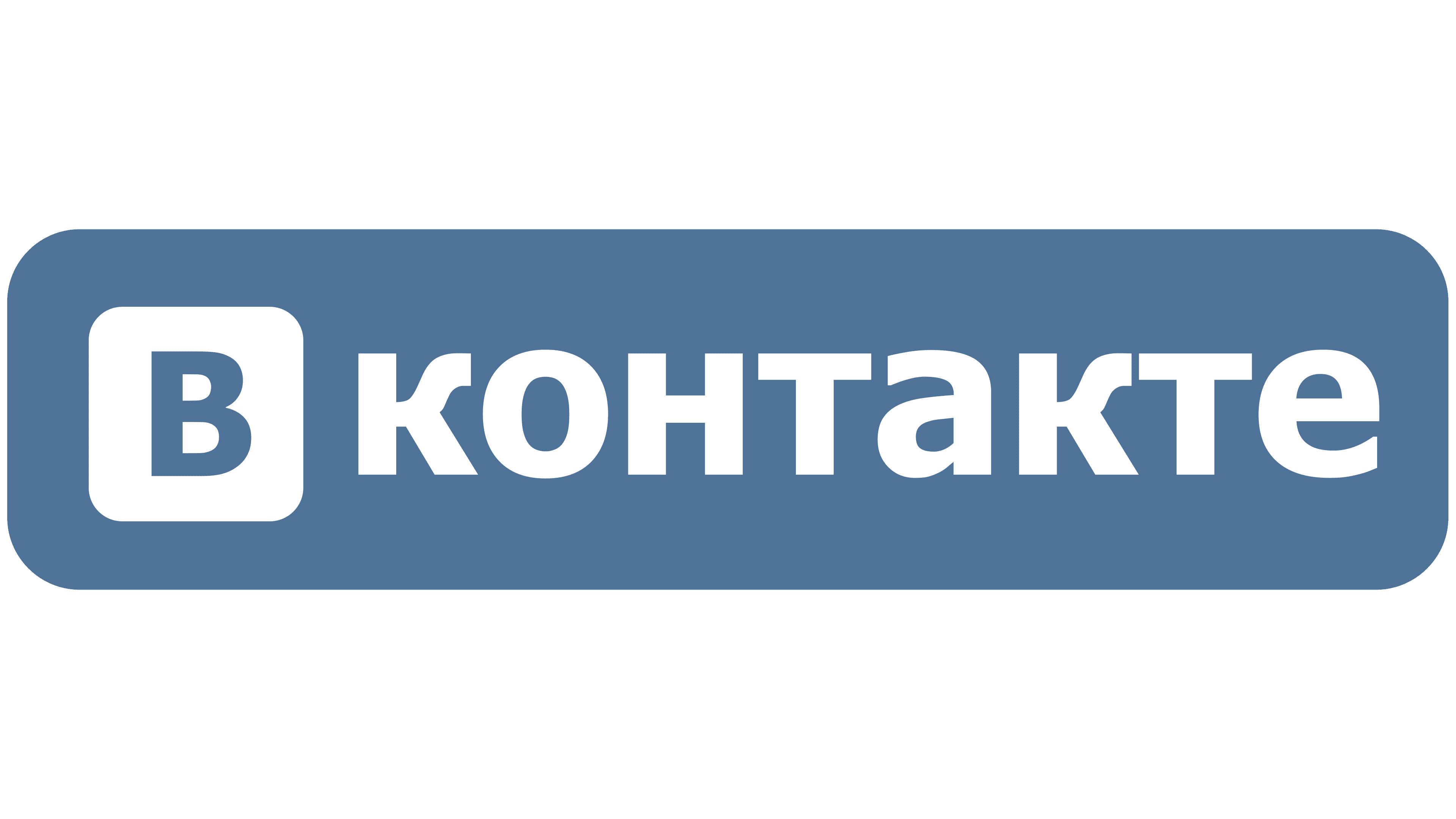
In 2012, the site finally moved to a new .com domain and received an updated logo. The designers changed the previous version quite a bit, removing the white border, the gradient, and the slight purple tint in the blue.
2016 – 2020
On April 1, 2016, VK got a logo without Cyrillic inscriptions. At first, it looked exactly like the international version of the icon adopted in 2012. It was a blue square with rounded corners, inside a white monogram of the combined letters “V” and “K.” They had smooth edges and one triangular serif. In November 2016, the emblem was updated, making the lines slightly thinner. The employees of Moscow Design Studio, Ilya Ruderman and Olga Pankova, were responsible for the processing.
Pavel Durov himself designed the original monogram logo (from 2012), although Art Lebedev Studio created it. The design company came up with hundreds of other variations, each with different combinations of “V” and “K.” Still, the social media executive rejected them and sketched in pen what he thought was most suitable. Subsequently (after many years), Artemy Lebedev criticized the result and admitted that his studio had refused authorship to avoid disgrace. He compared the monogram to the Russian letter “Zh” without a stem and dismissed it as “under-Armani.”
2020 – 2021
The return of the Cyrillic alphabet marked 2020. This happened on October 9, on the eve of the social network’s fourteenth birthday. The VK logo retains a white monogram inside a square with rounded corners. It has not changed much, except that the shade of blue has become much brighter and lighter. To the right of the emblem, a black inscription in Russian, “VKONTAKTE,” was added. There was a step back to the times when Cyrillic letters were used.
It was the largest rebranding in VK’s history. Designers not only gave the brand a new corporate color but also developed a custom font for it, whereas before the name was not considered an independent graphic sign. The text block was typed in the grotesque VK Sans, created by VKontakte employees and specialists from the TypeType studio. This typeface has become a connecting element across all services within a single ecosystem.
2021 – today
In 2021, Mail.ru Group adopted the name VK itself so that users would know who owns the online platform of the same name. So now this brand is the only one for the Russian holding and all its services. The same goes for the monogram of the white letters “V” and “K” inside the blue square, which is recognized as a common graphic sign of the entire VK ecosystem. However, the social network logo still contains the Cyrillic inscription “VKONTAKTE”, the same as in the previous version.
After a redesign in 2021, the shade of blue has changed: the developers have made it darker. The triangular serif has disappeared at the top of the monogram, and the sidelines have become clearer and smoother.
Font and Colors

The main symbol of the VK brand contains two letters from its name. Pavel Durov, the creator of the social network, invented this element. Even though the sign resembles an inverted hieroglyph, it has no hidden meanings.

The word “VKONTAKTE” is written in Cyrillic letters using the VK Sans font. This grotesque was developed by VK’s in-house designers and TypeType employees, who wanted the brand to have its unique typography. Three colors from the official palette were chosen for the logo design: white, black, and blue (shade #0077FF).