


 Xbox Live Logo PNG
The Xbox Live logo gives users access to a repository of essential game data. Inside the service, a whole world captivates players and transports them into a revitalizing virtual reality.
Xbox Live launched in November 2002 alongside several games for the first-generation Xbox. Microsoft built it around broadband internet, and it did not support dial-up modems. That gave the service a more stable base than many console online systems of the period, including PlayStation 2, where multiplayer often depended on individual publishers.
By 2004, Xbox Live had about one million subscribers. Halo 2, released in November 2004, became a turning point: its multiplayer mode brought record online activity and pushed many players to sign up. In 2005, with the Xbox 360, Microsoft redesigned Xbox Live and added Achievements, Gamerscore, Gamertags, avatars, the Xbox Live Marketplace, and Xbox Live Arcade, where games such as Geometry Wars and Braid gained cult status.
The service used two tiers. Xbox Live Silver gave access to the store and downloads, while Xbox Live Gold unlocked online play. Gold became a key revenue source for Microsoft. After the Xbox One arrived in 2013, Xbox Live served tens of millions of users, while competition with Sony’s PlayStation Network and PlayStation Plus pushed Microsoft to add Games with Gold.
In 2017, Microsoft launched Xbox Game Pass, and in 2019, it launched Xbox Game Pass Ultimate, which combined Game Pass and Gold. In 2021, Microsoft dropped the paid requirement for free-to-play online games. In 2022, it announced the $68.7 billion Activision Blizzard deal, completed in 2023, bringing franchises such as Call of Duty, Diablo, and Overwatch into the Game Pass ecosystem.
Meaning and History
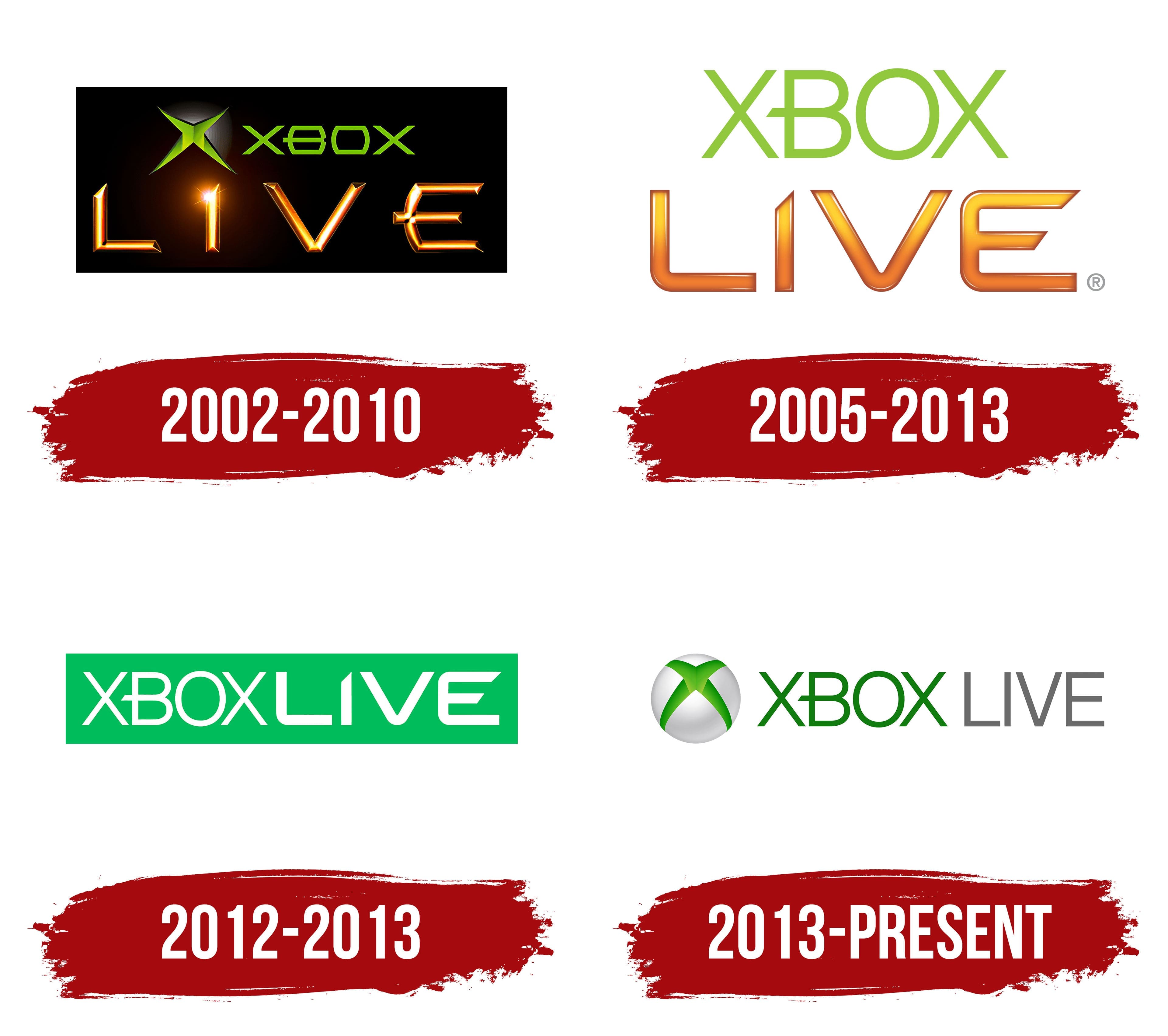
Over time, users watched the service’s visual brand elements evolve, including the logo. The service presented four variants. The platform’s name was the main element. Each update felt like a breath of fresh air, making the Xbox Live logo more modern and user-focused.
What is Xbox Live?
First, it gives you access to popular games and keeps you up to date with the world-famous company’s latest news.
2002 – 2010
The first logo version was introduced shortly after the service launched in 2002. Unlike the other variations, the logo features a dark background, which adds to its mystique and gloom. Despite this, the brand-relevant elements remained. First, the four-pointed green star serves as an emblem.
For the verbal inscription, the designer used a stylish, unique font. The word “Xbox” is in uppercase green letters in a bold sans-serif font. The letter “B” stands out in particular because of the extended middle bar. In contrast, the word “Live” is much larger and sits under “Xbox.” The orange gradient adds volume to the lettering and evokes associations with fire, as the light on the “i” also confirms. Bold capital letters without serifs are also used here.
2005 – 2013
The first redesign made the logo look more relaxed and client-oriented. This result was achieved by removing the gloomy background, which could subconsciously scare away potential customers. The first word, “XBOX,” is written in the same green capital letters, but the hue is brighter and friendlier. All the letters in this part of the brand name are narrower than in the previous version. The letter “B” retains the already canonical extended end for the company. However, it is not as striking at this stage because the letter is no longer flat. The word “Live” is also rendered with a yellow gradient. At the same time, the “fire” effect is less noticeable than in the original version.
2012 – 2013
A significant redesign placed all the lettering on one line in white. The design used a classic, bold sans-serif font. The main emphasis was on the word “Live,” which stands out because it is slightly larger than “Xbox.” The lettering’s calm color and bold font evoked a friendly and positive feeling. In addition, the brand name was placed inside a green rectangle.
2013 – today

Today, the service logo is almost completely identical to the main brand’s visual identity, namely “Xbox.” The main difference is the verbal name, which adds the prefix “Live” to point directly to the service. In this logo variation, the iconic emblem is to the left of the verbal inscription. It is a four-pointed star placed inside a white circle. The gradient adds volume, making the “Xbox Live” emblem even more effective. As a result, hundreds of millions of users worldwide recognize the brand.
The main inscription is in capital letters, with “Xbox” in green and “Live” in gray. The inscription uses a classic font with the company’s elongated letter “B.” Unlike previous variants, the user doesn’t feel one part is highlighted more than the other. Although they contrast through the color palette, they still look effective and attractive.
Font and Colors
The unique lettering style of the first logo versions has been replaced with a classic style. Thanks to the bright colors, the capital letters don’t feel aggressive. The brand’s “highlight” is the unusual style of the letter “B.”
The aggressive color palette used in the first versions of the “Xbox Live” logo has been replaced with a more down-to-earth, vibrant one. The company abandoned the gradient yellow, which evoked fire. The current palette symbolizes the service, characterized by innovation, modernity, and development. For many, green symbolizes vitality and rapid growth. Gray represents reliability and stability in the company’s work, and white represents loyalty and unity.