


 Zynga Logo PNG
The Zynga logo invites you to play. The emblem represents the company as a reliable friend and partner for leisure and entertainment, always ready to join the process and offer something new and interesting.
Zynga was founded in San Francisco in January 2007 by serial entrepreneur Mark Pincus. The name honored his American bulldog Zinga, from a Swahili word meaning “warrior princess.” Its first office was inside the former Williams Potato Chip Factory in Potrero Hill. Facebook had just opened its platform to outside developers, and Pincus used that opening to build simple social games for people who had never seen themselves as gamers.
On July 1, 2007, Zynga Poker launched as its first major product, using real player photos and quickly becoming one of the largest free online poker games. In early 2008, the company raised about $29 million from investors including Kleiner Perkins and Union Square Ventures. That summer, Mafia Wars became another hit by turning Facebook friends into in-game allies.
The real breakthrough came in 2009 with FarmVille. It reached one million daily users in a week and about 10 million daily active players in six weeks. By the first three quarters of 2011, Zynga had about $830 million in revenue, with FarmVille providing 27% of sales. In 2010, the company bought Newtoy, the studio behind Words With Friends.
Zynga went public on NASDAQ in December 2011, raising about $1 billion at a valuation near $9 billion. Its value peaked in 2012, then fell as Facebook gaming declined and users moved to smartphones. Don Mattrick from Microsoft’s Xbox division became CEO in 2013, while Pincus later returned. Zynga bought NaturalMotion in 2014 and Peak Games in 2020. In January 2022, Take-Two Interactive announced a $12.7 billion acquisition that was completed in May 2022.
Meaning and History
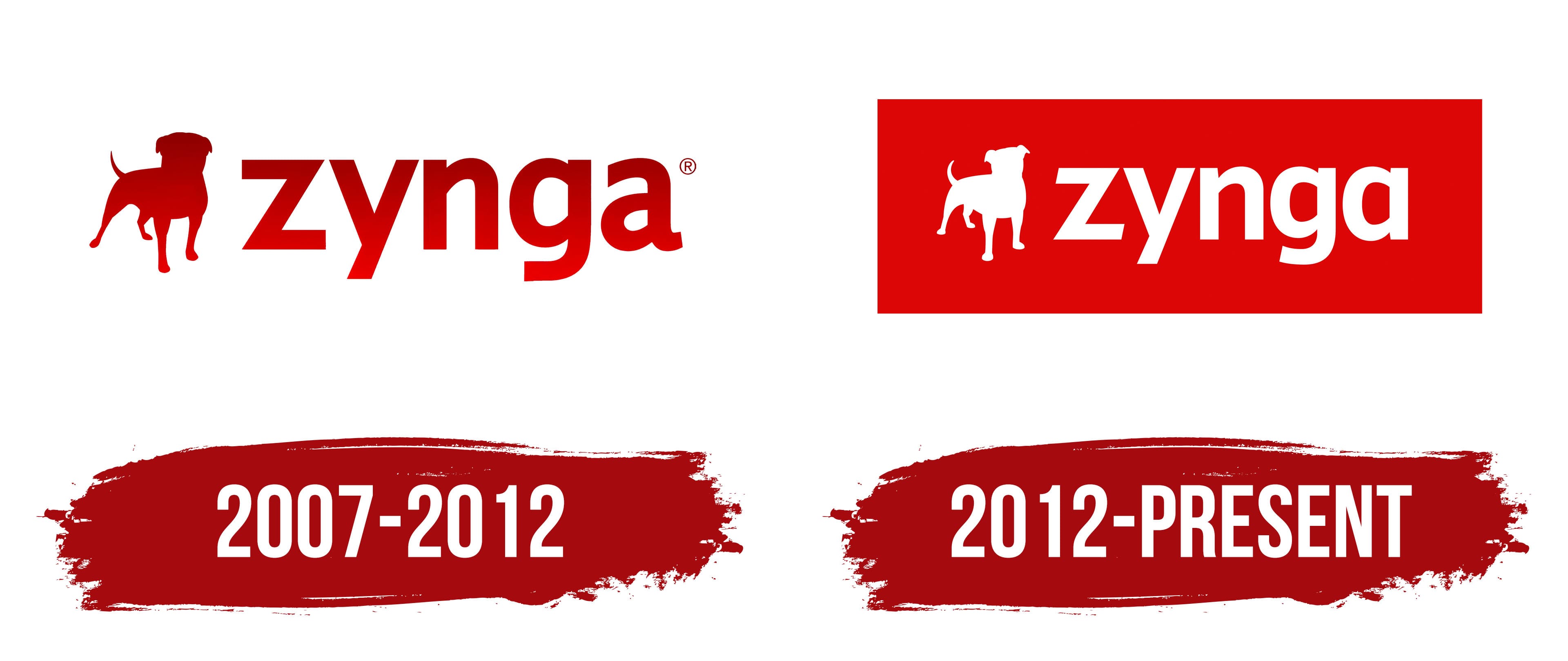
Initially, the company’s emblem had nothing to do with the world of video games and was rather personal. The history of its appearance is connected with Mark Pincus, the company’s CEO’s pet. His bulldog, Zinga, tragically died, and Pincus named the company in its memory. Later, the logo concept changed, and the image was slightly adjusted. However, the dog and its name have forever remained part of the brand’s history and sign.
What is Zynga?
A creator of video games known to Facebook users for Zynga Poker, Farmville, and CityVille. By 2010, 10% of internet users worldwide had played the company’s games. The headquarters is located in San Francisco. The firm generates income by selling in-game advertising.
2007 – 2012
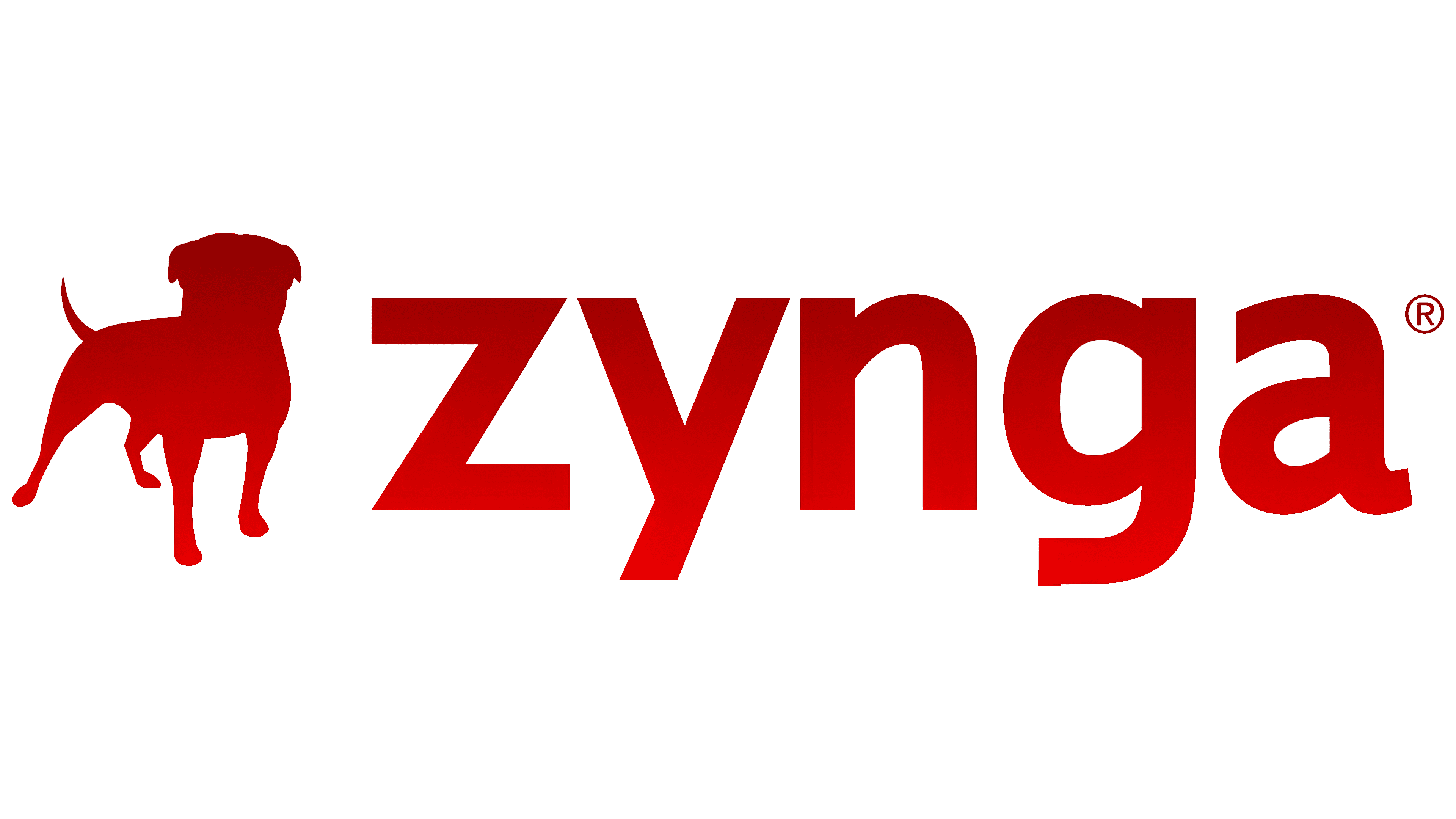
The first emblem is a red shadow of a dog and an inscription. The outline makes it easy to identify the breed of bulldog. The red gradient changes from light at the bottom to dark at the top, as if an eternal flame of memory is burning inside the image, illuminating the surrounding night.
The choice reflects attachment, sorrow, and love.
The dog also became the prototype for one of the first life games purchased by the company, YoVille, where players can create an avatar, enter a virtual world, and start a home, family, pet, and so on.
2012 – today
At the end of 2011, the company listed its shares on the NASDAQ and attracted 1 billion in investment, leading to staff expansion and growth opportunities.
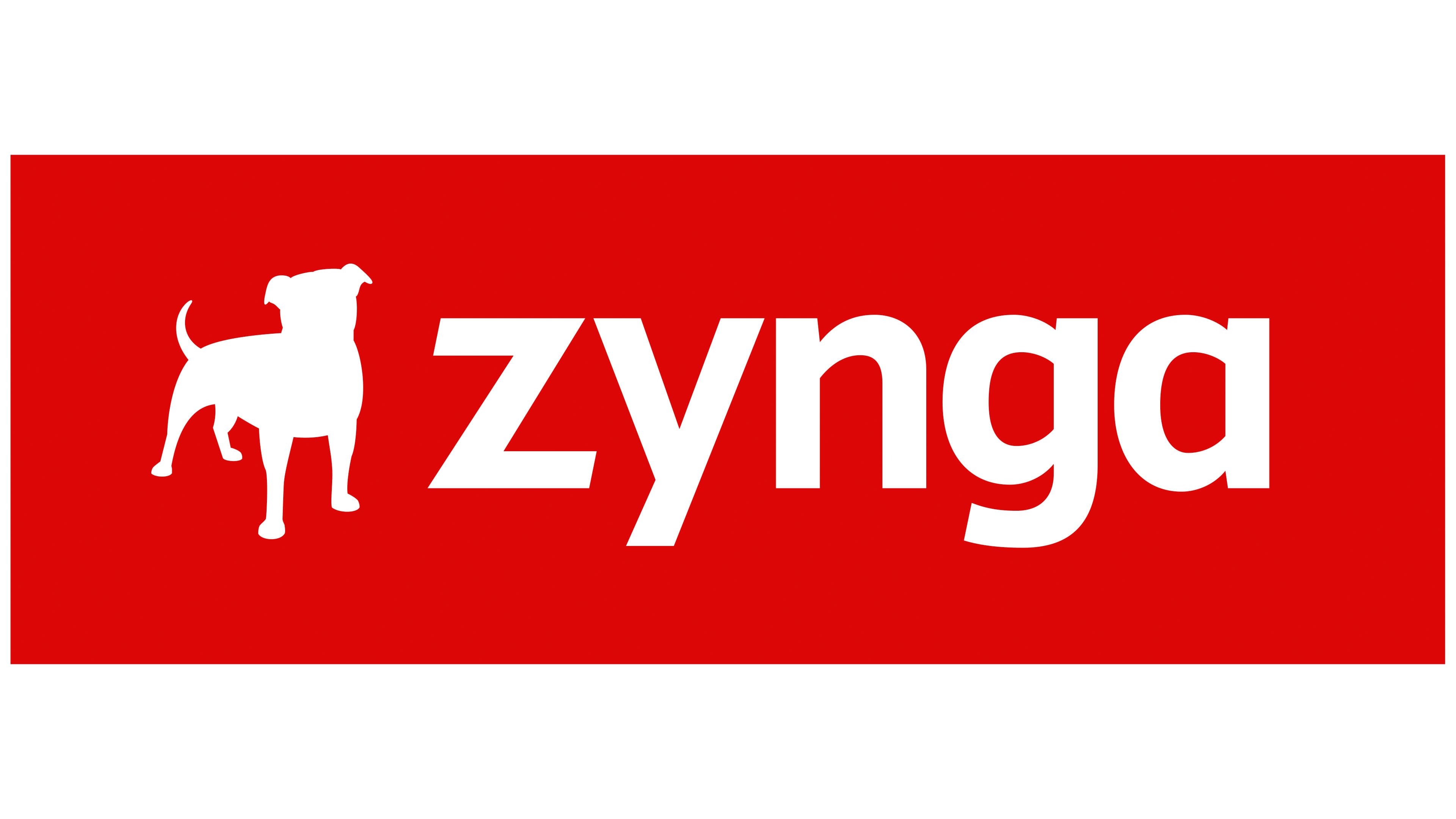
In 2012, as part of the development process and the transition from private ownership, the emblem underwent a rebranding, and its appearance changed. In the modern sign, the image of the dog and the name are executed in white on a red rectangular background.
The shades lack an element of sadness. The symbol is ceremonial, bright, and bold. White reflects renewal, a fresh outlook on the company’s development, and the emergence of new products.
The dog no longer resembles a bulldog. The touching story behind the name remained unknown to most users. Therefore, they couldn’t appreciate the theme of attachment between the bulldog and the owner. As a result, the dog subconsciously became associated with fighting breeds and aggression. Therefore, the contours were adjusted to increase the dog’s similarity to friendlier breeds.
The dog embodies playfulness, friendship, and loyalty in the modern emblem. The dog invites you to play, as if it had brought a ball. The company offers new games, never leaves its consumers, and is ready for communication. For instance, the early product YoVille had to be switched across several platforms, but the company made every effort to preserve the fan accounts before the game was shut down.
Interestingly, the changes did not benefit the company. A year after going public, the company lost 70% of its value, and Mark Pincus, the owner of the bulldog and the company’s CEO, stepped down. Over several consecutive years, indicators deteriorated, and eventually the company was sold.
Font and Colors
The red color speaks of popularity. Two years after its foundation, 40 million people played the company’s games. FarmVille was visited by up to 10 million daily; a year later, it was played by 80 million. In CityVille, 16 million people logged in every day. Therefore, the red background color reflects the sharp rise in interest in the company’s products and users’ love for them. The white color speaks of updates, constant forward motion, and the development of new games.
The font resembles Esm Black or Halcom, but it transforms the first inscription by changing the letter “a.” The glyphs in the modern emblem’s inscription have become simpler. The absence of uppercase brings the developer closer to users, indicating the ease and accessibility of the games.