


 AC/DC Logo PNG
The iconic Australian rock band’s recognizability comes from the AC/DC logo, which has remained consistent throughout its history. The emblem reflects their creativity, high voltage, electric discharges, and lightning sparks that ignite devotion.
AC/DC formed in Sydney in November 1973, when brothers Malcolm and Angus Young, who had moved from Glasgow in 1963, started a band. Their sister Margaret named it after the sewing machine. It referred to electric current and matched the group’s image.
The first lineup featured Dave Evans, replaced in 1974 by Bon Scott. With him, the band shaped its sound. In 1975, High Voltage was released on Albert Productions, built on heavy riffs and raw vocals. Angus Young’s school uniform became a defining stage image.
After several Australian releases, AC/DC moved to the UK and signed with Atlantic Records. Early tours were difficult, but live performances built a reputation. Let There Be Rock (1977) and Powerage (1978) expanded their audience, staying far from disco and progressive trends.
Highway to Hell (1979) brought global attention and opened the US market, with production by Robert John “Mutt” Lange. In February 1980, Bon Scott died in London after alcohol abuse, raising doubts about the band’s future.
The group continued with Brian Johnson from Geordie. In 1980, they released Back in Black as a tribute, with a plain black cover. The album sold over 50 million copies, second only to Michael Jackson’s Thriller.
In 1981, For Those About to Rock confirmed their position. Through the 1980s, AC/DC toured and recorded alongside bands like Iron Maiden and Metallica. In 2003, they were inducted into the Rock and Roll Hall of Fame.
Black Ice (2008) topped charts in 29 countries. Malcolm Young left in 2014 due to illness and died in 2017. In 2020, the band released Power Up, dedicated to him.
Meaning and History

The debut emblem appeared in 1977, at the same time as the release of the international version of the album “Let There Be Rock.” Bob Defrin, VP at Atlantic Records, and the popular graphic designer Gerard Huerta made this possible through their collaboration. Their partnership is high-voltage, an electric discharge that still flashes and rumbles worldwide, igniting devotion in fans’ hearts. Over the years, the rock group has had several logo variations.
What is AC/DC?
AC/DC is an Australian rock band formed in 1973 in Sydney. Guitarist brothers Angus and Malcolm Young formed the band. The legendary group’s repertoire spans rock and heavy metal. They released their debut album, High Voltage, in 1975. The group’s lineup has often changed, with Angus Young as the only original member.
1974 – 1976

The first logo is a traditional warning sign made using a stencil. Such inscriptions are usually placed on transformer booths, shields, and electrical cabinets to warn of high voltage, which can be deadly. This version was based on that and refined. It was used on the Australian group High Voltage’s debut album, released in 1974. The letters are round, with intermittent spaces, characteristic of stencils.
1976
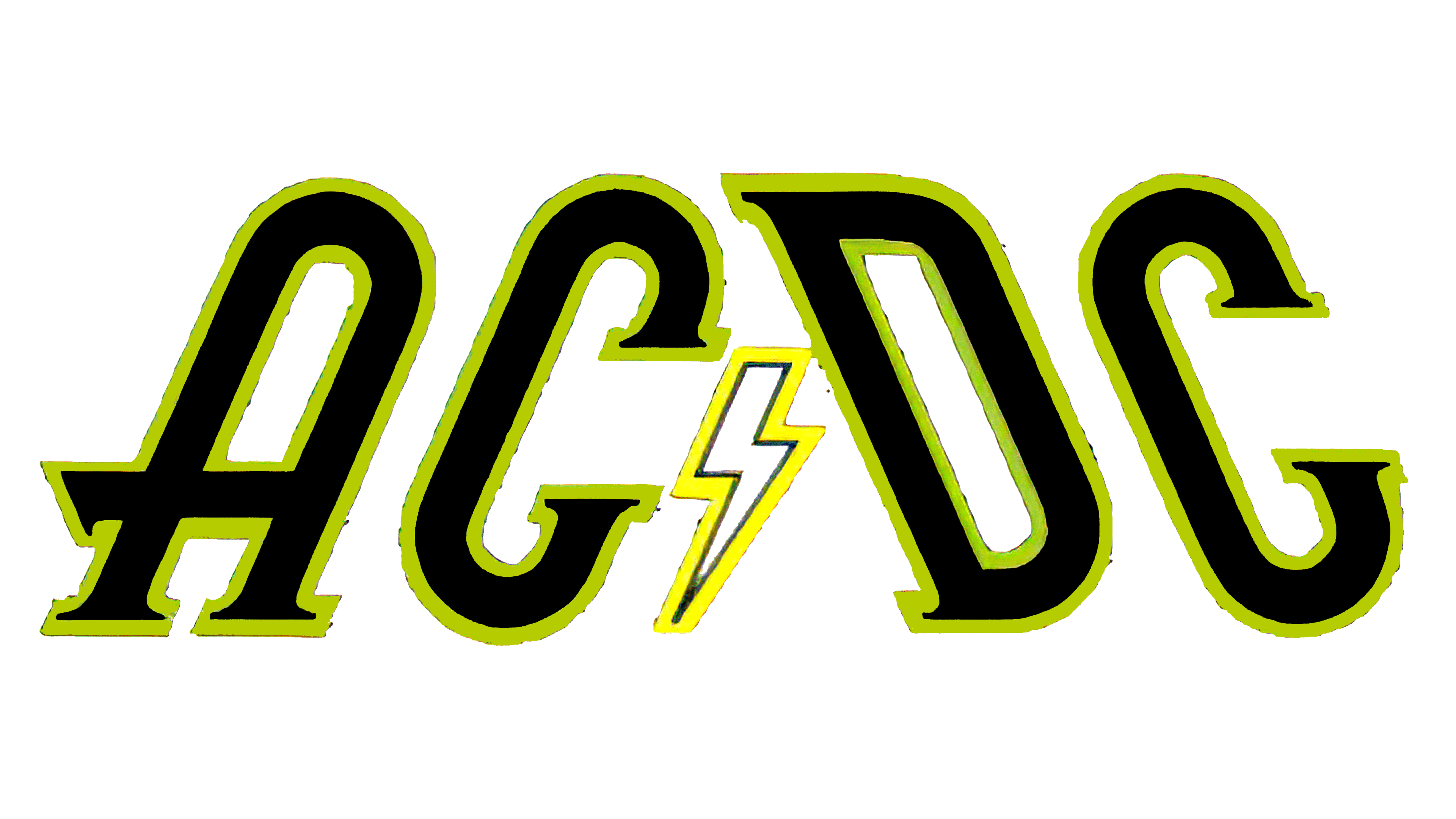
This version adorned the cover of the 1976 international album High Rock Hard Rock. The letters in this emblem are elongated, with serifs and green edging, and face each other.
1976 – 1977
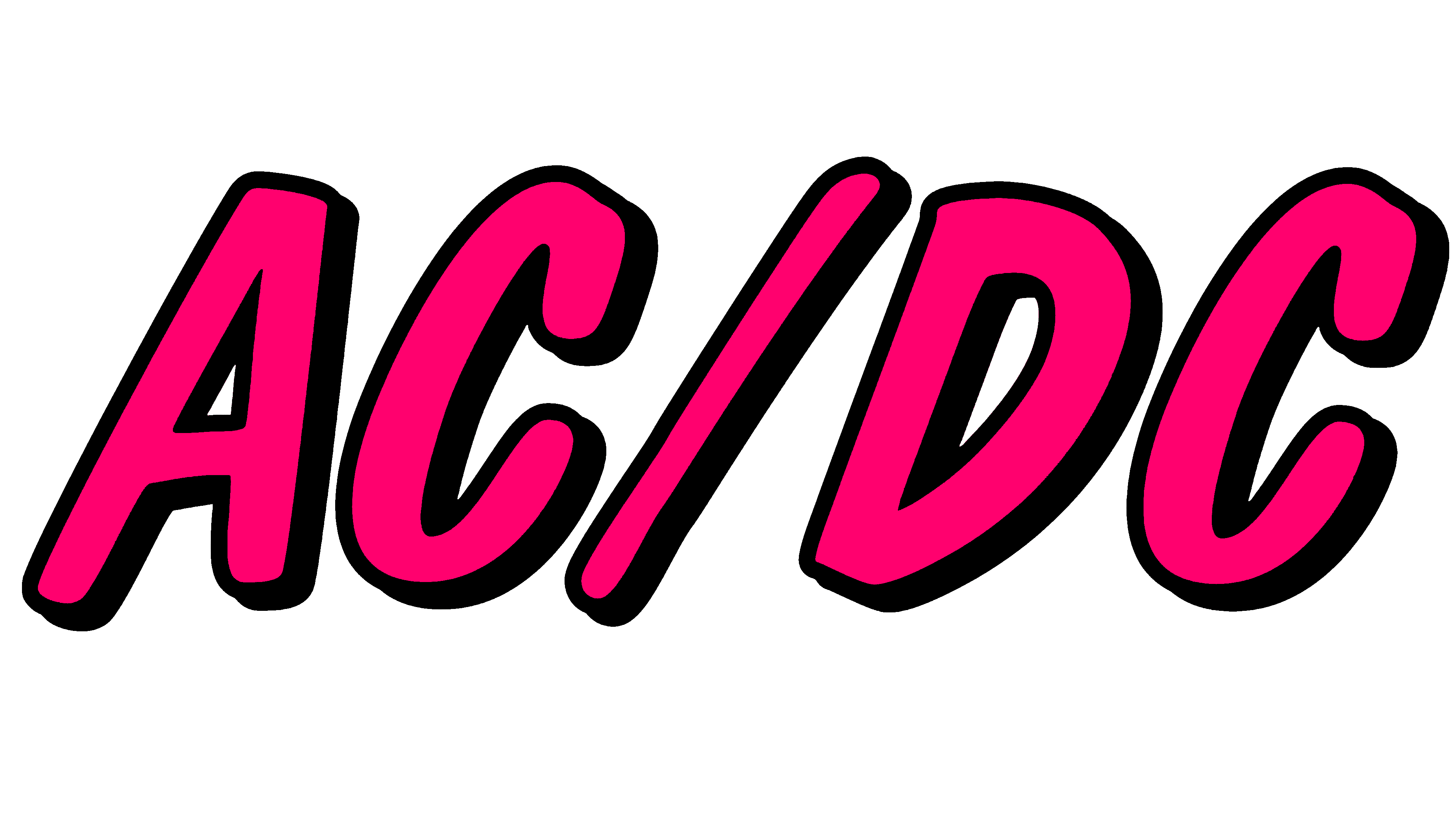
The second international and third Australian compilations, Dirty Deeds Done Dirt Cheap, received the same design. The logo depicts the group’s name in red raspberry with black shadows on the right. They give the letters volume.
1977 – today
In 1977, a gothic-style version appeared. It was first used on the cover of the international edition of the Let There Be Rock album. Two years later, the new logo adorned the Australian release of Highway to Hell.
Font and Colors
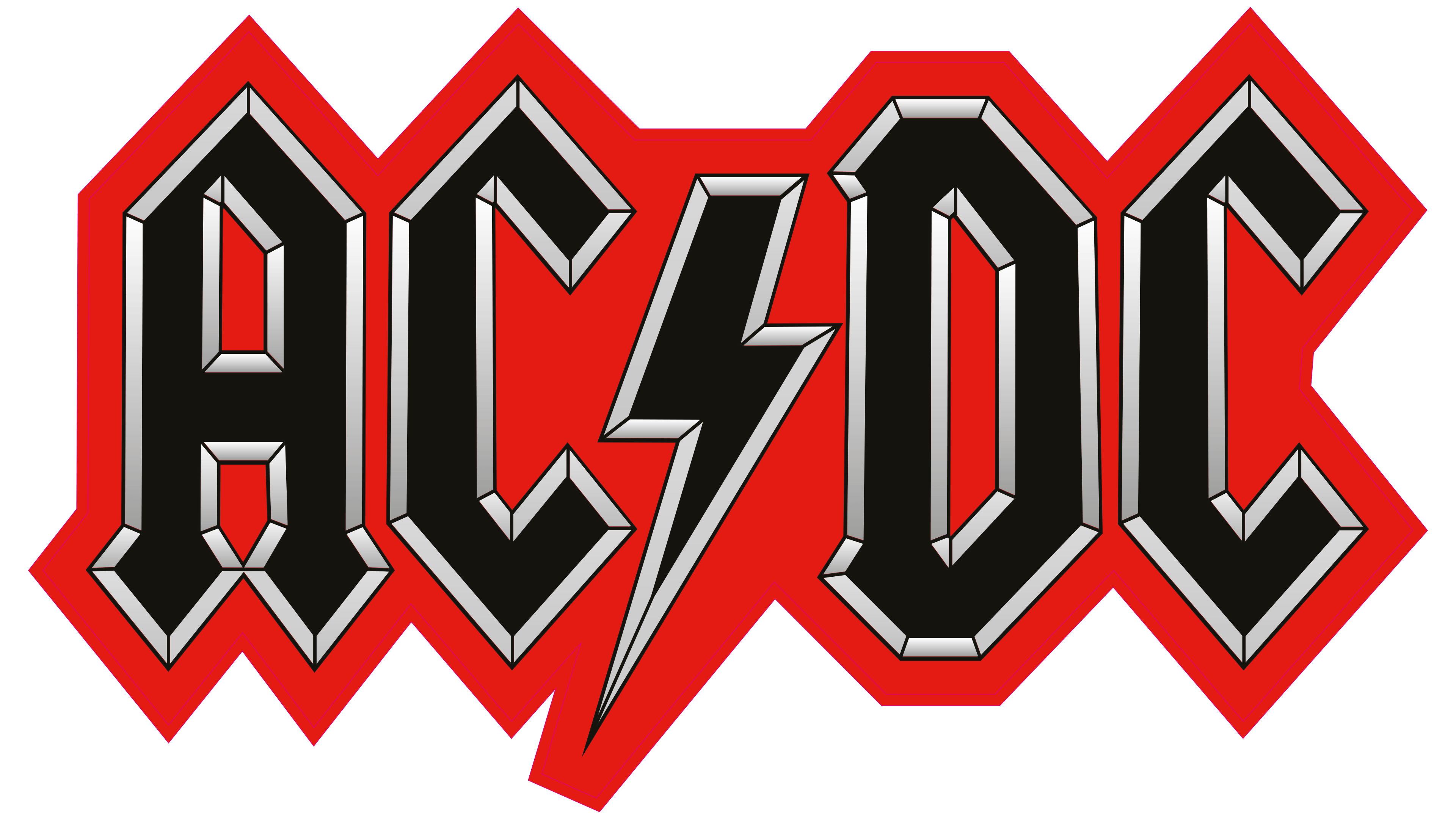
The Rockers’ trademark sign is tied to the group’s name, encrypted as an electrical abbreviation. AC “alternating current,” DC “direct current.” Instead of a slash, the musicians used a more fitting symbol: lightning, which symbolizes high voltage.
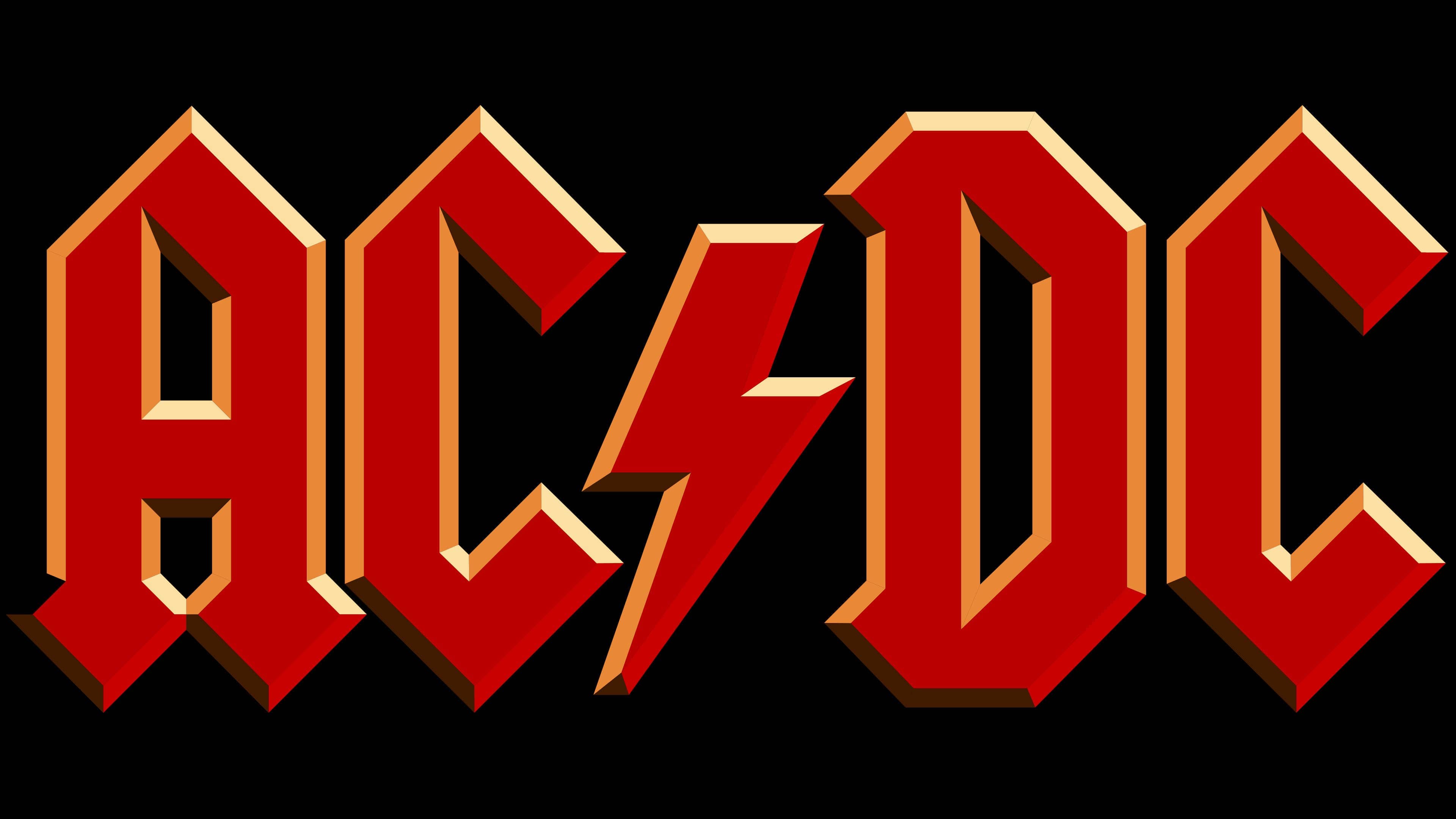
The AC/DC font has evolved into ornate symbols with pointed ends. The primary colors are black, white, and red. In one version, it also includes yellow and green.