


 Aixam Logo PNG
The Aixam logo packs maximum features into a minimal design. A neat emblem conveys compactness and elegance. Brand cars immediately attract attention and stand out among ordinary models.
Aixam’s history began before the brand itself. In 1975, Arola SARL was founded in Corbas, near Lyon, to produce small three- and four-wheeled vehicles that could be driven without a full license. These lightweight cars used polyester bodies and about 50 cc engines, targeting young people, older drivers, and urban users who needed basic daily transport.
Arola failed to remain financially stable, and in 1983 a new company, Aixam, based in Aix-les-Bains in Savoie, acquired its assets from bankruptcy. In 1984, Aixam released its first original model, the 325D, followed in 1985 by the 400D. Both used two-cylinder 400 cc Kubota diesel engines and were built around French rules limiting speed to 45 km/h. In this niche, Microcar was one of its closest rivals.
In 1988, Aixam became the first quadricycle maker to voluntarily meet automotive safety standards. In 1992, the company launched Mega, a subbrand for vans and utility vehicles. Mega later moved into racing, then returned in 2010 with the Andros Electric Trophy, driven by Soheil Ayari. In 2006, Mega presented the electric Mega City van at the British International Motor Show.
In 2009, Aixam-Mega bought the assets of the bankrupt British NICE Car Company. On April 11, 2013, Polaris Industries acquired Aixam-Mega from Axa Private Equity, entering the European license-free vehicle market. Total production passed 205,000 units by 2010 and 350,000 by 2023. In September 2024, Aixam opened a third plant in Andancette after investing €30 million. In 2023, it produced 19,131 vehicles, with €198.6 million in revenue and €36.6 million in net profit.
Meaning and History
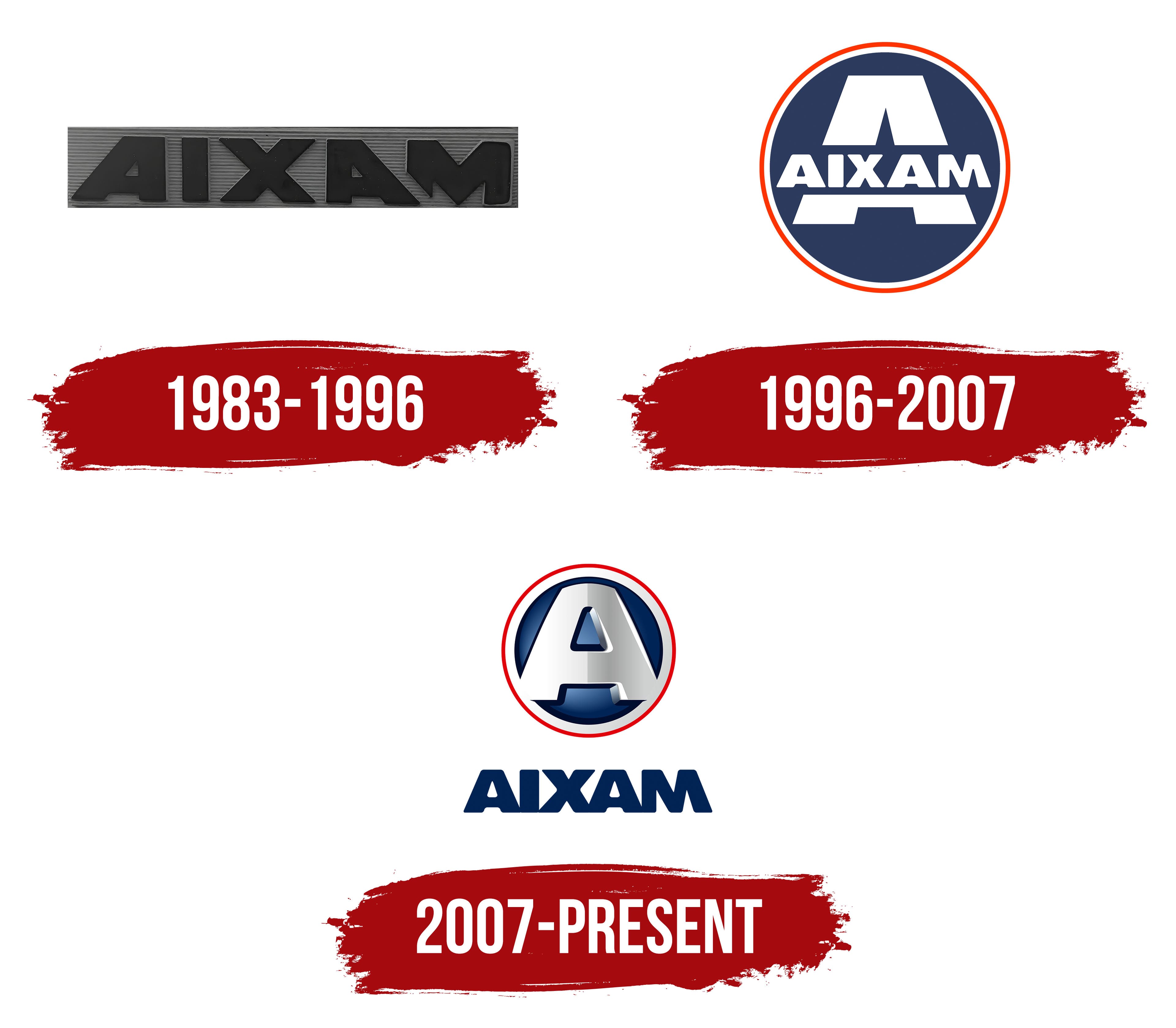
The brand’s logo is designed so its emblem can stand alone to mark the lineup. The symbol is simple and concise, reflecting an ergonomic design.
What is Aixam?
Aixam is a French automaker that specializes in microcars and lightweight quadricycles. These compact vehicles are designed for urban environments, and in some European countries you can drive them without a full driving license. The lineup includes models such as the Aixam City and Aixam Crossline. The company offers practical, eco-friendly transportation solutions, which makes its vehicles popular.
1983 – 1996
From 1983 to 1996, Aixam was known as a reliable, consistently performing small-vehicle manufacturer. The company’s first emblem embodied these qualities, reflecting durability and smooth operation even in compact car models. This reminded users that small size doesn’t limit quality or functionality.
The Aixam logo’s design was notable for the unique styling of the letter A in the word Aixam, which pointed in different directions. This added a playful, dynamic quality to the brand’s visual identity, making the inscription monumental yet easy to read. This design approach symbolized freedom of movement, as Aixam cars could be driven without a driver’s license, making them ideal for quick, easy urban travel.
Additionally, the interesting division of the word Aixam into two parts, AIX and AM, held special significance. AIX referred to Aix-les-Bains, the French city where the company was founded, adding geographical ties and cultural identity to the brand. The second part, AM, stood for Automobile Manufacture, emphasizing the company’s industrial foundation and specialization.
1996 – 2007

The logo, a striking blue road sign with red-and-white trim, is a recognizable symbol deeply connected to the brand’s history. This design was selected after the company acquired the Mega brand in 1995, marking a significant development. The color palette and emblem shape reflect this connection, highlighting the integration of the two brands and the updated corporate image.
The road sign symbol is deliberate: it represents the accessibility and freedom of movement Aixam’s small cars offer. Their maneuverability, lightness, compactness, and convenience make them ideal for urban environments where every inch of space counts.
The design centers on a giant letter A, symbolizing Aixam as a major player in the microcar market. A creative design move replaces the central bar of the letter A with the full brand name Aixam, enhancing visual impact. The small letters contrast with the large A, emphasizing that even small cars are a superb alternative to full-sized vehicles.
2007 – today
The emblem features a circle with a large, three-dimensional letter A inscribed inside, and the brand name is written in blue capital letters.
The round shape embodies car wheels, indicating minimalism, harmony, and completeness. The background features a double red-and-white border, linking the emblem to permissive and prohibitory road signs.
The red outline resembles a deceleration sign. Most Aixam models are limited to 45 km/h. In many European countries, this allows you to drive a mini-transport without a driver’s license.
The white border symbolizes ultra-light, electrically powered machines. They have been sold under the Mega brand since 2003. The rim conveys environmental safety and no harmful emissions.
A large central A is the first letter in the brand name. Its edges blend into the white stroke. It extends beyond the logo, reflecting the company’s extensive expansion across the American continent after Polaris’s purchase. Embodies the popularity of small-wheeled vehicles. Every year, up to 16 thousand cars roll off the assembly line.
Font and Colors
The logo’s main colors are red, white, and blue. These are the leading shades used on road signs, connecting the emblem to cars and roads.
- Red emphasizes and attracts attention. It represents the beauty, efficiency, and maneuverability machines gain from their small size. Red is a shade of danger. The brand’s SUVs handle uneven terrain and challenging conditions well.
- White is the badge’s main color. It refers to the metal used to make most machines. It indicates a lineup update. White suggests lightness and low weight.
- Blue conveys professionalism and a serious approach to work.
The inscription font resembles Rifton Caps, with minor changes. The M glyphs are slanted backward, reminiscent of the structure of minicar trunks, which appear to be cut off, reducing the car’s length. The lower parts of the letters merge, making the word continuous. This is another nod to the compact size and close placement of interior elements.