


 Ferrari Logo PNG
The Ferrari logo, a symbol of the Italian sports car manufacturer Ferrari, has been in use since 1947 as a tribute to an Italian World War I ace. The emblem symbolizes the brand’s nationality, style, elegance, and the elitism of its products.
Ferrari’s history traces back to Enzo Ferrari, born in Modena in 1898. After World War I, he failed to join Fiat, worked at CMN, and later moved to Alfa Romeo as a driver and later as a team organizer. In 1929, he founded Scuderia Ferrari and raced Alfa Romeo cars.
In 1939, he left Alfa Romeo under a four-year restriction on using his name. During World War II, he set up Auto Avio Costruzioni in Maranello. In 1947, the first Ferrari, the 125 S with a V12 engine, appeared and won a race in Rome.
The Cavallino Rampante emblem came from the family of pilot Francesco Baracca, with yellow referencing Modena. In 1950, Ferrari entered Formula 1, where Alberto Ascari won titles in 1952 and 1953. Competition with Mercedes-Benz defined the mid-1950s, while the 1957 Mille Miglia crash led to legal charges that were later dropped.
In 1963, talks with Ford Motor Company failed, leading to Ford’s Le Mans wins from 1966 to 1969. That same year, Fiat acquired a 50% stake in Ferrari and later gained control after 1988.
The team rebuilt in the late 1990s with Michael Schumacher, and won five titles from 2000 to 2004. Kimi Räikkönen took the 2007 title. In 2015, Ferrari went public, while limited-production models like the 250 GTO, F40, Enzo, and LaFerrari have shaped its collector status.
Meaning and History
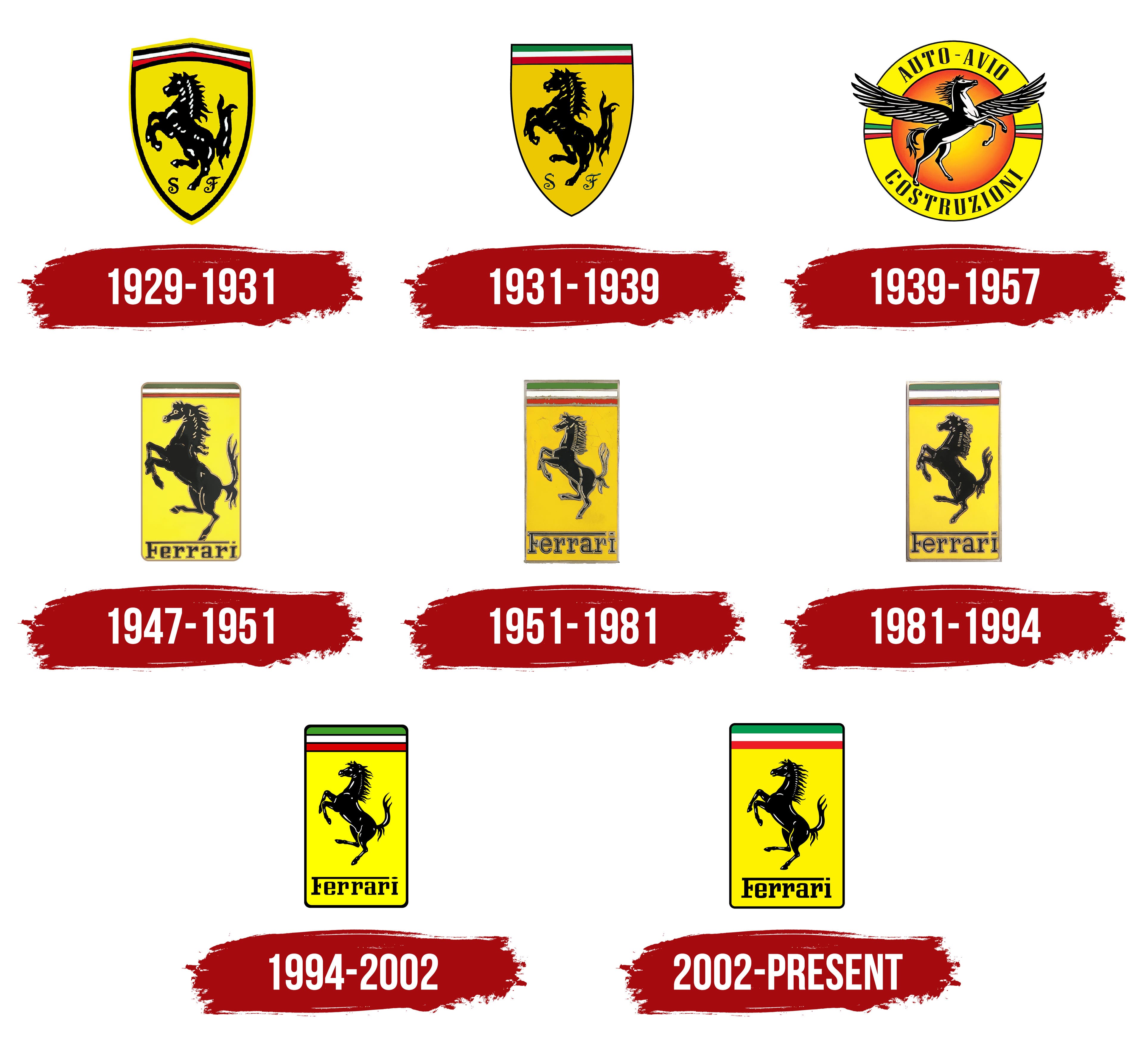
The company’s logo has always featured a prancing horse rearing on its hind legs. This is how it is known worldwide. The emblem image appeared long before the company itself, around 1929, when entrepreneur Ferrari opened a small enterprise. This enterprise became the foundation for the future automotive giant.
The owner used the image of a rampant horse as the primary sign, a symbol of power, unbridled strength, and speed. The brand’s yellow-and-black palette reinforces the hidden emotional tension.
However, the first figure on the emblem was Count Francesco Baracca, a military aviator, hero, and World War I veteran, who was an idol to millions of Italians. Among his fans was Enzo Ferrari. In the summer of 1923, he met his mother, Countess Paolina. Paolina asked him to base the emblem on an image of a rearing horse, which symbolizes luck and triumph. The future automotive magnate kept a photograph of Baracca, along with a commemorative inscription from his parents, for years.
Several years later, he used the galloping horse image as his company’s logo. Initially, the image was applied to car hoods. However, it was then supplemented with a yellow shade, symbolizing Enzo Ferrari’s hometown of Modena in the Emilia-Romagna province.
What is Ferrari?
Ferrari sports cars are known worldwide for their luxury. The brand released its first car in 1947. The brand’s parent company is Ferrari N.V., and the main shareholder is the Dutch Exor N.V., which owns approximately 23% of the shares. Piero Ferrari holds another 10%, and the remaining shares trade freely on the market.
1929 – 1931
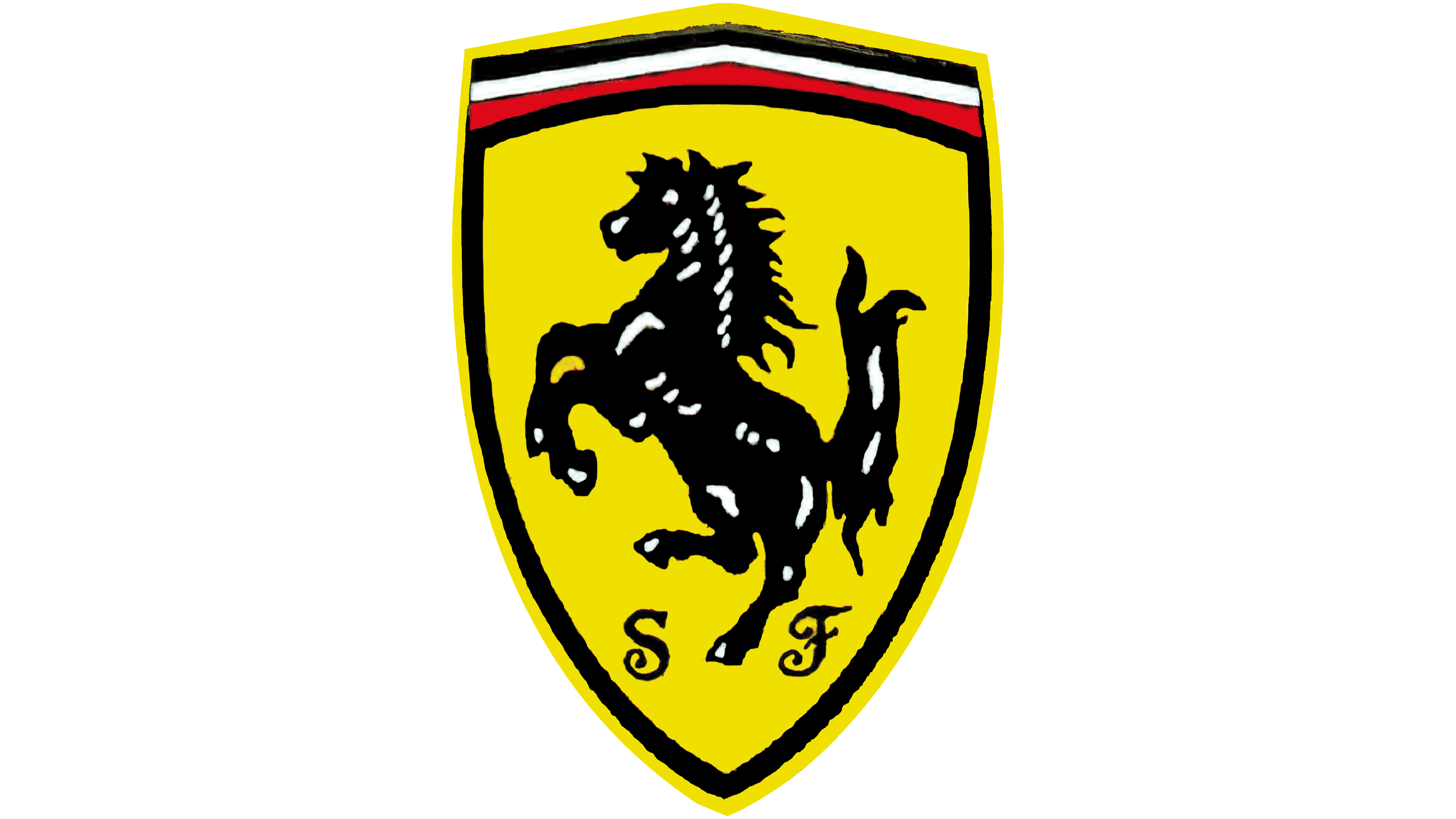
The debut version is immediately associated with horsepower, a measure of a car’s engine power. The logo depicts a spirited horse: calm, physically developed, and ready to race forward. The black horse with white highlights is depicted on a yellow background.
In addition, its image evolved from stocky to refined. This reflects the concept’s expansion: in the earliest versions, the animal was associated with “motor horsepower”; later, it came to be associated with the winged Pegasus. The classic shield features a double border (black and yellow), a triple red-white-black stripe at the top, and italic letters “S” and “F” at the bottom.
1931 – 1939
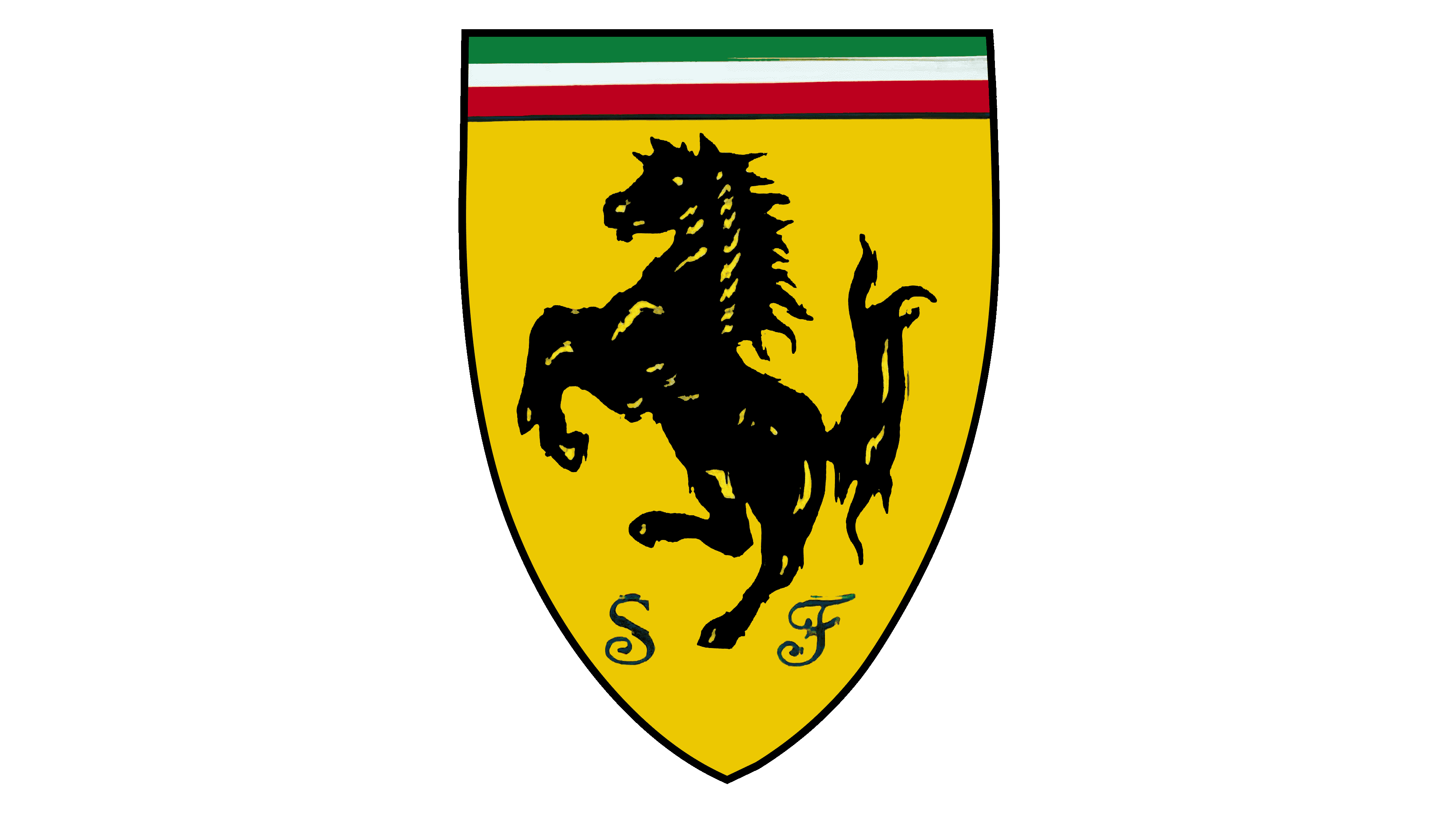
The debut logo consists of a sun shield with a black horse, to the right and left of which are the letters “S” and “F.” They are written in thin, italic, uppercase letters and stand for “Scuderia Ferrari.” At the top are three stripes in the colors of the Italian flag.
This emblem was first used in 1932 on cars participating in the Grand Prix in Spa. Since then, it has consistently accompanied the brand’s products and has been automatically approved as Ferrari’s primary symbol. The emblem’s history includes several key dates.
1939 – 1957
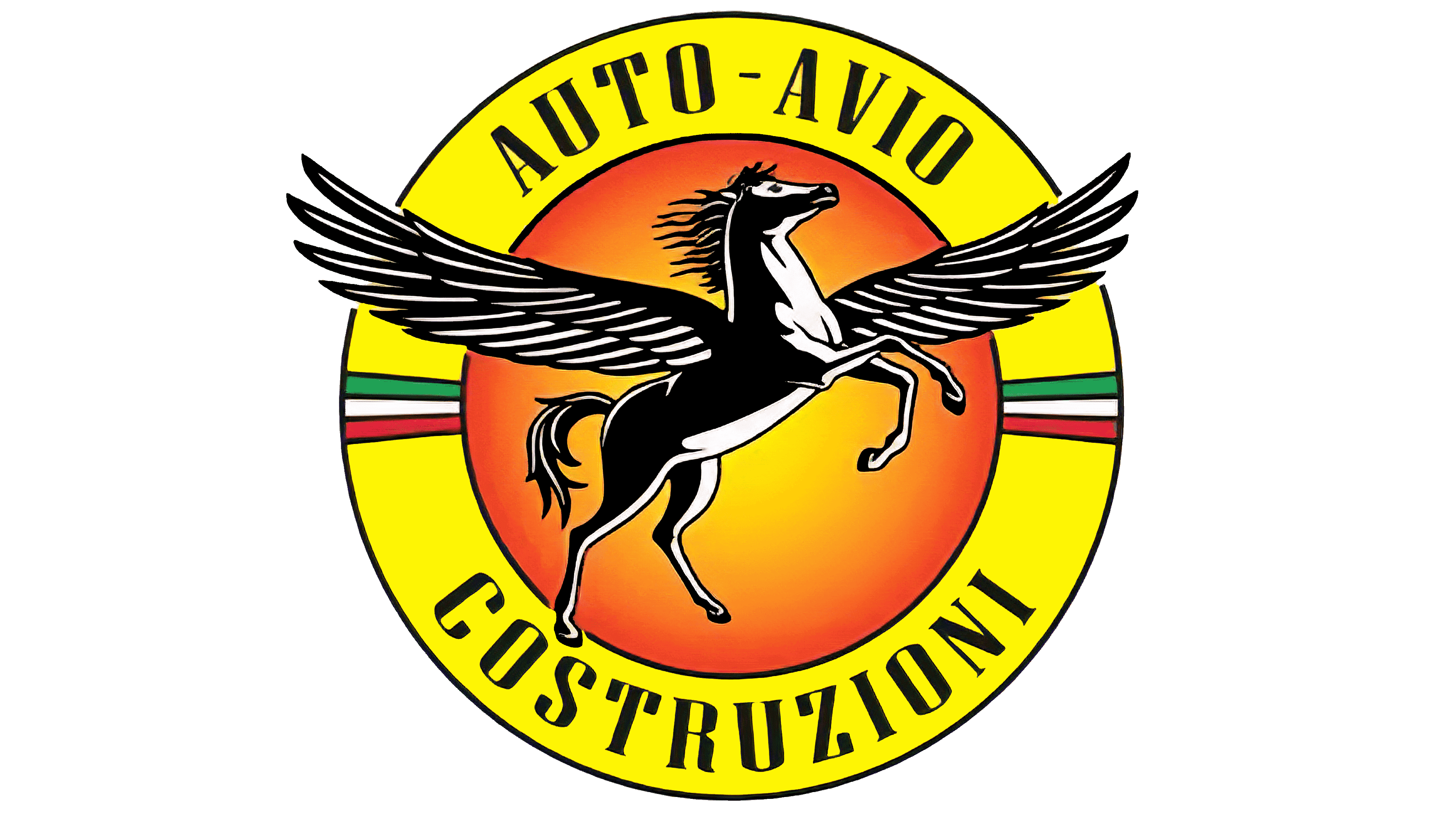
This is the only Ferrari emblem in which the horse is depicted at an unusual angle, looking not left but right. In this interpretation, it’s not entirely black; artists added many white highlights to make its silhouette voluminous. The animal also has large wings with intricately detailed bird feathers. They spread wide, suggesting the rearing horse is about to take flight.
The main Ferrari symbol sits against a yellow-orange circle with a radial gradient, fading from a light center to dark, almost red edges. A yellow ring encloses the circle, with thin black lines on both sides. Pegasus’s wingtips extend beyond the frame and intersect the inscription “AUTO-AVIO COSTRUZIONI.” The first two words sit at the top in an arc, while the third sits at the bottom, curved in the opposite direction, resembling a horseshoe. Three stripes flank it on the left and right, each in the colors of the Italian flag.
1947 – 1951
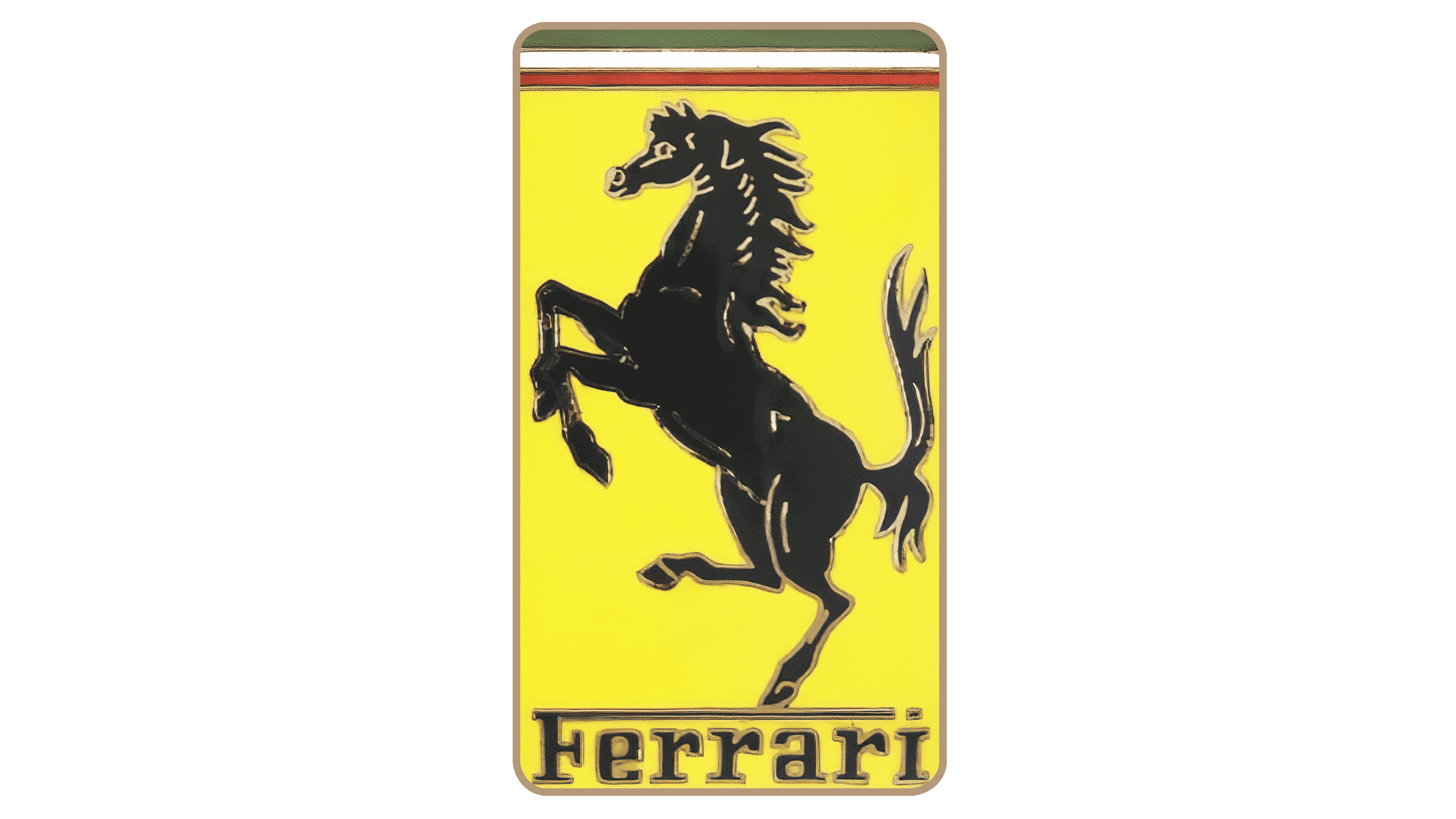
In 1947, the first version of the rectangular Ferrari logo, featuring rounded corners, appeared. It replaced the traditional triangular shields. The base remains yellow, but in a paler shade. The black horse faces left and is enlarged to fill more space. One leg stands on a long strip that continues the upper horizontal stroke of the letter “F.” The other glyph sits below this line in a bold serif font. Above the animal’s head, the Italian tricolor waves. All elements are outlined in gold.
1951 – 1981

In 1951, the horse’s silhouette was modified so that it no longer overlapped with the lower inscription. The base became a classic vertical rectangle and turned a saturated yellow. The colored stripes at the top also became horizontal rectangles.
1981 – 1994
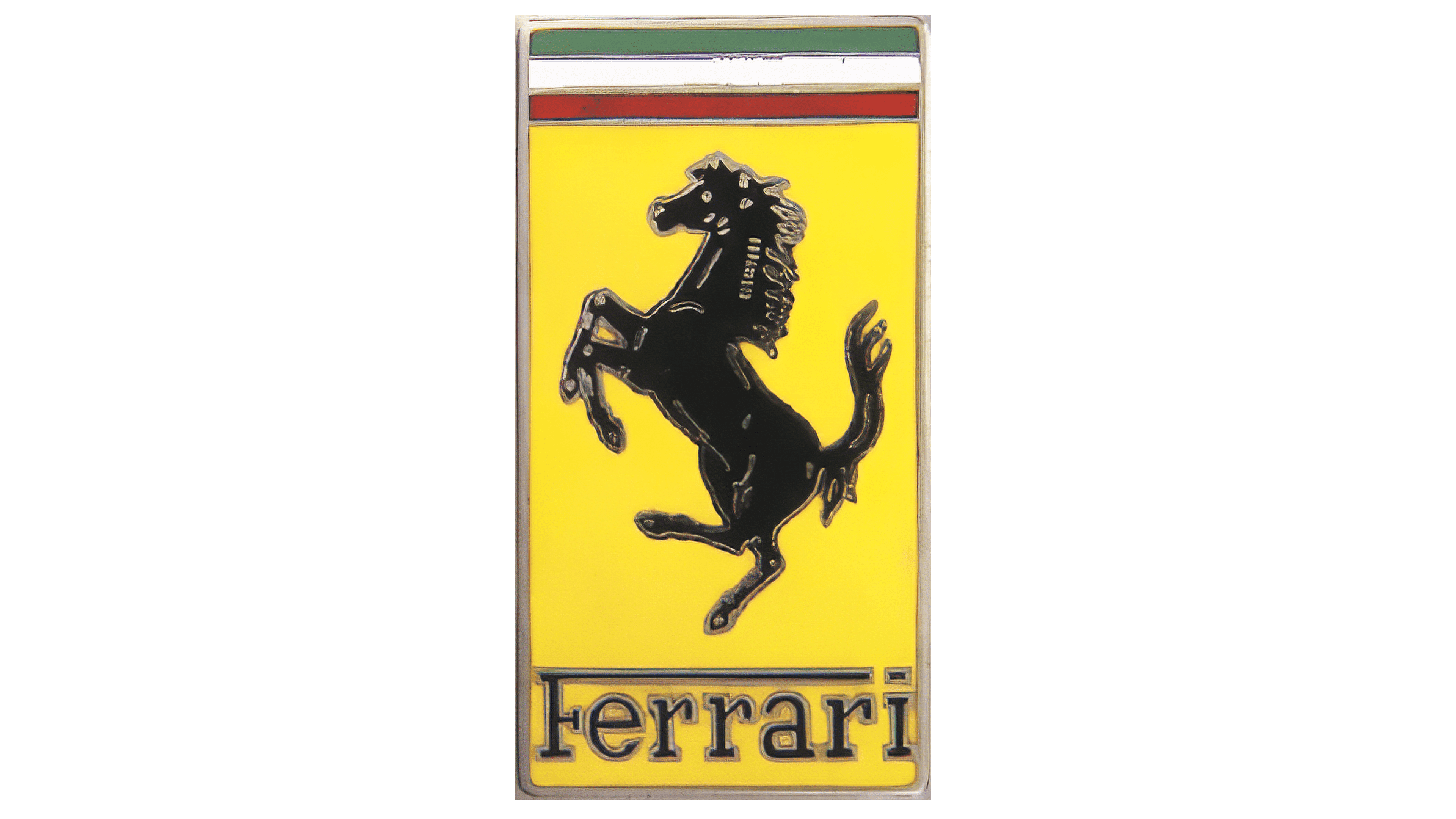
After the redesign, the horse’s appearance changed: its body became visually heavier, and the expressive muscle relief was lost. The frame around the rectangle has a silver gradient, while the other colors of the Ferrari logo changed in intensity and shade.
1994 – 2002
This year marked the company’s official appearance in its modern format. As its distinctive sign, it features an unrestrained black horse standing on its hind legs. The central element is placed on a bright yellow background.
Above it are three thin lines, green, white, and red, conveying a direct connection with Italy. Below is the brand name, executed in an original serif font. The top of the capital letter “F” is extended as a solid line, stretching over the word to the flattened dot on the “i.” The italic letters “S” and “F” have disappeared.
2002 – today
This is the second most significant period in the brand’s history. That’s when the brand underwent a redesign. It concerned minor details, such as colors and some lines. As a result, the sun-yellow field became more saturated, and the top colors merged, with the dividing line removed.
The horse’s drawing also changed: it now looks much more powerful. Moreover, the horse’s right front leg is depicted slightly higher than the original, so the left leg no longer covers it.
Font and Colors
Ferrari’s main colors are black (the prancing horse, the distinctive mark of Francesco Baracca’s plane) and gold (the palette of Enzo’s hometown, Modena). They have always been present in the company’s logo and have never disappeared; any changes have been minor. The horse’s dark silhouette looks very effective against the contrasting light background. Italy’s national colors remain constant and sit at the top of the emblem.
According to the author, this palette conveys prestige, power, beauty, and the brand’s dominant position in the industry. The font used for the name is a classic, with uppercase and lowercase letters. Moreover, all three letters “r” in the word “Ferrari” repeat the features of a horse standing on its hind legs.
In the first version, the text is highlighted in italics; the letters are uppercase and mimic handwriting. In 1947, the designers changed the font and introduced the company’s full name. Since then, the word has been written in a distinctive style: the “F” has an elongated top line, and the “r” resembles a rearing horse.
The black horse is the logo’s central element, showing readiness to rush forward at any moment. Another unchanging detail of the emblem is the three lines of the Italian flag (red, white, green). On the yellow background, the dark horse stands out more effectively. Moreover, this shade symbolizes Enzo Ferrari’s hometown of Modena.