Alabama State Hornets Logo PNG
Designers created a complex filigree logo for the Alabama State Hornets team to sting opponents like a hornet and give them no moment’s peace. The division’s logo features a ruthless insect. It overwhelms opponents with painful attacks, maintaining leading positions. Terrifying power and determination- that’s what this emblem conveys.
Alabama State University was founded in 1867 in Marion, Alabama, as Lincoln Normal School, which aimed to train Black teachers in the post–Civil War South. In December 1874, it became the first state-controlled institution for African Americans in the United States. In 1887, the school moved to Montgomery.
Athletics developed in the early 20th century. The school played its first football game in 1901 against Tuskegee University, beginning a long-standing rivalry. In 1913, Alabama State became a founding member of the Southern Intercollegiate Athletic Conference and won football titles in 1935 and 1939.
In 1975, the program left SIAC and, in 1982, joined the Southwestern Athletic Conference, moving to NCAA Division I. The shift raised competition and expanded recruiting opportunities.
The football team peaked in 1991 with an unbeaten 11–0–1 season and a SWAC title. Another conference win followed in 2004. More than twenty players from the program reached the NFL.
Key traditions include the Magic City Classic against Alabama A&M in Birmingham and the Turkey Day Classic against Tuskegee in Montgomery.
Men’s basketball made five NCAA Tournament appearances. In March 2025, Alabama State earned its first tournament win, defeating Saint Francis in the First Four.
Across all sports, the program has won more than 120 SWAC titles. Facilities include “Dunn-Oliver Acadome,” with 7,400 seats, and ASU Stadium, which opened in November 2012 and has a capacity of 26,500.
Meaning and History
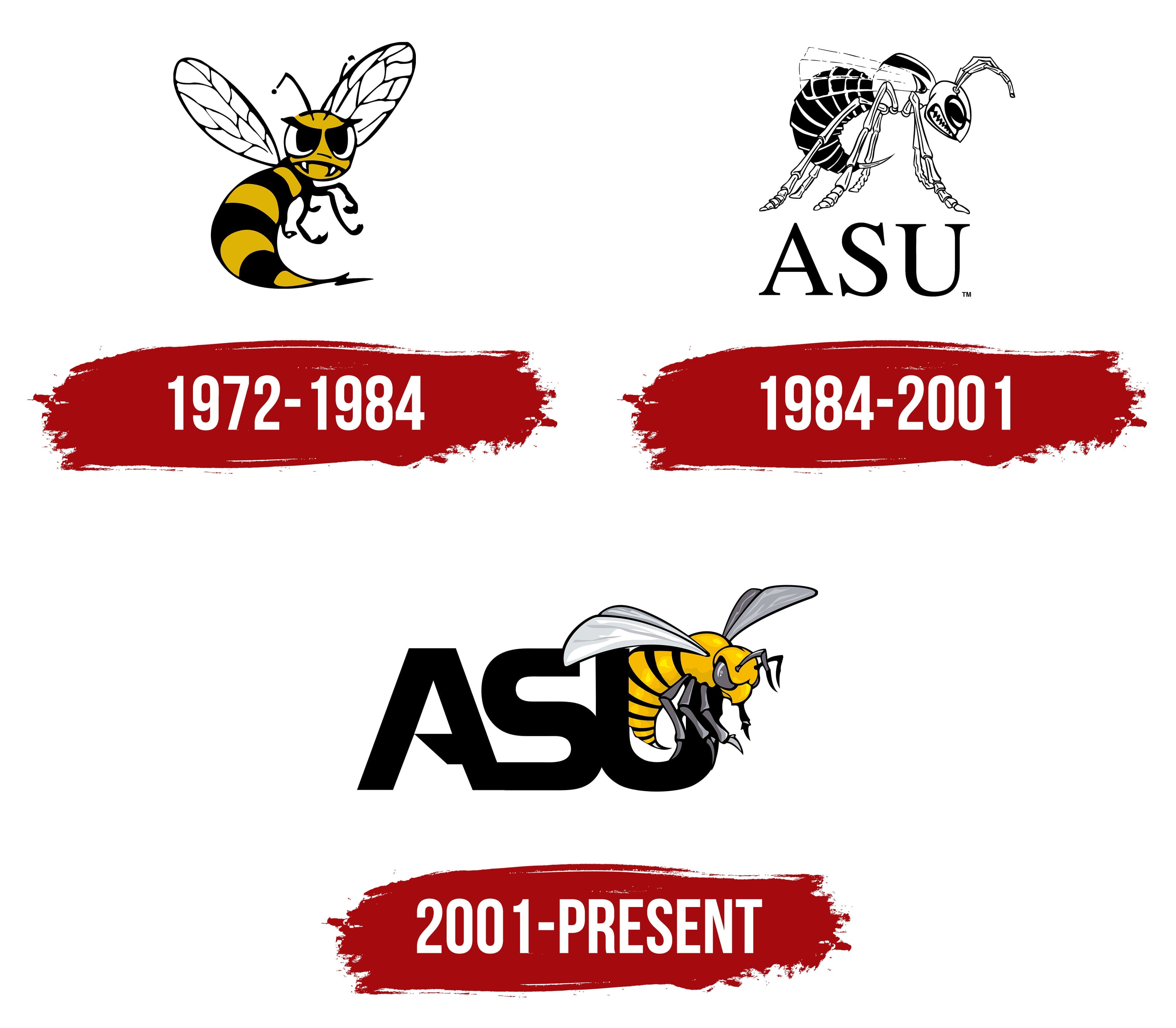
What are the Alabama State Hornets?
Alabama State Hornets is the name of 16 sports teams at Alabama State University in Montgomery, Alabama. They compete in NCAA Division I and the Southwestern Athletic Conference.
1972 – 1984
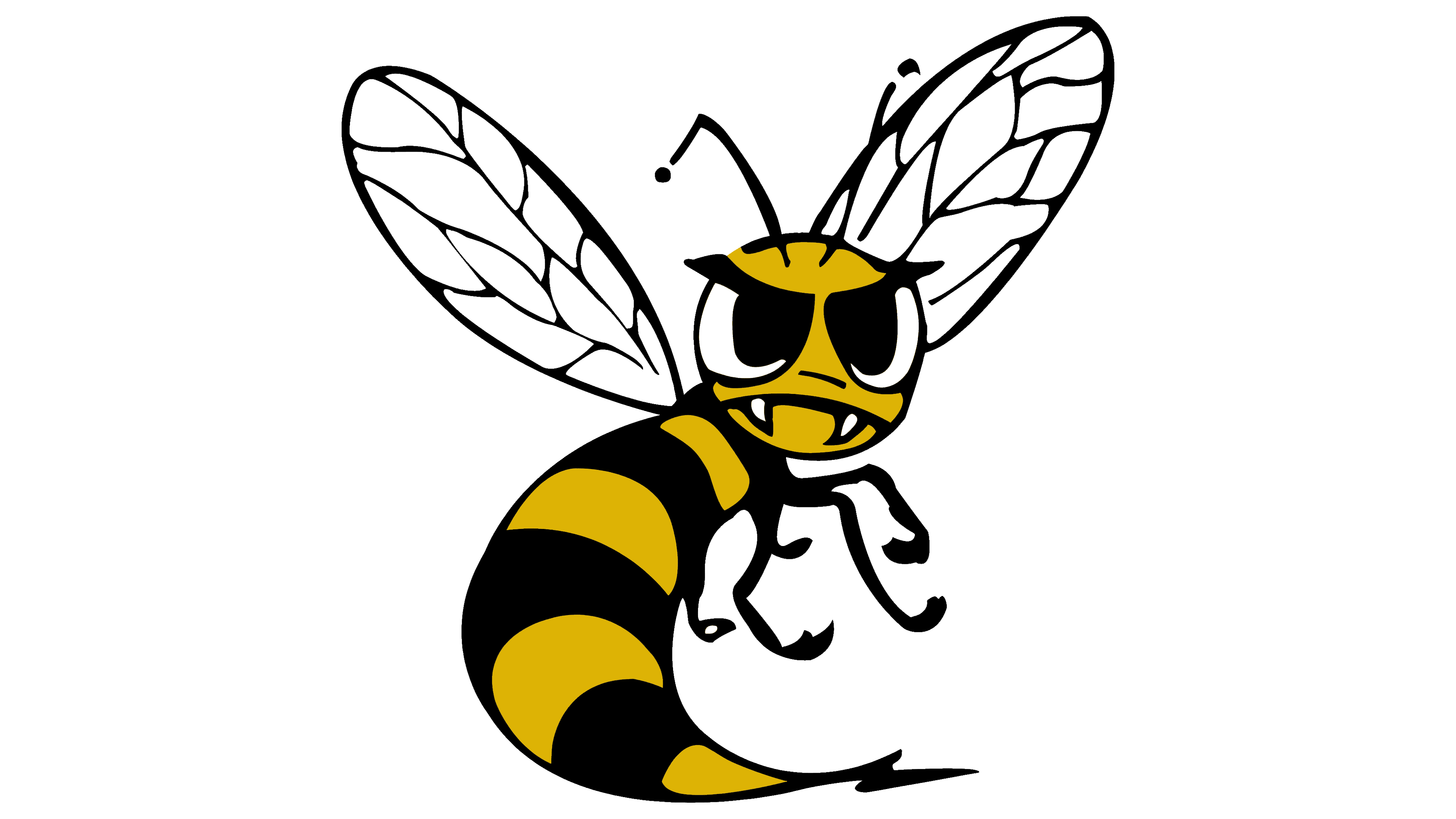
The hornet in the Alabama State Hornets emblem reflects the athletic teams’ name and campus traditions at Alabama State University in Montgomery. Hornets have been the team’s nickname since 1921, while Alabama State’s name reflects the institution’s affiliation with the state of Alabama.
The university traces its beginnings to Lincoln Normal School, established in Marion in 1867 to educate African Americans and train teachers. The institution moved to Montgomery in 1887. It adopted the name Alabama State University when it gained university status in 1969. The initials of those three words formed ASU, which later became a prominent part of the athletic emblem.
The Hornets name entered campus life through athletics and later appeared in university publications. The Hornet yearbook began publication in 1927. In 1950, the student newspaper changed its name from State Normal Courier to The Hornet and became The Hornet Tribune in 1962. Through the yearbook and student press, the Hornet became part of campus life beyond athletic competition. In the emblem, the insect represented the teams while referencing a longstanding university naming tradition.
The early color emblem featured a hornet in golden yellow, black, and white. Its large head faced the viewer, and its striped abdomen curved down and to the right. Oversized oval eyes, lowered eyebrows, and two white fangs gave it an angry expression. Its short legs resembled a cartoon character’s arms.
Thin antennae with rounded tips rose above its head. Elongated white wings extended to either side, divided by a black network of veins. The abdomen ended in a long, angular stinger shaped like a zigzag lightning bolt. A mirrored version facing the opposite direction was also used.
1984 – 2001
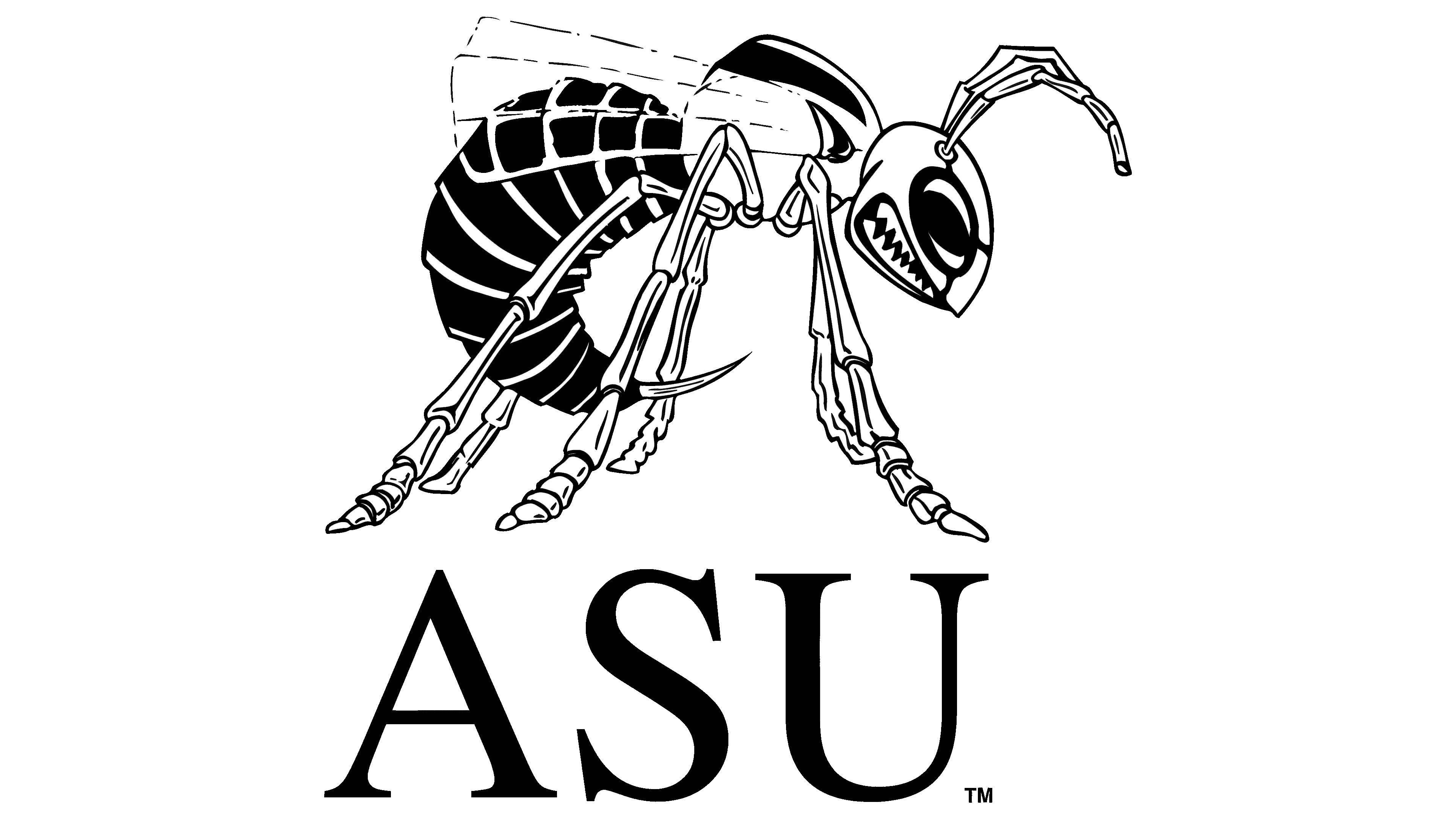
The Alabama State Hornets emblem used from 1984 to 2001 paired the hornet with the letters ASU. The insect sat above the lettering, which formed the lower tier. Three upright uppercase serif letters featured contrasting thick and thin strokes. Spaces between the letters formed the emblem’s base.
The hornet’s appearance changed as well. The rounded cartoon figure gave way to a profile view with an elongated head and a tooth-filled mouth. Its long, segmented legs had defined joints and pointed tips, while its antennae bent at sharp angles. Swept-back wings completed the silhouette. The curved abdomen retained its transverse stripes, with numerous fine lines dividing its surface into small sections.
In the black-and-white version, dense dark areas alternated with white spaces. A version incorporating gold in the hornet illustration was used alongside it.
2001 – today
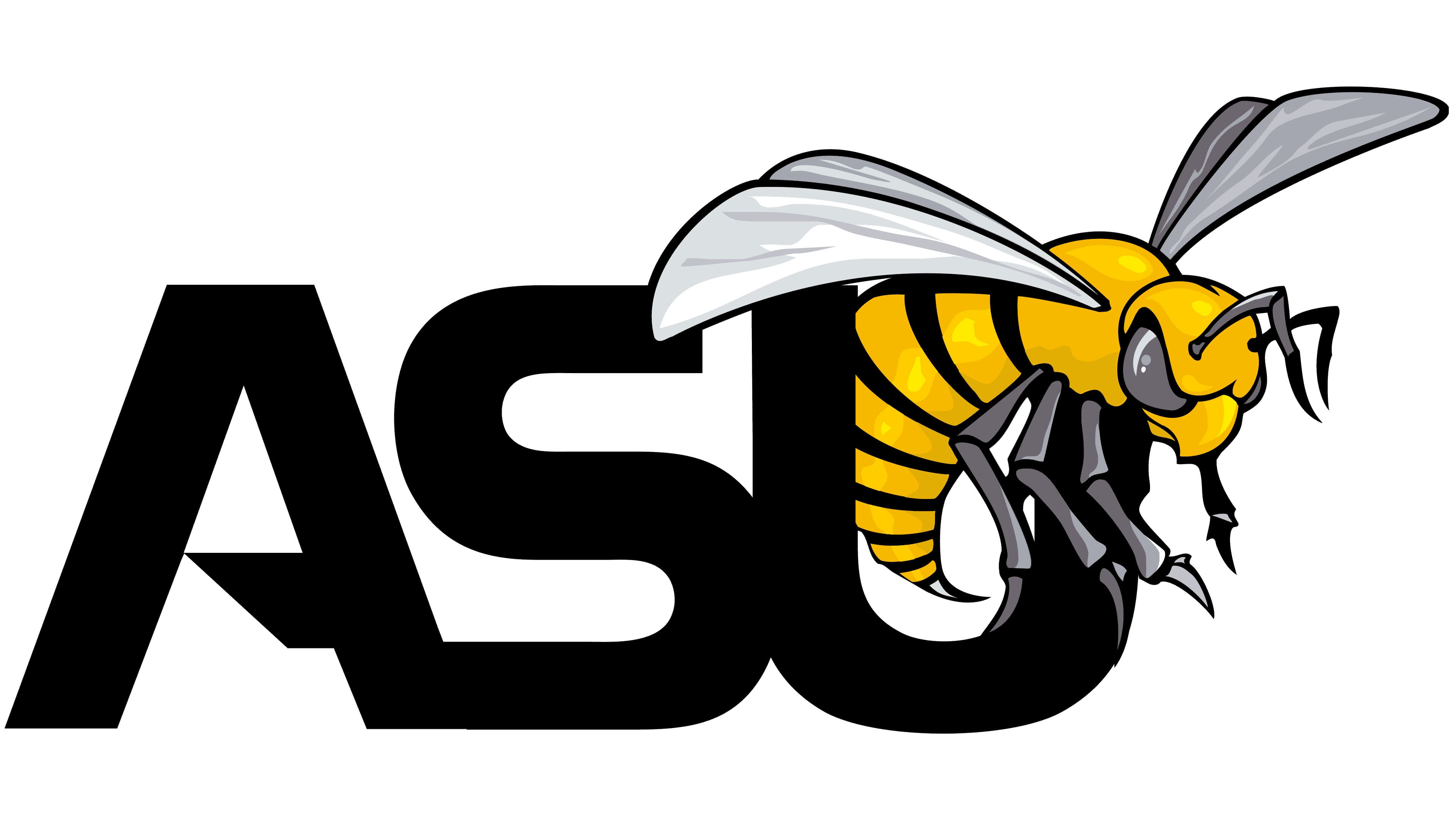
In the 2001 update, the hornet was placed over the ASU letters. The heavy black abbreviation stretched horizontally, while the colored insect overlapped the “U” on the right and extended above the lettering.
The letters became sans serif. Heavy strokes joined to form a tightly packed wordmark. The angular edges of the “A” contrasted with the curves of the “S” and “U.” The “A” retained its triangular opening and gained a sharp diagonal notch along its lower inner edge.
The hornet’s position followed the shape of the “U.” Its head faces right and tilts slightly downward, while its abdomen curves toward the bottom of the letter. Golden yellow with black stripes returned to the insect. A continuous black outline unites the head, body, legs, and wings, while gray areas and white highlights give depth to the eyes, limbs, and wings. Large light and dark sections replaced the fine network of veins. Gold variations and added highlights gave the hornet’s body dimension.
Both components of the updated emblem continued to appear separately. A standalone hornet has served as a secondary mark since 2001. The ASU abbreviation has its own version, including one in gold. When the full emblem appears on a dark background, the black areas along its outer edge blend into the surrounding surface. The university’s official colors are Old Gold and Black. The gold is specified as Pantone 117, with the hex code #C99700.
Beyond competition, the hornet represents school spirit at student events and alumni gatherings. The athletic identity is accompanied by #SwarmAs1, a call for the community to come together as one swarm. A secondary hornet’s nest motif represents the community’s strength and unity. It may be used as a background or as a supporting image alongside the primary mark.
The Stinger mascot brought the hornet into three dimensions. In February 2023, the National Bobblehead Hall of Fame and Museum unveiled a Stinger bobblehead as part of its first series honoring historically Black colleges and universities. The figure wore the university’s black-and-gold colors. It stood approximately 8 inches tall and was limited to 2,023 individually numbered pieces.