


 Alcoholics Anonymous Logo PNG
The Alcoholics Anonymous logo conveys the atmosphere of support and unity that forms the organization’s foundation. It grew from a small group of people united to address the common issue of addiction. Since then, it has become a place where sincere conversations and collective efforts help individuals find a new life.
Alcoholics Anonymous began in Akron, Ohio, in 1935, when stockbroker Bill Wilson met physician Bob Smith. Both men were struggling with alcoholism and found that mutual support helped them remain sober. They soon began working with patients at Akron City Hospital, and by the end of the year a third member had joined their group.
In 1937, Wilson and Smith estimated that about 40 people connected with the program had maintained sobriety. New groups began appearing in other cities. In 1939, the organization published Alcoholics Anonymous, later known as the Big Book, containing personal recovery stories, the Twelve Steps, and guidance for following the program.
Public attention increased after a 1941 article in The Saturday Evening Post, leading to rapid growth across the United States. During the 1940s, the fellowship developed the Twelve Traditions to guide group unity and independence. They were formally adopted at the first international convention in Cleveland in 1950, as meetings also began spreading into Europe and other regions.
Translations of the Big Book expanded access during the 1960s, while cooperation with medical professionals increased. International offices, publishing, and conferences grew during the 1970s. In the 1980s and 1990s, the movement added specialized meeting formats and support materials. Online groups and forums appeared in the 2000s, followed by wider digital resources from 2010 to 2023 while anonymity remained a core principle across many countries.
Meaning and History
What is Alcoholics Anonymous?
This is an international community that helps people cope with alcohol addiction by offering support and a space for connection. Participants share experiences, support one another, and follow a 12-step program grounded in principles of responsibility and spiritual growth. Meetings are held in a trusting atmosphere where everyone can discuss their struggles without fear of judgment. It is where people of all ages and professions come together to work toward recovery. The program is open to anyone who wants to change their life, regardless of circumstances or financial means.
1935 – 1955
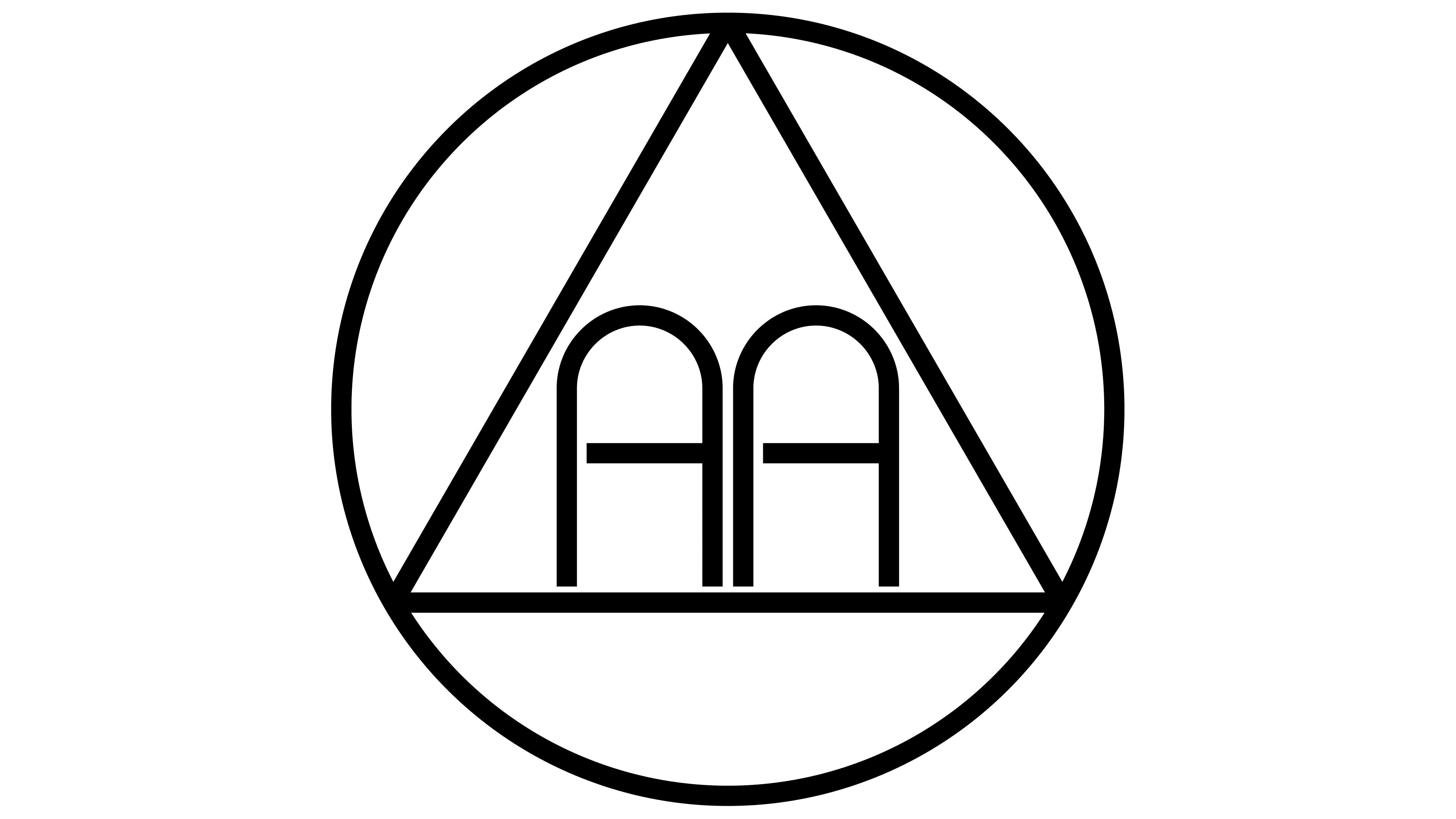
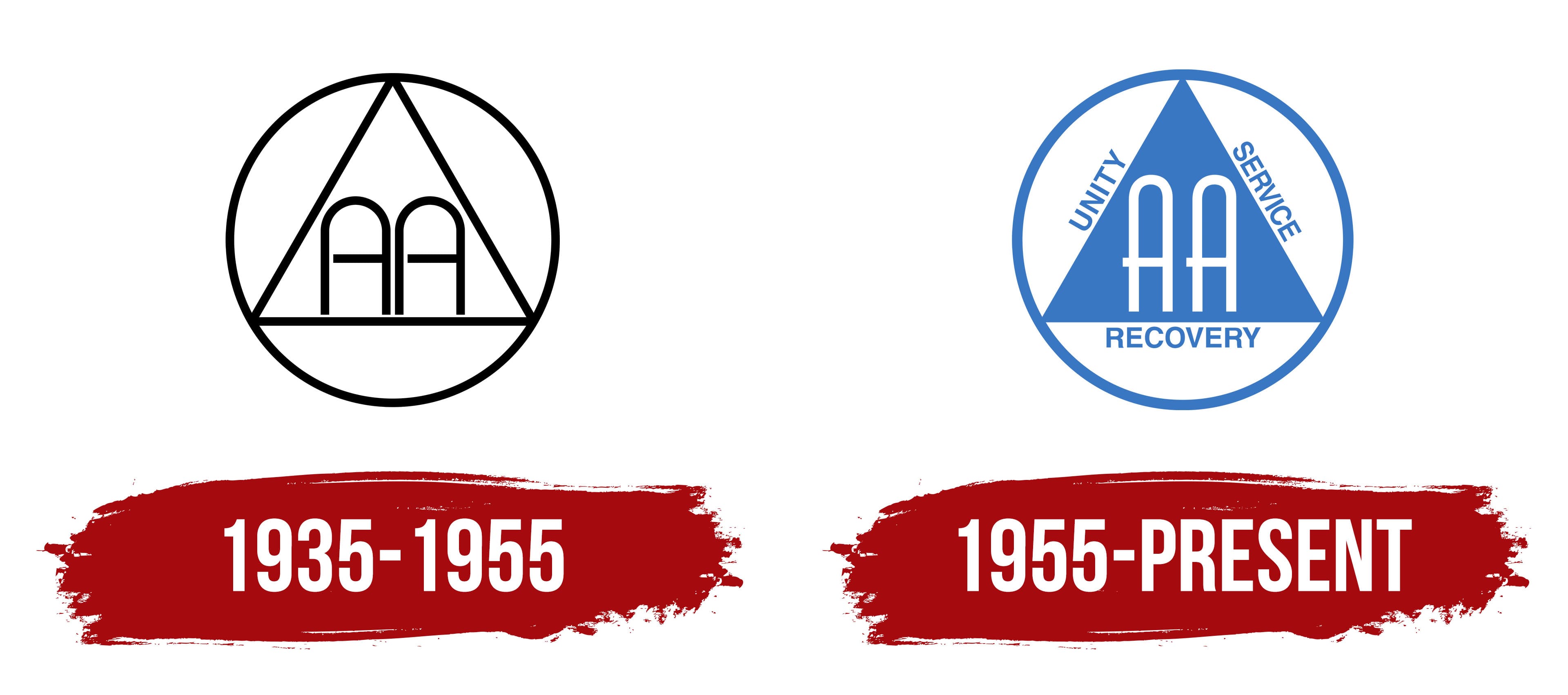
The logo developed for the program founded by Bill Wilson and Dr. Bob Smith in 1935 symbolizes the community, uniting people worldwide. Its fragments convey the principles of the movement and reflect a structural approach to restoration.
The circle in the logo represents integrity, equality, and the process of restoration. Its smooth lines create a harmonious perception and unify the other details. The participants’ unity and common goal are symbolized. An equilateral triangle at the center of the circle expresses the principles of restoration, service, and unity. Its proportions are carefully coordinated with the circumference.
The letters “AA ” indicate the movement’s name inside the triangle. They are made in a minimalistic style that combines simplicity and clarity. The rounded parts of the letters echo the circle, and the horizontal lines add stability.
The logo’s font is geometric, without decorative details. Neat and verified lines emphasize order and consistency. The letter design is consistent with the triangle and circle, enhancing the image’s overall harmony.
Every part of the logo is meaningful. The circle unites the participants, the triangle conveys the program’s three key areas, and the letters emphasize the organization’s name. Together, these fragments create an image that symbolizes change and reminds us of available support.
1955 – today
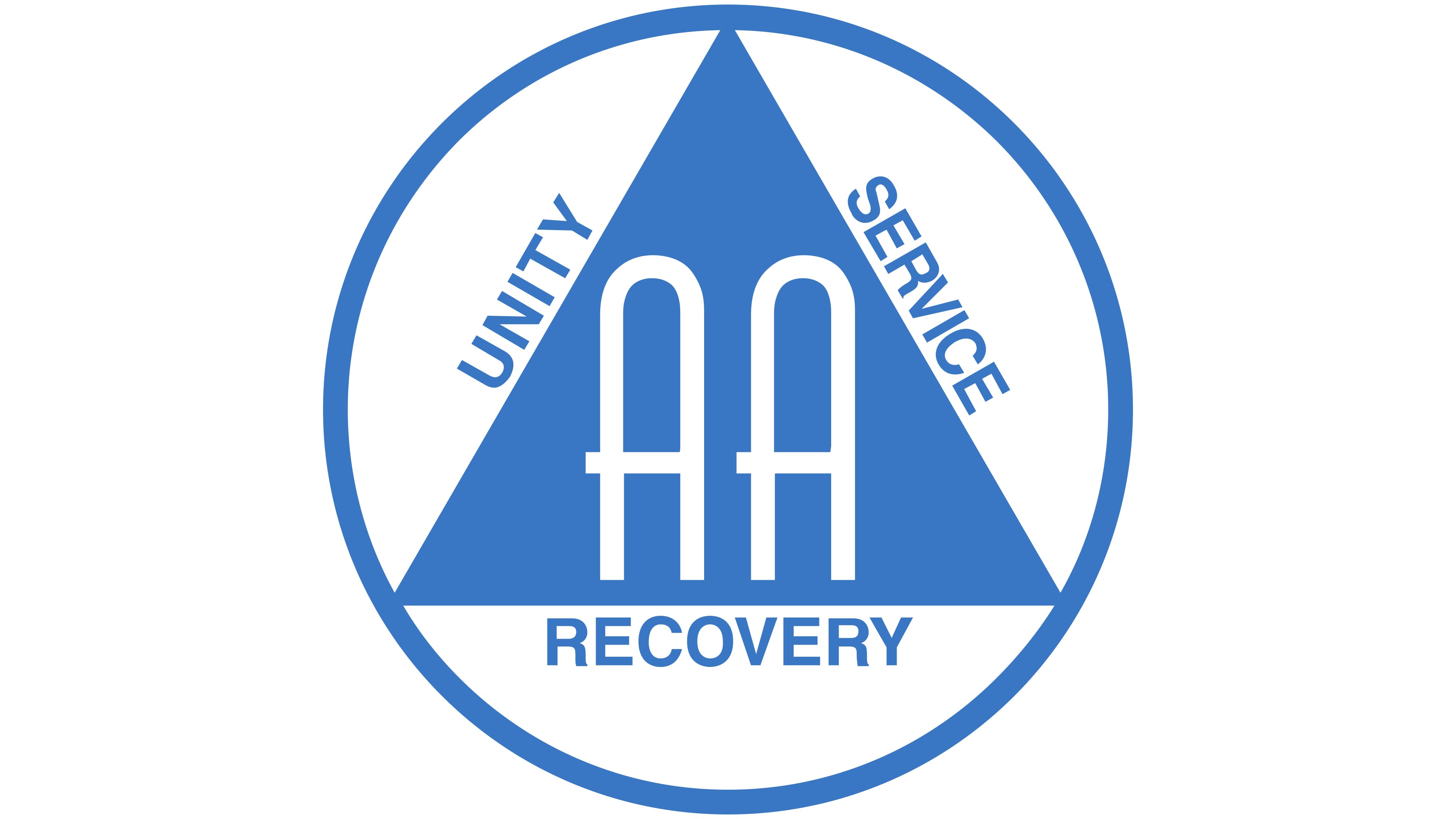
In 1955, at the International Conference of Alcoholics Anonymous, a new symbol reflecting the organization’s development and structural approach was presented. The symbols retained the base but were redesigned to emphasize the program’s key ideas.
The circle remains the central part of the composition, and the triangle inside is now positioned so that it does not touch the circle’s sides. The inner part of the triangle has a continuous bay, enhancing visual perception. The area around the triangle is divided into three equal parts, symbolizing the balance of the program’s principles.
The words “Unity,” “Service,” and “Recovery” are located at equal intervals on the sides of the triangle, emphasizing the equal importance of each direction. Labels clarify the organization’s main ideas.
Inside the triangle are the letters “AA.” Their style has become more elegant; the lines are a little more sophisticated. They retain the rounded tops, organically combined with the logo’s overall shape.
All elements of the composition follow strict proportions. The triangle is at the center of the circle, and the text and letters are placed symmetrically, creating visual balance. The simplicity of the geometry emphasizes the program’s clarity and organization.
The blue color used for the triangle gives the image softness and tranquility. The shade expresses hope, peace, and inner harmony.
The logo’s redesign reflected the movement’s independence, mission, and readiness to accept new members.
