


 Anheuser-Busch Logo PNG
The Anheuser-Busch logo looks elegant, lofty, and magnificent. It symbolizes reaching new heights and a long journey through time. The logo presents the brand as exclusive and appealing to true beer connoisseurs.
Anheuser-Busch began in 1852, when German immigrant Eberhard Anheuser, a St. Louis soap and candle manufacturer, took over the bankrupt Bavarian Brewery as repayment for debt. The brewery sat in cool cellars near the Mississippi River, ideal for fermentation and storage, though Anheuser had little brewing experience.
In 1861, his daughter Lilly married Adolphus Busch, a young German immigrant who sold brewing equipment and understood the beer trade. Busch became the driving force behind the business. In 1879, the company was renamed Anheuser-Busch Brewing Association, and after Anheuser died in 1880, Busch became its president.
In the 1870s, beer rarely traveled far because it spoiled in transit. Busch aimed to make a national beer, using Louis Pasteur’s pasteurization method, refrigerated railcars, and ice warehouses along rail routes. In 1876, he launched Budweiser with Carl Conrad, named after Budweis, the German name for České Budějovice. After Conrad went bankrupt in 1882, Busch bought the Budweiser trademark. Michelob followed in 1896.
By 1901, the St. Louis brewery produced over one million barrels a year. During Prohibition, starting in 1920, August Anheuser Busch Sr. shifted production to yeast, malt extract, ginger ale, nonalcoholic beer, and ice cream. Brewing resumed in 1933, and Clydesdale horses delivered Budweiser. After World War II, Anheuser-Busch opened new plants in Newark, Los Angeles, and Miami. Bud Light arrived in 1982, and in 2008, Anheuser-Busch was acquired by InBev for about $52 billion.
Meaning and History

The company’s logos combine respect for America and the founders’ family values. Initially, it expressed gratitude to the country for the opportunities it provided; later, it became an aspiration to elevate the nation with an outstanding product known worldwide. Family values are also reflected in the emblems. Although different generations of the Busch family managed the company, the letter “A” has always remained in the logo in honor of the first owner (Anheuser’s father-in-law) and the first Busch family representative, Adolphus.
The Anheuser-Busch logo emphasizes the quality and brewing traditions passed down through generations. This aspect highlights the Busch family’s long-term vision and dedication to their business, making their products truly unique and prestigious.
What is Anheuser-Busch?
A large company headquartered in St. Louis that produces beer, energy drinks, and bottled water. It was the first company in America to transport its products over long distances using refrigerated railcars, selling bottled, pasteurized, and mechanically cooled beverages.
1879 – 1936

The company’s first visual logo appeared when Adolphus Busch took over the business management. Adolphus was a progressive and experienced entrepreneur who elevated the company. Beyond numerous innovations, he helped create a unique identity.
The compact logo made it easier to apply to labels. It consisted of a large letter “A” in an old-style font, with an eagle standing on the US flag inscribed within it. The eagle is an American symbol representing greatness, nobility, and superiority over competitors. The bird in the emblem seems ready to take off, its wings lifted. This sign heralds the company’s prosperity.
The letter “A” corresponds to the company’s name at the time: E. Anheuser Company’s Brewing Association. Although the name soon changed, the first letter of the father-in-law’s surname, Anheuser, remained in the logo throughout the centuries. Perhaps Busch also imbued the symbol with another meaning: the first letter of his name, Adolphus.
The flag added a patriotic touch to the logo, suggesting that, thanks to America, a German immigrant could establish his business and achieve the American dream. This reflects the idea of the United States as a land of opportunity. The logo also emphasizes that the company developed and sold beer in America, as symbolized by the emblem’s flag.
Beyond the original description, the first Anheuser-Busch logo also spoke to the company’s strong roots and values. It reflected respect for the traditions and culture on which the business was founded and served as a guarantee of success and long-term market sustainability.
1936 – 2022

2022 – today
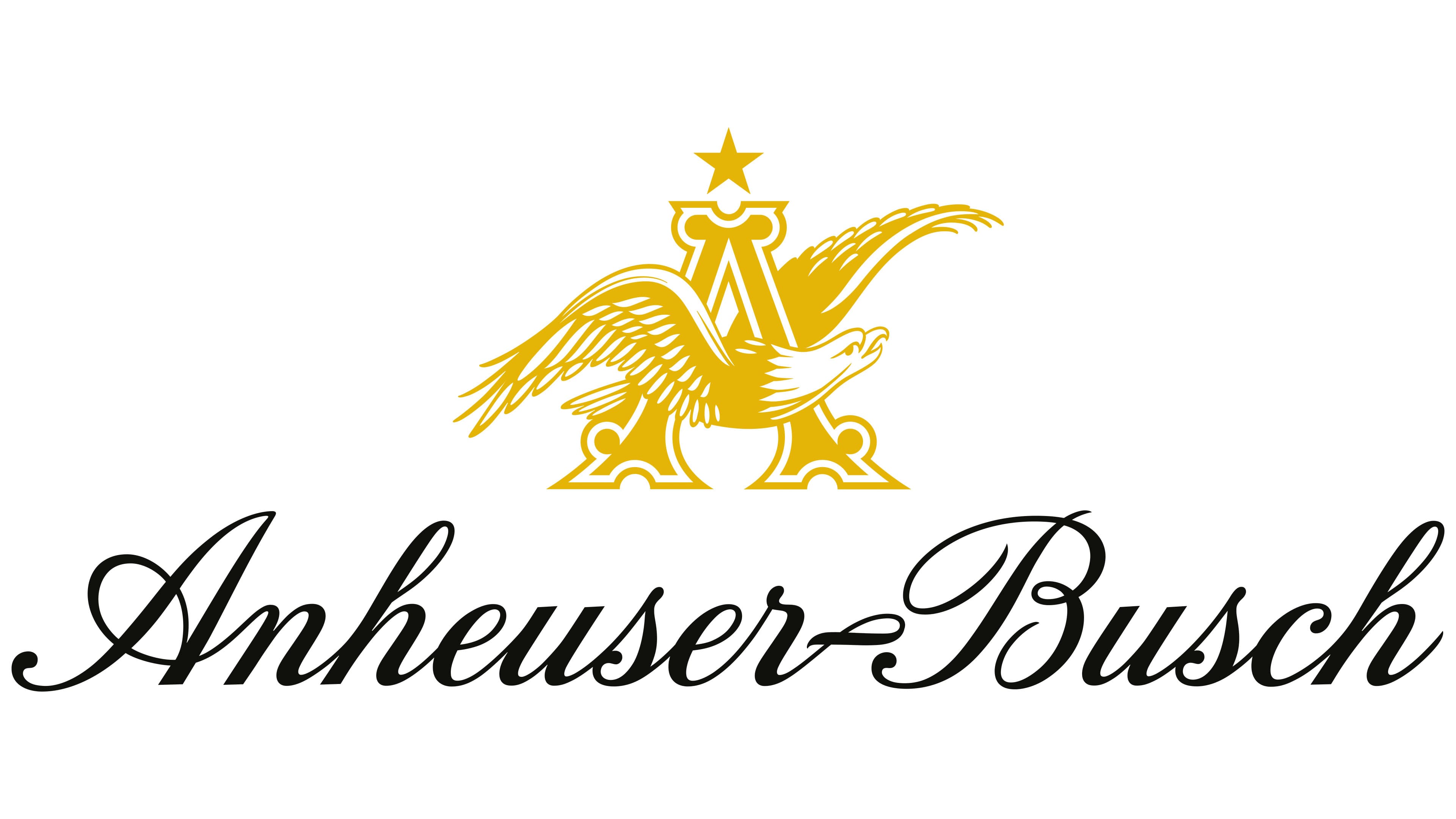
Since 2022, Anheuser-Busch has been part of a giant brewing corporation that controls 30% of the global market. The company’s development and prosperity are reflected in the logo.
The emblem’s overall image is similar to the previous one, but it has gained more prestige and shine. The logo’s golden eagle and letter “A” symbolize the company’s financial stability and achievements. The image emphasizes experience and greatness. In the new corporation, Anheuser-Busch is the oldest.
The mirrored eagle, turned right, suggests the company is looking toward the future, development, and growth. The eagle no longer stands on the American flag; it soars upward. AB InBev, which includes Anheuser-Busch, is a global manufacturer whose products are known far beyond America. Therefore, the American symbol was removed.
Below the image, the company’s name is written in an elegant font with beautiful flourishes. This inscription symbolizes nobility, high quality, and the beverage’s unparalleled taste. An interesting fact: although the company is called Anheuser-Busch, the brewery was founded by George Schneider in 1852, and Eberhard Anheuser became the owner only in 1860. The Busch surname was added in 1979, a year after Eberhard’s death, and after 20 years of Adolphus Busch’s work and even involvement in the company. However, among all owners, Adolphus made the greatest contribution to the company’s development and global recognition.
The updated logo reflects the company’s adaptation to modern market demands and its readiness to embrace an innovative product approach. This makes the logo relevant and in demand while maintaining a historical connection.
Font and Colors
The logo’s main colors are gold and white. Gold symbolizes wealth, luxury, and leadership, reflecting the company’s dominant market position. White symbolizes renewal, new beginnings, and readiness to enter the next century.
The logo font resembles “Calligri Bold Italic” but leans toward a handwritten execution. This emphasizes the company’s uniqueness and family nature, as one family has managed the business for several generations.