


 AXE Logo PNG
The AXE logo is very masculine and strong. The emblem represents a company that stands firm and produces products for real men. The brand’s fragrances are long-lasting and project an image of an attractive, brutal macho man.
AXE grew out of an earlier Unilever experiment. In 1979, the company launched Impulse, a scented deodorant for women that combined fragrance with basic hygiene. Its success suggested a similar concept could work for men.
On June 6, 1983, AXE debuted in France with three variants: Musk, Amber, and Spice. The launch in a major perfume market supported its positioning as a deodorant with a fragrance identity. Unlike clinical competitors, the product was framed as a tool of attraction.
From 1985, the brand expanded across Europe. Trademark issues forced a different name in some regions. In the UK, Ireland, Australia, New Zealand, and China, the brand was called Lynx, while in South Africa it was sold as Ego until 2002.
In 1987, AXE added shower gels. The range evolved through annual scent releases. By 1990, geographic names such as Africa, Alaska, and Java appeared. Lynx Africa became one of the best-selling male fragrances in the UK, exceeding 400 million units by the 2020s.
Between 1996 and 2002, consultant Ann Gottlieb, also linked to Calvin Klein fragrances, led development. In 1999, AXE entered the Indian market, competing with Rexona and Denim.
In 2002, AXE launched in the US, targeting younger consumers and competing with Procter & Gamble’s Old Spice. Campaigns built around the “AXE effect,” developed by BBH London, relied on exaggerated attraction scenarios and expanded into viral online content by 2004.
The product line expanded to include sticks in 2004, shower gels in 2005, hair care in 2009, and face care in 2013. Axe Bullet, a compact spray, appeared in 2009.
By 2016, the brand revised its messaging with the Find Your Magic campaign, shifting focus from a single image of attraction toward individual style and identity.
Meaning and History
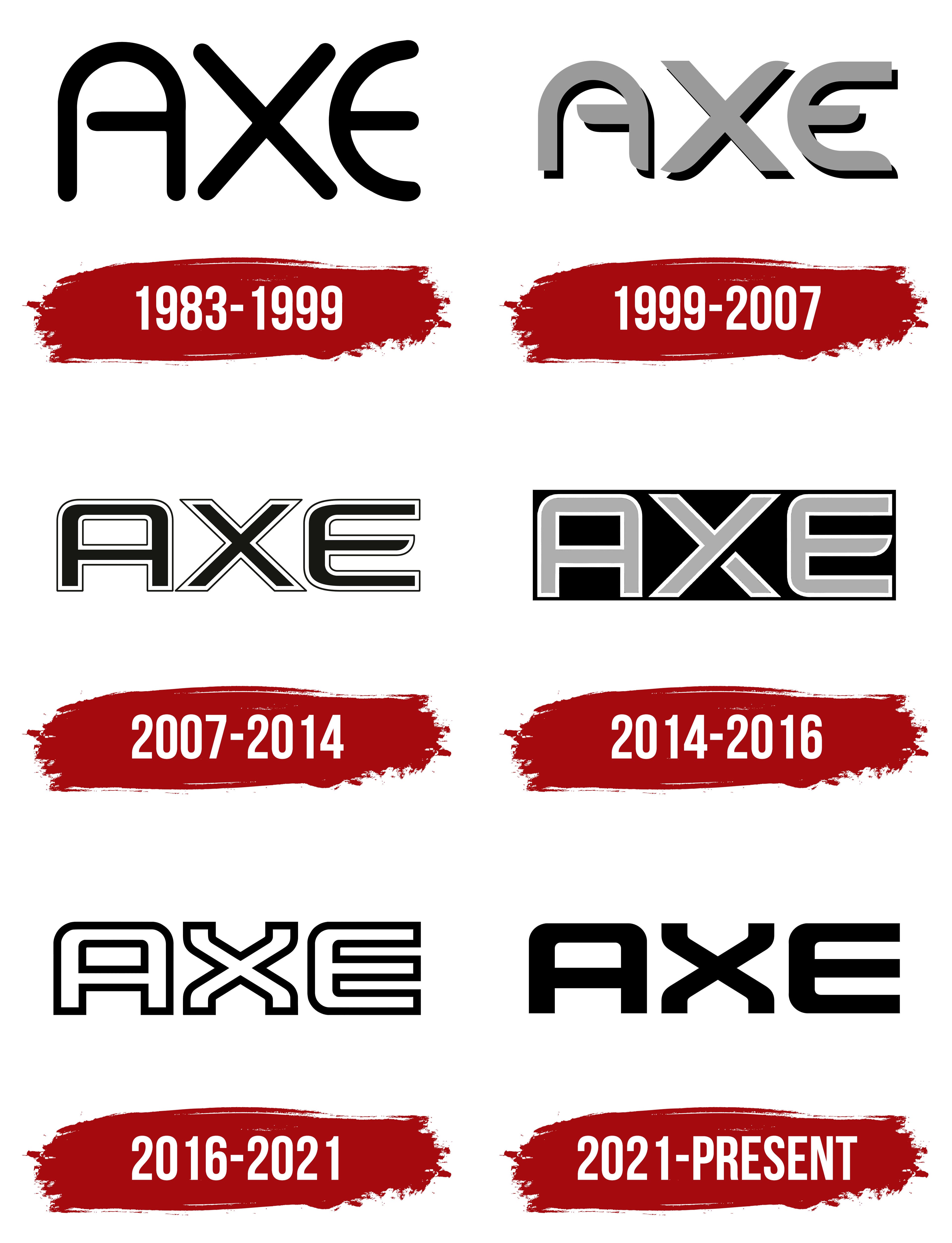
The brand had four logos with different designs. The only thing that unites them is the strict, minimalist inscription “AXE.”
What is Axe?
Known as Lynx in some countries, this brand has become a cultural phenomenon in men’s grooming, turning routine hygiene into a bold expression of attractiveness and confidence. Offering a wide range of products from body sprays and deodorants to shower gels and hair care items, the company, part of Unilever, has mastered crafting unique scents ranging from modern, sophisticated blends to classic musky notes. Each fragrance in the line is designed to make a strong impression, appealing to young men looking to highlight their individuality.
1983 – 1999

The first version of the emblem is elegant. “A” and “E” are formed by smooth semicircular lines. “X” consists of two diagonal stripes of equal length and thickness. The streamlined lettering emphasizes the absence of serifs and other decorative elements.
This logo is notable because the connecting stroke of “A” is too short. It “hangs in the air” because it doesn’t reach the letter’s left side. The color palette is standard: black is the main color, and white is the background.
1999 – 2007
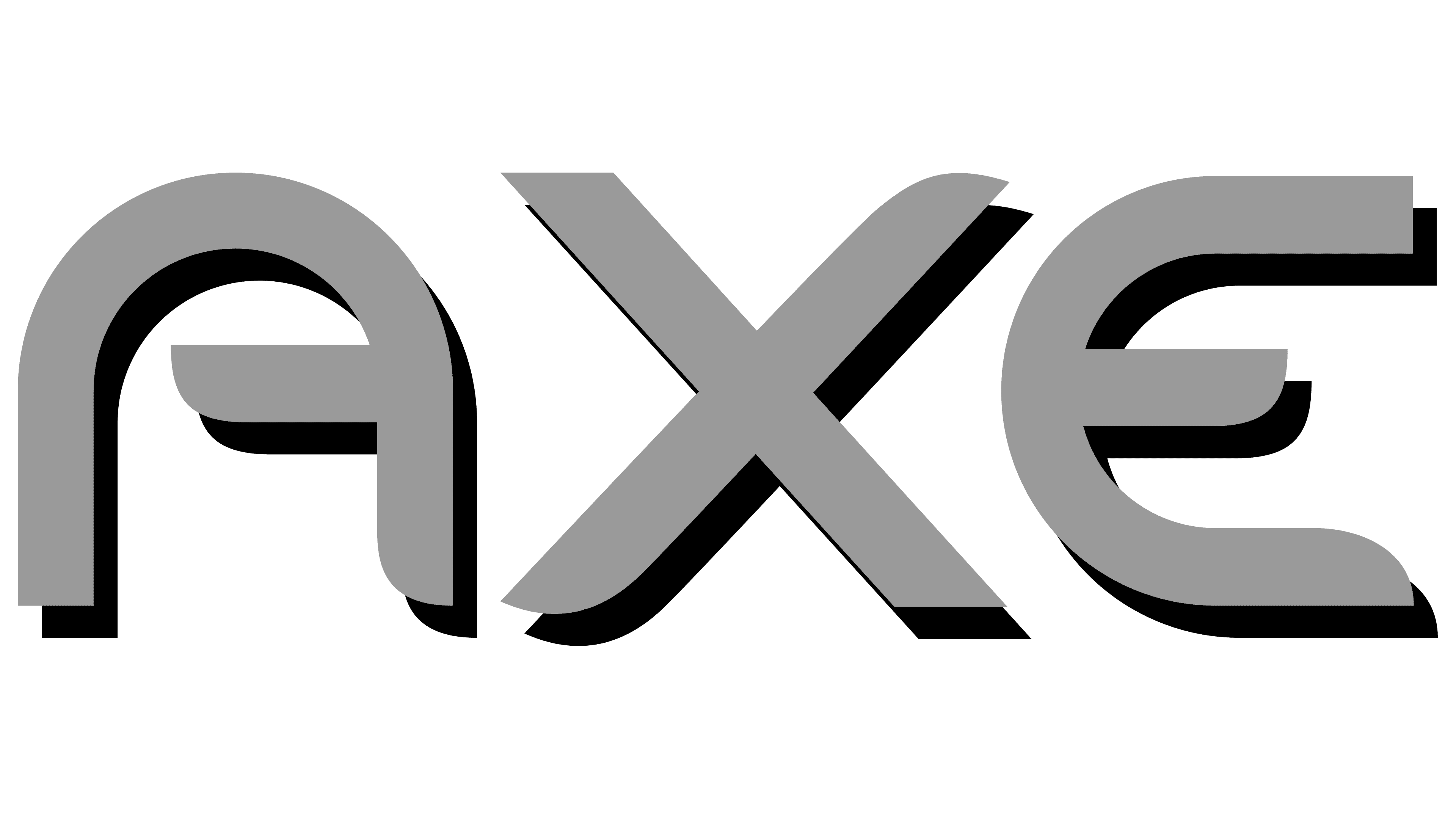
The font remains the same; only small details have changed. The printed characters now have angles that were not present on the 1983 emblem. The proportions have changed only slightly: the inscription seems compressed horizontally. The center stroke of the “E” is shortened. The decoration uses gray with black outlines on the inside. Dark shadows give the image a subtle 3D effect.
2007 – 2014
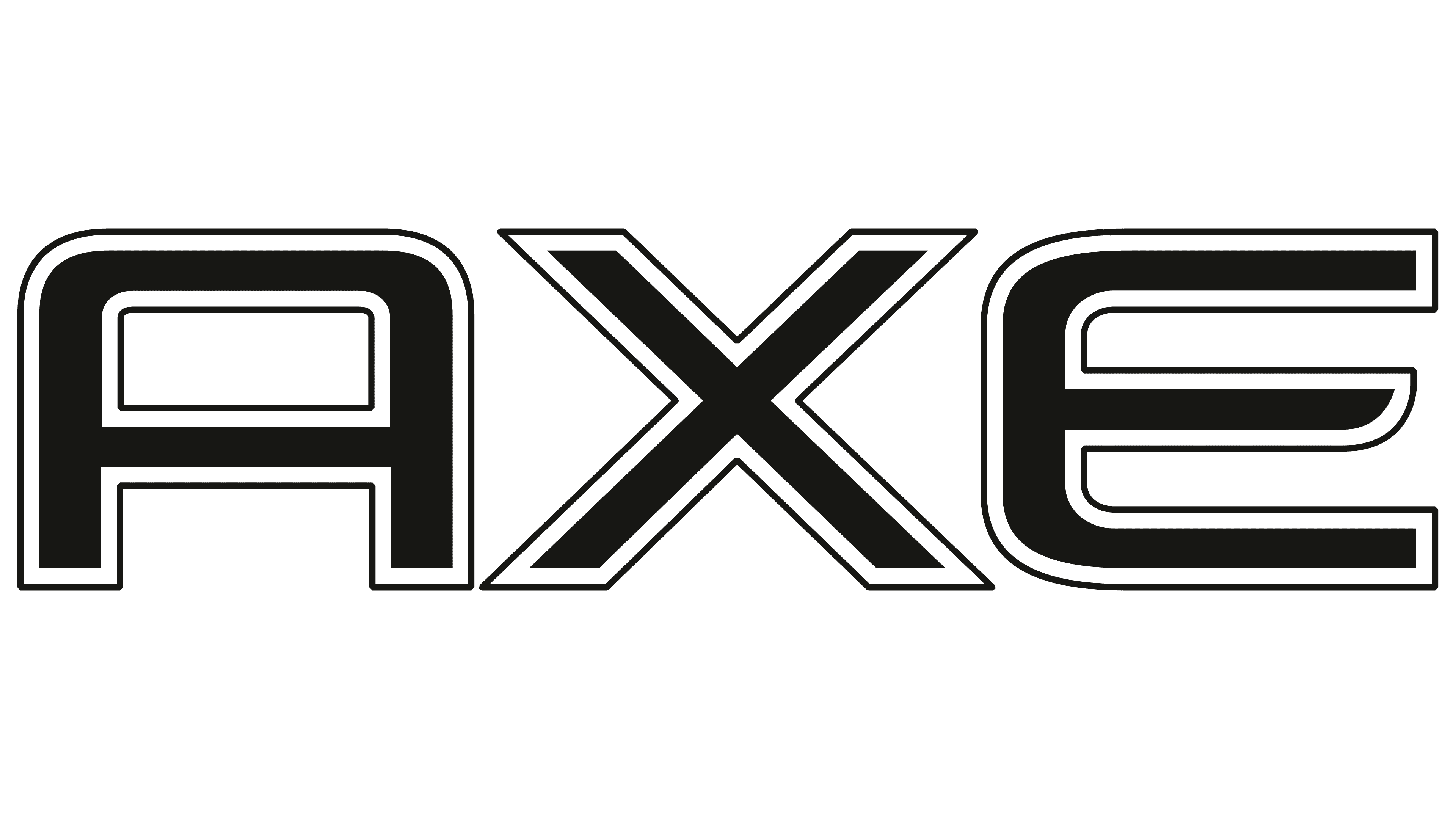
In 2007, the designers redesigned the logo again. They abandoned the semicircular lines of the “A” and “E,” giving them a rectangular shape. Regardless, the letters remained streamlined thanks to the rounded corners. The developers also lengthened the horizontal strokes at the “A” and “E” to achieve harmonious proportions.
As for the design, it has become more original. Now the inscription is not just one color; a double outline surrounds it. Each printable character is first outlined in white and then framed in black.
The company sometimes added its advertising motto to the existing logo: “The AXE Effect.” But the augmented version was rare and was used in exceptional cases.
2014 – 2016
In 2014, the logo’s font changed little, and on products, the new company logo appeared more against a dark background. Moreover, the inscription itself was made in a strongly contrasting color. At the “X,” the lower-right leg was split to give the logo a modern, masculine feel.
2016 – 2021
The final redesign took place in 2016. This time, graphic artists focused on the letter “X.” They gave it a unique shape, slightly curving at the ends. They also changed the color scheme. The word turned white, and the outline widened and blackened.
Around the same time, Lynx introduced its current logo, the “twin” of AXE. Its name is written in a similar style: the printed characters look original because of their rounded corners.
2021 – today
The designers used the previous logo and proposed a new black version. To do this, they used the edging color to fill the letters, leaving no white voids inside. The shape and style of the glyphs remained the same.
Font and Colors

Since its inception, the AXE logo has undergone several major redesigns. The first added a line and a shadow, which gradually became a stroke. The second touched on the letters’ shape: after many years as streamlined symbols, they became sharper and more geometric. Therefore, the modern version incorporates all the noted changes: the edging strip along the perimeter of the signs and strict angularity combined with smooth transitions. The developers have removed explicit rounding.
The emblem has no standard typeface; it is custom-designed for this trademark. It also resembles some sans-serif fonts, particularly in its grotesque style and lack of serifs. Each letter is outlined with a thin perimeter line, so it looks hollow.
The inscription uses a monochrome color palette. The common version contains white characters on a white background; the commercial version contains black characters on a black background. They look like the original and its negative print. At the same time, the letter edges are mirror-opposite: light on a dark substrate and vice versa.