


 The Body Shop Logo PNG
The logo shows the care with which the brand’s cosmetics surround the client’s skin. The Body Shop logo conveys deep nourishment and moisturization, the products’ delicate texture, and the perfect combination of active ingredients.
In 1976, Anita Roddick opened the first The Body Shop store in Brighton to support her family. The shop launched with 25 products, using reused medical bottles and handwritten labels. Local press coverage drew early attention.
In 1977, she sold 50% of the business, and Gordon Roddick introduced franchising as a growth model. From 1978, the brand expanded across the UK and opened its first international store in Brussels in 1980. By 1990, the network exceeded 500 locations. In April 1984, shares were listed on the London Stock Exchange at 95 pence, with the founders retaining a significant stake.
The brand built its identity around sourcing and campaigns. In 1987, Community Fair Trade was launched to purchase ingredients directly from producers in developing regions. In 1989, The Body Shop Foundation was established. In 1994, a campaign against animal testing positioned the company against industry practices used by firms such as L’Oréal and Estée Lauder.
In 1998, Anita Roddick stepped down as CEO but remained involved in leadership. In March 2006, L’Oréal bought the company for £652.3 million, prompting customer criticism. Anita Roddick died in September 2007, leaving £51 million to charitable causes.
Under L’Oréal, the business expanded to more than 3,200 stores in 66 countries, though growth slowed in some markets. In 2017, Natura & Co bought it for £880 million. In November 2023, Natura sold the brand to Aurelius for £207 million. In February 2024, the UK division entered administration, with insolvency procedures initiated in the US, Canada, Germany, and Belgium.
Meaning and History
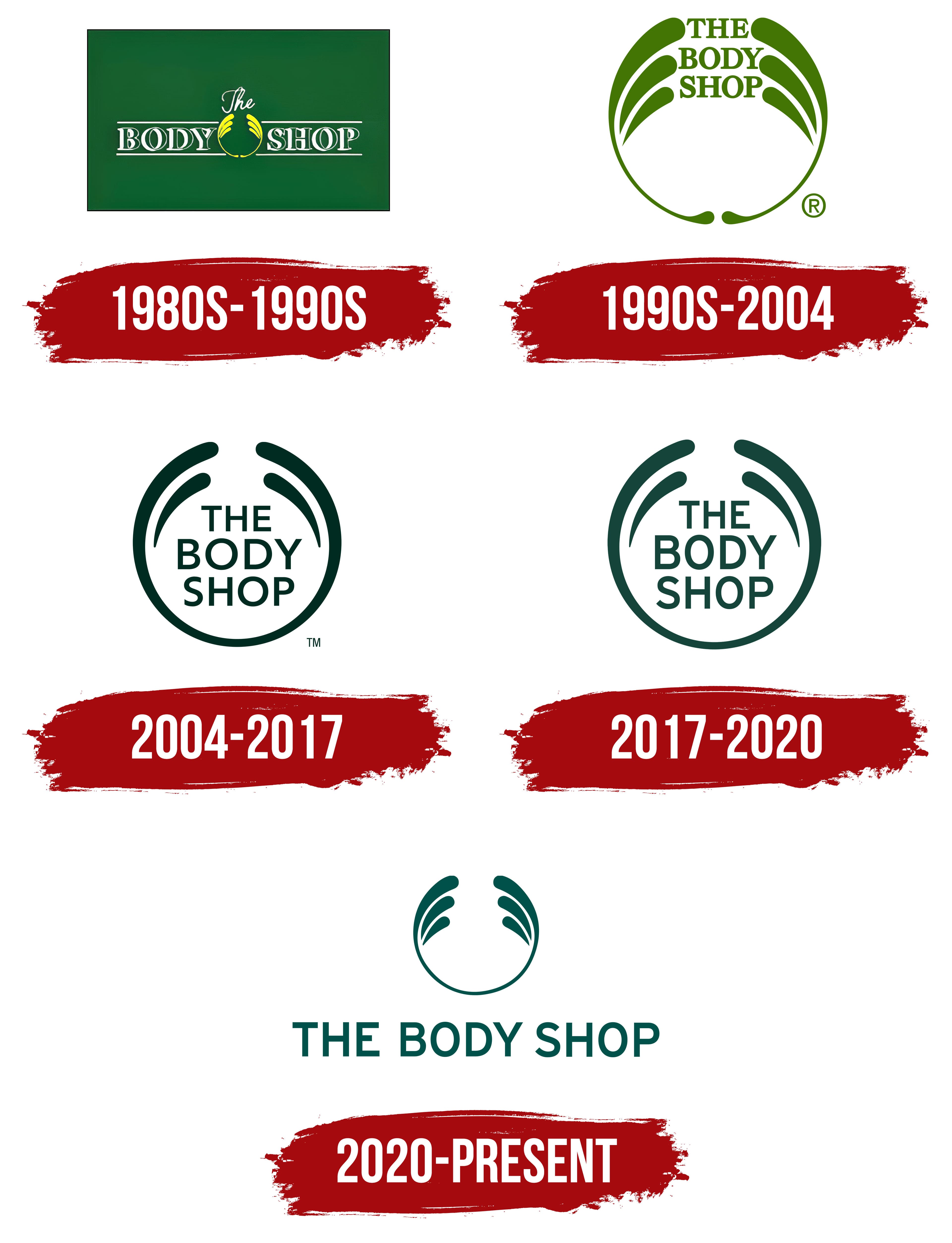
Over the years, The Body Shop’s branding has undergone several updates. As a result, the brand has had three logos. They share a unified color (green) and shape (elongated feathers).
What is The Body Shop?
This brand sources signature ingredients worldwide and offers a wide range of organic cosmetics across categories, including Skincare, Body Care, Hair Care, and Makeup. Created in collaboration with community organizations, the product lineup includes popular collections like British Rose for gentle hydration, Shea Butter for intense moisture, and Tea Tree for blemish-prone skin. The brand is known for combining pleasant sensory experiences with natural ingredients to create products that evoke beauty and care.
1976 – 1980s
The Body Shop was launched in 1976 and, in the early years, sold cosmetic products only in its home country, the United Kingdom. The company’s first logo has not survived, but it may have inspired the famous wreath-shaped symbol used today.
1980s – 1990s
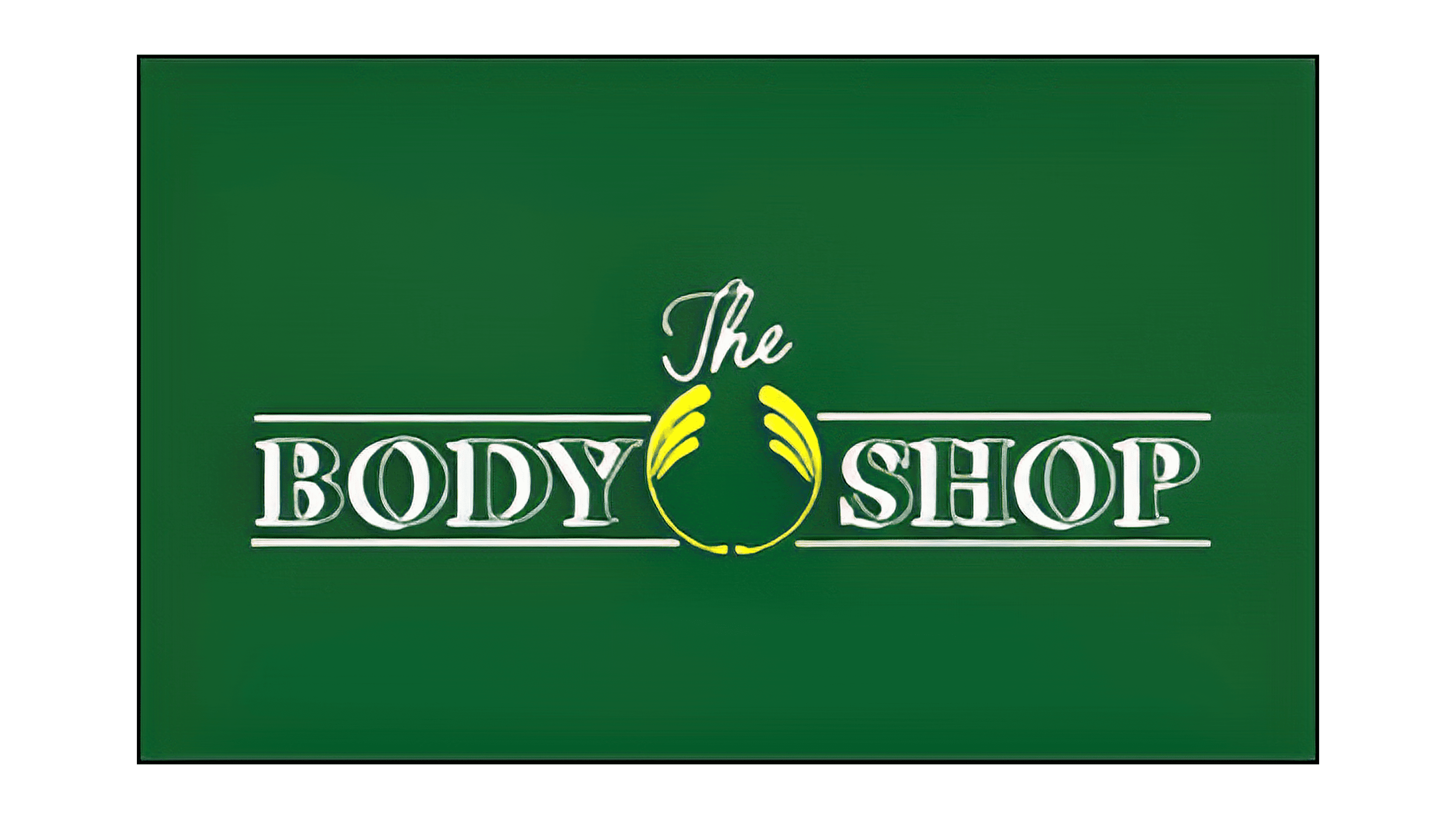
The debut version consists of graphics and text on a green background. The brand name sits in the center in a drop shape. They are elongated and grouped in three on each semi-oval line. At the top is the italicized word “The”; to the left is “Body,” and to the right is “Shop,” separated by horizontal lines at the top and bottom.
1990s – 2004
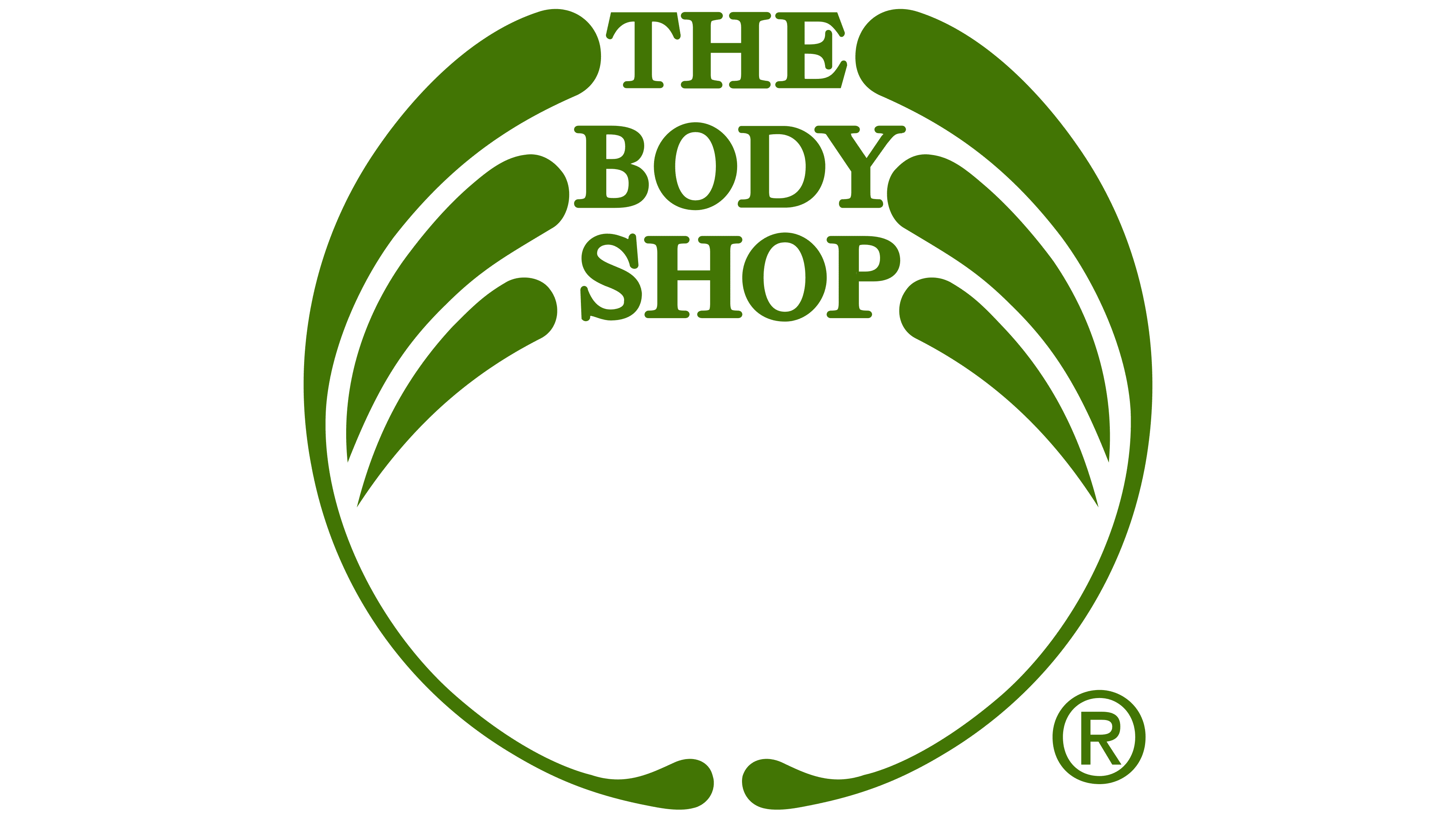
In the 1990s, the logo was still a wreath-like ring-shaped symbol. It consisted of two light-green fragments, each with drop-shaped end extensions. Four more separate “drops” sat inside at the top. They were arranged in mirror image: two on the right and two on the left. They were separated by the three-line inscription “THE BODY SHOP.” It was in bold capital letters with large serifs.
2004 – 2017
In 2004, the logo changed color to turquoise. The number of freestanding “drops” was reduced to two. The lettering moved inside the ring, and instead of a contrasting serif, the designers used a grotesque with lines of approximately equal thickness.
2017 – 2020
In 2017, the designers repainted The Body Shop logo in a lighter shade of turquoise and changed the font, stretching the letters vertically. They also shortened the middle stroke of the letter “E.”
2020 – today
In 2020, the logo underwent a radical change, allowing The Body Shop to position itself as a progressive brand not afraid to experiment. As a result, the lettering has moved outside of the stylized ring. It now sits at the bottom and occupies a single line, since the frames no longer limit the space beside it. The “wreath” is at the top and contains six “drops”: two of them are connected by a semicircular line, and the rest are not connected to anything. The color is a rich turquoise.
Font and Colors
The logo is stable, as all variants contain the same details: the name, an open circle, and elongated strokes resembling drops or feathers.
The lettering is in four font types. In the first, the logo is in italics and a 3D font with shadows; in the second, classic serif letters; in the third, smooth sans-serif. The color stays consistent throughout, ranging from white to green in several shades.
FAQ
What does The Body Shop logo represent?
The splashes on The Body Shop logo symbolize the brand’s cosmetics. The ring surrounding the lettering represents care and protection.
When was The Body Shop founded?
The company was founded on March 27, 1976. It also opened its first store then.
Who owns The Body Shop now?
In 2017, The Body Shop brand was sold to Brazilian company Natura & Co Holding S.A., the world’s fourth-largest cosmetics manufacturer, which also owns Avon.
What is The Body Shop’s mission?
The Body Shop’s official website states that the company is committed to creating a beautiful and just world.