


 Better Business Bureau Logo PNG
Although the BBB logo is monotonous, it is dynamic. Hidden energy shows in elements tied to the desire to move forward, develop, and overcome difficulties to reach a long-awaited goal. The emblem also reflects hope for improvement and belief in a brighter future.
The Better Business Bureau grew out of a trust crisis in early-20th-century American advertising. In 1906, a federal case against a major soft drink maker drew attention to misleading claims, and by 1911, Samuel Candler Dobbs of the Associated Advertising Clubs was publicly arguing for truth in advertising. In 1912, Boston created the National Vigilance Committee to monitor dishonest ads.
Local groups soon appeared in New York, Minneapolis, and other business centers. The first full local bureau opened in Minneapolis in 1914. In 1916, the National Vigilance Committee became the Better Business Bureau, expanding from ad oversight to wider business ethics. New York’s bureau was incorporated in 1922, and in 1927, it added a committee focused on financial and trade fraud.
The BBB network grew through the 20th century. In the 1960s and 1970s, the consumer rights movement, linked to figures such as Ralph Nader, pushed the organization toward voluntary self-regulation as an alternative to stronger government action. In 1970, the Council of Better Business Bureaus was formed to coordinate standards. By 1989, about 180 local bureaus were handling more than 10.7 million consumer inquiries a year.
The digital era changed its role. BBBOnline launched in the late 1990s as Angie’s List, and later, Trustpilot entered the consumer reviews market. In 2007, BBB adopted “Start With Trust,” and in 2009, it introduced A+-F ratings. A 2010 pay-to-play scandal forced reforms after paid accreditation was linked to higher grades. In 2011, U.S. and Canadian BBB structures merged into a North American system. By 2013, its database covered nearly 5 million companies, including more than 400,000 accredited members.
Meaning and History
The history of the now-renowned Better Business Bureau (BBB) International in the U.S. and Canada dates back 109 years. This type of organization was widespread in medicine at the time; it offered all sorts of powders, ointments, and liquids under the guise of drugs, though they were not. For the most part, these were harmless mixtures that posed no threat to human health. But patients did not receive appropriate and necessary treatment, which often became the cause of death.
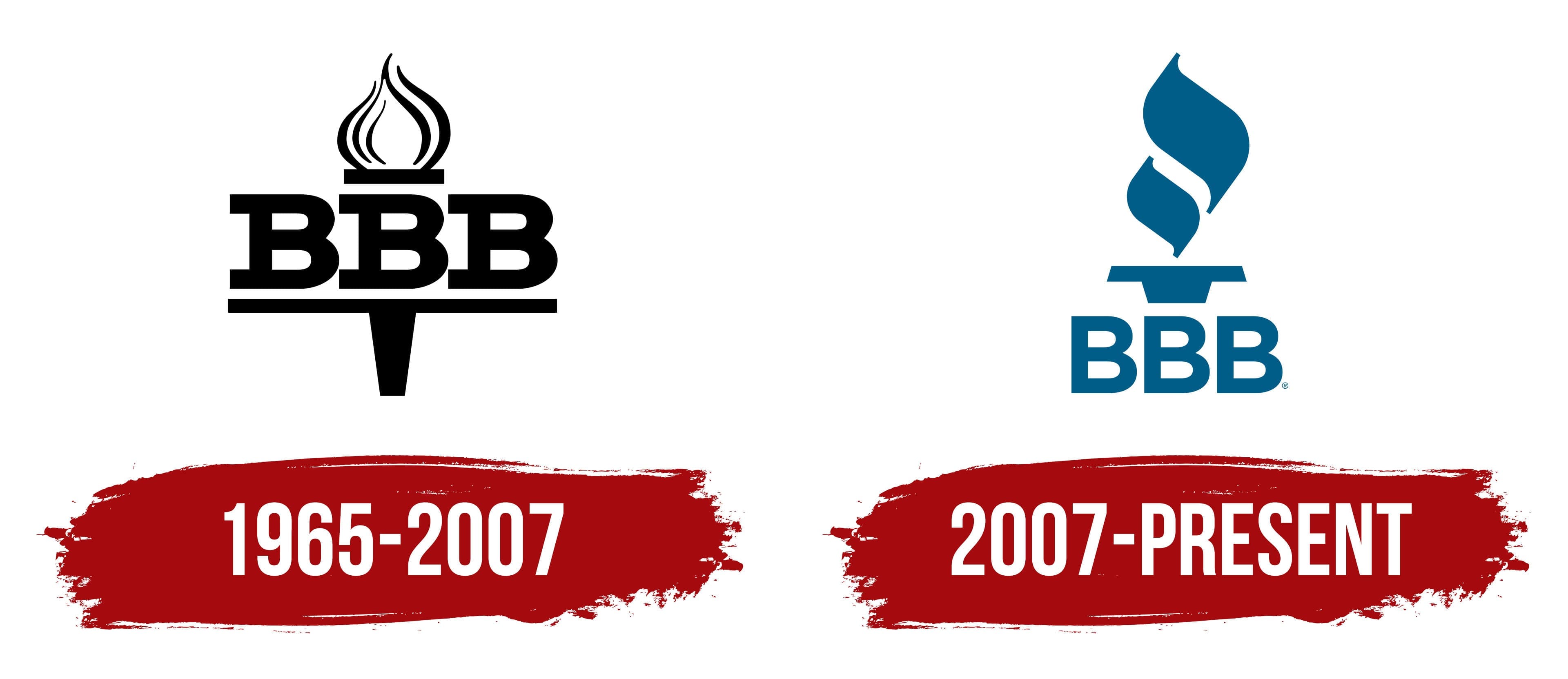
During its formation and development, the Better Business Bureau spent significant time and money informing potential members about its goals, tasks, and ongoing changes. It also focused on developing its brand marks and corporate style, which the company takes special care with. The company has renewed it only once since 1965. There were no fundamental changes. The company preserved almost the entire basic concept of the old emblem. This conservative approach to its history, reflected in how management handled these decisions, led only to minor adjustments to meet modern design requirements.

It is believed that since its inception 109 years ago, the association has grown and earned undeniable international credibility without relying on modern technology for self-promotion or “adjusting” to the desires of most promotional product consumers. One factor that supports confidence in these decisions is the association’s peculiarity: it targets a narrow, specialized circle of product consumers. Reliability, the absence of complaints, and high performance are the criteria that ensure the self-sufficiency of the current marketing.
1965 – 2007
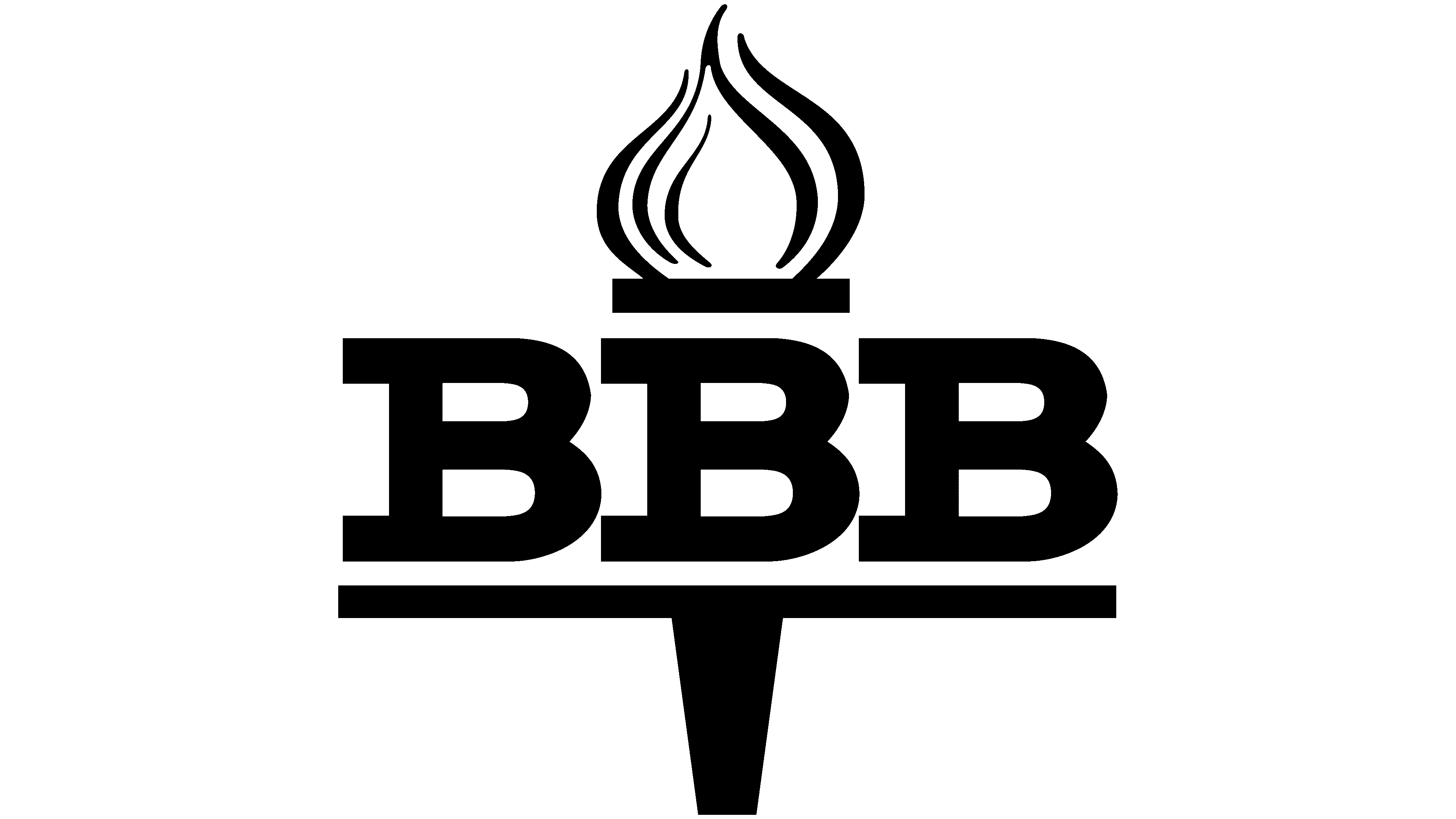
In 1965, the association’s management designed a logo based on its requirements, vision of relevance, and current goals. The association adopted a stylized torch as the main logo, symbolizing “bearing light” and building confidence in the twilight of modern business. Underneath it was an abbreviation of the name made up of three large letters, “B,” with the base of the torch beneath it. However, this design was not unique. The torch symbol appears on the emblems of many educational institutions and sports organizations. It didn’t make the association’s logo stand out or look attractive. It had to do with the font’s design – usual, not accentuating the peculiarities of the owner.
2007 – today
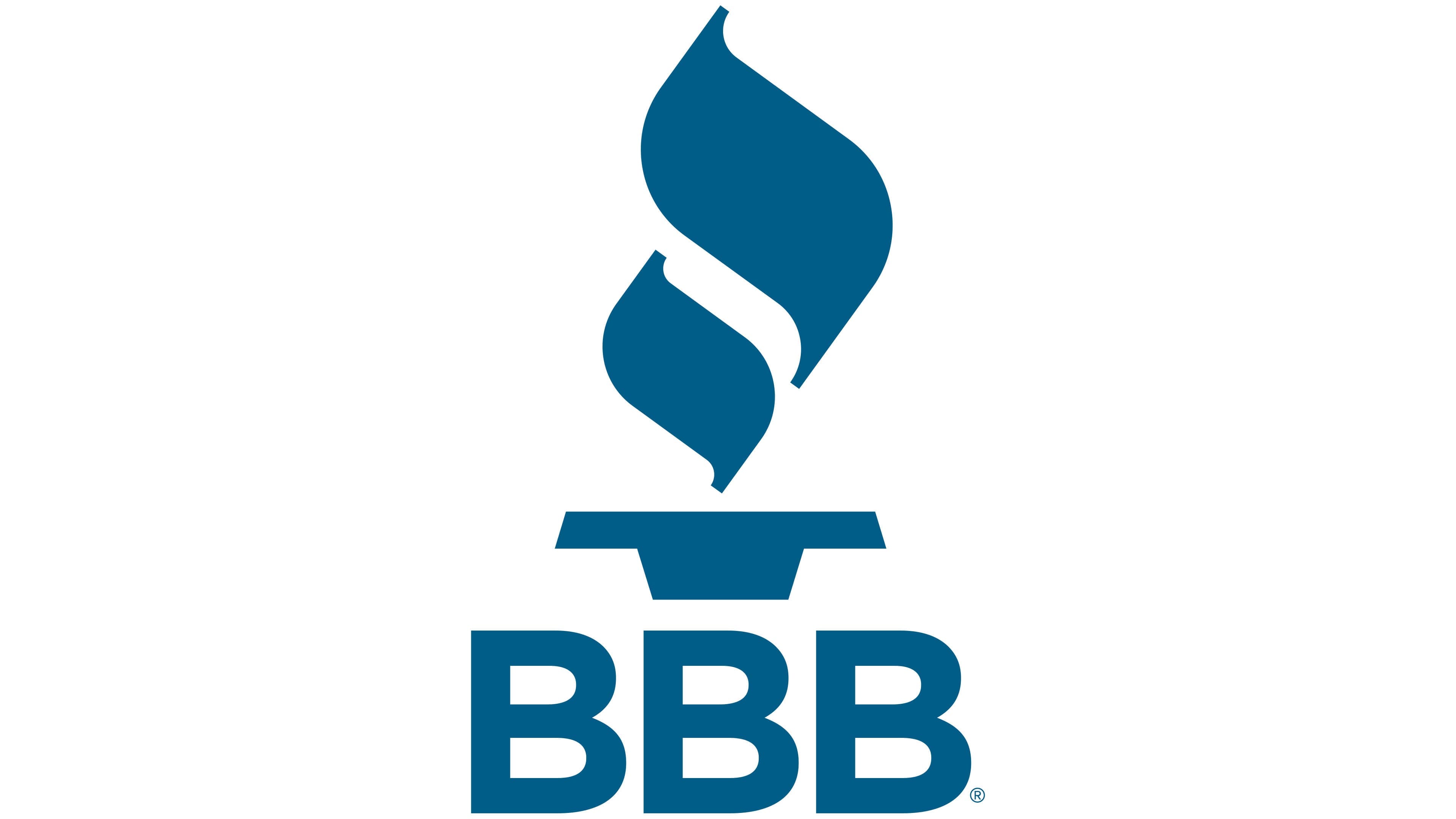
2007 was a year of change. The 21st century saw many corrections in many trends, including in our views of the Better Business Bureau. The decision to focus on self-promotion led to the creation of a logotype better suited to the time: high speed and the catastrophic lack of time for each person on the planet. The designers conveyed dynamism and minimalism through every element of the logo while staying true to tradition.
Practical considerations also dictated this minimalist solution for the company’s logo. Because the logo must fit on association member emblems, we had to consider space constraints. Minimization made it easier to place the BBB-accredited members’ mark and the association mark on the emblem while preserving the overall composition’s readability.
Font and Colors

The symbols were painted blue on a white field, giving them a more noble appearance. The torch flame is divided into two elements that, by their shape, effectively convey upward movement. Their ends also guide the eye from left to right, corresponding to the conventional designation of everything positive. This is the attitude that should be formed in all who turn to the association for the opportunity to strengthen their business confidence in themselves and others in various directions. By removing the burner handle, the designers reduced the graphic burden. By placing the acronym letters below the torch and extending them beyond its edges, they created the impression of a solid foundation. This unshakable foundation guarantees reliability and sustainability. A modern typeface and a clearer image improved the text’s readability.