


 Henkel Logo PNG
Henkel uses the oval’s strength and vibrancy in its corporate style, which features this shape. Its horizontal position symbolizes the brand’s financial success and business development. At the same time, it demonstrates the enterprise’s success, stability, and charisma.
Henkel & Cie. was founded on September 26, 1876, in Aachen by Fritz Henkel and two partners. The first product, a sodium silicate detergent, stood out for its packaged sales rather than bulk distribution. In 1878, Henkel became the sole owner and introduced Henkel’s Bleich-Soda, one of Germany’s first branded detergents.
By 1883, the company had expanded its product range to include starch, cleaning products, and shoe care products. In 1886, Henkel opened its first foreign office in Austria and, by 1893, had established trade links with England and Italy.
A major shift came in 1907 with Persil, the first self-acting detergent, which simplified washing. By 1912, Persil accounted for about 40% of production at the Düsseldorf-Holthausen plant.
In 1923, supply disruptions during the Ruhr occupation pushed Henkel to produce its own adhesives. That same year, the company began selling glue externally, forming a new business line.
Advertising grew in scale. In 1927, aircraft wrote Persil across the sky, and early cinema ads promoted the brand.
After World War II, Henkel rebuilt operations and expanded through acquisitions. In 1995, it acquired Hans Schwarzkopf GmbH, followed by the 1997 acquisition of Loctite Corporation, strengthening its position in adhesives.
Competition with Procter & Gamble shaped the detergent market. In 2004, Henkel acquired The Dial Corporation and Advanced Research Laboratories, expanding in North America.
In 2008, the company bought National Starch from AkzoNobel, reinforcing its industrial and electronics materials business.
Meaning and History
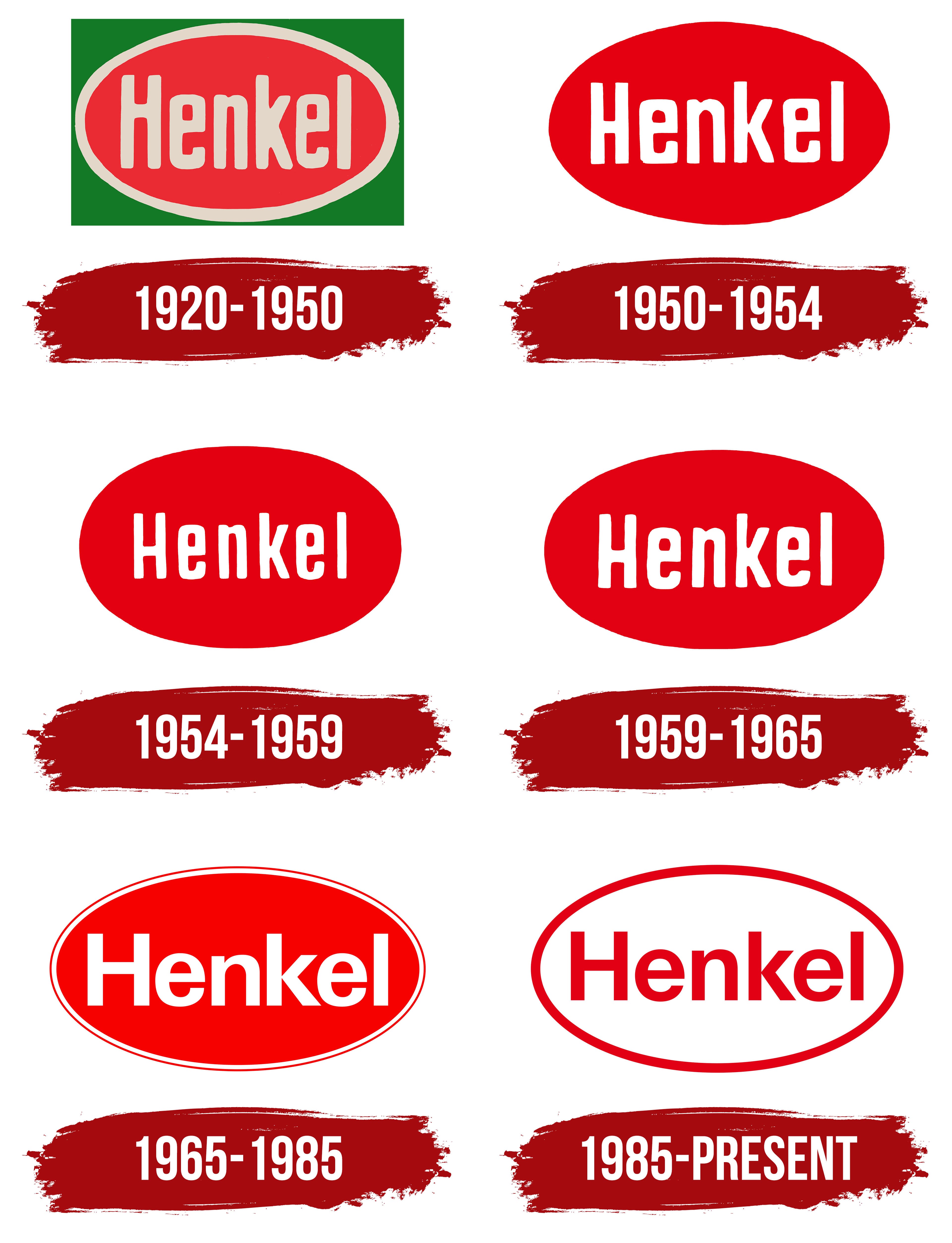
The debut logo of the future industrial giant featured a lion lying against a gear wheel. The company used this version until 1907, when a geometrically precise red oval emerged. In 1920, the company added its name, based on the founder’s surname.
A radical design review dates back to 2002, when the corporation underwent a complete rebranding. The next change occurred in 2011.
What is Henkel?
Henkel is a German company that manufactures more than 25,000 different products for home and industrial use. It owns many well-known brands, such as Fa, Dial, Loctite, Persil, and Syoss. The company also owns Schwarzkopf, Europe’s best-selling shampoo. Henkel is also a leader in producing sealants and adhesives for the construction, transportation, and electronics industries.
1920 – 1950

The debut logo consisted of three equal parts:
- Name
- Ellipse
- Rectangle
The central element was the text. The word “Henkel” was executed in elongated, upward-stretched letters of a grotesque font. Their size precisely matched the width of the oval frame. The primary background was a green rectangle reminiscent of a label.
1950 – 1954

In 1950, the brand owners abandoned the rectangle. So designers kept only the emblem’s central part: a red oval with an outline and an inner inscription.
1954 – 1959
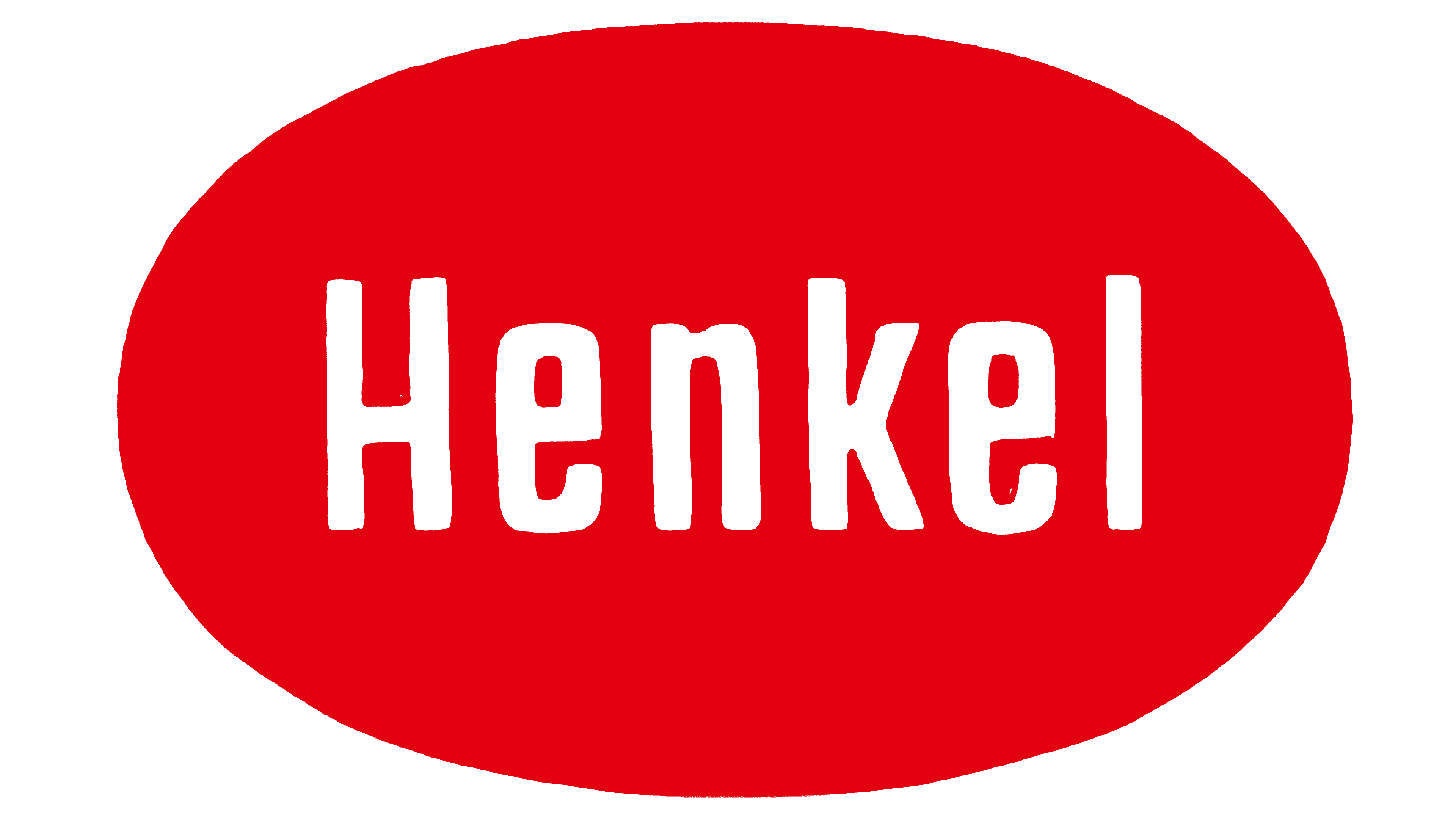
The next redesign brought minor changes. The developers flattened the ellipse on the sides and gave it a rounded shape, and the word “Henkel” was reduced, leaving a lot of space around it.
1959 – 1965
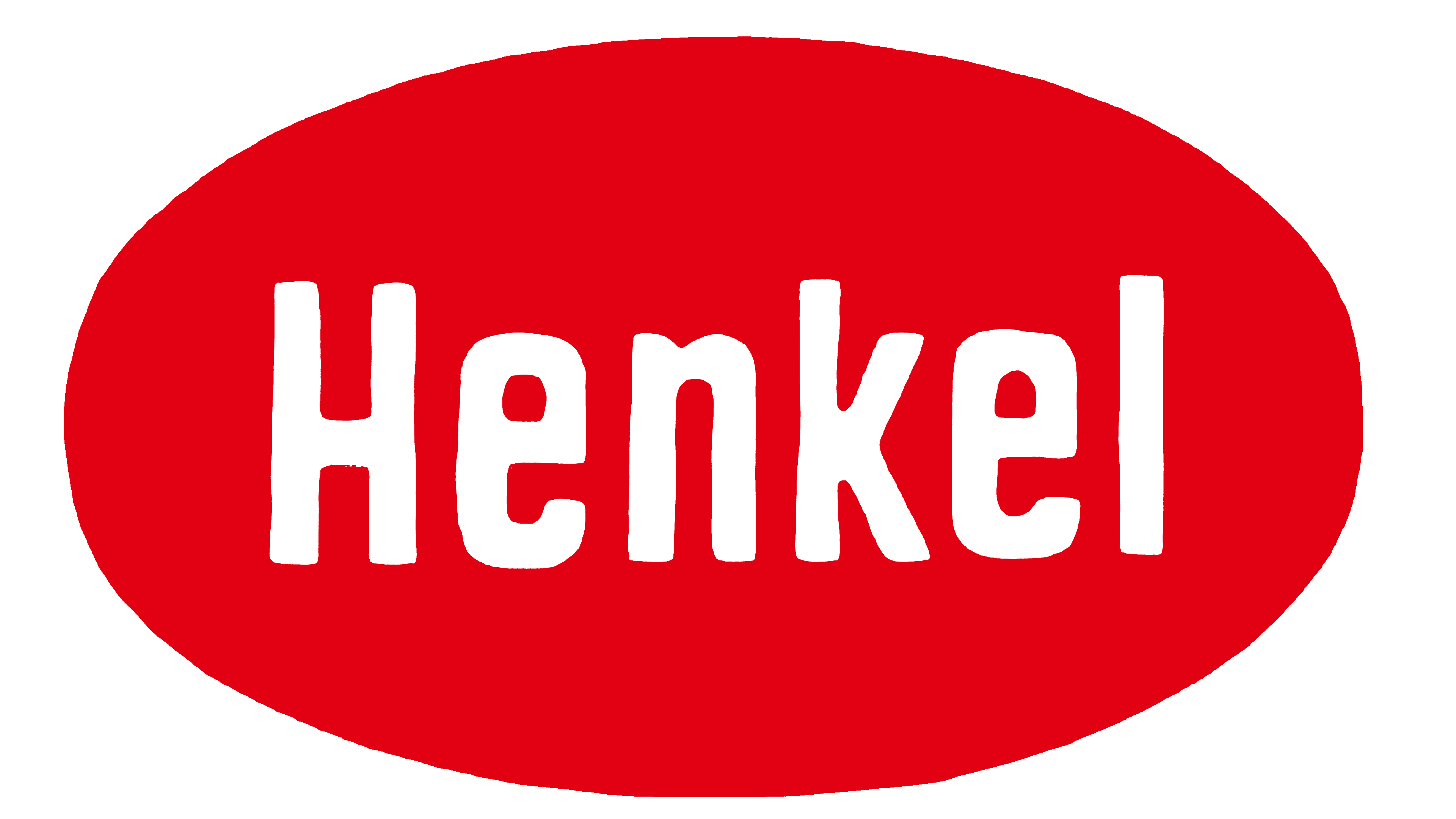
After the 1959 reconstruction, the inscription on the emblem became larger, and the oval became more elongated.
1965 – 1985
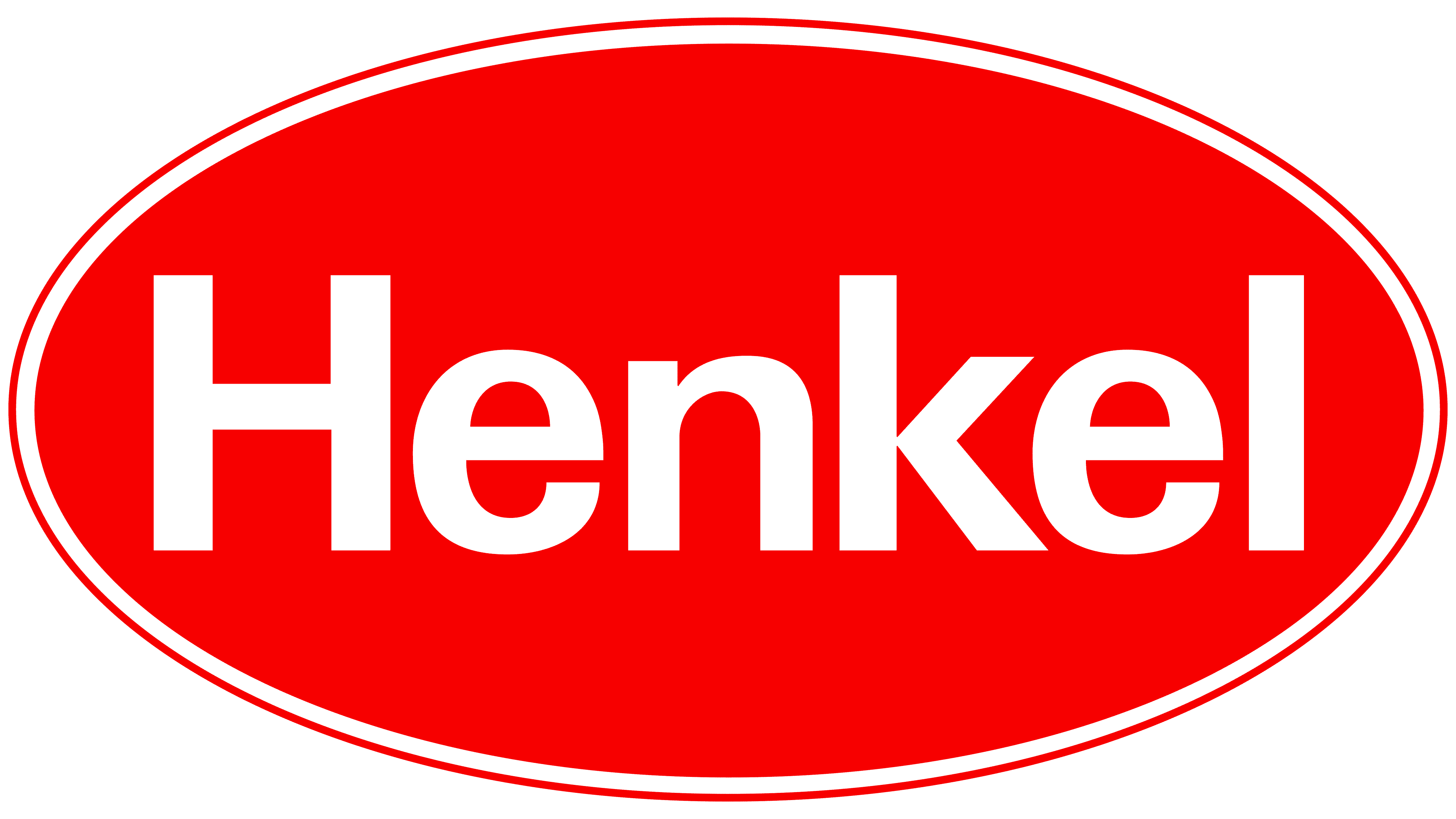
During this period, the logo underwent a significant transformation: designers elongated the oval, added two outlining stripes, and changed the inscription font.
1985 – today
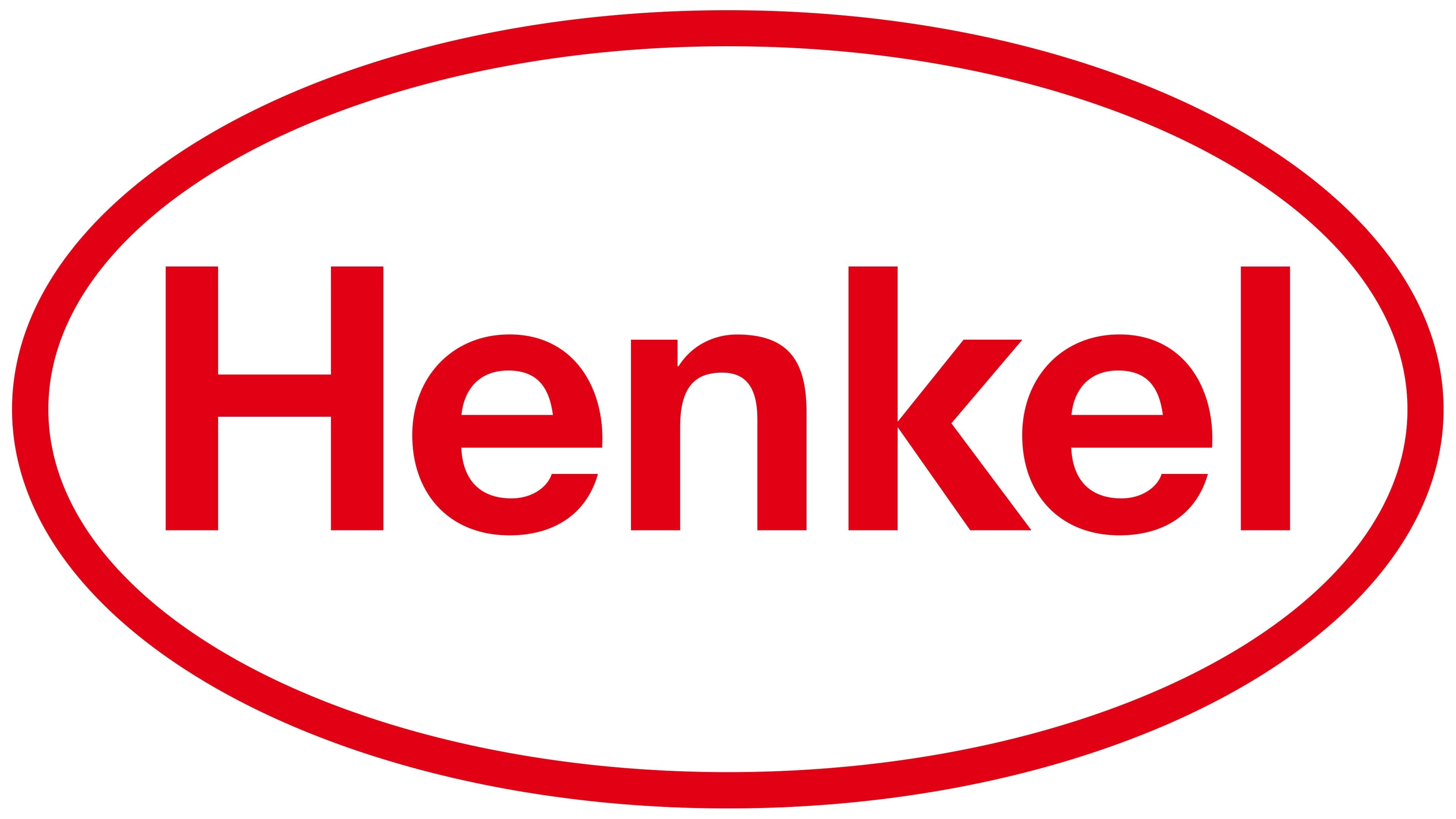
The current version of the logo reverses all previous versions. The developers swapped the colors: red became white, and white became red. They also removed the double frame and drew one wide stripe around the oval.
Font and Colors

The current label of the globally renowned corporation was introduced in 2011 and has not been updated since. It represents a clear oval outlined by a bright red stripe. The company name is painted in the same color and placed inside the oval on a light background.
The logo’s main idea is modernity, relevance, and novelty. It uses a simple visual sequence, a dynamic color scheme, and a clear reference to purity. The fonts are simple sans-serif, giving the wordmark the clarity and stability it needs.