


 UPS Logo PNG
The American logistics company UPS symbolizes speed, reliability, and security through its logo, which features a heraldic shield and the company’s acronym. The modern visualization reflects the brand’s responsibility and focus on service-level growth.
In August 1907, Jim Casey and Claude Ryan opened American Messenger Company in Seattle with a $100 loan. Teen couriers delivered telegrams and small parcels on foot, competing with nine local services while focusing on accurate delivery times.
By 1912, the staff exceeded 100 people. In 1913, the firm merged with McCabe’s Motorcycle Delivery Service, added motorcycles and a Ford Model T, and became Merchants Parcel Delivery. Contracts with Seattle department stores shifted retail logistics to outsourcing.
In 1916, investor Charlie Soderstrom introduced the brown vehicle color, inspired by Pullman railcars. Expansion began in 1919 with a move into Oakland and a new name, United Parcel Service.
During the 1920s, UPS entered Los Angeles, San Diego, and Portland, introduced conveyor sorting in 1924, and tested air delivery with United Air Express in 1929, before closing the service during the Depression.
The company moved its headquarters to New York in 1930. In 1953, UPS relaunched air service with Blue Label Air and began serving the general public, entering competition with the U.S. Postal Service.
By 1975, the network covered all 48 US states and expanded to Canada and West Germany. Revenue reached $4 billion by 1980, with competition from Federal Express. UPS Airlines launched in 1988.
A 1997 Teamsters strike halted operations for 16 days; in 1999, UPS raised $5.47 billion in an IPO. The company acquired Mail Boxes Etc. in 2001 and rebranded locations as The UPS Store by 2003.
Meaning and History
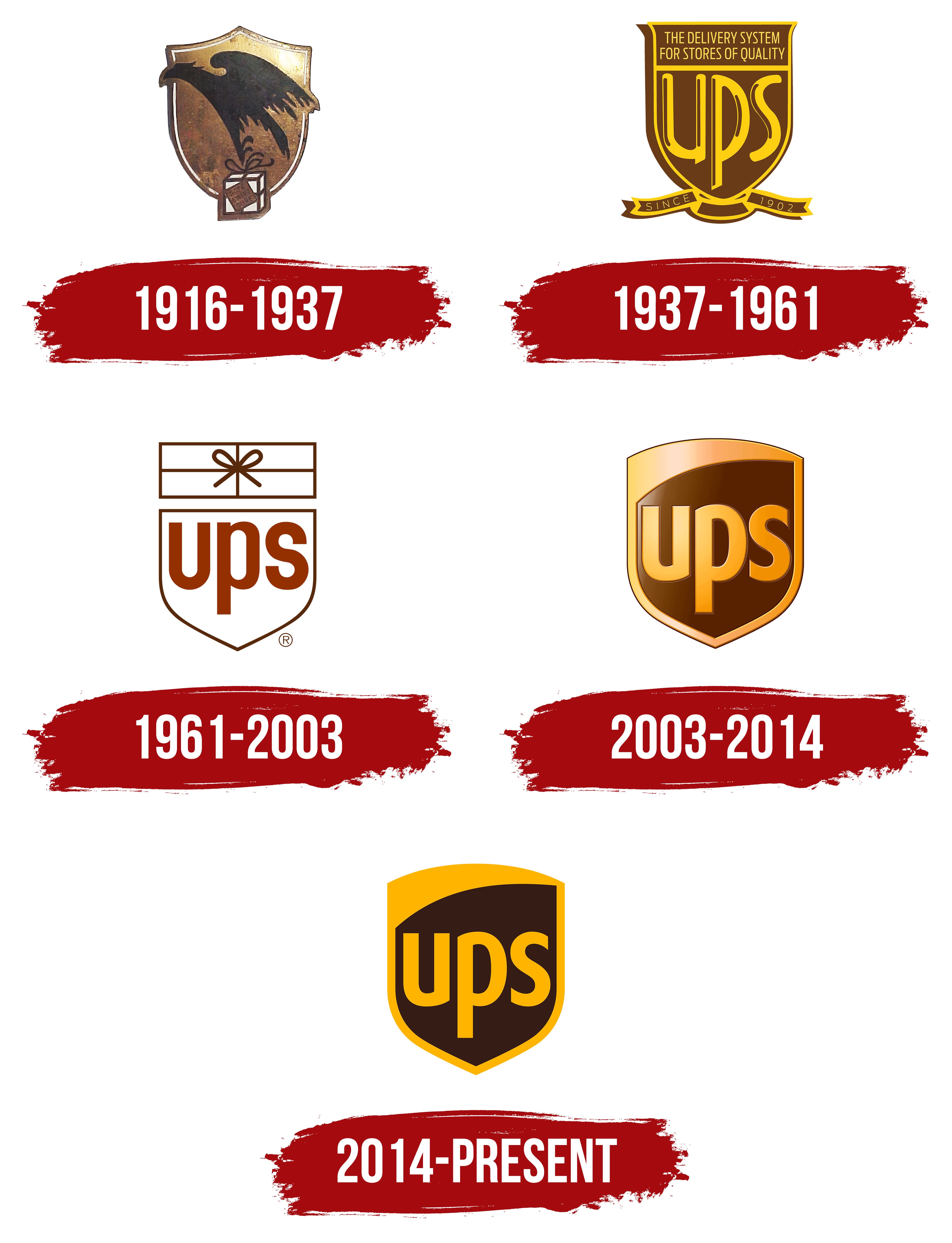
Throughout its existence, the corporation has had five emblems. The current brand name is United Parcel Service (UPS). This acronym has always been associated with the logo.
What is UPS?
It’s an American logistics company specializing in domestic and international transportation. It provides express delivery worldwide, utilizing an extensive fleet of vehicles and its aviation service.
1916 – 1937
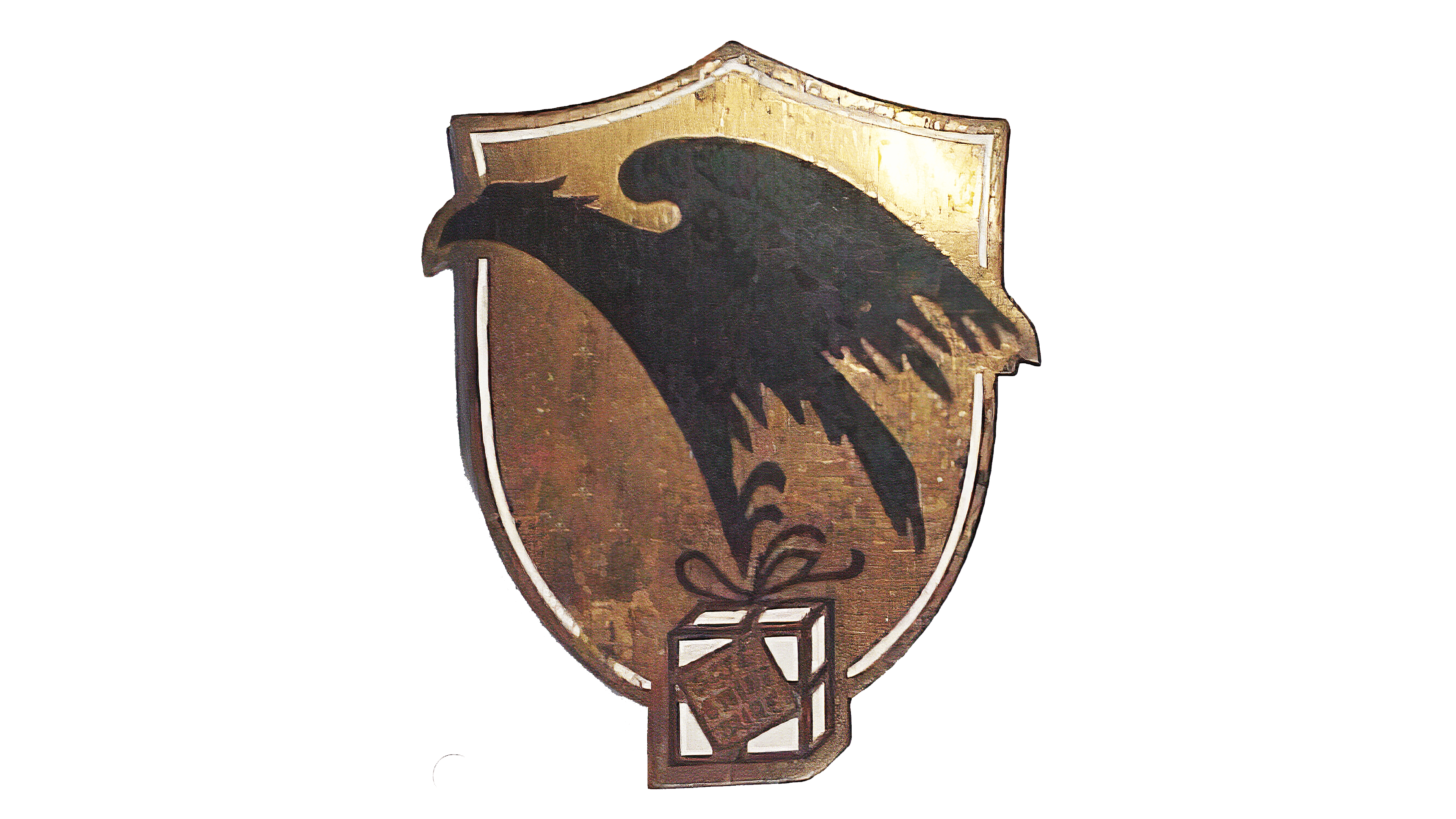
The original version dates back to 1916. The debut logo featured a flying eagle with a bag in its claws. The slogan “Safe, Fast, Reliable” was also present. Behind the brown bird was a bronze shield with a golden outline. The company incorporated knightly attributes into the branding after merging with a local competitor.
1937 – 1961
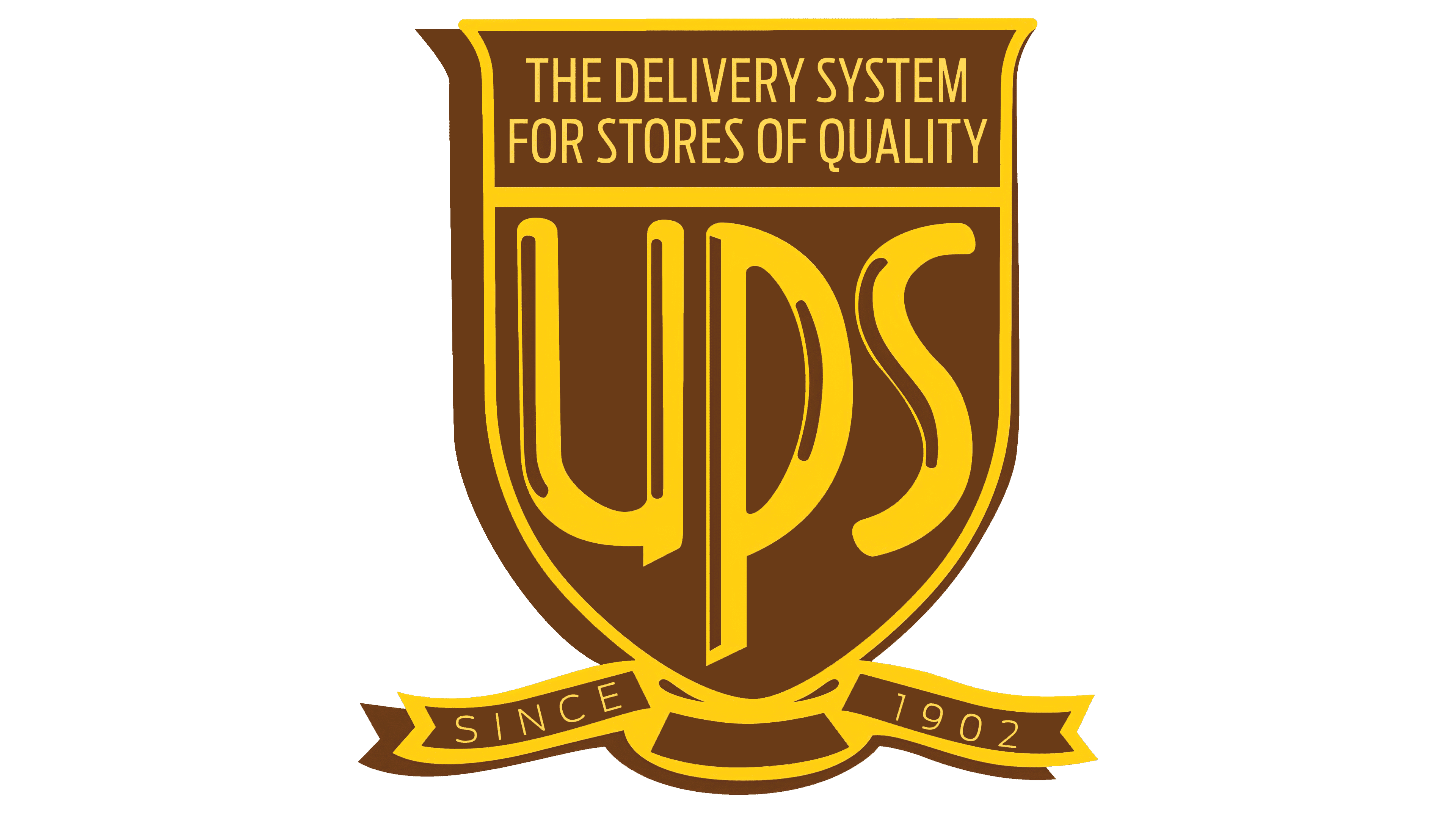
In 1937, the legendary UPS acronym appeared on the logo, and it has remained part of the company’s emblem ever since. The inscription (abbreviated) received a noble golden hue. The shield was enlarged and colored brown. Below was a fluttering ribbon with triangular cuts at the ends and the phrase “Since 1907” (on the right and left). The top prominently featured “Delivery System for Quality Shops.”
1961 – 2003

During this period, the logo underwent a redesign, resulting in a radical change. They removed minor details, leaving only the key elements significant to the corporation. In particular, they removed the shield and acronym. They added a rectangular box tied with a bow. The logo’s color palette became minimalist: white and brown. Paul Rand, the designer behind the update, praised its simplicity.
2003 – 2014
The previous version gave way to a new one, in full color and more detailed. Developers added colors, returned the shield to its classic shape, and brought back the foot of the letter “u.” They also stylized the inscription while preserving the lowercase font. They added a small bevel to the upper-left corner of the abbreviation to modernize the logo.
This year, the changes were minor, mainly in color. As a result, designers returned the emblem to the palette of the original 1916 version.
The current UPS emblem is a rectangular heraldic shield with a pointed bottom and rounded top. This emblem has appeared in all logos, in various forms. Previously, it was supplemented with delivery-service symbols: a box (in 1919) and a tied envelope (in 1961). Then, the designers removed them to make room for the company name. Now the abbreviation “UPS” fills the remaining space on the board.
American graphic artist Paul Rand developed a unique font for the company UPS, called UPS Sans. He based it on FF Dax, enhancing the sign’s expressiveness and simplicity. All three letters in the logo are lowercase, even though it abbreviates United Parcel Service. The golden inscription reflects the delivery service’s high status. Part of the shield is painted in the brown color known as UPS Brown. Both colors formally represent the brand. Hexadecimal color codes: #351C15 and #FFB500.
2014 – today
In 2014, a two-dimensional version of the previous logo appeared. Developers removed the gloss, glare, and shadows to flatten it, leaving only the relevant elements: the abbreviation on the shield. They also preserved the division into two contrasting zones, yellow and brown. The dark color almost entirely replicates the shield’s shape, while the light serves as a frame with an angled top. The thin edge outline also disappeared.
Font and Colors
Designers based the adapted font UPS Sans on a modified version of FF Dax. The corporate palette moved to a simple scheme, without gradients or gloss. The emblem now features warm yellow and chocolate brown.
FAQ
What does the UPS logo mean?
The 1916 logo symbolized speed and reliability, depicting an eagle flying with a bundle against a shield. The 1937 emblem represents the UPS acronym, formed from the company’s full name, United Parcel Service.
Why did UPS change its logo?
After 42 years of using the bow-tied parcel logo, UPS changed its design to convey seriousness and a high level of service. Thus, the company wanted to show the vast range of delivery options, not just standard delivery (parcels).
Who created the logo for UPS?
James Casey developed the very first logo (with the eagle). Designer Paul Rand created the modern version. He presented only one version to the client and said, “That’s it.”
Can I use the UPS logo on my website?
UPS provides the Authorized Shipping Outlet sign for websites free of charge. Otherwise, you need special permission to use a limited number of logos for business purposes.