


 Bitdefender Logo PNG
The digital world is as real as the real environment. Despite the abstraction, the Bitdefender logo is a timeless mark that expresses the virtual space’s desire to evolve. The company’s management gives it that chance, as it continues to develop software.
Bitdefender began in 1990, soon after Romania’s communist regime fell, when mathematician Florin Talpeș and his wife, Măriuca, founded Softwin. The company was one of Romania’s first private software firms. Initially, it built custom programs for corporate clients rather than cybersecurity products.
The shift came after a client’s software was found to contain a virus that other tools had missed. Softwin developed its own antivirus and, in 1996, released AVX (Antivirus eXpert). The product included browser-based updates, a notable technical feature at the time, and gradually gained users in Romania and abroad.
On November 6, 2001, AVX was renamed and relaunched as Bitdefender, a separate Softwin division with its own brand direction. In 2002, the company’s MIDAS system won the European IST Prize, giving the Romanian developer early international recognition. In 2004, Bitdefender opened offices in the United States, Germany, and the United Kingdom. By 2007, its products were present in more than 100 countries, and the company was legally separated from Softwin with investment from Axxess Capital Investment Fund.
Bitdefender then expanded to compete with rivals such as Kaspersky Lab and ESET. GravityZone arrived in 2011 to protect businesses, followed by Bitdefender BOX in 2015 for smart homes. In 2016, the company joined Europol’s No More Ransom initiative. Vitruvian Partners bought about 30% of the company in 2017, valuing Bitdefender at over $600 million. In 2022, it acquired Horangi Cyber Security, and in 2024, it released a free decryptor for victims of the ShrinkLocker ransomware.
Meaning and History
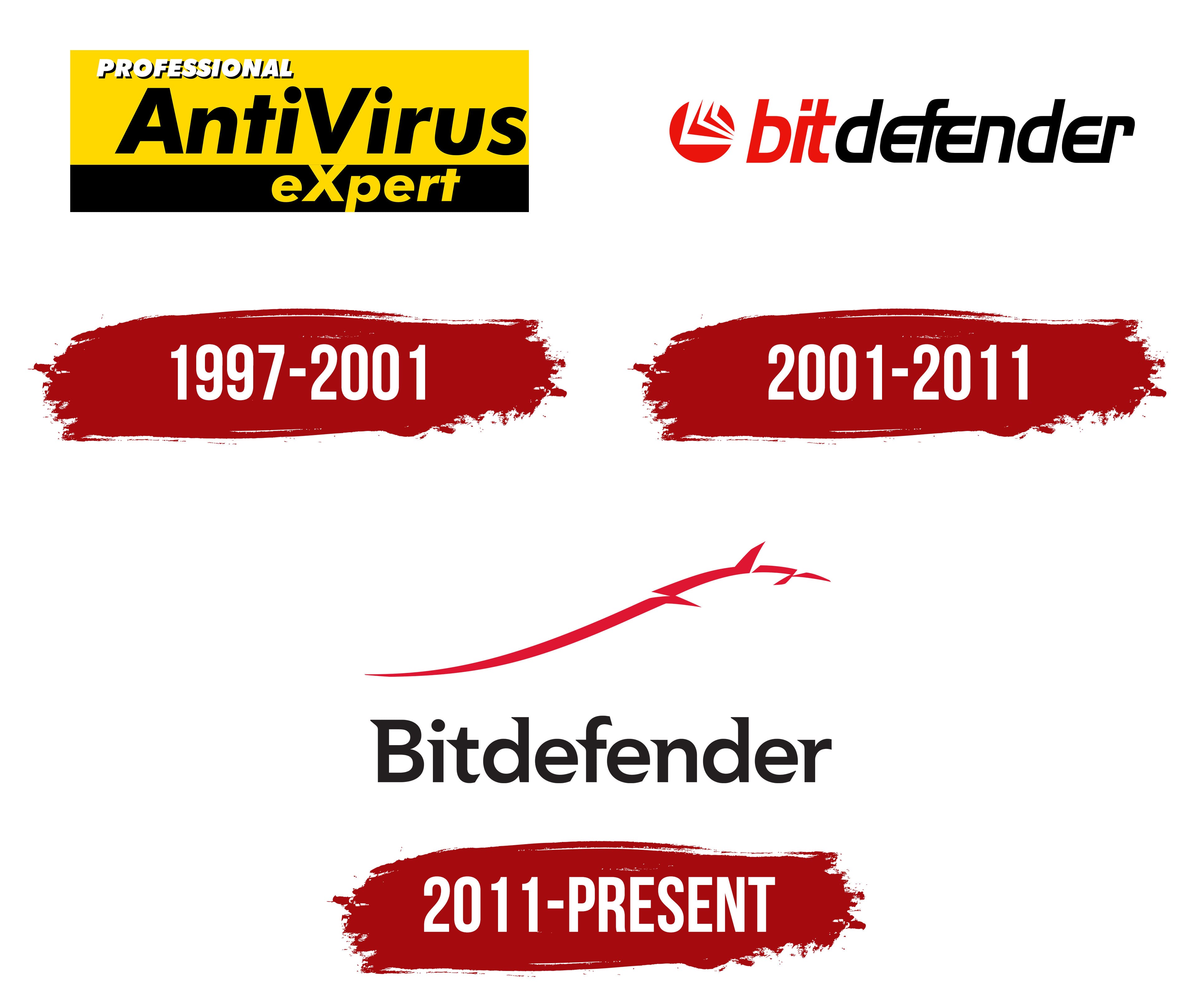
The Romanian cybersecurity program was based on a utility SOFTWIN created as part of its startup. Initially, the developer distributed it as AVX (short for Antivirus Expert). Under this name, it existed from 1996 to 2001. However, a private firm emerged to develop and improve the digital product. It was a subsidiary of Bitdefender. As a result, in 2007, it left the SOFTWIN structure and became completely independent.
The company opened its first overseas offices in the United States, Germany, and Great Britain. It later expanded into the Middle East (2011) and Denmark (2015). This strategy coincided with the rapid emergence of computer viruses and the urgent need to protect against them. Today, Romanian software runs on 500 million systems worldwide and ranks 7th in personal cybersecurity. Bitdefender products are well known, and partners distribute them in almost 150 countries.
To make the security utility more recognizable, the developer gave it an unusual logo that doesn’t fit the typical look of such programs. It looks like a single, sinuous, spiked band. The company adopted this distinctive face in the first half of the 2000s; before then, it used standard emblems. It has three in total.
What is Bitdefender?
Bitdefender is a Romanian software developer that provides antivirus protection, a firewall, and a spam filter. Its cybersecurity system works on both desktop and mobile operating systems. The company was founded in 1997. It received its current form in 2001. Its headquarters are in Bucharest, the capital of Romania. Additional offices are located in the United States, Australia, the Middle East, and Europe. Florin Talpeș founded the company.
1997 – 2001

The logo initially consisted of a rectangle divided into two multicolored segments: yellow and black. The upper part contained two inscriptions loosely grouped across the surface. In the bottom right, it read “antivirus.” The word contained two capital letters, “A” and “V.” The rest were lowercase. At the top left, the inscription read professional. It was set entirely in capital letters and had narrow shadows, giving it a three-dimensional look. The second part of the emblem contained the third fragment from the project name “expert.” The main emphasis was on the uppercase “X”; it was the only uppercase letter.
2001 – 2011

After Bitdefender was founded, it adopted the name for its cyber defense program. Naturally, management rebranded and redesigned it to improve the visual identity of its IT structure. The name was based on two parts: “bit” and “defender.” The first indicated that the software belonged to the computer sphere and was rendered in a deep red. The second fragment, in black letters, denoted operating-system protection. They were typed in a custom sans-serif typeface. All the symbols in them remained rounded and closely connected. Only “d” didn’t have a bunch (there are two of them), but it still had smooth bends. To the left of the name was a round sign made of four irregular triangles.
2011 – today
In 2011, the Romanian company launched new cybersecurity products and decided to change its logo. The designers made the famous ethnic character, the Dacian wolf, the key element. This mythical creature has a wolf’s head and the body of a dragon or snake, and once protected local warriors in battle and terrified the enemy. This analogy carries over into the modern cybersecurity program’s symbolism. The logo shows an elongated figure resembling a ribbon fluttering in the wind. This is the Romanian “balaur,” a dragon. The artists depicted him with an improvised head (short) and a body (long) with three sharp spikes. The same spikes adorn the inscription below.
Font and Colors
To emphasize the antivirus program’s origins, the developers drew on authentic folklore and Romania’s historical roots. They chose an amulet from Ancient Rome as the modern sign, which warriors used: an image of a wolf with a snake’s body. They carried the installation, and at the moment of the battle, the wind passed through the mouth, creating an eerie howl and fanning the ribbons. So suddenly, the “revived” dragon instilled fear in the enemy. This association is embodied in the current logo and accurately conveys the concept of security software.
In the previous versions of the logo, the grotesque prevailed. At first, the letters were wide and bold, with a slight rightward slope, identical to ParaType’s Futura Futuris Bold Italic. In the second emblem, the designers used the original typeface, which resembled the Geometria Extra Bold Italic style (developed by Brownfox studio). For the current version, they chose an antiqua with needle-shaped serifs that harmoniously complement the spikes on the Dacian wolf image. This font resembles Essai Regular (by ClaudeP). The only difference is that the original version has rectangular serifs with blunt ends, while the personal modification has sharp, spike-like serifs.
A key feature of Bitdefender’s corporate palette is flashiness. It is bright and intimidating. At first, the color scheme included poisonous yellow, then scarlet (light red), and now rich crimson. Black complements all of them, making them look more impressive.