


 Bon Jovi Logo PNG
Bon Jovi’s emblem is heartfelt and noble. The emblem tells about the band, which sings about love, romance, and freedom. The sign reflects the spirit of the era in which the band was born and evokes a nostalgic longing for the past.
Bon Jovi formed in Sayreville, New Jersey, in 1983. Jon Francis Bongiovi Jr., later known as Jon Bon Jovi, recorded the demo Runaway at New York’s Power Station studio, owned by his cousin. After the song gained airplay on a local radio station, he assembled a permanent band with Richie Sambora, David Bryan, Alec John Such, and Tico Torres.
After signing with Mercury Records, Bon Jovi released its debut album in 1984. The record had moderate success and set the group’s early style, based on melodic hard rock, strong choruses, and a radio-friendly sound. The 1985 album 7800° Fahrenheit did not bring a breakthrough, but touring helped the band build its live reputation.
The turning point came in 1986 with Slippery When Wet, recorded with songwriter Desmond Child. You Give Love a Bad Name and Livin’ on a Prayer reached number one on the Billboard Hot 100, while the album sold more than 28 million copies worldwide and competed in the same commercial rock field as Def Leppard. In 1988, New Jersey produced five Top 5 U.S. singles, including Bad Medicine and I’ll Be There for You.
After solo projects by Jon Bon Jovi and Richie Sambora, the band returned with Keep the Faith in 1992, adapting to a market changed by Nirvana and the decline of acts like Poison and Warrant. Later releases included These Days, Crush with It’s My Life, Lost Highway, This House Is Not for Sale, and Bon Jovi 2020. Sambora left in 2013 and was replaced by Phil X.
Meaning and History
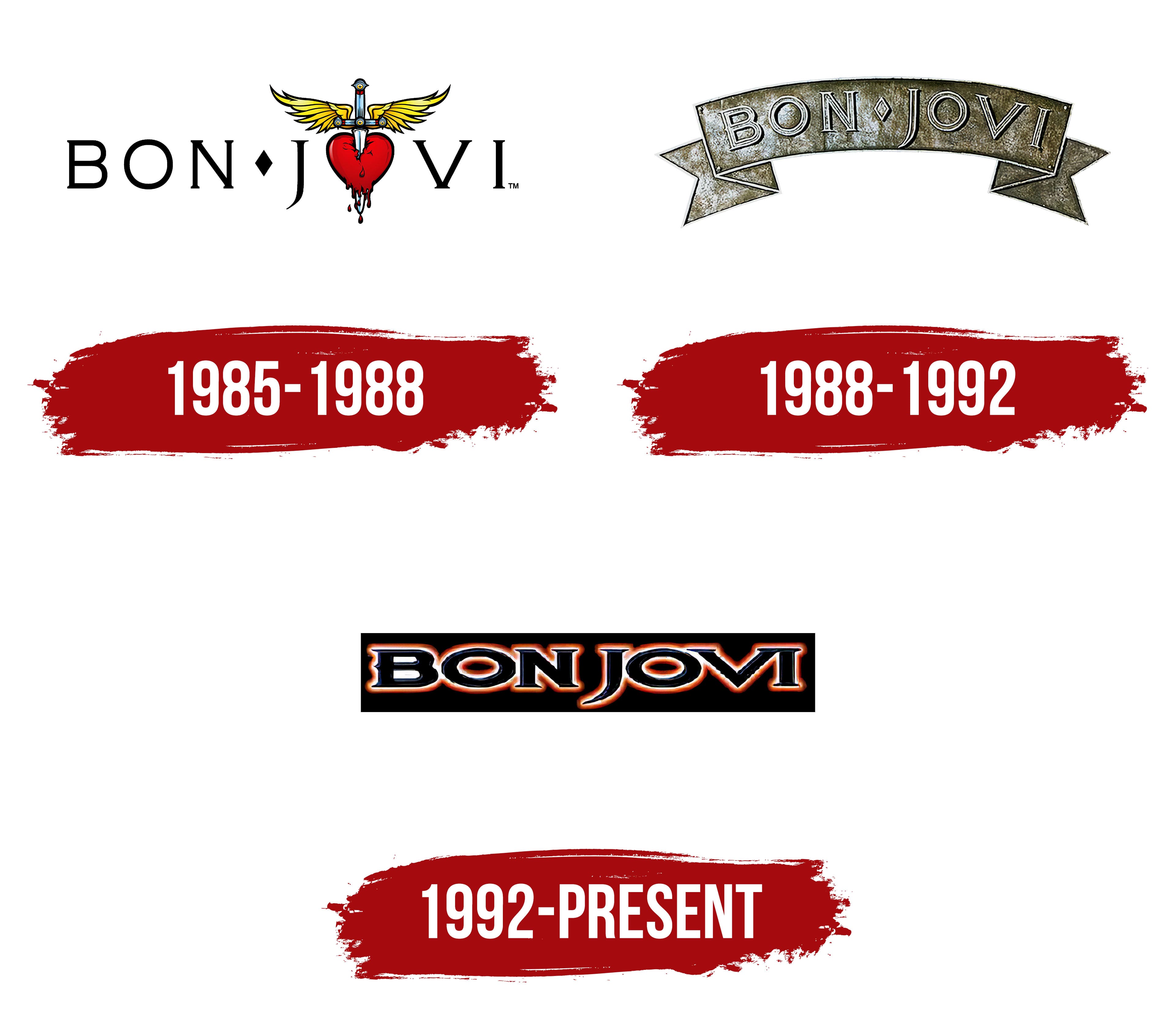
The band is notable for the fact that the first known logo of the musicians appeared after the release of the first album. On the cover of 1984, you can see only a unique rhombus. The idea of a bright and memorable sign appeared later in the performances of Scorpions and Kiss. Interestingly, each rebranding is distinct, emphasizing the band’s diverse styles and creative themes.
What is Bon Jovi?
A popular American rock band from the late 20th century that continues to delight fans 40 years later. Each member of the legendary band has a bright and creative personality. In addition to group work, the three musicians recorded several solo albums, and Bon Jovi actively starred in movies. Fame engulfed the group after the release of the 3rd album, Slippery When Wet, which sold 20 million copies. The artists are now Grammy and BRIT award winners, as well as stars of the U.S. and U.K. Halls of Fame.
1985 – 1988
The band’s first logo consists of the name. The band was named after the founder, which is not usually common for musical groups. However, Jon Bon Jovi was a colorful personality: an actor, singer, and songwriter who played in musical groups from the age of 13 and managed to organize two bands before Bon Jovi. In addition to his work with the band, he recorded two solo albums and was inducted into the Hall of Fame as a music poet in 2009.
Interestingly, fans may have known the band as Johnny Electric. That’s what the quintet was originally proposed to be called, if not for assistant music manager Doc McGee working with the guys. It was her idea to use the band’s founder’s name. However, the musicians accepted the proposal only two years later.
Between Bon and Jovi, there is a diamond, alluding to the suit of diamonds in cards. This element emphasizes the excitement, risk, and drive present in the band’s music.
The letter “O” in the word Jovi is stylized as a heart pierced by a winged sword. This image is believed to describe the Virgin Mary’s suffering after the death of Christ. The symbol has religious significance, perhaps because John received a Catholic upbringing.
According to another interpretation, the symbol speaks of the agony of love, a feeling that can help one ascend to heaven and create. The most romantic and touching songs are written in moments of separation, loss, and unrequited love.
The band’s work includes a lot of motivational content about overcoming difficulties. Therefore, the symbol that epitomizes this philosophy is “rising up” despite heartbreak.
This emblem was used by the band at concerts in the 80s. Some elements of the emblem are present on the covers of the second and third albums.
1988 – 1992

A new symbol appeared with Bon Jovi’s fourth album, New Jersey. The metal style was emphasized by a metal heraldic ribbon bearing the band’s name.
The symbol turned out to be romantic and chivalrous, just like the compositions of the compilation. Bon Jovi grew up in the family of a marine, so concepts such as duty, honor, nobility, and loyalty to the law were instilled in him from an early age. There is no vulgarity or offensive language in the band’s songs. But there are dreams and freedom, which unfold on the logo like a flag.
An element of heraldry linked the second symbol to the knightly theme, emphasized in the first symbol by a winged sword.
1992 – today
The emblem first appeared on the fifth Keep The Faith album and has been used continuously. The symbol resembles a neon-lit signboard. Such signs were popular in the 80s when the band was formed.
The symbol looks more modern than the knight symbols of the previous two logos. However, it has less freedom and more stability. The emblem shows a change in the band’s musical style. The transition to a more relaxed pop-rock. It emphasizes the change in the musicians’ image, who decided to cut their long, ponytailed hair. This conveys the songs’ more serious content.
However, the innovations did not diminish the fans’ love, and the fourth album went double platinum.
Font and Colors
Black and red are significant colors in the band’s identity. The former indicates the protest and rebellion of rock, with its heavy-metal notes. It emphasizes the themes of heartbreak and sadness in many of the band’s songs. The red hue symbolizes love, the central note of the composition.
The wide serif symbols indicate a band with a wide soul, full of drive and noble emotions.