


 Büssing Logo PNG
The Büssing logo conveys strength, leadership, and a stable market position. The emblem reflects a desire to glorify the native city and spread the news worldwide. The sign prophesies great prospects and development.
Büssing’s history began with Heinrich Büssing, born in 1843 near today’s Wolfsburg into a family of blacksmiths. After studying at Collegium Carolinum in Braunschweig, he pursued several engineering ventures before finding stability in 1873, when he and Max Jüdel founded a railway signaling company. Büssing became its chief designer and earned 92 patents in railway technology.
In 1903, at the age of 60, he founded H. Büssing, Spezial-Fabrik für Motor-Lastwagen und Omnibusse in Braunschweig with his sons Max and Ernst. Its first truck carried 2 tons and used a 9-horsepower two-cylinder gasoline engine with a worm-drive rear axle. The design was licensed in Germany, Austria, Hungary, and Britain through Straker-Squire. In 1904, Büssing built its first bus, a 20-horsepower chain-drive vehicle for 12 passengers, and put it on the Braunschweig-Wendeburg route on June 5.
By 1908, the company had offices in Saint Petersburg, Moscow, Kyiv, Odesa, Riga, Warsaw, the Netherlands, and other markets. In 1922, Büssing became Büssing AG. In 1923, it introduced a rigid three-axle chassis and the Büssing III GL 6, regarded as the first full-size bus. In 1930-1931, Büssing merged with Neue Automobil Gesellschaft, an AEG subsidiary, and became Büssing-NAG. In 1936, it pioneered the horizontal underfloor diesel engine, freeing cab space and reducing noise.
World War II shifted production toward military vehicles, including armored cars, Einheitsdiesel trucks, tractors, aircraft engines, and the L 4500. After the war, Büssing restored production and focused on underfloor-engine trucks. At the same time, Mercedes-Benz and other rivals stayed closer to traditional layouts. In 1969, Büssing entered a close partnership with MAN AG. MAN acquired the company in 1971, kept the Braunschweig lion, and continued the underfloor-engine concept into the late 1980s.
Meaning and History
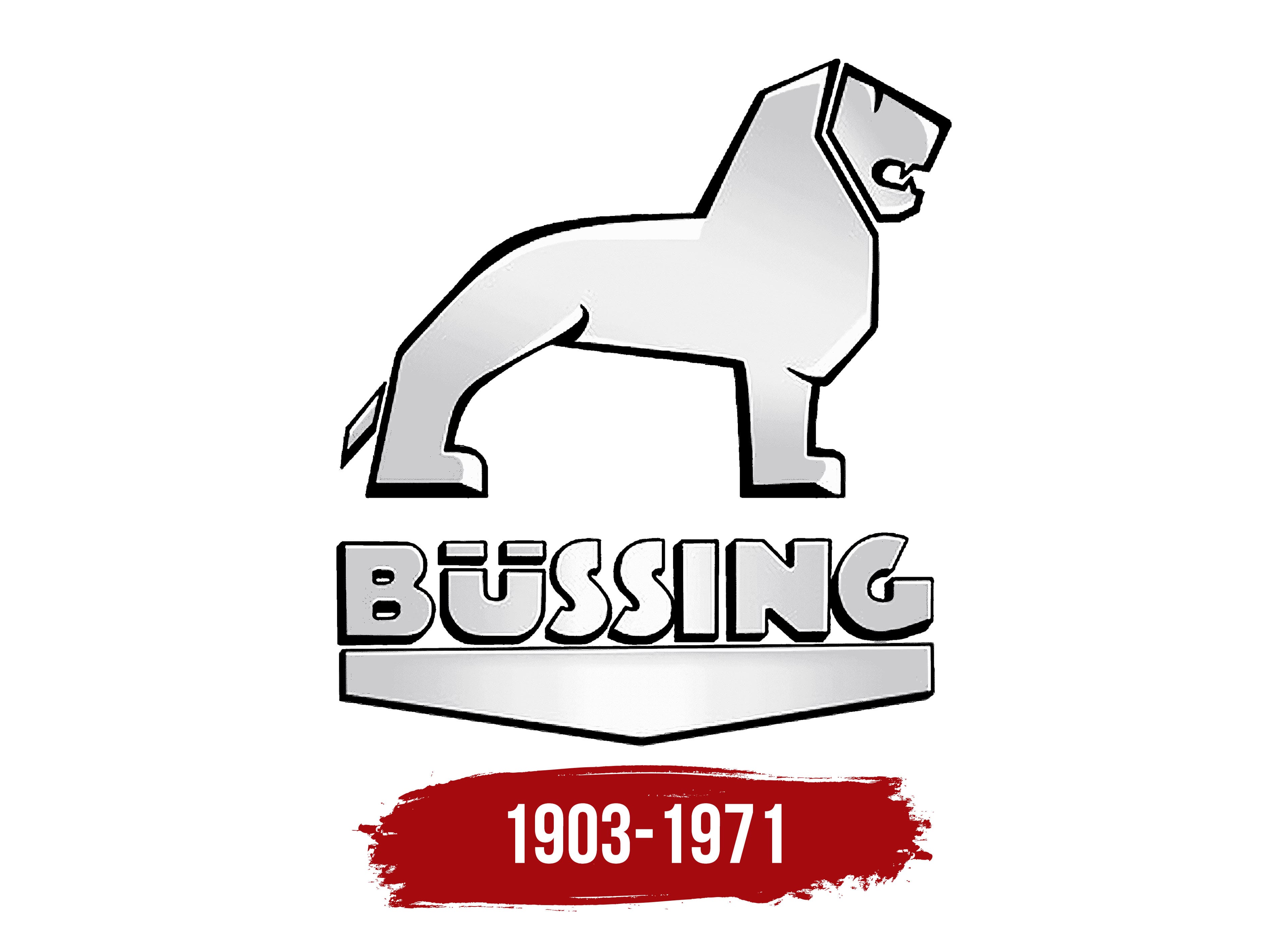
The manufacturer’s emblem is a large, dominant image on the road. At the head of the logo is a majestic grinning lion. Below is the brand name, located atop a triangular monolith. The artist and photographer Hermann Fischer worked on the sign in the early 1920s.
The company was founded in the German city of Braunschweig, which has a heraldic lion. It is placed on the Büssing transport for patriotic purposes.
What is Bussing?
This large German company, headquartered in Braunschweig, specializes in manufacturing commercial vehicles, including trucks and buses. It gained recognition for developing advanced solutions for heavy-duty operations, including unique underfloor engine designs for buses and various truck configurations for different commercial applications. The company’s production facilities manufacture reliable commercial vehicles frequently seen on European roads, and its engineering developments have significantly impacted the commercial transportation sector.
The Predator appears to be standing on a dais, signaling a leading position in the market and featuring powerful, large machines. The company’s collection includes an eight-ton Büssing 8000 and an LU 11 for several trailers. Lion – the embodiment of strength- shows the carrying capacity of buses and trucks.
The animal is the king of beasts. The drivers of the company’s vehicles felt like kings. Unlike other trucks, the cabs were spacious, with no fuel smell or noise.
The name Büssing comes from the founders’ names. Interestingly, the name is associated with the world of cars and is translated from German as “tire fitting.”
A triangular monolith standing on its tip is a prototype of a balance. To carry passengers and cargo, the company’s vehicles must be properly balanced and have an ideal weight distribution. The symbol tells about it.
The location of the monolith at the bottom of the composition indicates the brand’s main design feature- the cars’ engines were installed under the floor.
Reports monolith and strength. All the company’s products were considered practically “indestructible.” Their practicality and advantages are evident in the fact that after MAN purchased the assets, it sold Büssing models under its own name, adopting the Büssing brand logo.
Font and Colors
The logo’s main color scheme is a gray gradient with a black border. Gray is the prototype of careful design and painstaking, consistent work on each machine. The overflow of shades demonstrates the play of light on the bodies and conveys the feeling of metal. Edging is an element of clarity and completeness, as well as the constructive perfection of models.
The inscription font is unique, akin to a Toyster 3D extrude. The two S’s in the center are reminiscent of the track’s bend.