


 Capcom Logo PNG
The striking Capcom logo appeals to video game fans because it represents the company that makes their games. This unconventional visual identity shows rich imagination and strong creative potential, laying the foundation for many fascinating digital products. The emblem shows the brand’s limitless potential to expand its range.
Kenzo Tsujimoto founded Capcom in 1979 in Osaka as Japan Capsule Computers. The shorter name, “Capsule Computers,” became official in 1983. At first, the company worked with electronic arcade machines, supplying them to entertainment venues across Japan before developing its own games.
In 1984, Capcom released Vulgus, its first arcade title. Ghosts n Goblins followed in 1985 and became an international arcade hit. In 1987, the company launched Mega Man for the Nintendo NES and the original Street Fighter. The breakthrough came in 1991 with Street Fighter II: The World Warrior, one of the era’s strongest arcade releases. In fighting games, Capcom competed with SNK, known for Fatal Fury and The King of Fighters.
In 1996, Shinji Mikami directed Resident Evil on PlayStation, helping define the survival horror genre. Resident Evil 2 arrived in 1998, followed by Resident Evil 3 in 1999. In horror, Capcom faced Konami’s Silent Hill, which approached fear and atmosphere differently. In 2001, Devil May Cry introduced Dante and helped shape the stylish action genre.
In 2004, Resident Evil 4 changed the series with an over-the-shoulder camera and a stronger action focus. The same year, Capcom launched Monster Hunter, which quickly became a hit in Japan. Monster Hunter: World reached a global audience in 2018 and sold over 20 million copies. In 2019, Capcom released the Resident Evil 2 remake, followed by Resident Evil Village in 2021.
Meaning and History
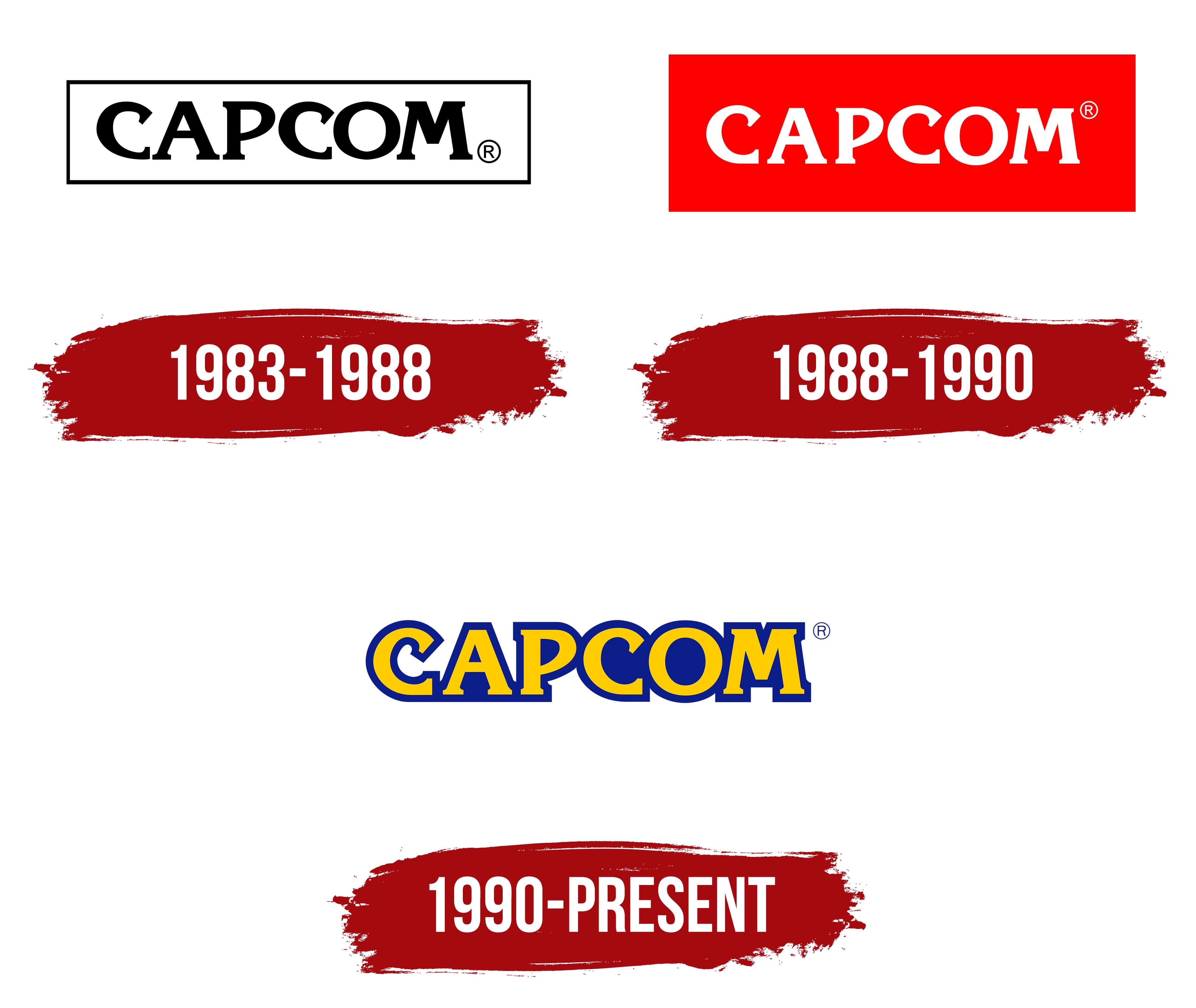
Visual brand recognition is high due to the popularity of Capcom’s projects. Capcom has introduced three versions of the logo over time. With each redesign, the emblem became more striking and eye-catching, and potential customers clearly associated it with the company’s work.
What is Capcom?
It is one of the world’s most famous video game developers, with millions of gamers playing Capcom-developed software every day.
1983 – 1988
The original logo was designed in a terse, minimalist style. It was black verbal lettering on a white background with a black outline. The Capcom brand name was set in a modern, bold serif font. All letters were capitalized, with thick lines and unusual rounding. Because of the chosen font, customers paid closer attention to Capcom products, which stood out from the competition.
1988 – 1990
In 1988, the logo was redesigned for the first time. It was almost the same as the original version, but the letter lines became thinner and more elegant. This logo was also used in a different color palette. In addition to the classic black-and-white version, you could also see white letters on a red background.
1990 – today
The last redesign to date took place in 1990. This was a global logo redesign. Despite the retro style and the unusual color palette, it became brighter and more recognizable to the target audience.
Capcom’s brand name spelling remains unchanged. However, each yellow letter now has a large blue shadow, giving the logo a three-dimensional look. The lettering sits on a white background, adding an elegant, eye-catching effect.
Through the logo, the company sought to convey its unique game-development style to customers.
Font and Colors
Throughout the company’s development, the lettering font remained unchanged. That is why fans can easily spot the organization’s products among similar ones. The lettering most closely matches the modern Korinna style, which prominently uses serifs. Most clearly, the letter “C” catches the eye. The serifs make these letters look bold and attractive.
If the company initially emphasized a black-and-white color palette in the first two logo variations, it has since changed. Now, bright yellow and blue create a retro game effect. Globally, the chosen color scheme reflects the company’s energy and potential, as well as its prospects for further development in game development.