


 Castrol Logo PNG
The original corporate design sets the Castrol logo apart from the competition. It conveys impeccable product quality, strong demand, and a natural feel. Bright accents quickly attract attention and highlight the company’s activity. The mark also reflects the movement associated with branded oils and lubricants.
Castrol began on March 9, 1899, when Charles Cheers Wakefield left Vacuum Oil Company and opened C.C. Wakefield & Company in London with eight former colleagues. The firm first sold lubricants for steam locomotives and heavy industrial equipment. Wakefield soon shifted to cars and aircraft, whose engines needed oil that performed well during cold starts and in high heat.
In 1906, the company released its first motor lubricant. Its formula used a measured amount of castor oil, which helped give the product its name: Castrol, from “castor oil” and “lubricant.” Wakefield then tied the brand to racing and aviation. In 1919, John Alcock and Arthur Brown crossed the Atlantic nonstop using Castrol-powered engines. In 1927 and 1929, Henry Segrave set land speed records with Castrol-backed cars, including Golden Arrow at Daytona Beach.
During World War I, Castrol oils were used in military aircraft and armored vehicles. By the 1930s, the brand was present in many markets, and in 1960, C.C. Wakefield & Company officially became Castrol Ltd. In 1966, Castrol joined Burmah Oil Company, and in 1968, the company launched Castrol GTX. By the late 1960s, Castrol products were sold in more than 140 countries.
In 2000, BP Amoco bought Burmah-Castrol, which had 18,000 employees and operated in 55 countries. BP kept Castrol as a separate brand. In 2012, Castrol lubricant was used in NASA’s Curiosity Mars rover mission. In December 2025, Stonepeak agreed to acquire a 65% stake in Castrol from BP. Its long-term competitors include Mobil (Mobil 1) and Shell (Shell Helix).
Meaning and History
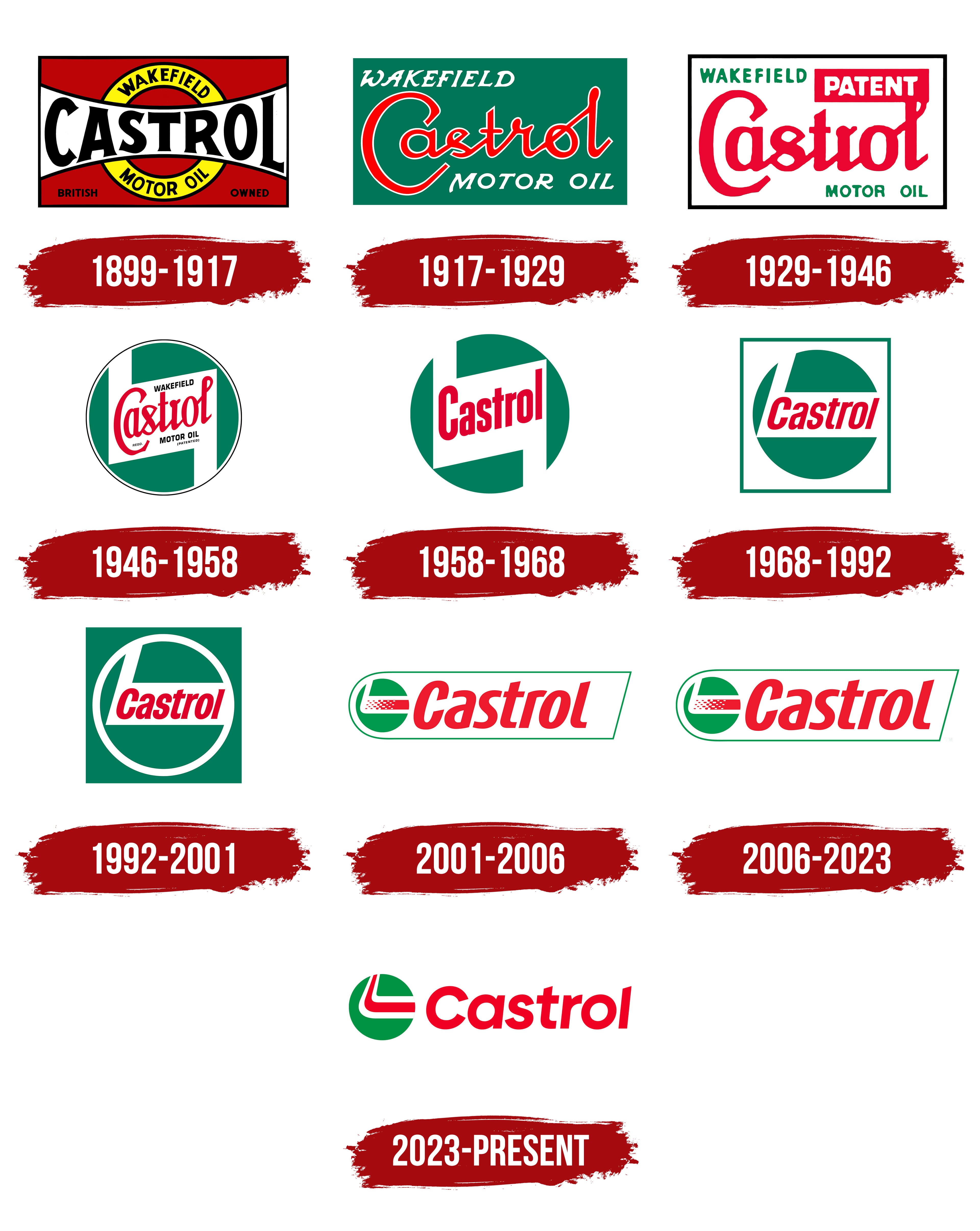
Over more than a hundred years of Castrol’s operation in its target audience’s market, nine variants of the logo have been presented. Except for the first logo, introduced in 1899, all subsequent redesigns followed the same style, greatly increasing the brand’s visual recognition.
What is Castrol?
Castrol is one of the world’s most famous companies specializing in engine oil production. This brand’s products are available to car owners in more than 100 countries worldwide.
1899 – 1917

The Castrol brand dates back to the late 19th century, specifically to the Wakefield Oil Company. Charles Cheers Wakefield created it.
At this stage, the logo was a red rectangle with several elements inside. A thick white horizontal line ran through the center, with “Castrol” set in classic bold sans-serif. All black letters were capitalized. If you look closely, the letters are arched. A yellow circle with two black outlines surrounded this horizontal line. The company name was written on top and bottom: “Wakefield” and “Motor Oil.” This element also used a classic font, but with much thinner lines.
1917 – 1929
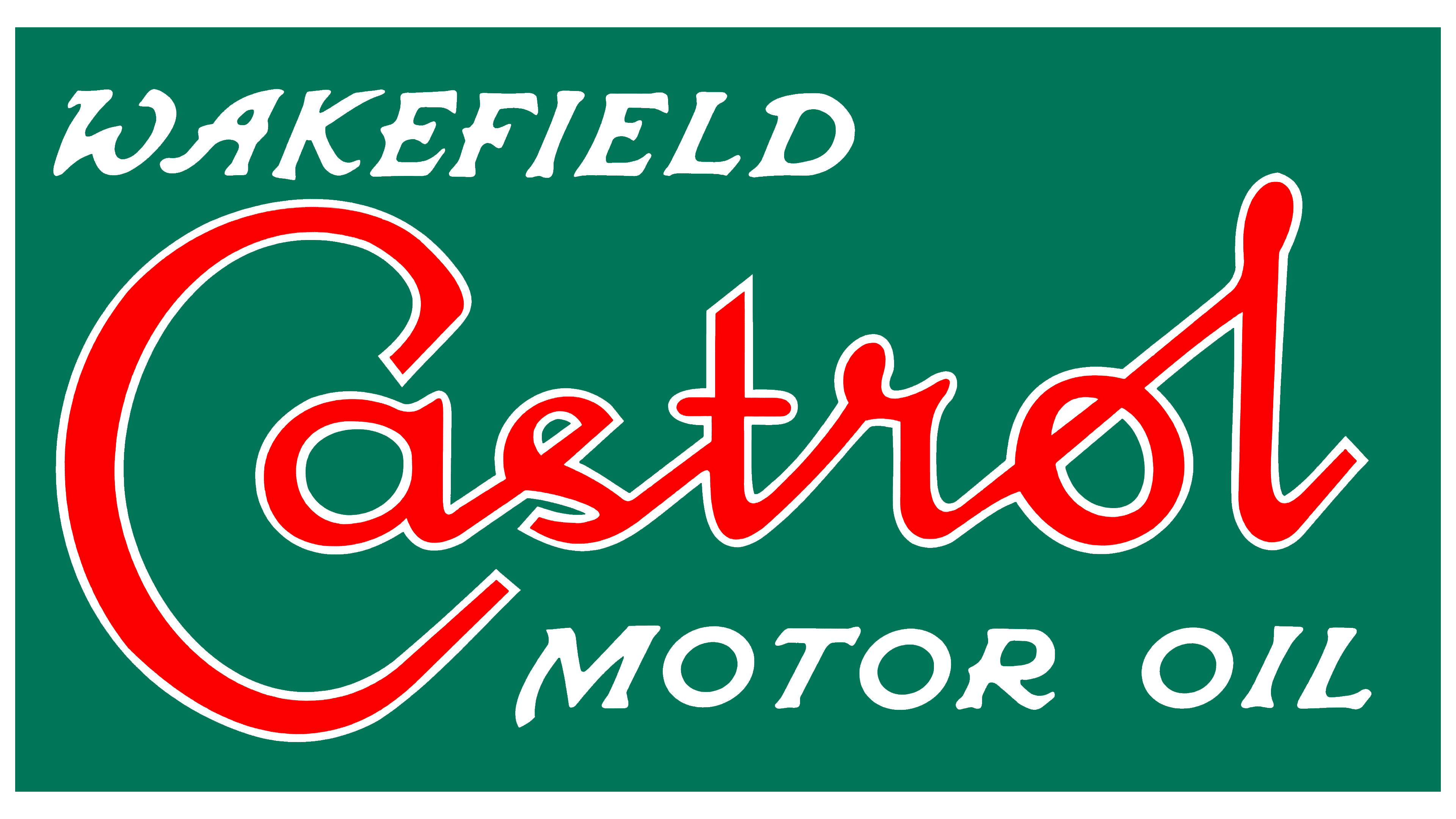
The first redesign took place 18 years after the company was founded. At this stage, the familiar red-green color palette appeared. The main title, namely “Castrol,” was handwritten and looked extremely convincing. As in the previous version, “Wakefield” and “Motor Oil” appeared at the top and bottom. They were made in a classic sans-serif typeface. All letters in these inscriptions were white.
1929 – 1946
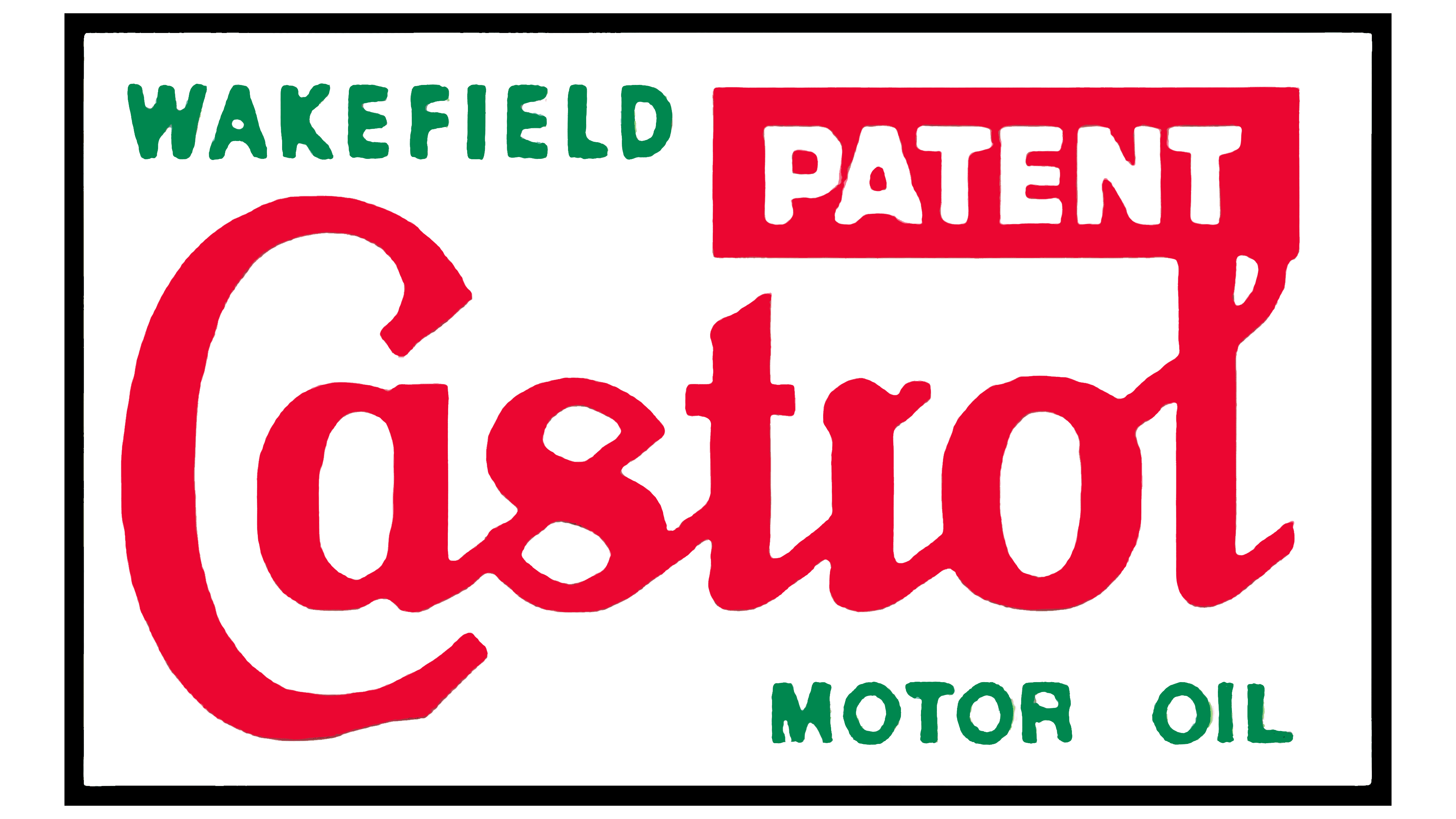
The main change in the new “Castrol” redesign is the updated background, now white. The main inscription was also made in a cursive style, but less explicit. The diagonal lines connecting the symbols look modern and convincing. Because the background changed, the additional inscriptions were no longer white but green. An additional red rectangle appeared in the upper right corner, with “Patent” written in white letters inside.
1946 – 1958
At this point, the logo’s shape changed from a rectangle to a green circle with a black outline. Inside it was a white rectangle from which additional vertical lines emanated in the upper-left and lower-right corners. In the center of the rectangle, “Castrol” was written in red letters. The italic style, however, remained identical. Above and below the title, the words “Wakefield” and “Motor Oil” appeared in black letters. All the words on the emblem were written diagonally upwards.
1958 – 1968
The green circle and rectangle, along with additional elements, remained unchanged. In this case, the black outline was removed, leaving only one word in the center of the rectangle: “Castrol.” It was set in a classic, bold sans-serif font. As a result, the company moved away from cursive styles and italics.
1968 – 1992
The green circle’s background is a white square with a green outline. The rectangle now has only one vertical line in the upper-left corner. The points on the circle that touched the rectangle had no outline. If we talk about the inscription itself, italics reappear.
1992 – 2001
After another redesign, the green color took up even more space on the Castrol logo. The green circle with a white outline was now inside the green square. The verbal inscription remained the same as the previous version.
2001 – 2006
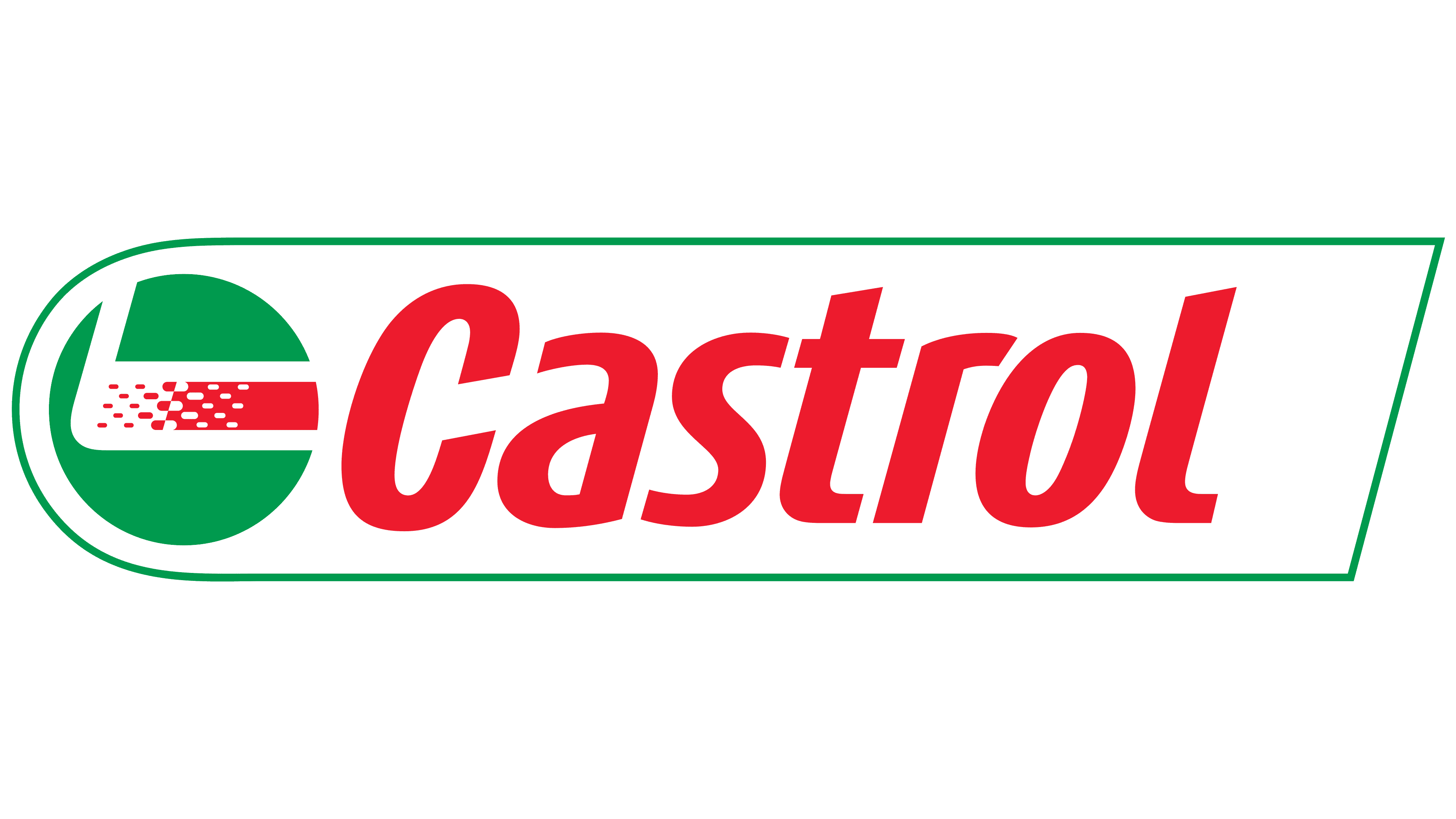
The company’s logo and emblem had an unusual background. It looks like a rectangle with a large rounded left side. A green circle contained a white rectangle. However, red dots now appear on the horizontal line where “Castrol” used to be. The closer they were to the right side, the more united they became. On the right, a red inscription appeared in a slightly different font. For example, the vertical line in the letter “a” was missing.
2006 – 2023
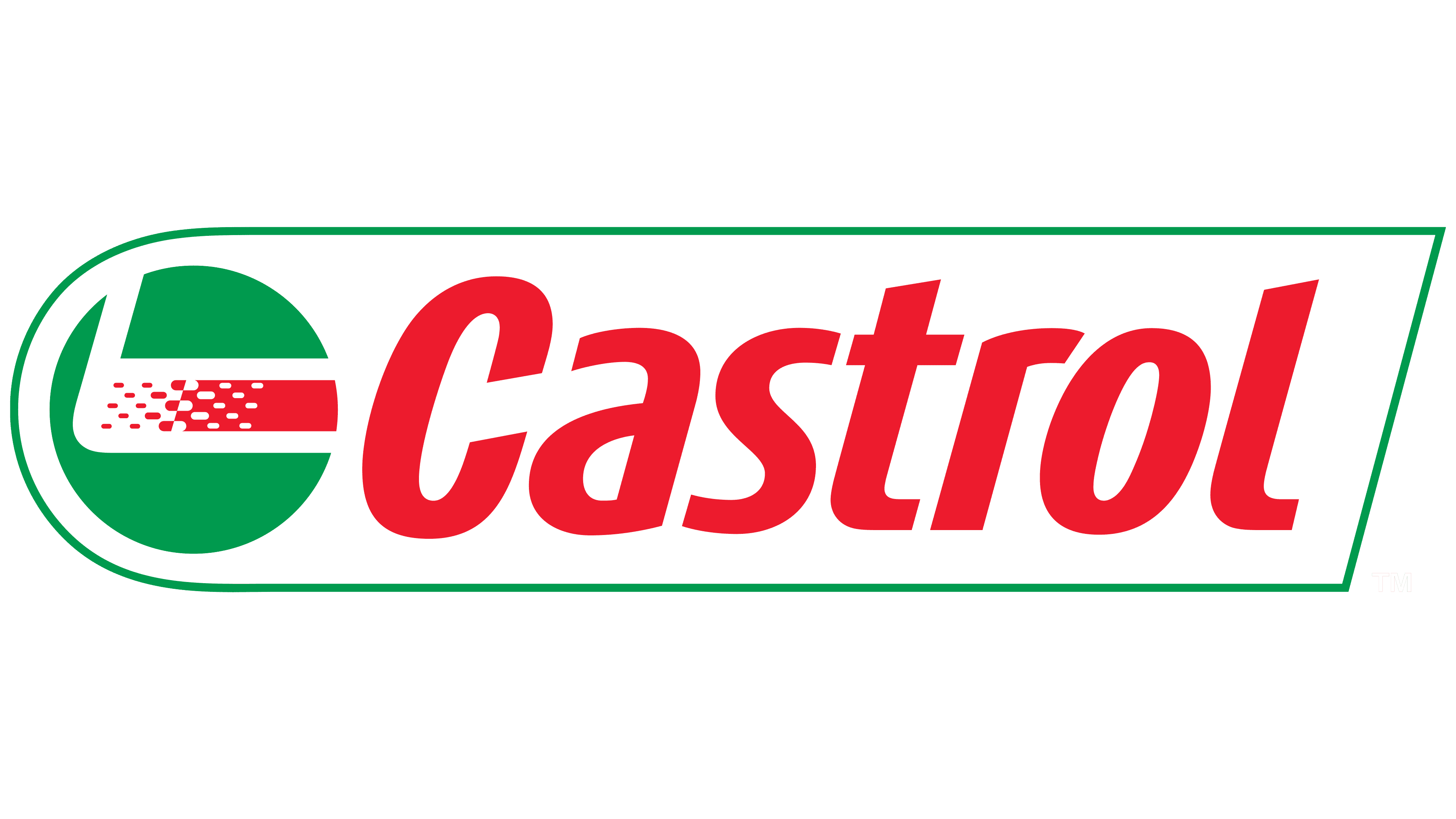
In the latest redesign, minimal changes have been made. For example, the circle’s color became brighter, and the red inscription did too. Moreover, it stretched across the entire background.
2023 – today

In late February 2023, Castrol updated its visual identity, including its logo, making it more straightforward and minimalist while keeping the overall composition. The team at Landor & Fitch retained the primary elements: a green circle divided into two parts by differently colored stripes and a red cursive inscription. Only details such as line shape, font, and proportions changed.
- First, the thin green frame that made the old logo resemble a tag was removed. We removed it to achieve minimalism, improve readability, and create a cleaner, more concise design.
- Second, the red stripe in the green circle became whole, no longer disintegrating into quadrilateral pixels. This created a modern and clean image. Some consumers criticized this step because the previous blurred squares represented a stylized checkered flag, an essential symbol for a motorsports-associated company.
- Third, the red line now extends upwards and forms a “boomerang,” resembling a receding road. The curve dividing the green circle into two parts became smoother. Together, these changes infuse the emblem with energy and dynamism.
- Fourth, the “Castrol” wordmark remained italic but became more standard. This change improved the inscription’s readability. Designers used Gilroy Grotesque as a base and slightly modified the letters, notably adding a cut at the top of the “l” to match a similar cut on the “t.”
Landor & Fitch simplified the logo to display better on small-screen devices while retaining Castrol’s iconic colors: white, green, and bright red.
Font and Colors
During the company’s engine oil sales, several fonts were used for the logo. The peculiarity was the use of cursive and script styles. Now the company has a legible and unique logo. Rounded corners and the main emphasis on the brand name attract potential buyers’ attention.
After the first logo redesign, the company decided on a traditional palette of red, green, and white. It looks modern and confident, prompting car owners to consider Castrol. Green signals life and ambition, while red conveys the project’s passion.