


 Celcom Logo PNG
The Celcom logo is based on graphic-textual balance. It captures the energy behind Malaysia’s first mobile operator. It symbolizes public support, wide mobile coverage, accessibility, and reliability. Its realistic style clearly conveys movement toward subscribers.
Celcom was founded in 1988 as Malaysia’s first cellular operator, Celcom (Malaysia) Sdn Bhd. The company launched an analog mobile network while the country’s telecom infrastructure was still developing. In the early years, mobile services were expensive and mainly used by business clients and wealthier customers. Still, Celcom gradually expanded its coverage and built a broader subscriber base.
The company operated under Technology Resources Industries (TRI), which was controlled by Malaysian businessman Tajudin Ramli. In 1995, Celcom launched its GSM network and moved from analog to digital mobile services. The shift came as demand for mobile phones was rising across Malaysia. That year, Maxis entered the market and became one of Celcom’s main competitors.
The 1997-1998 Asian financial crisis hit TRI hard, and by the early 2000s, the group was under heavy debt pressure. In 2003, Telekom Malaysia acquired Celcom, giving the operator financial stability and state-backed support. In 2008, Telekom Malaysia reorganized its international telecom assets into Axiata Group Berhad, and Celcom became Celcom Axiata Berhad.
In the 2010s, Celcom competed with Maxis and Digi.com, a Telenor-backed operator strong in budget tariffs. Celcom and Maxis fought for premium users and corporate clients, while all three operators invested in 3G and 4G networks. In 2021, Celcom Axiata and Digi.com announced a merger to combine resources for 5G. The deal closed in 2022, creating CelcomDigi Berhad, Malaysia’s largest telecom operator by subscriber count.
Meaning and History
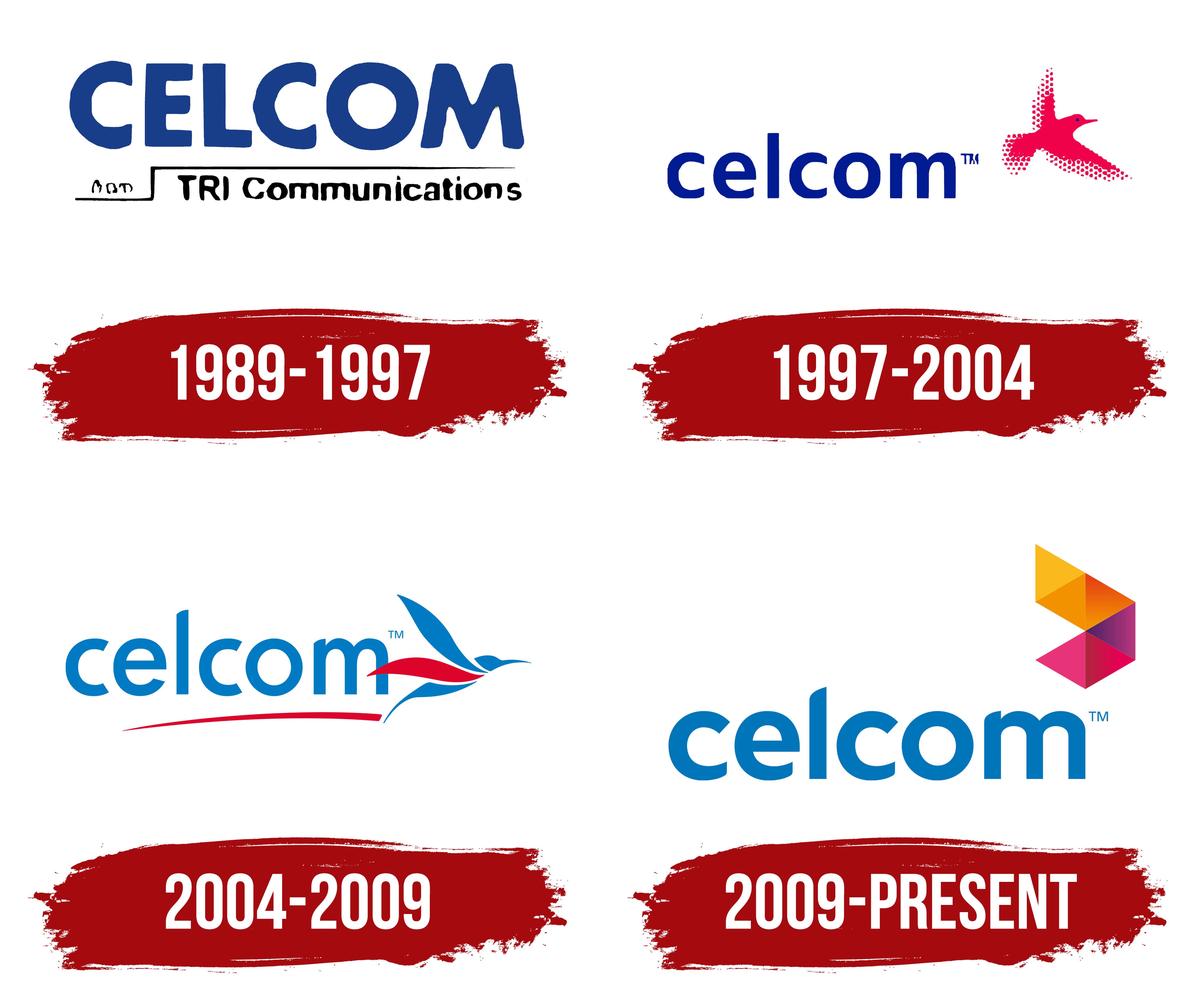
In Malaysia, the brand has strong visual recognition. Over the past 30 years, the company has presented four logo variants to the target audience. Despite significant changes, the logo’s core remained indispensable, making it easy for the target audience to identify their favorite mobile provider.
What is Celcom?
It is one of Malaysia’s largest mobile operators, with many years of experience and millions of satisfied customers nationwide.
1989 – 1997
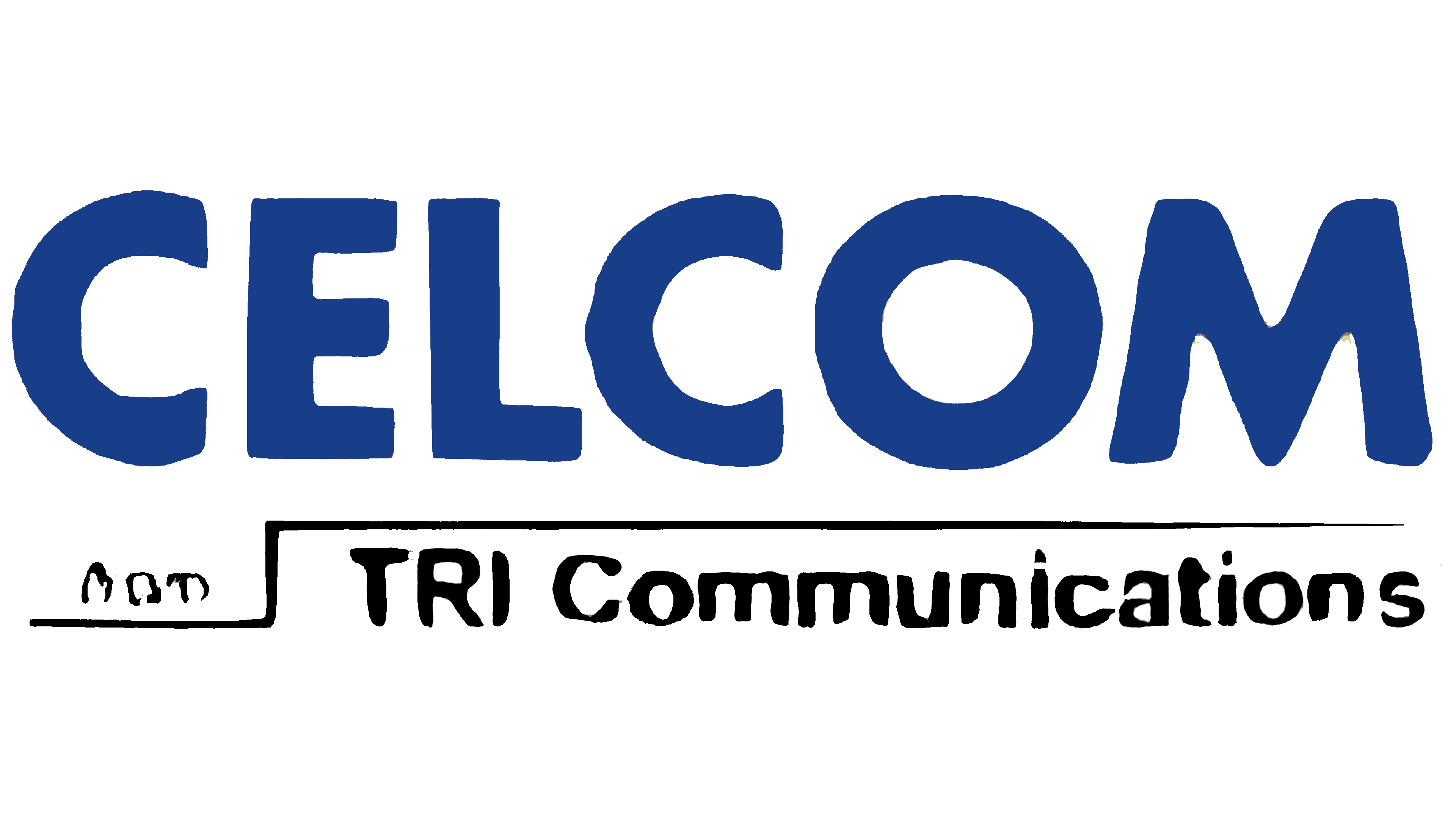
The company introduced its first logo version almost immediately after its founding. The main element was the name “CELCOM” in dark blue. It used a classic bold sans-serif typeface with subtle rounding. The thick lines in the symbols made the wording appear more confident and powerful to potential customers. The inscription most closely resembles Helvetica, with slight variations in letterforms.
Under the main name, two horizontal lines were at different levels. A vertical line connected them. The inscription “TRI Communications” was added here. It was set in black, with thin lines.
1997 – 2004
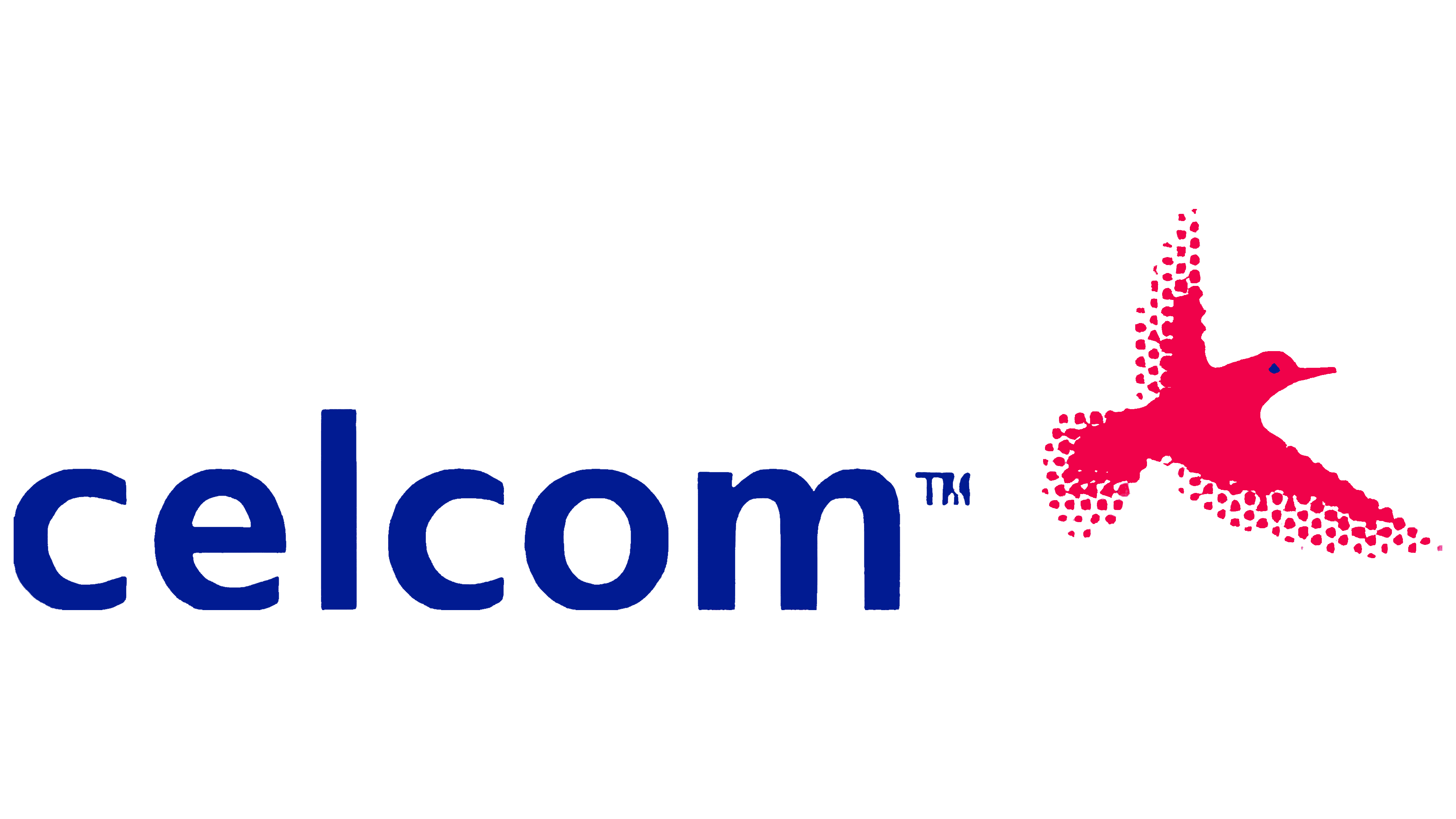
The first major redesign made the logo livelier and more dynamic. Although the company used the same font, it changed the capital letters to lowercase. As a result, Celcom needed to evoke positive emotions in potential customers. Also, significant spacing between characters left “food for thought” for users. The wordmark’s lines were removed, making the logo easier to read.
A bird appeared in the upper right corner. Visually, it appears to be a hummingbird. The bird is red, directly referencing the transmission of information. The edges of the emblem’s wings and tail are outlined in red dots, making the Celcom logo more mysterious.
2004 – 2009
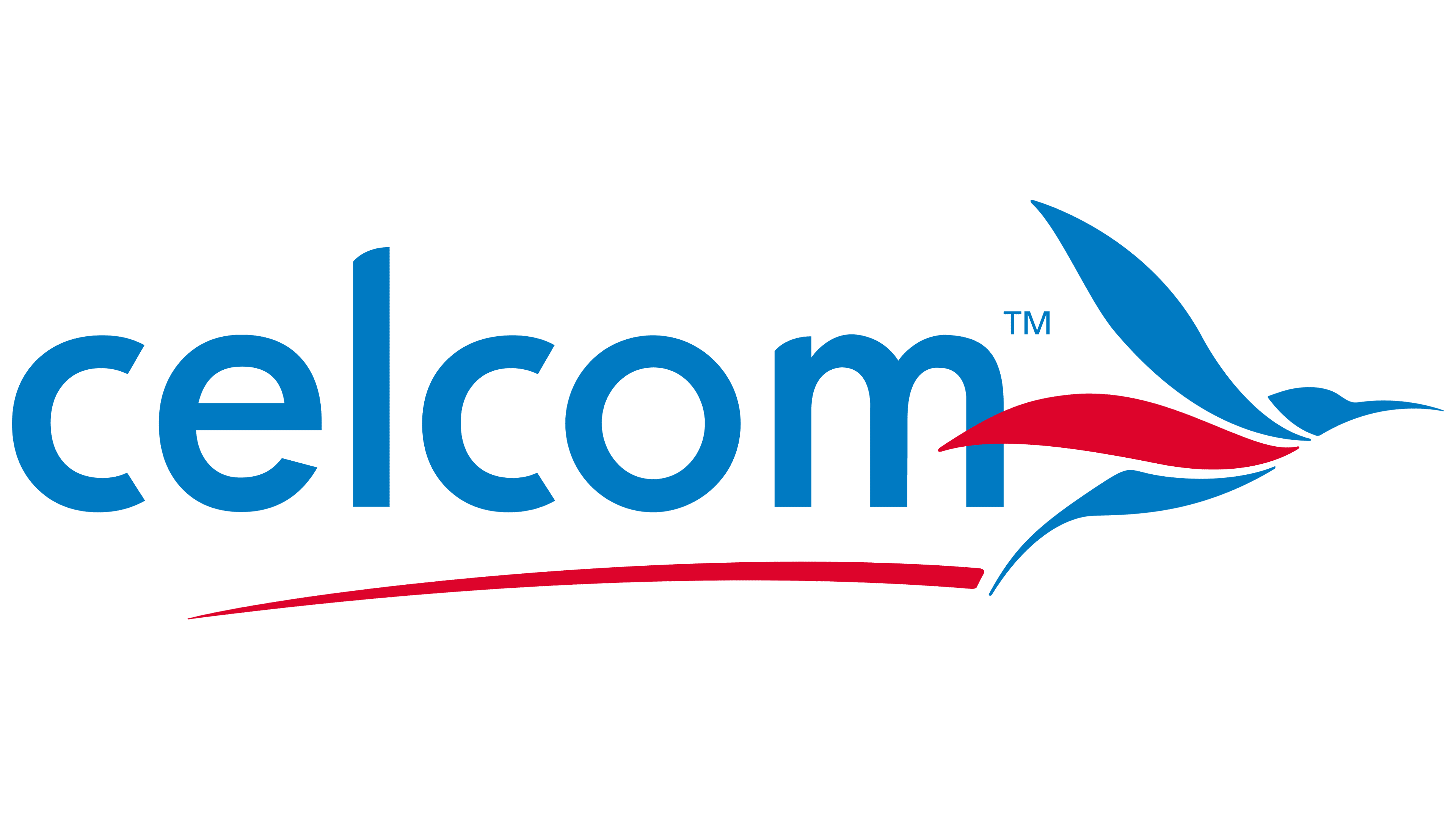
Another redesign made minimal changes to the logo. The font of the verbal inscription and the character case remained identical. At the same time, the dark blue color was replaced with a brighter shade. A red horizontal line appears from below and rises slightly in the right corner. The bird’s color changed from red to blue. The only exception is one red wing.
2009 – today
The latest redesign to date has made the logo more confident and modern. The writing style remained the same, but the letter lines became bolder. Also, the bird was removed. Perhaps this is because not all users associated hummingbirds with mobile communications. The company likely added speed to this symbol because the bird can flap its wings up to 80 times per second. In general, an abstract emblem replaced it, conventionally divided into five differently colored blocks.
Font and Colors

The logo was based on a classic sans-serif typeface. After the first option, all subsequent redesigns used lowercase letters, which evoke positive emotions in potential customers. The Celcom brand name is easy to read and stands out from the competition.
The logo uses a red-and-blue color palette. In the early stages, the company used them in contrast; the latest redesign made blue the dominant color, which many people associate with a mobile operator.