


 CenturyLink Logo PNG
Connecting subscribers to a single service center, the CenturyLink logo appears. Information flows through the arteries of the fiber optic network, helping users. The emblem represents growth, development, unity, and a full range of services.
CenturyLink began in 1930, when William Clarke Williams and his wife Marie bought Oak Ridge Telephone Company in Louisiana for $500. The small switchboard served 75 customers and was moved into the family living room. In 1946, their son Clarke McRae Williams received the business as a wedding gift. A year later, he bought Marion Telephone Company with financing from Joe Sidney Carter and used it as a base for regional expansion.
Growth accelerated after the 1972 acquisition of La Crosse Telephone Corporation. In the 1980s and 1990s, Century Telephone Enterprises bought phone lines across the US, including Centel’s Ohio unit in 1992 and Pacific Telecom in 1997 for $2.2 billion.
In the early 2000s, the company shifted toward fiber networks, bought Digital Telecom assets, and sold its wireless business to ALLTEL. The major break came in 2009, when Century Telephone completed its $6 billion all-stock merger with Embarq, Sprint’s former local phone division, and adopted the CenturyLink name. By then, it served more than 7.5 million access lines in 33 states, still behind Verizon and AT&T but now a national-scale operator.
In 2011, CenturyLink bought Qwest Communications, becoming the third-largest US telecom provider by access lines, and then acquired cloud infrastructure company Savvis for $2 billion. In 2017, it completed the $25 billion purchase of Level 3 Communications, adding global fiber routes, subsea cables, and a Tier 1 network. In 2020, the parent company became Lumen Technologies, while CenturyLink remained a brand for legacy copper services. Later asset sales included a 2021 Apollo deal and the 2025 sale of Quantum Fiber to AT&T, completed in 2026.
Meaning and History
The renaming of CenturyLink to Lumen Technologies is not the only global change in the giant operator’s history. This company repositioned itself several times, changing its name, concept, and visual identity. Its earliest predecessor was the Oak Ridge Telephone Company, which pioneered telephony. ITheWilliams family in 1930, when subscribers had to water the land to improve the connection quality
In 1946, Clarke Williams decided to automate the system and purchased everything he needed, but the banker who promised to issue the loan suddenly died. An acquaintance of Joe Sydney Carter provided the required amount. Inspired by his success, the entrepreneur began buying up other telephone companies in different states. At 15, he united them into Central Telephone and Electronics Holding.

The telecommunications corporation has continually experimented with its name and logo. In the latter case, it simplified the name and abandoned complex graphic symbols. Lumen Technologies (formerly CenturyLink) uses a minimalist wordmark with a short blue dash as its only striking element.
What is CenturyLink?
CenturyLink is the former name of Lumen Technologies and was used until 2020. However, the CenturyLink brand still exists and is used to provide copper-network telecommunications services. The CenturyLink Fiber brand provides fiber-optic communications. Their parent company, established in 1968 and based in the US, serves clients worldwide, providing mobile services, digital television, and internet access.
1968 – 1971
Central Telephone and Electronics was formed in 1968, three years after the death of George Lee, Clarke Williams’ father-in-law, who helped him run his business. Having lost an irreplaceable manager, the owner of telephone networks decided to consolidate them into a single structure to simplify control over all access lines. The headquarters has moved to Monroe.
1971 – 1999
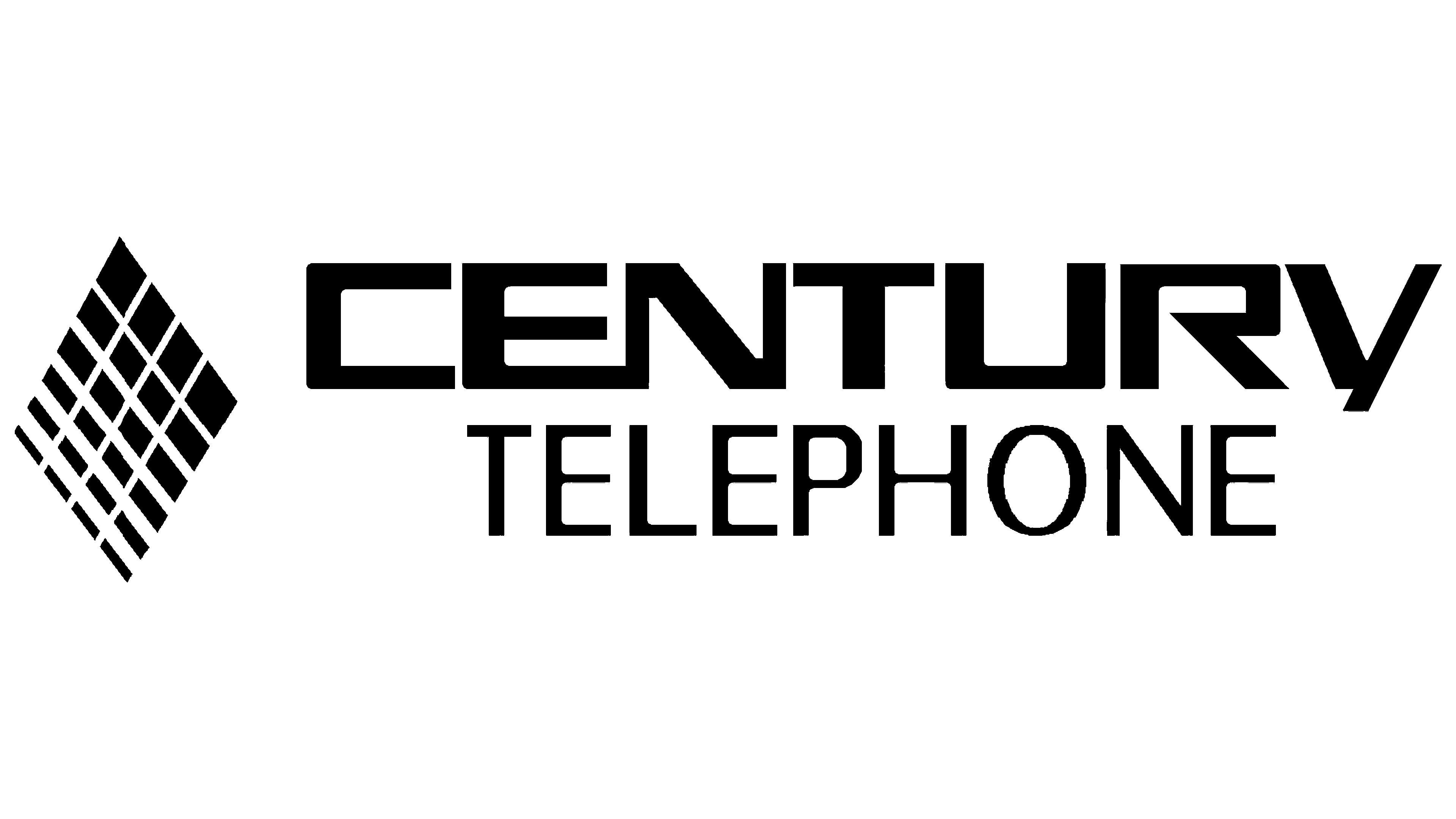
In 1971, the Central Telephone and Electronics Holding became the Century Telephone Enterprises Corporation. She immediately began buying up smaller independent companies and was among the first to enter the US cellular market. Its logo reflected high technology. The graphic element resembled a diamond and consisted of clusters of varying sizes, which could be interpreted as a symbol of connection or transmission.
On the right were the first two words of the company name, written one below the other. Different fonts were used: bold, contrasting line thickness, and narrow letters extended upward. They were united by black color, square shape, and lack of serifs.
1999 – 2010
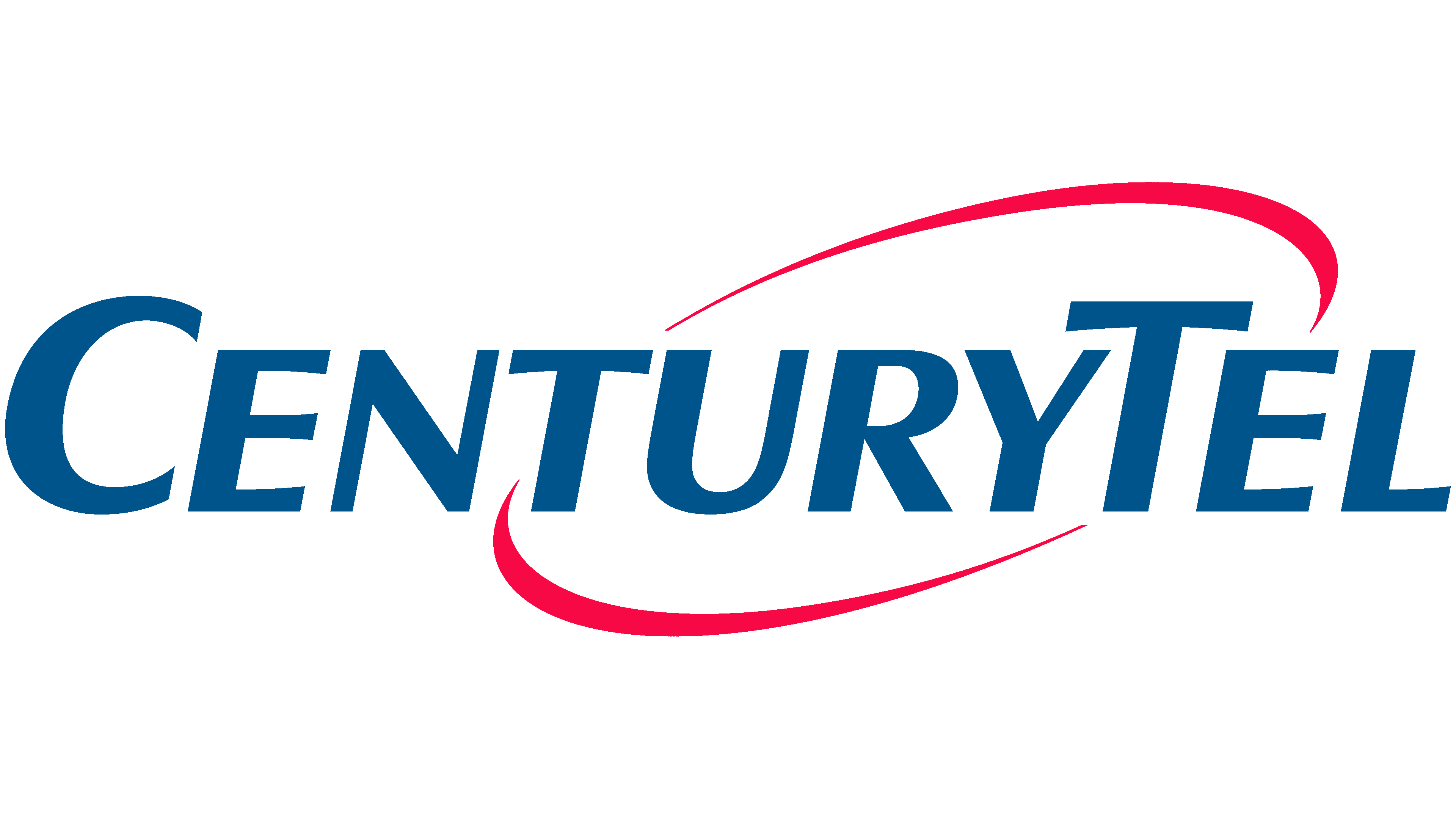
In 1998, the company began preparing to rebrand and merge Century Cellunet, PTI Communications, Century Long Distance, and Century Telephone services under the name CenturyTel. The company approved the new brand in 1999 and began using the logo with blue oblique lettering, “CENTURYTEL,” against a red ring. Even though all the letters were capitalized, the first “C” and the eighth “T” stood out noticeably in height. The two red arcs above and below represent an abstract rotation orbit.
2010 – today
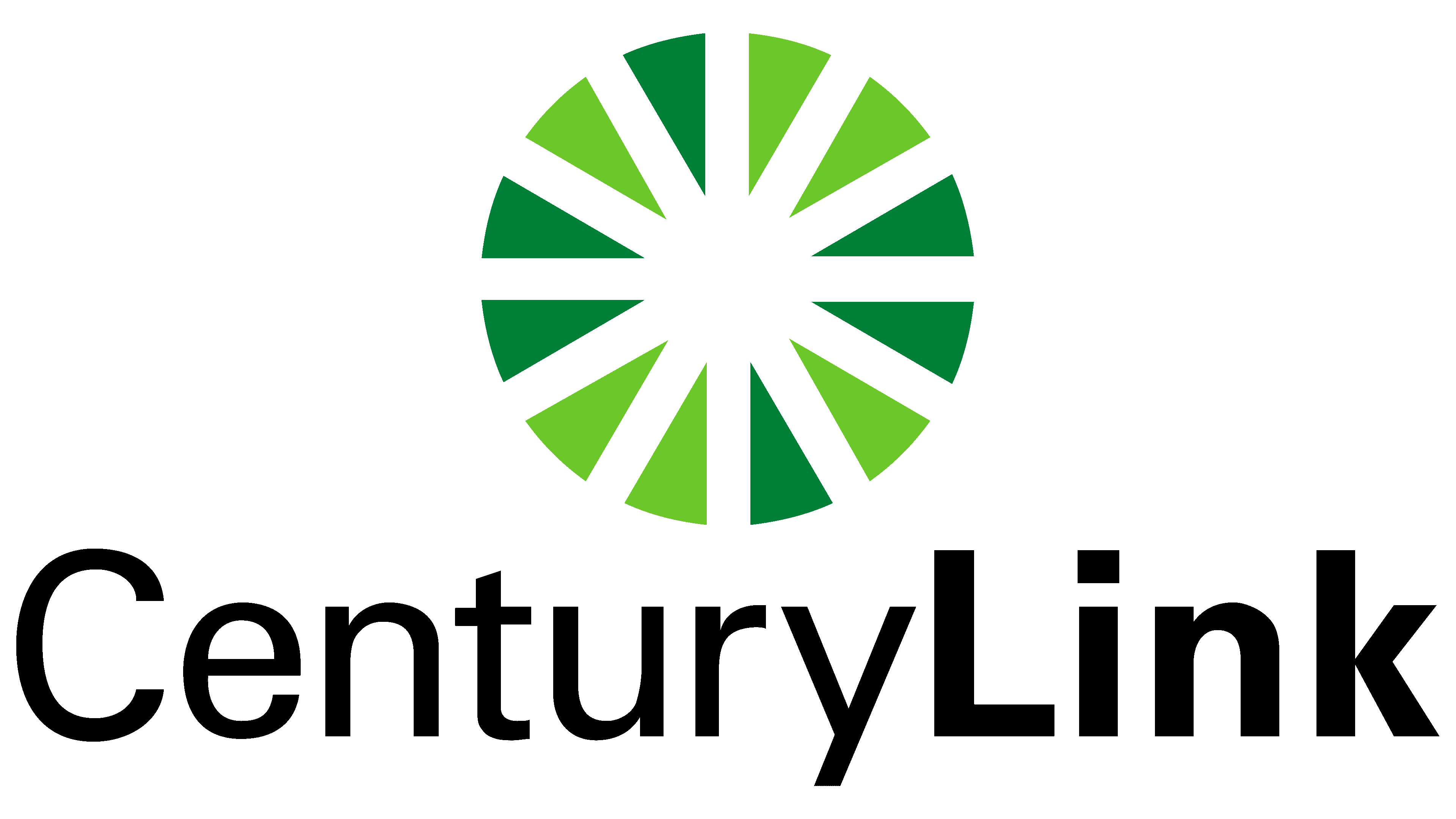
After merging with telephone operator Embarq Corporation, the company was renamed CenturyLink. In 2010, the new name became official. As part of the restructuring, a green round emblem appeared. It consisted of twelve small green triangles arranged in a ring, each pointed inward at sharp angles. The black lettering “CenturyLink” appeared to the right. The designers visually divided it in half, highlighting the second part in bold. This version of the logo and the brand name is still used for some of the corporation’s services.
2020 – today
In 2020, the telecommunications company changed its name to Lumen Technologies. This is reflected in the modern wordmark, which includes the short inscription “LUMEN.” The design follows the 1971-1999 tradition, when the logo featured a square typeface. Visually, only the capital letter “E” stands out, divided into two parts. It consists of a blue stripe (top) and a black line curved at right angles (bottom).
Font and Colors

One of the typefaces on the Century Telephone Enterprises logo resembled Salzburg Serial Regular, a modern geometric sans serif from SoftMaker. From 1999-2010, the inscription used a bold Gothic italic with extensions at the ends. Then the typeface changed: the first part of the CenturyLink logo resembled Urbano Regular, and the second part, Urbano Bold.
The last logo featuring the word “LUMEN” is the most unusual. The designers chose a square sans-serif font with rounded corners. In doing so, they stylized the letter “E” by repainting the top stroke in bright blue to contrast with the black lines.