


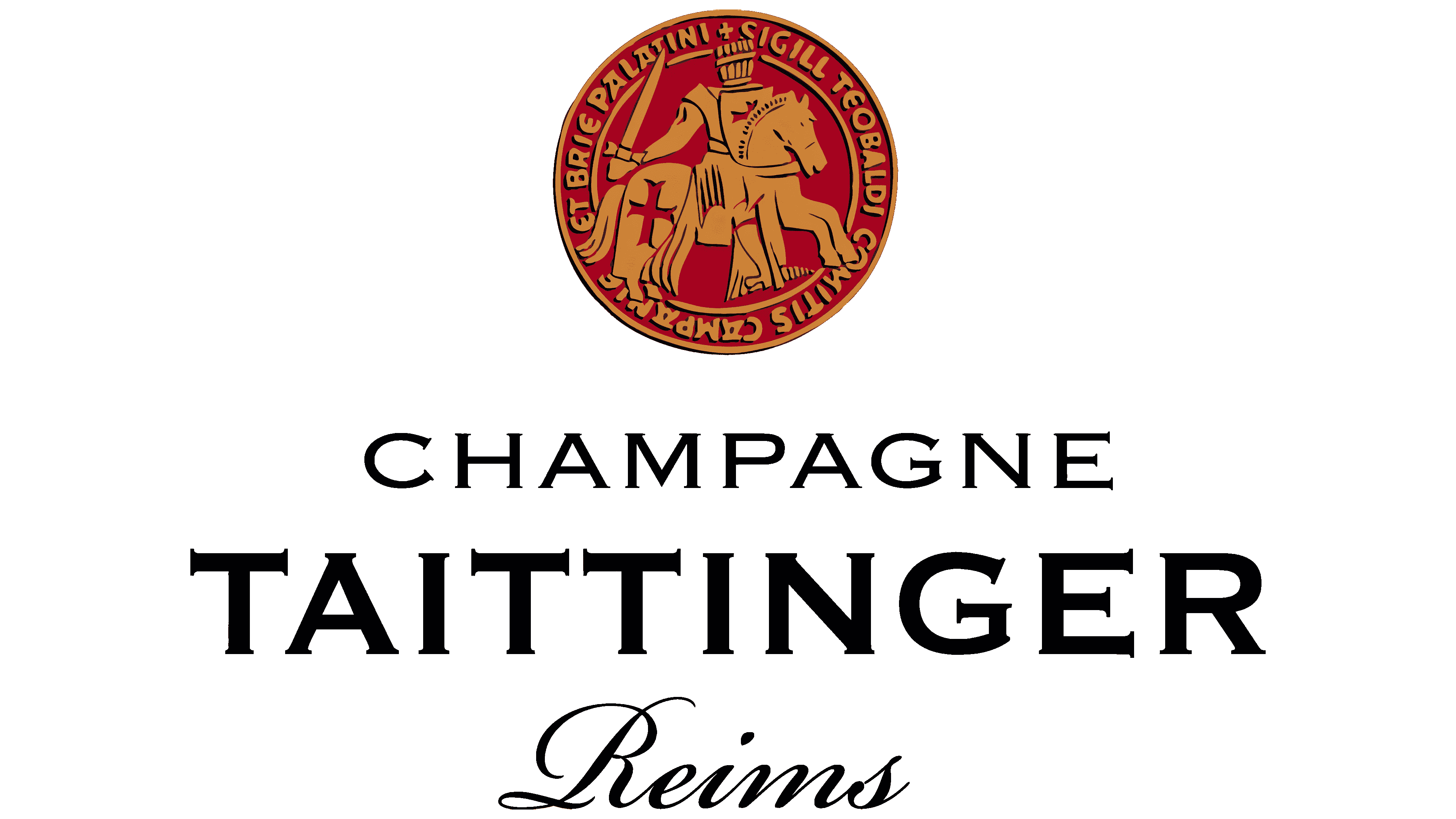
 Champagne Taittinger Logo PNG
The Champagne Taittinger logo conveys the value of the wine house as one of the oldest alcoholic beverage producers. The emblem shows respect for the noble family of the castle where the company’s cellars are located.
Taittinger’s roots go back to 1734, when Jacques Fourneaux founded Forest-Fourneaux in Reims, one of France’s oldest Champagne houses. The latter family name entered the story after 1871, when the Taittingers left Lorraine after the German Empire annexed it and settled near Paris.
Pierre-Charles Taittinger first encountered Champagne during World War I. In 1915, as a cavalry officer, he stayed at Château de la Marquetterie, in the middle of the vineyards, and decided to return after the war. The chance came during the Great Depression. In 1931-1932, he and his brother-in-law, Paul Evêque, bought Forest, Fourneaux et Cie, renamed it Taittinger, and acquired the château.
After World War II, Pierre’s son, François, shaped the house around elegant, Chardonnay-led Champagne. The cellars were set in the chalk galleries of the former Saint-Nicaise Abbey. In the early 1950s, Taittinger created Comtes de Champagne Blanc de Blancs, made entirely from Chardonnay from the Côte des Blancs. After François died in 1960, his brother Claude took control.
Claude expanded advertising, launched the artist bottle collection in 1966, and helped bring Taittinger to the US, including the Domaine Carneros project in California. The family later built a wider group with “Société du Louvre”, “Concorde Hotels”, “Hôtel de Crillon”, and “Bouvet-Ladubay”. In 2005, Starwood Capital bought the group, but in 2006, Pierre-Emmanuel Taittinger repurchased the Champagne house with backing from Crédit Agricole. In 2015, Taittinger opened Domaine Evremond in Kent, the first English vineyard owned by a French Champagne house.
Meaning and History

The deep roots of Champagne are associated with the house of Forest-Fourneaux. This enterprise for the sale of Champagne wines was established in 1734. The house purchased products from the Benedictine monks and exported them. From the beginning of the twentieth century, Fourneaux occupied the premises in Reims, in which Thibaut, the fourth count of Champagne, had previously lived. Legend says he brought Chardonnay grapes (the main variety of Taittinger wines) to France. In 1932, the Frenchman Pierre Taittinger bought a castle with vineyards from Fourno, and in 1934, together with his brother-in-law, he bought the entire Forest-Fourneau house (Forest-Fourneau). A politician and deputy, he devoted his life to winemaking and developed the style of the new wine brand.
The strategy, design, and logo evolved gradually. All of Pierre’s descendants helped promote it. The champagne house changed its name in 1945, thanks to Pierre’s son, Francois. The heir decided that the brand should bear the name of their house, Taittinger. The brand’s global fame came through François’s brother, Claude Taittinger, who sought out and found strategic partners abroad. In 1955, the brand expanded its holdings by purchasing additional vineyards. The production volume increased, and exports began.
What is Champagne Taittinger?
This champagne, made from Chardonnay grapes, embodies the art of French winemaking, imparting characteristic elegance and refinement. The company offers a collection of champagnes from the flagship Brut Réserve to the prestigious Comtes de Champagne, each showcasing a unique style through meticulous grape selection and extended aging in historic chalk cellars beneath Reims. With extensive vineyards in the finest areas of Champagne, the company stands out for its family-run business model and commitment to traditional champagne-making methods.
The house is very proud of its history, traditions, and recipes. This is reflected in the brand’s emblem, which has not changed since its inception and evokes the Champagne region’s history. In the late seventies and early eighties, the house hired renowned artists to design its brand (the Taittinger Collection series). They tried to convey that Taittinger was “the spirit of France in a bottle.” And the seal of the region’s ancient royals on the logo is also fully consistent with the brand’s idea and reflects it.
As a visual sign, we used an imprint that copies Count Thibaut’s sigil, featuring a knight on horseback equipped for the Crusades. Count Thibaut (Theobald IV, King of Navarre) went on the Sixth Crusade like his grandfather, in whose castle the house of wines was located. Since then, the seal of the Counts of Thibaut has featured a corresponding image. Around the knight, the logo says Sigillum Theobaldi Comitis Campanae et Brevae Palatini, the seal (symbol) of Theobald, Count of Champagne and Brie (1201-1253).
The wine house chose the sign because the Taittinger family has built its business and participated in the region’s political life for many years. And over the years, their wine has become, in fact, the hallmark of Champagne. The trading house unites family spirit, experience, focus on the future, responsibility, and strict standards.
The brand name is printed on the logo in simple, even, strict black letters. It symbolizes reliability and a solid position, and complements the idea of Taittinger products’ antiquity. Beneath the title is a dainty, vintage-inspired Reims signature. This is where Taittinger’s business center has been for many years.
Font and Colors
The brand’s main colors are gold, red, and black. This elite, classic combination conveys the brand’s spirit and historical roots. The golden tones in the image are:
- A tribute to the gold on the Champagne flag.
- The color of sparkling wines.
- A sign of the brand’s elite.
Red is the color of grapes, love for the motherland, and bloodshed for France by the representatives of the family (Pierre’s son, Michel, died in the war, and Pierre himself was wounded). Red also appears as the sealing wax.
The font of the main inscription resembles Raavi but with small serifs.