


 Chevrolet Logo PNG
The brand name promises the user long journeys on different roads. The Chevrolet logo symbolizes the car’s versatility: from city streets to tracks to race tracks, it can do it all. The sign also hints at the availability of auto repair parts.
William C. Durant founded General Motors in 1908, building it around Buick, Oldsmobile, Cadillac, and other brands. After an aggressive acquisition spree, GM forced him out in 1910. Louis Chevrolet, a Swiss-born racer known for driving a Buick in Durant’s promotional races, became the public face of Durant’s comeback plan.
Chevrolet Motor Car Company was founded on November 3, 1911. Its first model, the Series C Classic Six, appeared at the 1913 New York Auto Show with a six-cylinder engine, left-hand drive, and electric lights. Louis Chevrolet wanted expensive performance cars, while Durant wanted a mass-market rival to the Ford Model T. In 1914, Louis sold his stake and left the company.
Durant shifted Chevrolet toward lower-priced cars such as the Royal Mail roadster and Baby Grand. Sales reached 70,000 cars in 1916 and 125,000 in 1917. Using Chevrolet’s success, Durant bought shares in GM. On May 2, 1918, Chevrolet joined General Motors, returning Durant to GM leadership. Under Alfred Sloan, Chevrolet became GM’s main weapon against Ford. In 1929, it outsold Ford in the US, selling more than 1 million cars.
During World War II, Chevrolet built military trucks and aircraft engines. In 1953 came the Corvette, followed by the small-block V8 in 1955 and the Bel Air’s peak in 1957. In 1966, Chevrolet launched the Camaro as a direct answer to the Ford Mustang. In 2009, the brand went through GM’s bankruptcy and restructuring.
Meaning and History
The history of the famous logo is shrouded in many legends and stories. The Chevrolet Story says that Durant, while traveling in Paris, saw an infinity symbol on hotel wallpaper. Inspired by this idea, he created a world-famous logo. Durant’s daughter said in her book that her father drew the logo during dinner, “somewhere between a soup and fried chicken.” The founder’s wife states that a newspaper ad for the Coalettes inspired Durant while they were on vacation. Another version says that the emblem is a tribute to Louis Chevrolet, who was born in Switzerland. The cross on the flag, the symbol of the rider’s homeland, visually intertwines with the company logo. Most interestingly, it is still unknown what the logo means and which origin story is real.
What is Chevrolet?
Chevrolet is a car manufacturer known for its innovative technologies and high-quality standards. The company was founded in 1911 and was named after its founders, brothers Louis and Arthur Chevrolet. Today, it is a division of General Motors and produces a range of car models, including sports cars, pickups, SUVs, crossovers, and sedans. Recently, the company has started developing electric vehicles.
1911 – 1913
The Chevrolet brand logo has changed many times. The company’s first emblem has nothing to do with the famous cross, also called a bow tie. The brand’s founder, William Durant, created the first logo. He wrote the company’s name himself, underlining it with a line. The emblem is in bold black type. It was used for the first car in the C series, the Classic Six, built with Louis Chevrolet.
1913 – 1914
In the mid-1910s, Chevrolet used a logo with a cross consisting of a rectangle and a parallelogram. It had a white frame that seemed voluminous because of the many distinct lines drawn on it. Inside, the brand name appeared in white letters set in a bold font with long serifs.
1914 – 1934
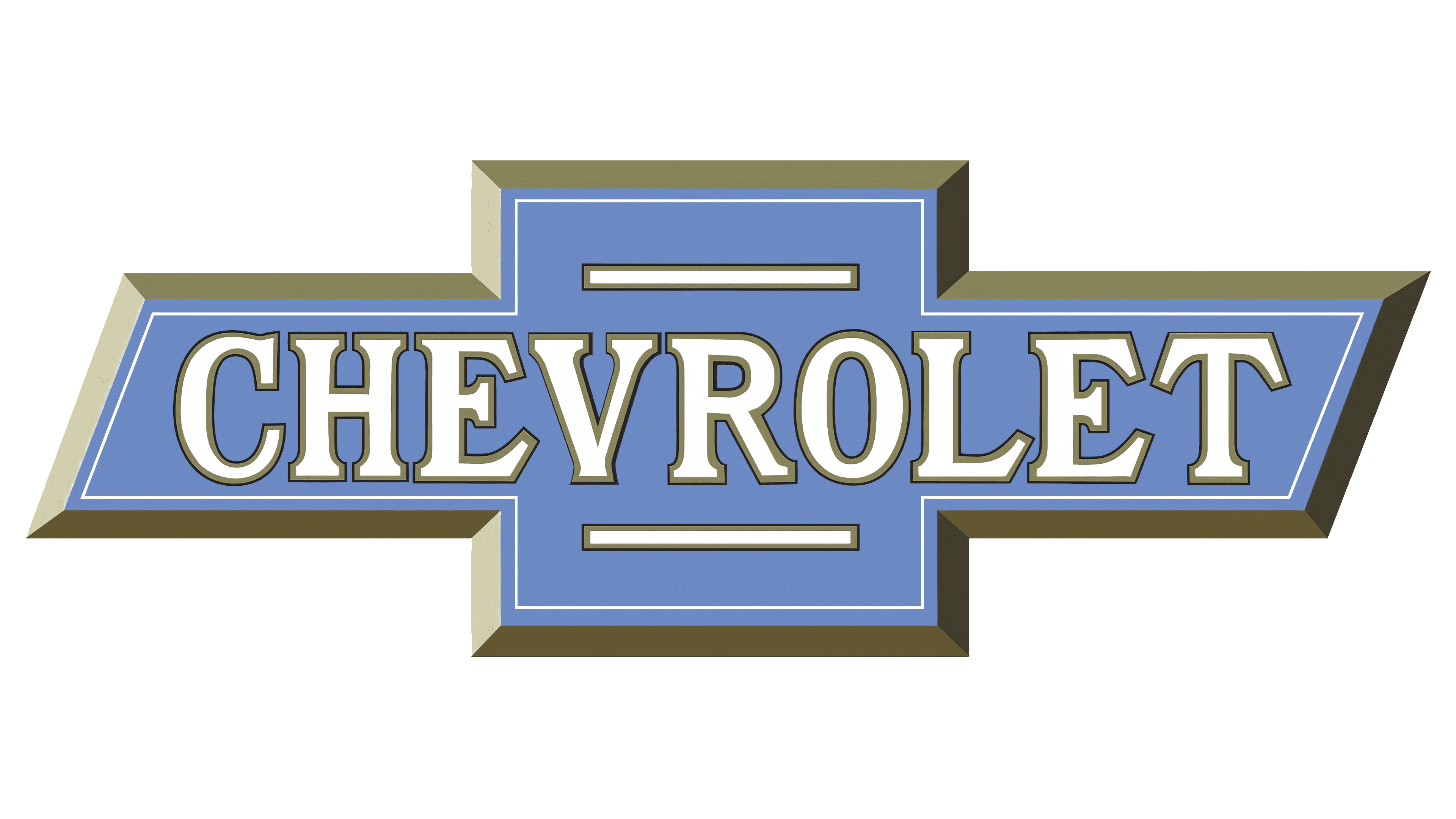
1914 – the beginning of the bow tie’s history. The logo features a cross, plus, or infinity sign. The emblem’s main color is light blue. The company name is bold and white. The text is centered horizontally across the cross. White lines above and below underline the brand name. A gold outline frames the bow tie, text, and lines, adding a bulging, three-dimensional effect. Inside the cross, you can also see the inner border of the solid white line. The logo was created to honor the release of the Chevrolet H and L series models. The emblem has remained unchanged for 20 years, adding sophistication and uniqueness to the brand.
1934 – 1940
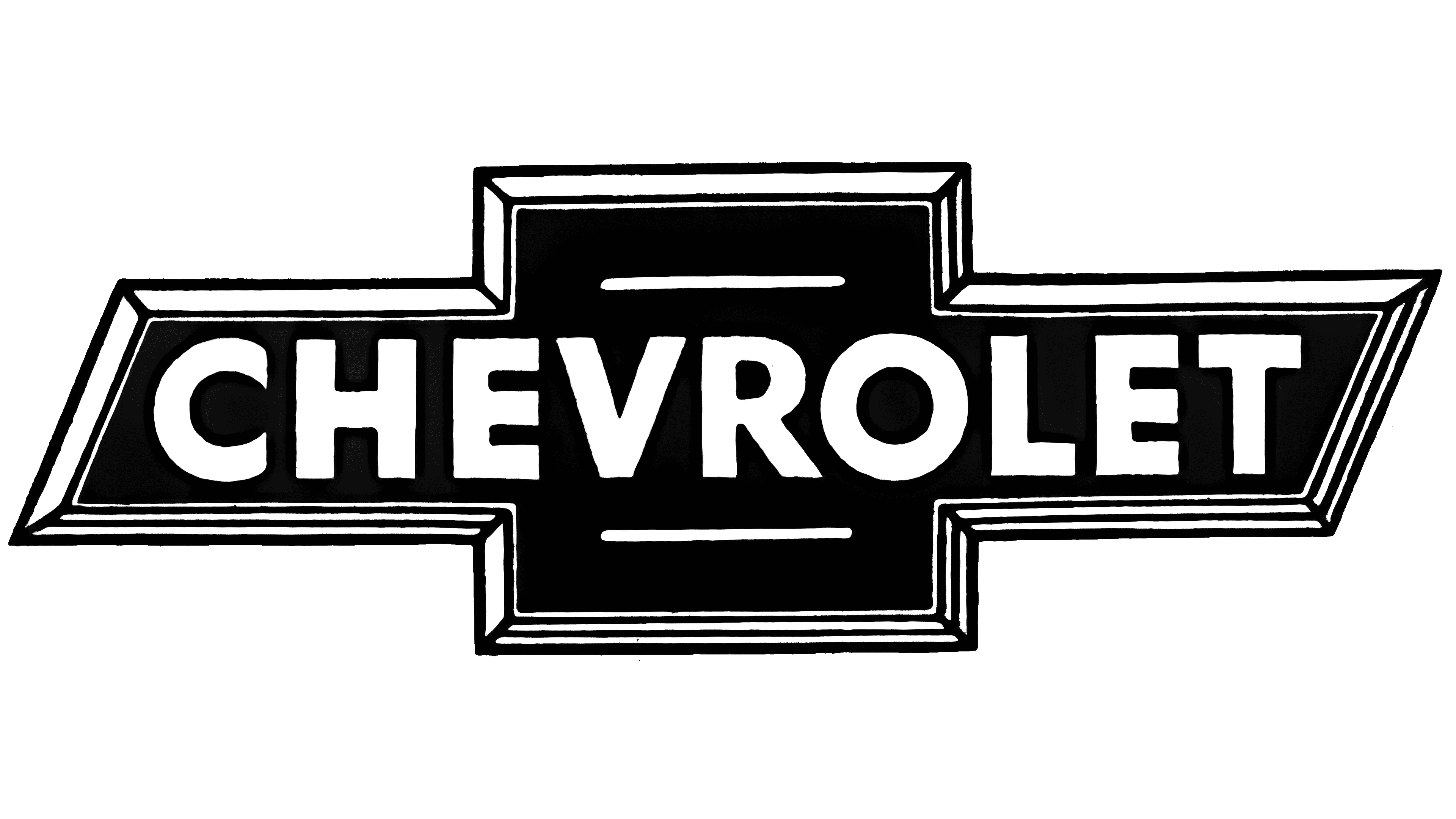
In 1934, Chevrolet radically changed its style. The light blue hue disappears, and black comes in its place. The text widens, but the color remains white. The company also kept the white lines and inner trim, but now without the gold trim. The bulge effect was created using additional outer lines. The font became more modern, and this design was perfect for printing in black-and-white newspapers. The logo represents courage and determination.
1940 – 1950
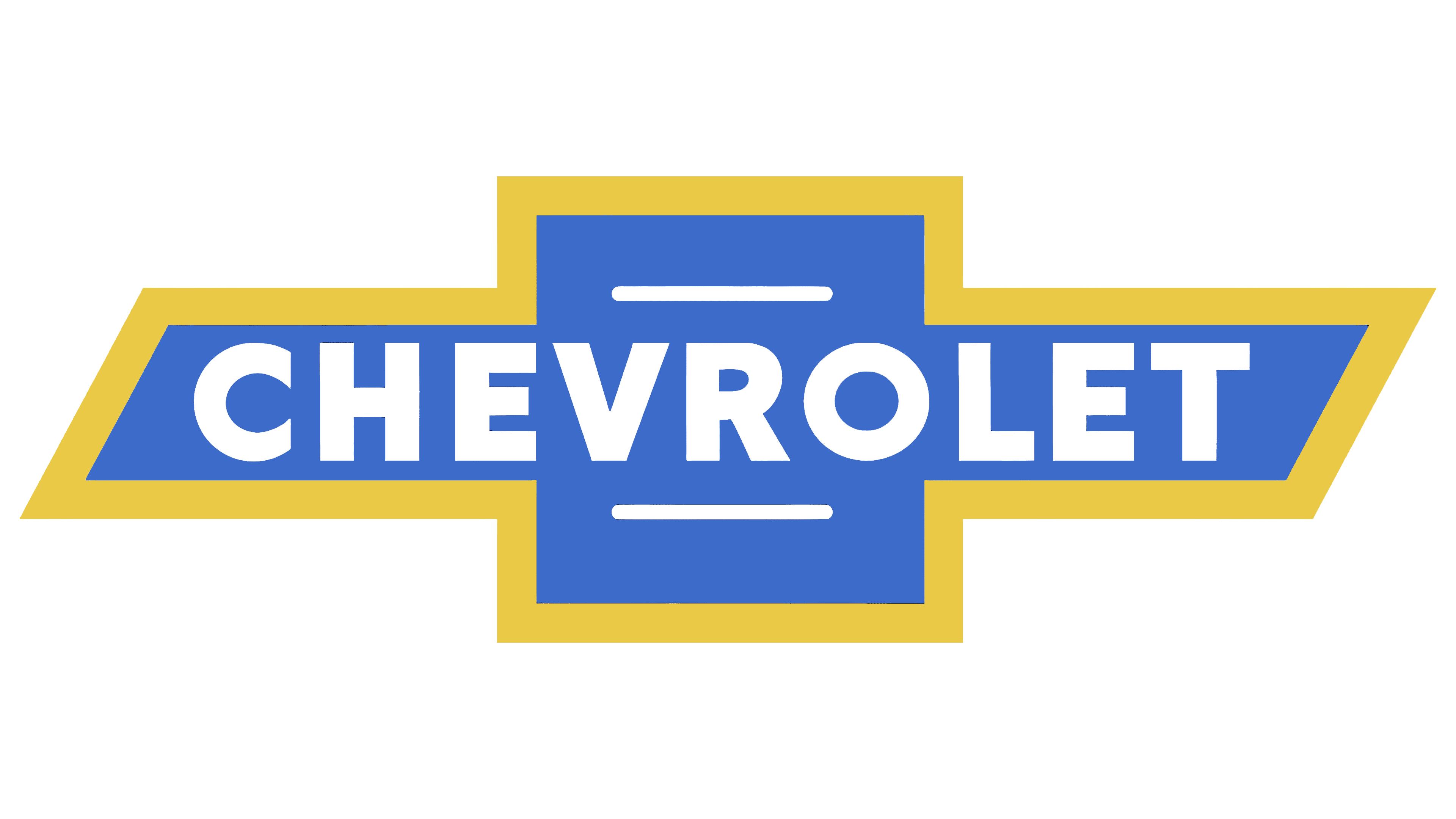
After six years of using the monochrome logo, the creators returned to the color version. The blue logo color becomes more saturated. The font remains the same as on the previous emblem. The inner white border disappears, but the gold border returns, though only on the outside. The logo loses its volume and appears in 2D. The logo was brighter to attract a younger audience.
1943 – 1945

Along with the striking logo, Chevrolet used another emblem that was radically different from the previous one. The brand removed the famous cross, leaving only the company name. The font changed completely, and the color turned black, with serifs along the edges of each letter that betrayed sophistication. Big V stood out from the rest.
1950 – 1964

Chevrolet changed the logo’s main colors, replacing blue with a rich red. But the beloved cross returned, now white. The text is bold again, with serifs and an additional detail: red italics. The emblem’s background is an oval with a gray “highlight” that resembles a shadow, which adds volume to the figure. The redesign likely symbolized the company’s rapid growth and high productivity.
1964 – 1976

In the 1960s, a new style emerged in the United States: minimalism. Modern trends also influenced the company’s logo. Chevrolet removed the bright colors, leaving only a white cross and black italic text. The font became bolder and more modern, and the spacing between letters decreased. A thin black line frames the logo. The emblem has lost its bulk.
1976 – 1988

Chevrolet produced 2.8 million Chevettes between 1976 and 1988, and the model became the best-selling car in 1979-1980. Along with this unprecedented success, the company changed its logo again, returning to a blue gradient. The text has changed completely: from the font to the letter size. A white line and a gray shadow appeared, which added volume to the figure.
1988 – 2002

With minimal details and more color, this is how the logo of a company of that period can be described. Since 1988, the company’s name has been moved beyond the bow tie, and the brand has never returned to the previous versions. The cross is white with a deep blue border, and the text is reddish. The company’s name is larger than the famous bow tie.
1994 – 2001

During this period, the company produced a new generation of the Chevrolet Lumina. This also influenced the brand’s logo. The emblem became brighter and more chrome. The company added its name: “Genuine Chevrolet.” The cross used blue, black, and white strokes. The framing added volume and shine.
2001 – 2002

The logo used for only one year differed from all previous ones. The emblem had no company name, only the famous cross. The logo’s framing was filled with red, with overflow, which added volume. The emblem looks modern and fresh.
2002 – 2010

Since 2002, the most recognizable golden butterfly has been part of the company’s history. The emblem symbolized the company’s strength and power and emphasized its honorary status. The logo is bright gold with a matte finish and no company name. The emblem is a gray chrome frame that emphasizes the badge’s volume.
2010 – 2013
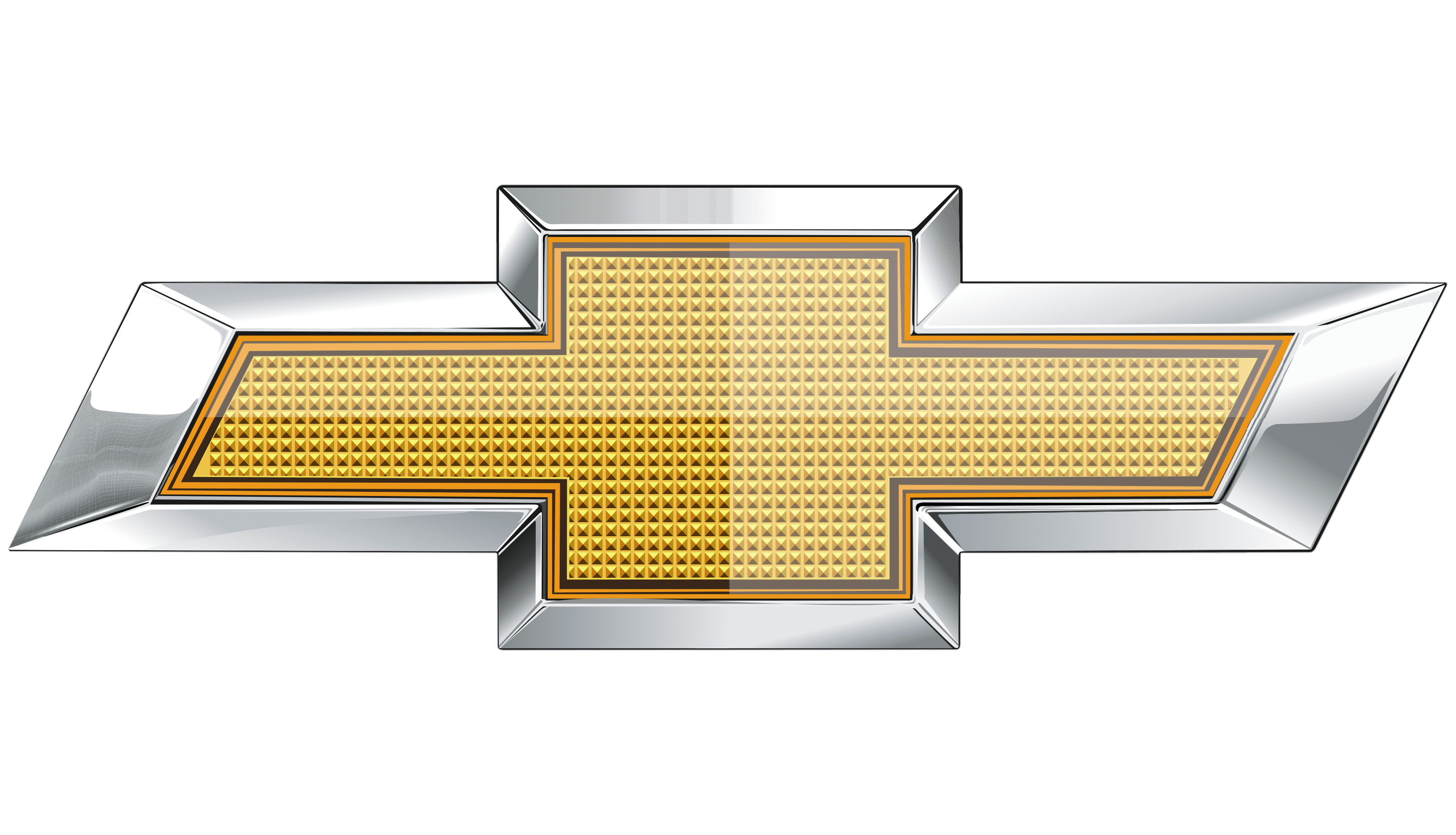
In 2011, the company celebrated its 100th anniversary, and the logo reflected the brand’s greatness. The concept remains the same as in previous years, but some details have changed. The company name is back, and the bezels are a bit wider. Black text and a bold font were used; all letters are spelled out separately. A small checkered pattern is visible within the cross, set against a gold background.
2013 – today
The modern logo is still gold with a silver border, with no additional patterns inside the cross. If you look closely, you will notice the emblem appears tilted. The cross is divided into two parts: a brighter, glossy section and a less saturated, matte section. A new gray font is used for the company name. Some letters connect. The company still uses this logo today.
Font and Colors
The bow tie logo is undoubtedly part of the company’s rich history in automotive production. The modern emblem is a kind of tribute to William Durant. Playing with textures and colors demonstrates the company’s openness to experimentation and new ideas. The logo emphasizes the company’s greatness, ideology, and confidence.
The logo uses gold and silver. Matte and glossy textures complement it, adding style and depth. The text is dark gray, graphite.
The font used for the company’s name is unusual and sets Chevrolet apart from other brands. The text is in bold; all letters are capitalized. Some letters, particularly E, transition smoothly into V and T. The letters are close together, as in the previous company logo.