


 Cirque du Soleil Logo PNG
The name directly influences the Cirque du Soleil logo, reflecting the circus’s main symbol. The bright emblem conveys joy, happiness, carefreeness, and high spirits. It concentrates the rays of goodness permeating every spectator, as well as the powerful energy of talented artists.
Street performers Guy Laliberté and Gilles Ste-Croix founded Cirque du Soleil in Baie-Saint-Paul, Quebec, in 1982. Laliberté had worked as a fire-eater and accordionist, while Ste-Croix was known for stilt walking. Their troupe wanted to build a different kind of circus, without trained animals, using acrobatics, choreography, theatrical staging, and live music.
The first Cirque du Soleil performance took place in 1984 in Gaspé during the 450th anniversary of Jacques Cartier’s expedition. A Canadian government grant funded the early tour, but the company struggled financially. The turning point came in 1987, when Cirque performed at the Los Angeles Festival of Arts and gained major attention in the United States.
Its format stood apart from Ringling Bros. and Barnum & Bailey Circus, the dominant American circus built around animals and classic acts. Cirque offered a more theatrical model and reached audiences who usually didn’t attend traditional circus shows. In 1993, the company opened “Mystère” at Treasure Island in Las Vegas, its first permanent production.
In 1998, “O” premiered at Bellagio with a water stage and a large production budget. Later Las Vegas shows included “Zumanity,” “KÀ,” and “LOVE,” created with Apple Corps and featuring music by The Beatles. In the 2000s, Cirque expanded across Europe, Asia, Latin America, and Australia. In 2015, Guy Laliberté sold control of the company to a TPG Capital-led group for about $1.5 billion.
Meaning and History
The cult circus has been delighting audiences for many years. Over its history, programs, performances, numbers, and artists have changed. But one feature remained unchanged: the show’s impressive scale and approach to creating numbers. Many experts note that Cirque du Soleil marked a new stage in the development of circus art.
More than 3,000 people are involved in the circus, who are organized into troupes. They give performances all over the world. Touring groups perform in permanent circus arenas, under a temporary tent, and in concert halls and theaters. The show uses the same logo, with the sun symbol inside. The brightest-star symbol has been part of the circus’s corporate identity since its inception.
But each logo version has been presented in a different design. The modern emblem is distinguished by its style and an incredibly harmonious combination of elements. It consists of a circle with a smiling sun inside. The picture is complemented by an elegant show title, crafted with stylish, smooth lines.
What is Cirque du Soleil?
Cirque du Soleil is a unique circus show with no analogs anywhere. Its main office is in Canada (Montreal), and creative troupes tour in different cities (including Las Vegas). It delivers unmatched performances that blend acting, choreography, music, and tricks.
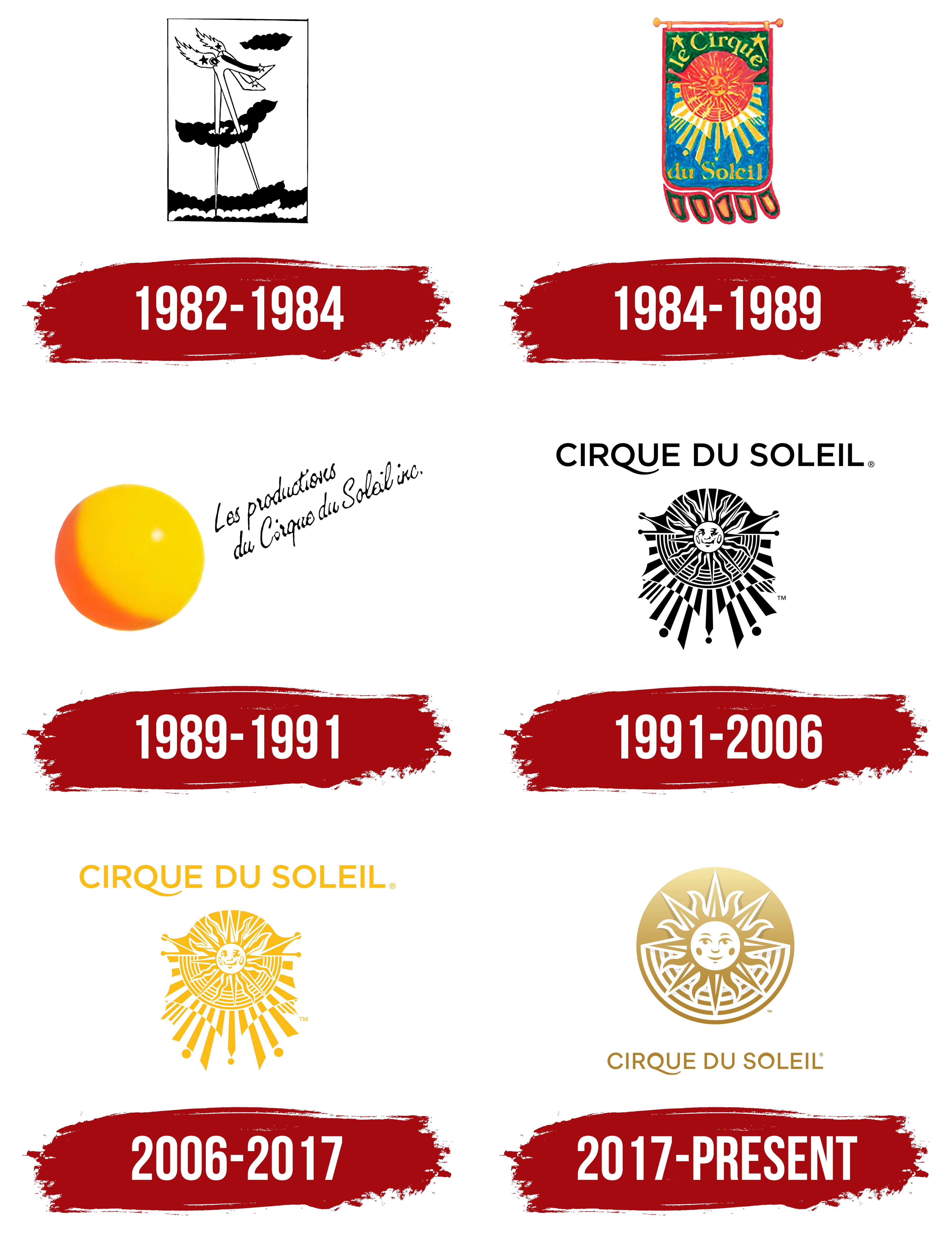
1982 – 1984
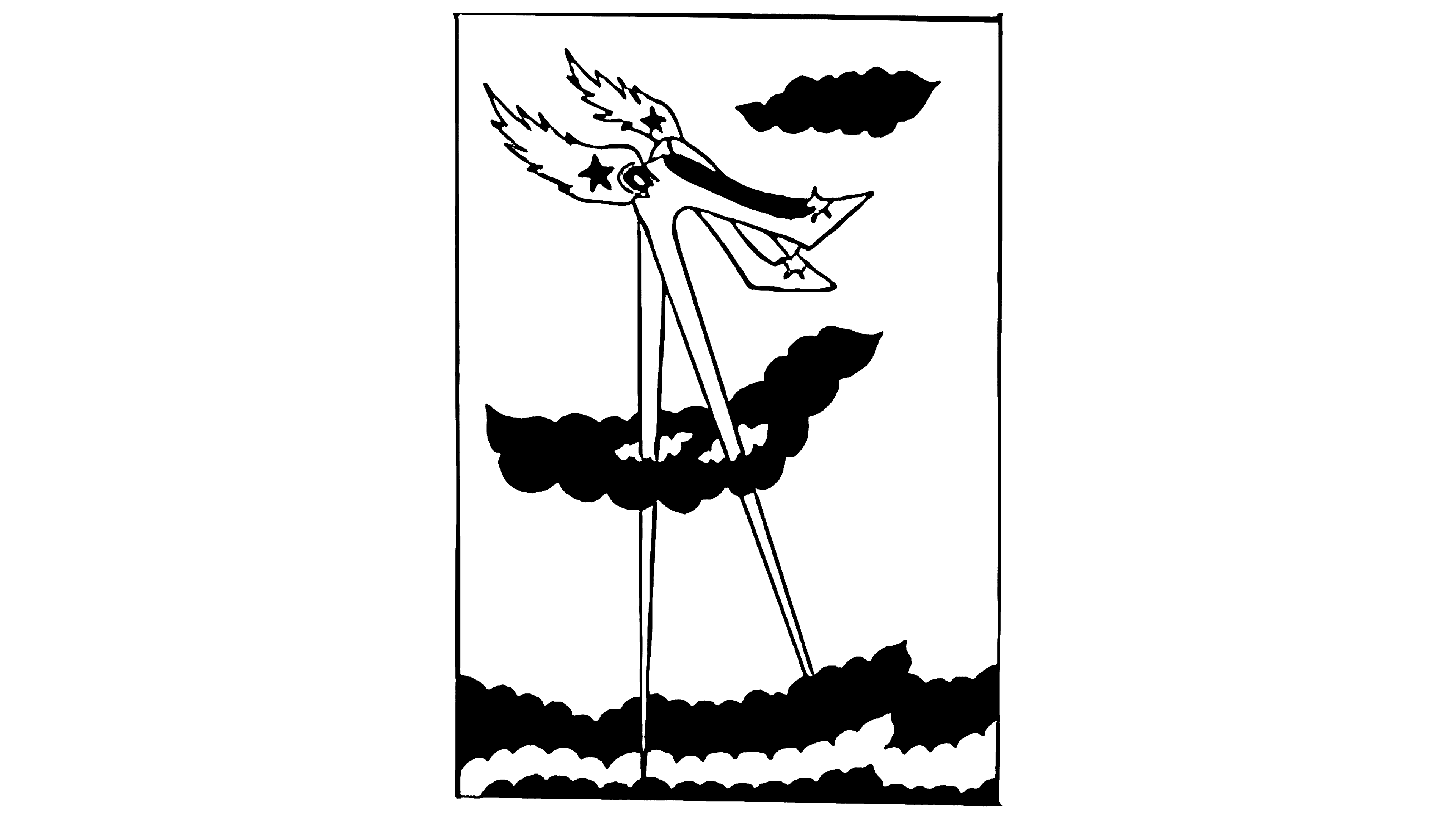
Since 1982, the circus has used a simple, concise emblem featuring an abstract image. It features unusually shaped shoes. The shoes had incredibly high heels. They were so large that they were pierced by elements that looked like clouds at the top and plunged into the ocean from below.
The picture was rendered in monochrome. The shoes, clouds, and ocean were all black, with a white background. Despite the strict palette, the emblem carried a mysterious meaning tied to tricks and magic. But the logo didn’t last long. The circus soon adopted a more colorful, themed emblem.
1984 – 1989

The circus was officially founded in 1984 in Canada. Gilles Ste-Croix and Guy Laliberté helped create the updated show. They created a real Circus of the Sun that continues to impress viewers worldwide. At that moment, a bright logo appeared, perfectly reflecting the new project’s essence. It looked like a banner. The main part imitated red fabric with a sun symbol, its rays extending to the bottom of the picture.
Stars and an inscription bearing the circus’s name added a stylish touch. The first two words (le cirque) were at the top of the banner, and the other two (du Soleil) were at the bottom. The coloring included several bright colors: red, blue, green, and yellow. The overall concept conveyed joy, fun, and carelessness.
1989 – 1991
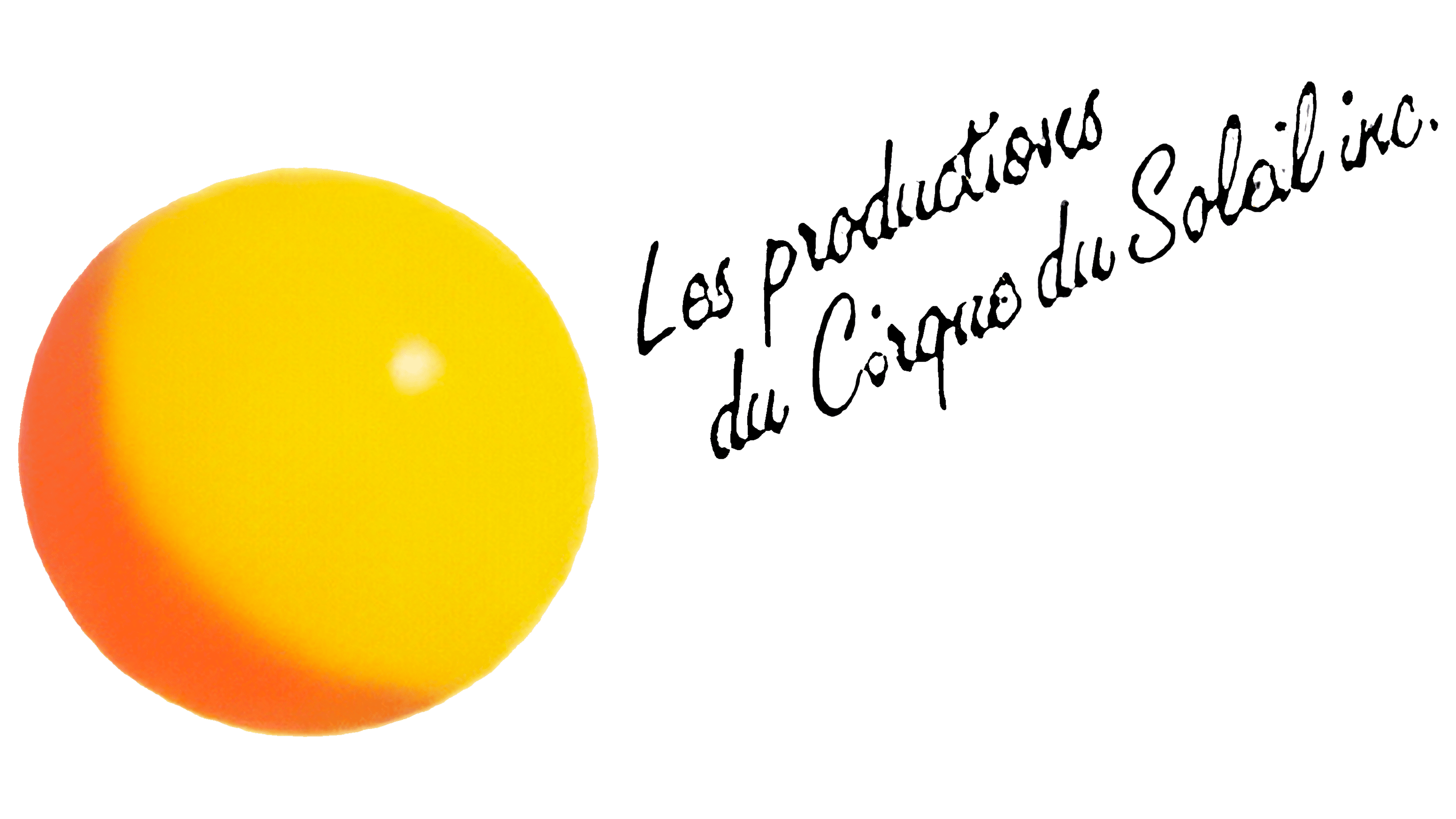
A radical change in visual identity marked the period’s beginning. The circus adopted a more concise, simplified logo. The presented version was the complete opposite of its predecessor. Instead of a banner, it featured a small black ball and a phrase set in a special font, similar to a handwritten inscription.
The phrase used was “Les Productions du Circus du Soleil inc.” The ball was painted yellow and a darker shade. The lettering was classic black. This design decision aimed to update the sun symbol and create a more modern corporate identity.
1991 – 2006
In 1991, the circus used a professional emblem that met all brand design requirements. At the center of the picture was Cirque du Soleil’s main symbol: the sun. It was a complex image made up of lines and strokes in various shapes. It surrounded a smiling, round face.
The mysterious figure was accompanied by the circus name. Cirque du Soleil was done in a straight, thin sans-serif. The letter Q had a bizarre shape, and its tail smoothly extended under the letter U. The color scheme used classic white and black. But the restrained colors didn’t make the emblem gloomy. Because of the fantastic picture, the logo evoked positive fairy-tale associations.
2006 – 2017
In 2006, the corporate identity changed again. This time they were minor. The content, an inscription and the original picture of a smiling sun, remained the same, symbolizing respect for tradition, but the colors changed.
Instead of a strict achromatic palette, an elegant golden hue was combined with a neutral white background. The new performance was a logical continuation of the spectacular show’s development, gradually reaching a higher level. This version became a cult and later served as the basis for creating the modern emblem.
2017 – today
The Cirque du Soleil brand name changed again in 2017. Its new version was distinguished by simplicity, style, and a harmonious color combination. The designers removed unnecessary graphic elements and refined the inscription and the sun’s image.
The golden color used in the previous emblem has shifted to a deeper, more metallic gold. The new logo format conveys warmth, friendliness, and childlike spontaneity. The sun symbolizes the magic and fairy-tale circus artists bring to each performance.
Font and Colors

The current Cirque du Soleil logo exemplifies elegance, style, and expression. The color scheme uses a light golden hue, symbolizing creativity and miracles, paired with classic white to accentuate the main color. The inscription uses a direct, laconic font that harmonizes with the sun’s image.
All letters are the same size and style, except Q, which stands out from the background. The elongated end softens the severity, curving smoothly under the letter U. Together, this makes the logo mysterious and benevolent at the same time, like all Cirque du Soleil performances.