


 CNET Logo PNG
A site dedicated to news from the world of technology, in every possible way, emphasizes its innovativeness. The CNET logo symbolizes progress and continuous change. At the same time, it looks contradictory: it shows the internal struggle that underlies development and transformation.
CNET began as an idea in San Francisco in 1992, when Halsey Minor, a 27-year-old former Merrill Lynch investment banker, planned a media company focused on technology. Shelby Bonnie, managing director at Tiger Management, became his partner and his first major investor, contributing $25,000. In 1993, Bonnie became CFO, and the company began building a tech media brand across television and the internet.
By 1994, CNET was close to running out of money. Paul Allen, co-founder of Microsoft, invested $5 million for a 20% stake, helping launch the cable channel CNET: The Computer Network and the weekly program “CNET Central.” In 1995, USA Networks took a minority stake and aired CNET shows on USA and Sci-Fi. The same year, CNET.com launched, and in 1996, the company went public on NASDAQ.
The late 1990s brought rapid growth. In 1999, CNET reached a market value of $12 billion and began a $100 million advertising campaign. In 2000, it bought MySimon for $700 million, then acquired Ziff Davis Media for $1.6 billion, adding ZDNet, GameSpot, and other properties. After the dot-com crash, shares fell to 60 cents by 2002. Bonnie took over from Minor, cut costs, and CNET returned to profit in 2004.
CBS bought CNET Networks in 2008 for $1.8 billion. In 2020, ViacomCBS sold CNET Media Group to Red Ventures for $500 million, including CNET, ZDNet, GameSpot, and Metacritic. In 2023, CNET faced criticism over undisclosed AI-written articles and later layoffs. On October 1, 2024, Ziff Davis bought CNET for about $100 million.
Meaning and History
CNET content was created for television and was later posted online as TV shows on several sites. And only in recent years have the owners begun to prefer the blog and podcast formats.
What is CNET?
American news resource, founded in 1994 and dedicated to new products and news in the world of computers and technology. 57% of visitors are from the United States.
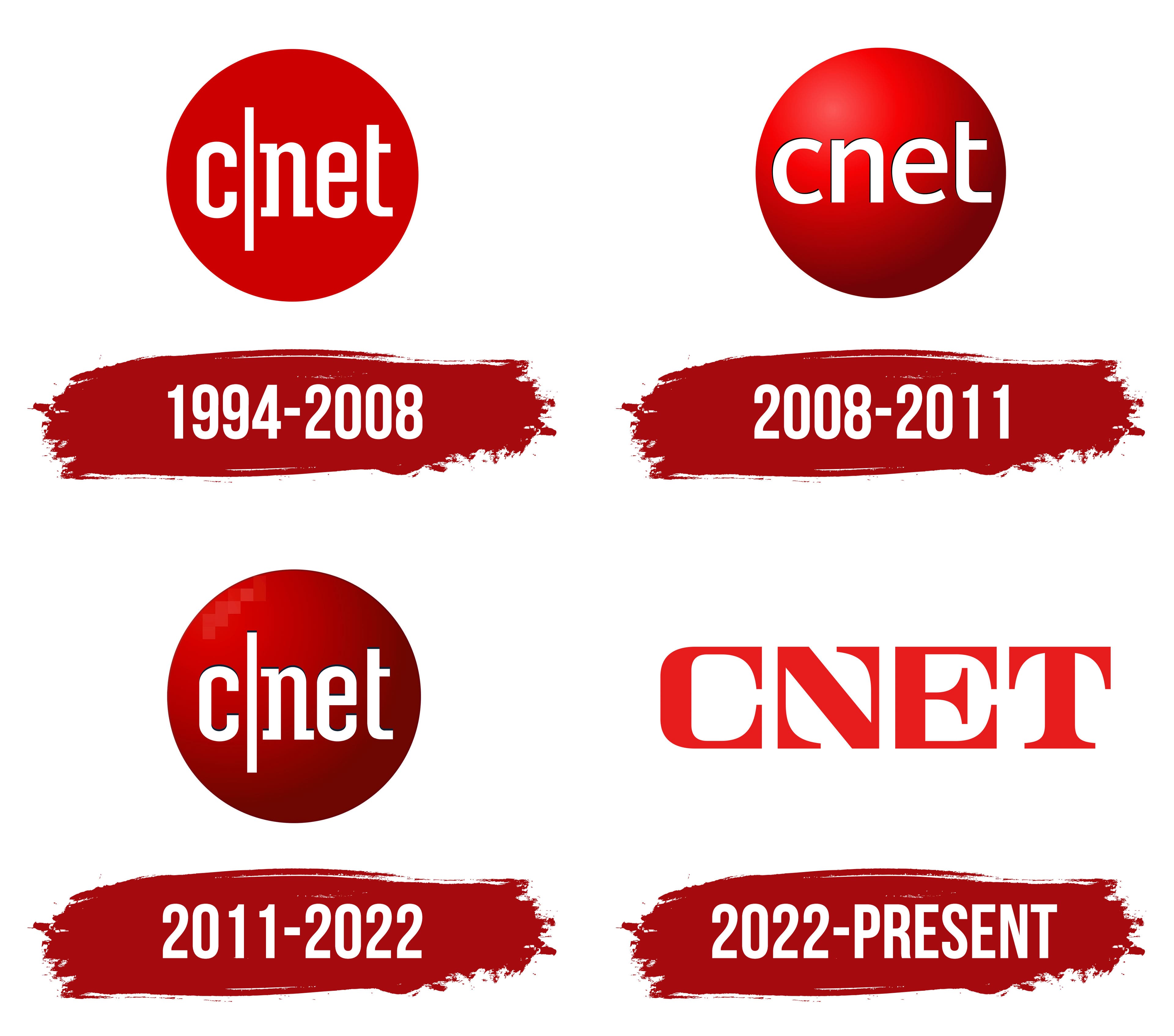
1994 – 2008

The site’s logo is very concise yet conveys all the information the user needs.
It is a red circle with the name “CNET” inscribed on it. The use of lowercase letters indicates the site’s service functions. It only provides information about new computer products. It is the main one. CNET is close to its readers. The site is easy to find and accessible to all.
The image’s trick is the dividing line between the first and all the other letters. It turns the inscription into the word “network” (net), indicating the Internet and the letter C. It immediately demonstrates the scope of CNET’s work. The composition has three readings:
- A computer network, since all of the site’s information is stored and transmitted over a network.
- CNET/net, a CNET company that operates on a network.
- Computer/net: computers/network or information about computers on the network.
All variants quite accurately demonstrate the essence of the product. The squiggly lines running off the letters at right angles hint at the microchips, the flow of information, and the networking.
The circle shape suggests brevity. The site provides the latest and most comprehensive information on all new products. In addition, the form is a prototype:
- A button to be pressed
- Icons on the desktop.
This encourages the transition to the resource. And the use of red reinforces the message, indicating urgency and importance. It is associated with the alarm.
2008 – 2011

In 2008, the site was bought by CBS Interactive. It changed the brand’s visual identity. The dividing line was removed from the logo so users would perceive the word “CNET” as a brand. The lettering became smoother and more rounded. And the circle, thanks to the gradient, became a sphere, serving as the prototype for the globe. The site contains news from all over the world, and whoever uses CNET is always up to date.
2011 – 2022

The logo was restored to its original look and font, as the line feature was highly successful and unique, and the hint of a network in the letters themselves was ideal for the site’s emblem. At the same time, the balloon’s bulkiness remained. Its rounded shape made the logo more visually appealing.
2022 – today

At the end of 2020, the company was sold to the American media company Red Ventures. While the original 2008 deal was for $1.8 billion, Red Ventures bought the site for $500 million, underscoring CNET’s declining popularity and value.
Various steps were taken to get the site back on top, including rebranding. The concept of brand presentation has completely changed.
The modern logo is a CNET lettering in an unusual font. On the one hand, it resembles a newspaper font, linking the emblem to the news. On the other hand, the serifs on the letters are very extended, making each one spherical. This demonstrates the completeness of the information.
The site contains a voluminous body of data from popular podcasts, blogs, news outlets, and review articles. The roundness of the letters also reflects the delicate approach outlined in the company’s mission: introducing people to new products so they can make their own decisions later.
Font and Colors

The main colors of the logo are red and white.
- Red: urgency, exclusivity, cuteness.
- White: news, honesty, openness.
Font inscriptions are unique and designed specifically for the site. It is partly similar to Doric Expanded but smoother and more rounded.