


 Costa Coffee Logo PNG
The light aroma of roasted coffee beans fills the air around the Costa Coffee logo. It grabs the attention of customers. The emblem invites you to sip a delicious, hot cup of coffee that invigorates and puts you in a good mood for the whole day.
Costa Coffee began in London in 1971, when Italian brothers Sergio and Bruno Costa opened a small roastery. Their family had moved to England from Borgo Val di Taro in 1959, bringing a traditional drum roaster with them.
At first, the business supplied roasted beans to London restaurants, hotels, and Italian cafés. Before selling the blend, the brothers blind-tested 112 recipes. The final mix became Mocha Italia, made from Arabica and Robusta beans and roasted slowly for at least 18 minutes. Costa later moved production to Old Paradise Street in Lambeth, where the roastery stayed until 2017.
The first Costa Coffee shop opened in 1981 on Vauxhall Bridge Road. It served espresso and cappuccino in porcelain cups at a time when Britain was still dominated by tea and instant coffee. In 1985, Bruno sold his share to Sergio, who focused on growing the café network.
Whitbread bought Costa Coffee in 1995 for about £19 million, when the chain had 39 UK shops. Under Whitbread, Costa expanded across Britain and opened its first international site in Dubai in 1999. It later competed with Starbucks and Caffè Nero, launched Costa Express machines, and by 2016 had over 14,200 machines in the UK and Ireland. In 2018, Whitbread sold Costa to The Coca-Cola Company for £3.9 billion. The deal closed in January 2019, and in 2020, Costa added ready-to-drink canned coffee to Coca-Cola’s distribution system.
Meaning and History
The company was founded in London by Italian immigrant brothers who moved to England in the 60s. They gave the company their last name, Costa. Bruno and Sergio’s business supplied roasted coffee. After trying many variations, the brothers created a blend of Arabica and Robusta with the perfect roast, which they called Mocha Italia. They delivered their coffee to prestigious hotels and restaurants in special machines. And in 1981, they opened their fashionable coffee shop, serving cappuccino and espresso in china cups. In 85, Bruno left the business. But the establishments were popular, and for 14 years, Sergio had managed 41 coffee houses.
What is Costa Coffee?
This is one of the largest coffeehouse chains in the world. It began as a small, family-owned coffee shop in London and became a gathering place for millions of visitors worldwide. Its success stems from the famous Mocha Italia blend, a closely guarded recipe that combines slow-roasted Arabica and Robusta beans to create a rich, full-bodied coffee. This chain embodies a welcoming café atmosphere, where guests can enjoy fresh pastries, sandwiches, and creative drinks crafted by skilled baristas, making everything from classic espresso to intricate latte art.
1971 – 1995
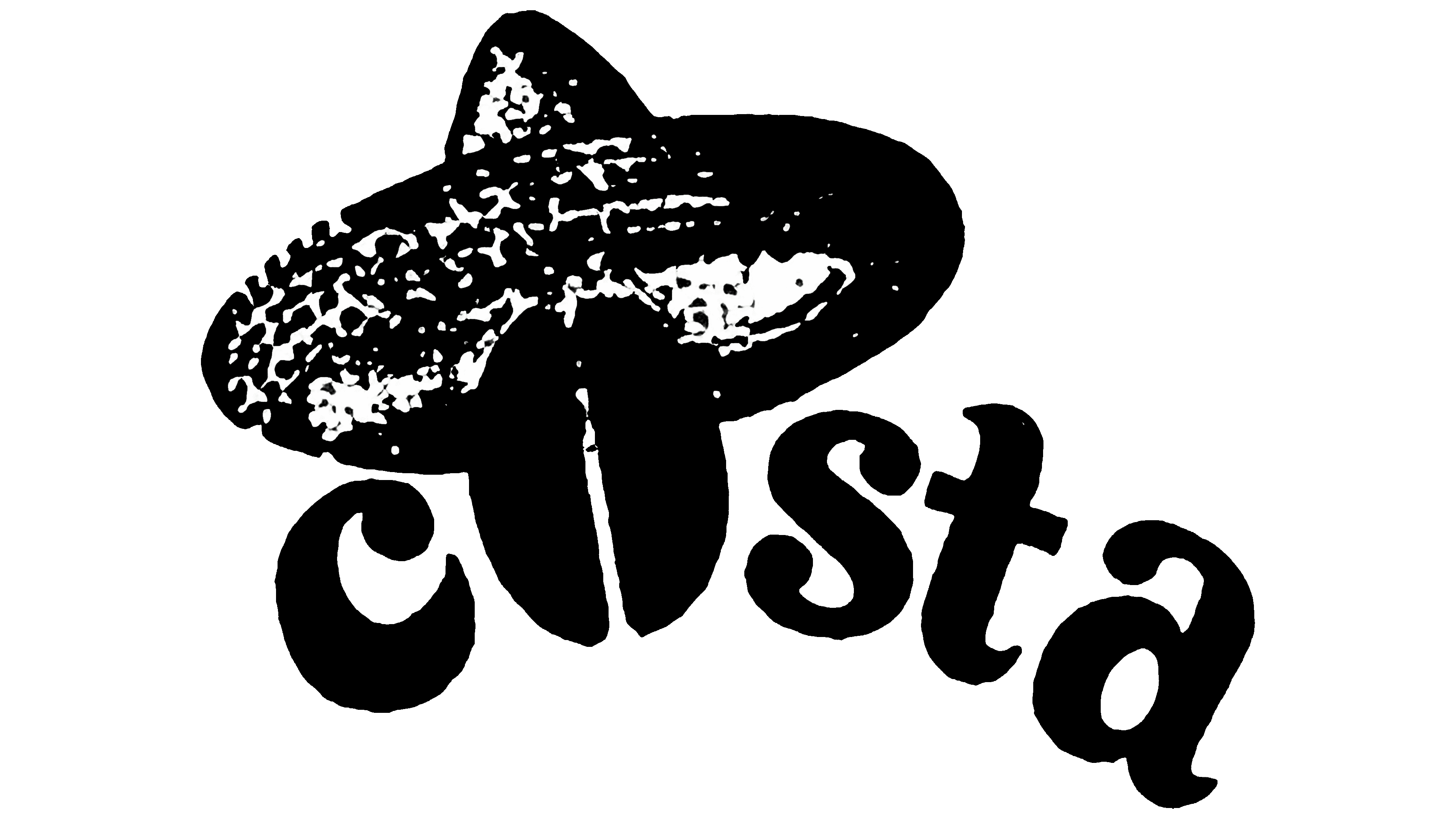
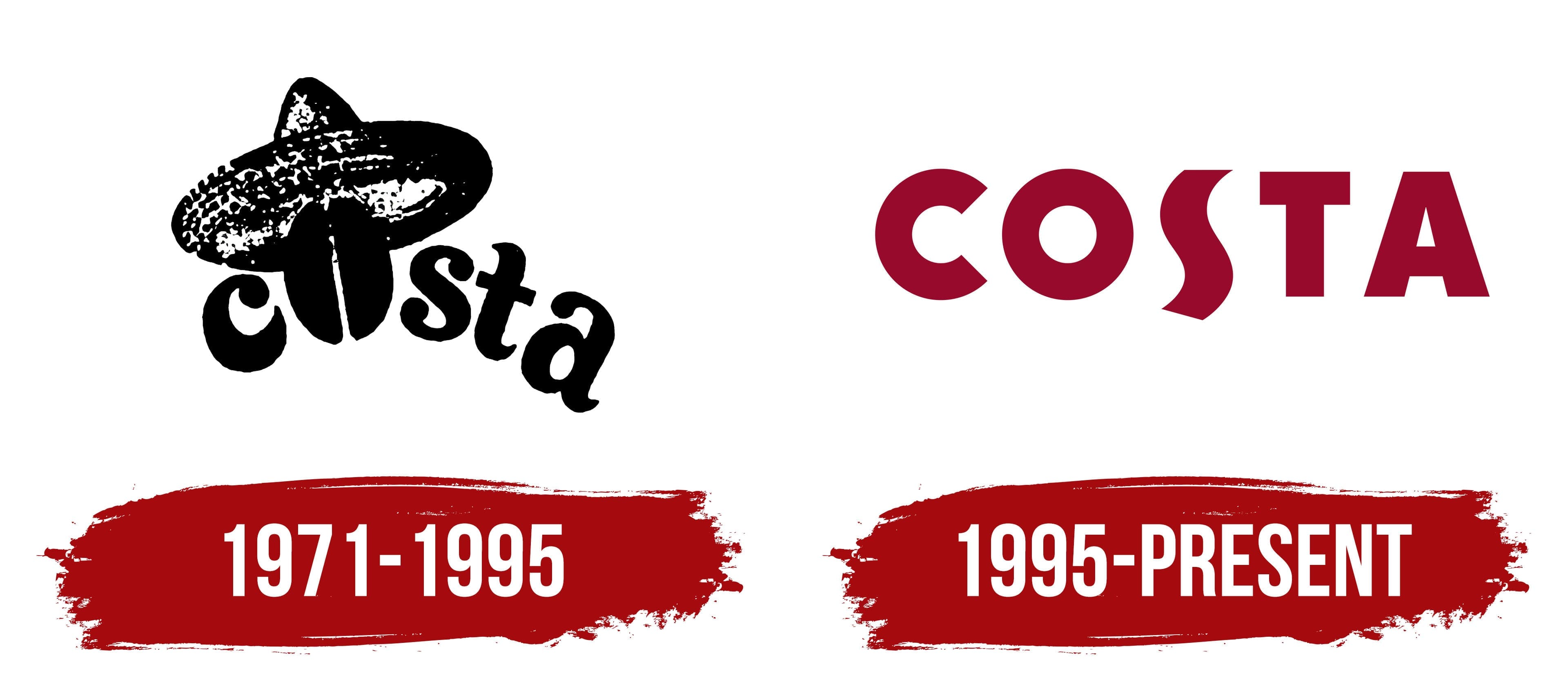
The company logo is simple and concise. It captures the brand’s essence through coffee-related visual cues. It features the inscription Costa, with the letter “O” replaced by a grain in a sombrero hat. This element evokes associations with coffee, coffee plantations, a sunny day, and bean pickers. The inscription is arranged in an arc, as if it were placed atop an oval coffee bean. The emblem is made in black and white, which very accurately conveys the idea of roasting.
1995 – today

The British hotel and restaurant concern Whitbread purchased the chain in 1995. At this point, Costa owned 41 coffee shops. The new owner changed the establishments’ emblems to a more modern design and added color.
The main logo is verbal. It is rendered as the inscription “Costa”, which emphasizes the brand’s historical roots and aids recognition. The unusual shape of the letter S in the inscription resembles steam rising from a hot cup. Capital letters indicate leading positions and popularity.
One variation of the emblem features a red seal with white inscriptions: “Costa” at the top, “Coffee” at the bottom, and “since 1971” on the sides. At the center of the seal is an image of three white coffee beans, with their grooves traced in red lines. A similar logo suggests a place where you can try natural coffee made from ground beans. The founding date suggests considerable experience in preparing the drink. The press image symbolizes quality and excellent taste. In addition, the logo resembles a round cup with coffee beans inside, viewed from above. This is a very symbolic image of a coffee shop.
Font and Colors
The logo uses an unusual shade of Monarch red (medium-dark rose red). This is a warm, rich color. It suggests premium quality, good roasting, and the passion the brothers put into making their favorite drink. Red also symbolizes Britain and hints at the homeland of coffee shops. Fresh coffee berries are also red.
The white color in the logo symbolizes organic and sustainable products (beans are Rainforest Alliance-certified) and beautiful foam and milk. The contrasting white-and-red combination indicates the bright, rich taste of Costa blends.
The early emblem uses Cooper Black, while the new logo uses Berlin Sans FB Demi, with a slightly longer S.