


 Covergirl Logo PNG
Covergirl’s logo demonstrates the company’s global reach and scale, with sales worldwide. Every customer can count on flawless makeup and attention as if they were a girl from the pages of fashion magazines.
CoverGirl’s history began before the brand existed. In 1917, Maryland physician Francis Townsend founded Noxzema Chemical Company in Baltimore to produce his camphor, menthol, and eucalyptus skin cream. For decades, the company sold Noxzema and later added shaving cream and sunscreens in the 1950s.
In January 1961, Noxzema launched CoverGirl with liquid foundation and pressed powder. The line was promoted as “medicated makeup” and contained antibacterial ingredients, including hexachlorophene. Its main audience was teenagers and young women with troubled skin. At first, the range had only three shades for fair skin, yet by the end of 1961, sales had already passed half of Noxzema cream’s record annual volume.
In 1963, Jennifer O’Neill became CoverGirl’s face at about 14 and stayed with the company for about 30 years. In 1966, Noxzema Chemical became Noxell Corporation and moved to Hunt Valley, near Baltimore. CoverGirl then expanded into mascara, eye shadow, lipstick, and nail polish. In 1976, Christie Brinkley joined the brand. She retained its face into the mid-1990s, helping CoverGirl compete with Maybelline in the mass makeup market.
Procter & Gamble bought Noxell in 1989 for about $1.3 billion, making CoverGirl its first color cosmetics line. P&G later moved Max Factor production to Baltimore. In 1997, CoverGirl introduced “Easy, Breezy, Beautiful,” which was used for nearly twenty years. Coty acquired P&G’s beauty division, including CoverGirl and Max Factor, in October 2016 for about $12.5 billion. In 2017, the brand replaced its slogan with “I Am What I Make Up.”
Meaning and History
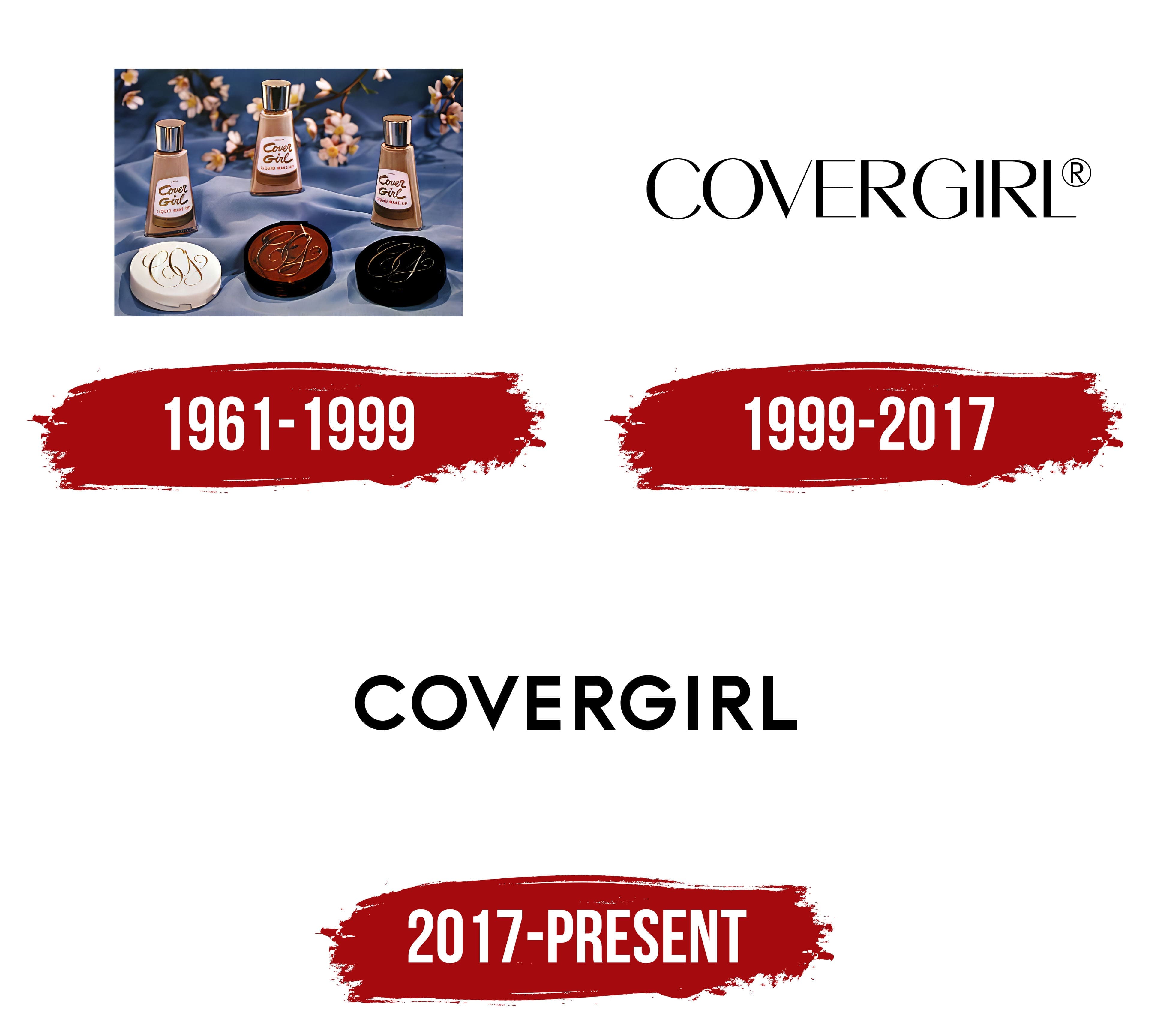
Changes to the company’s visual mark reflect the brand’s transition to new owners. However, the owners’ vision for the brand didn’t change much, so the logo didn’t undergo a major transformation after the purchase. Across all the emblems, the brand aims to present CoverGirl as a brand for women of all ages, locations, and skin colors. At the same time, the emblems’ inscriptions make it clear that the cosmetics brand highlights each woman’s individuality and puts her at the center of attention.
What is Covergirl?
This unique beauty brand brings professional cosmetics to drugstore shelves across America, offering quality products for everyone. The product lineup includes the iconic LashBlast mascara, long-wearing foundations, and vibrant lip shades, combining affordability with effectiveness. The brand’s strength lies in its diverse product range, suitable for all skin tones and types, as well as various cosmetic preferences. The brand also collaborates actively with renowned athletes, influencers, and celebrities, embodying its vision of authentic beauty.
1961 – 1999
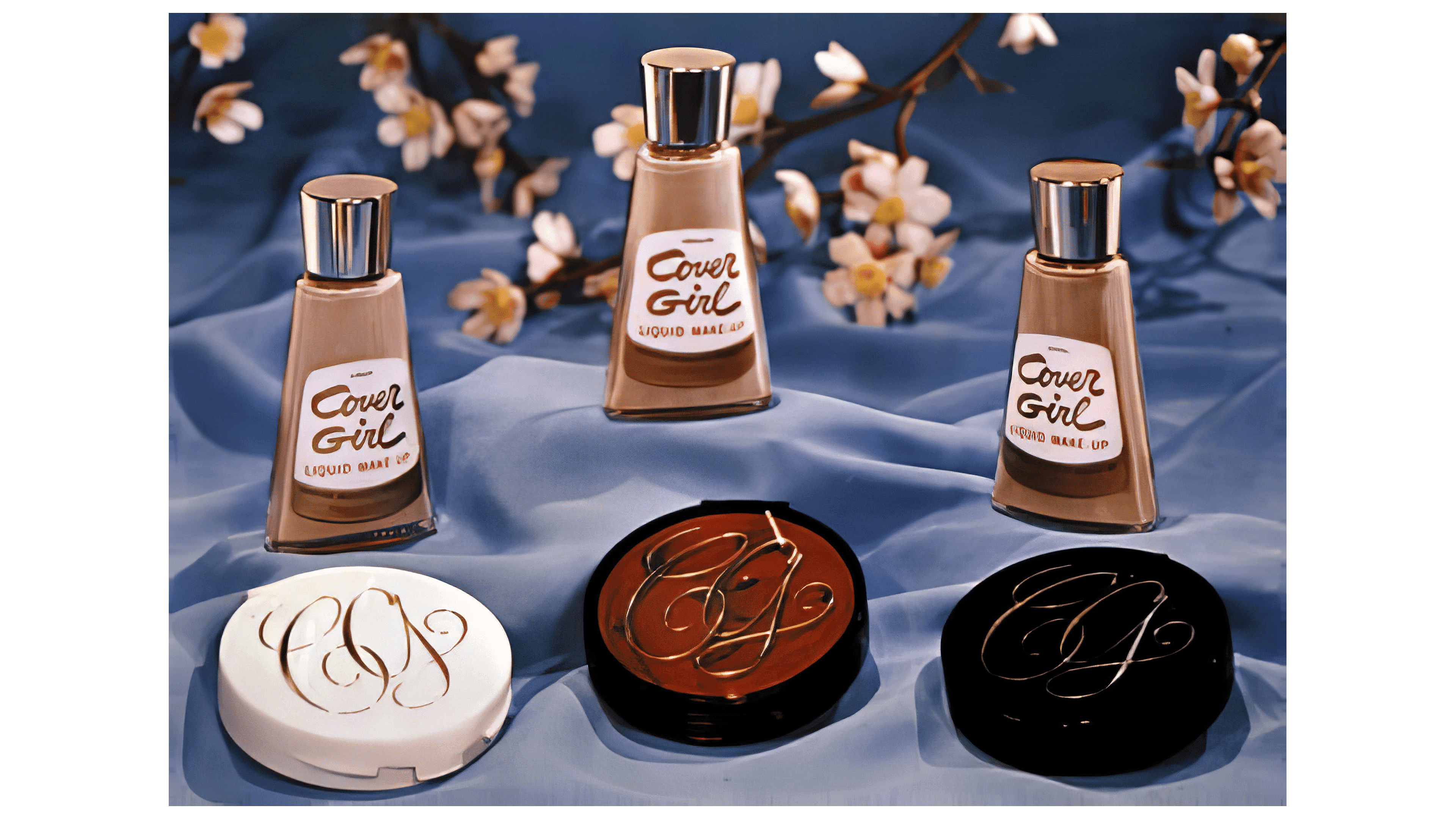
Noxzema promoted CoverGirl by giving its samples to famous models and other celebrities who appeared on fashion magazine covers. That is why the first logo had two variants:
- Presentable, as if for a magazine photo, it took the form of an intertwined monogram of the compound name’s first letters, C and G. The gilded, voluminous symbols were set against a white, red, and black background.
- An ornate but more conventional logo, the name is set on two levels.
The gold letters further emphasized the brand’s elitism and peculiarity. The sign’s duality suggested the brand’s goods were meant for both the famous and women who aspired to become them.
The red, black, and white background hinted at black, Hispanic, and light-skinned people. This emblem shows the company understands women’s needs. It’s tailored to individual needs, so women can get the product that’s perfect for them and always look their best.
1999 – 2017
In 1989, Procter & Gamble acquired the brand. To increase sales, the company updated the brand’s image to modernize its identity. The changes were timed to coincide with the entry into the new millennium.
The logo style remained verbal, but it no longer used the monogram. The brand name was set in capital letters with varying glyph thicknesses, giving the inscription an elegant feel. The font had a twist, a hint that something special lives in every woman, and that she can change the world. This echoed Procter & Gamble’s large-scale projects to improve life on earth.
The emphasis on the name reflects women’s desire to emulate popular heroines, dreaming of recognition as beauties and of appearing on magazine covers. By buying cosmetics used by their favorite stars, female customers felt they were joining the elite. One step closer to popularity and beauty standards. The logo subconsciously reinforces the feeling of getting closer to Olympus.
2017 – today
In 2016, Coty, Inc. acquired the company, bringing its perspective to the visual identity. The lettering changes the font, echoing the image characteristic of Coty’s logo: smooth, clear letters with flowing roundings.
The emblem speaks to the enduring confidence in one’s future. “We become what we strive for, what we use,” is the brand’s new message. The company creates products that help women stand out.
Font and Colors
The logo’s main color is black. It suggests the brand’s products are safe to buy. They are time-tested and environmentally safe. The shade conveys calm and confidence that the cosmetics will accentuate individual features. It’s like a black outline in a pattern.
The font resembles Cosmata Bold, with a sharp V-shaped base like a tick. It shows: “Covergirl” is the best choice.