


 Cricket Wireless Logo PNG
The Cricket Wireless logo demonstrates reliability and uninterrupted communication. Emphasizes a large number of service users. The symbols of the emblem are like pointers directing to a living source, a special point from which access to the Internet is possible.
Leap Wireless International, spun out of San Diego-based Qualcomm in 1999, created Cricket Communications for customers who were poorly served by the main U.S. mobile carriers. At the time, AT&T Wireless, Verizon, and other operators focused on postpaid users with strong credit records.
Cricket opened its first store in Chattanooga, Tennessee, in 1999. Its offer was direct: unlimited local calling for a fixed monthly fee, with no credit check, no hidden charges, and no long-term contract. In the early 2000s, Cricket expanded across small and mid-sized markets that larger carriers often ignored. The company built its own CDMA networks, which required heavy investment but gave it control over coverage and service quality.
By 2005, Cricket had passed 1 million subscribers. Its prepaid model had moved beyond a niche and proved that lower-income and credit-challenged customers could support a national wireless brand. Competition grew in the mid-2000s. MetroPCS used a similar unlimited prepaid model, while Sprint’s Boost Mobile expanded in the same segment. In 2007, Leap rejected a merger offer from MetroPCS and remained independent.
By 2012, Leap began reviewing partnerships and possible sale options as major carriers moved deeper into prepaid wireless. On July 12, 2013, AT&T announced a $1.2 billion deal to acquire Leap Wireless. The FCC approved it on March 13, 2014. At closing, Cricket had 4.5 million subscribers. AT&T then merged Cricket with Aio Wireless, retired the old CDMA network, and moved customers to AT&T’s GSM/LTE system.
Meaning and History
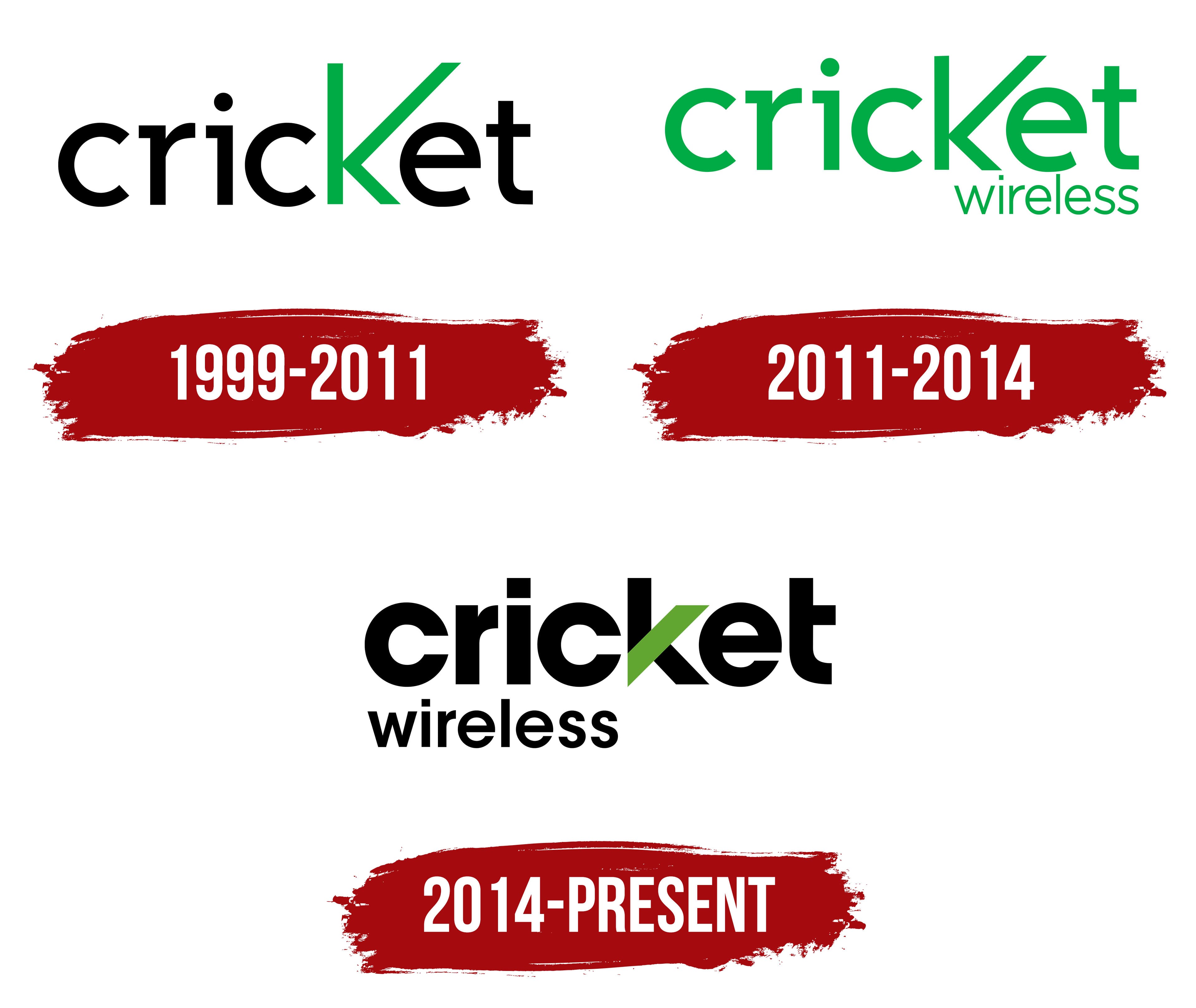
The provider was not intended to be a full-scale resource covering the entire country. Its primary task was to provide services in a limited signal area. In 2014, AT&T bought it from Leap Wireless International and merged it with Aio Wireless. At the time of the acquisition, the subscriber base was already about 4.5 million consumers.
Its initial coverage area was Chattanooga, Tennessee. Since then, the provider has been considered a mid-range organization targeting small rural markets. However, it was the first company to gain access to the 5G network, which was deployed in August 2020.
In the fall of 2007, MetroPCS announced a $5.3 billion merger with Leap Wireless. That was exactly the amount she was willing to shell out for Cricket Wireless. However, less than two weeks later, Leap declined the offer, and two months later, it officially withdrew the application. In December of that year, Cricket acquired Hargray Communications Group, a state-of-the-art wireless communications service.
In September 2008, Cricket signed a 10-year roaming contract with MetroPCS. They jointly launched Premium Extended Coverage, a partner service that includes 14 wireless companies. Then, they signed a contract for a 5-year 3G EVDO Sprint application.
In the summer of 2013, AT&T agreed to acquire the parent company for $1.2 billion. The FCC approved the deal almost a year later. At the end of 2016, the operator finally closed the 2G network but retained the original identity. In total, this brand has three emblems.
What is Cricket Wireless?
Cricket Wireless is a subsidiary of the telecommunications holding company AT&T Inc. It was established in 1999 and was initially owned by Leap Wireless International before changing ownership in 2014. It specializes in wireless services, including broadband internet and cellular connections. Its service area covers the entire United States, with quality coverage provided by the extensive AT&T network.
1999 – 2011
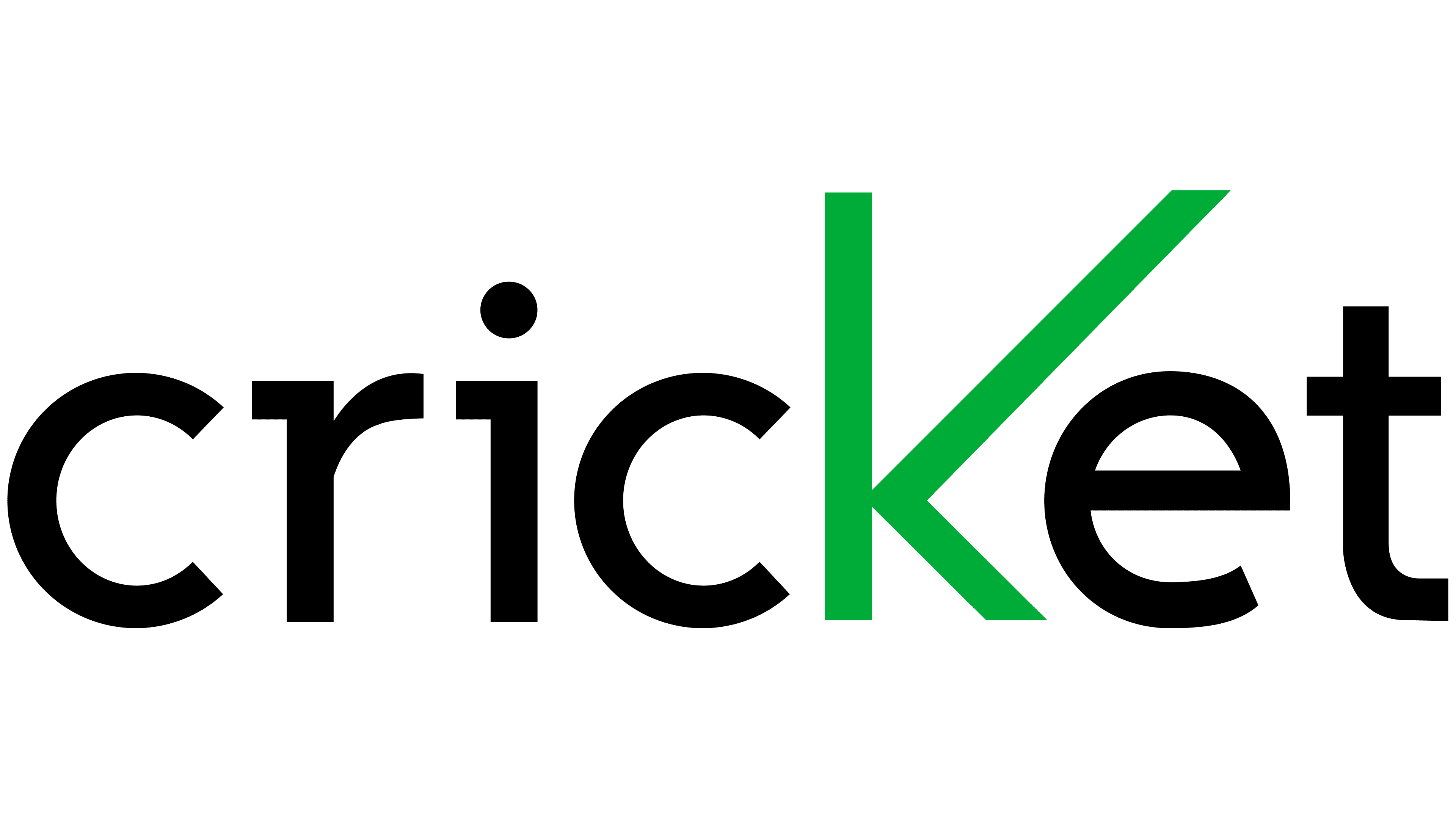
The corporate logo consists of a single element: the wireless service name. At the same time, the word “Cricket” combines both text and graphic functions. Its “K” is played with, differing significantly from the other letters in color, size, and design. The designers lengthened its upper parts so high that the lines’ junction dropped deep down, making the symbol look like a Latin “V”. The rest of the elements are set in a sleek, narrow sans-serif font, with both “c” and “e” perfectly round.
2011 – 2014
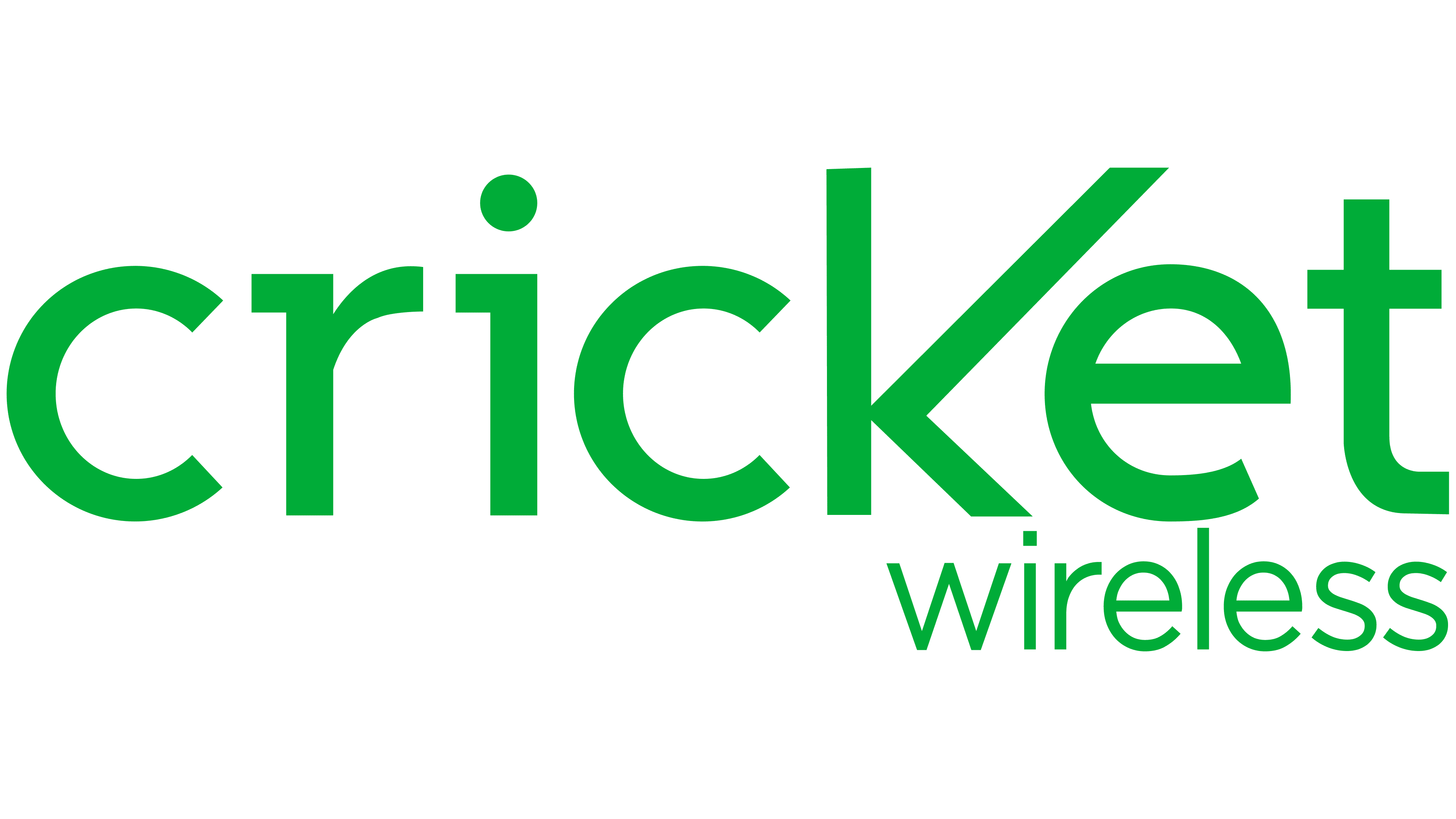
In 2011, the previous logo was slightly corrected. To make the change, the designers only had to replace the black letters with green (like the “K”) and add the second half of the brand name, Wireless, at the bottom right. The lettering is in a subtle variation of the same font. The rest remains the same: lowercase, a precise V-shaped corner, and a shortened bottom half of the semicircular “e.”
2014 – today
A more solid lettering style is now used. It is in wide, bold type, emphasizing the diagonal “K” stroke rather than the entire letter. The top line features the word “Cricket,” with an almost perfectly round “c” and an aligned “e”; the bottom is now proportional to the top. The designers also removed the protruding strokes from the “r” and “I,” and from half of the bar in “t.” In the second row, they repainted “Wireless” black and shifted it left.
Font and Colors
From the start, the logo design revolved around two key elements: green and the original stylized “K.” Any changes incorporated symbols; these two factors remained present, even when the designers adjusted them slightly. The current version features a unique letter with a trapezoidal olive stroke.
For the debut version, the developers have chosen a typeface in the style of the 30s of the last century, resembling Trebuchet by Vincent Connare. In the latest logo, it is replaced by the geometric sans-serif type ITC Avant Garde Gothic Bold. Herb Lubalin and Tom Carnase designed it, and it was released in the 1970s.
The logo’s color is also distinctive, though it falls within the most popular spectrum: green. The debut emblem uses black and a swamp hue (#00ac42), while the modern logo uses olive green (#60a82c).