


 DPD Logo PNG
The DPD logo indicates that the package is sealed and ready to ship. Indicates well-adjusted logistics. It makes the client feel the speed of service and the importance of his package. The company focuses its attention on the cargo.
DPD began in 1976 in Aschaffenburg, West Germany, when several German transport companies founded Deutscher Paketdienst. Demand appeared quickly: in its first year, the company handled over 1.4 million parcels across Germany.
In 1979, DPD moved into international delivery. During the 1980s, it built its domestic network and, in 1984, introduced the cube-shaped logo that remained tied to the brand for decades.
At the same time, France’s La Poste launched express delivery by creating Chronopost in 1985. In the 1990s, DPD expanded across Europe, UPS grew in the region, and Deutsche Post prepared DHL for global competition. A major shift came in 1999, when La Poste Groupe created GeoPost for B2B parcel services. In 2000, GeoPost bought the UK’s Parceline and Ireland’s Interlink for about $277 million and, in 2001, became DPD’s main shareholder.
In 2006, DPD became the single international brand for GeoPost’s network. In 2008, the name changed from Deutscher Paket Dienst to Dynamic Parcel Distribution, reflecting its move from a German carrier to a broader delivery group.
In 2009, DPD launched Pickup, a parcel collection network aimed at e-commerce. GeoPost also expanded through partnerships and acquisitions, including Yurtiçi Kargo in Turkey, JadLog in Brazil, Ninja Van in Southeast Asia, and BRT in Italy.
In 2015, GeoPost united DPD, Chronopost, and Seur under the DPDgroup umbrella, with a new identity developed by Lippincott. In 2023, GeoPost/DPDgroup rebranded as Geopost, while DPD stayed a key brand. In 2024, Geopost delivered 2.1 billion parcels and reported revenue of €15.8 billion.
Meaning and History
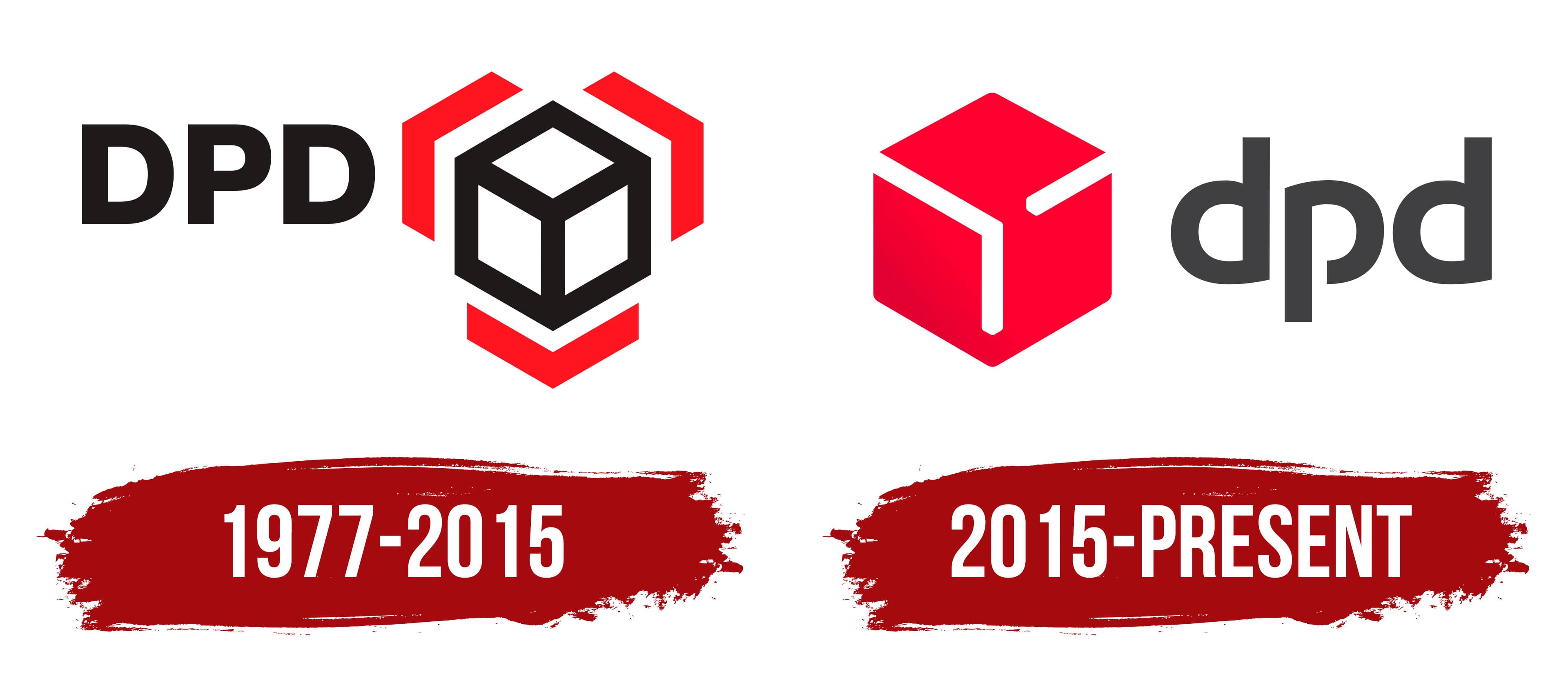
The predecessors of the modern DPD are three services: Deutscher Paketdienst (Germany), Interlink (Ireland), Parceline (Great Britain). In January 2008, they were all renamed Dynamic Parcel Distribution. A little later, in 2015, GeoPost merged the Seur, Chronopost, and DPD branches under the DPDgroup roof, which later included BRT (Italy) and Lenton (Asia). Despite these brands, German DPD, which dates back to 1977, remained the company’s main brand.
The service logo shows the abbreviation DPD. At first, it stood for three German words: Deutscher Paketdienst. The forwarder kept this name when it moved to La Poste. But after the 2008 renaming, the acronym began to stand for Dynamic Parcel Distribution.
What is DPD?
DPD is a brand under which Geopost (formerly DPDgroup) operates in most European countries. This three-letter abbreviation stands for “Dynamic Parcel Distribution.” Geopost is an international courier service based in France that provides parcel delivery services worldwide. It uses different trademarks: for example, it is known as Chronopost in its homeland and Mauritius, as BRT in Italy, and as Seur in Spain.
1977 – 2015

Until 2015, the DPD brand used a logo inherited from its German predecessor. The abbreviation was written in black, sans-serif capital letters on the left. On the right was a white cube with black edges, framed by three red lines. The three-dimensional geometric figure symbolized the parcel post.
2015 – today
DPD, along with other delivery services, merged into an integrated international DPDgroup network. This happened in 2015 after GeoPost’s restructuring. The Lippincott agency developed the name, logo, and corporate culture for the new holding. Before that, experts analyzed 15 business areas to better understand the company’s essence.
They created a flexible brand positioning that adapted across all parts of DPDgroup. As a result, DPD and Chronopost have very similar emblems: a stylized cube on the left and a dark gray inscription on the right. Only the German unit has a red polygon, while the French unit has a blue one.
The multifaceted figure symbolizes the connection among the different companies within DPDgroup. The emblem is shaped like a hexagon with two deep indentations on the right and left. White lines create volume, making it clear that this is a cube rather than a flat 2D object.
Another association is directly related to parcels and indicates DPD’s occupation. The figure looks like a box, or the main cargo of an express carrier. The same logo as in the previous one was used, but Lippincott has visibly modified it to reflect its pragmatic approach. The evolved cube pays tribute to the tradition of Deutscher Paketdienst and steps into the future of Dynamic Parcel Distribution.
Font and Colors
The designers converted the letters to lowercase to make the inscription more inviting and “human.” They also developed new typography that is radically different from the previous version. The font is similar to Explora Explora by typographer Benoît Sjöholm, except that in the word “DPD,” the tops of both “d”s are not angled. The second analog is Canaro SemiBold from the German studio Rene Bieder. Whatever guided the logo’s creators, they modified the typeface by separating the lower part of the semicircle from the vertical line in the letter “p.”

The color scheme has evolved, too. The black lettering turned gray (shade #403F41), and the black-and-white geometric shape became a red cube with a gradient transition from cherry (#C30030) to Pink and Red (#DD002E).