


 Duplo Logo PNG
The Duplo logo is childlike and fun because it accompanies a series of toys for kids. The logo symbolizes optimism, development, joy, and a positive influence on creative thinking. At the same time, the graphics are perfectly balanced with the text, so the verbal information harmoniously complements the visuals.
LEGO Duplo began inside the LEGO Group, founded by Ole Kirk Christiansen in Billund, Denmark, in 1932. By the 1960s, LEGO bricks were sold in the United States and had become common in children’s rooms, but the small parts were still unsuitable for toddlers.
In the mid-1960s, LEGO engineers developed larger bricks for younger children. After testing 3:1 and 4:1 scales, the company settled on a 2:1 ratio. In 1967, LEGO patented a system that allowed larger Duplo bricks to connect with standard LEGO bricks. The line was tested in Sweden in 1968 and launched internationally in 1969.
The name Duplo came from the Latin word “duplex,” meaning “double.” The first sets, numbered 510 and 511, were released in red, yellow, blue, and white. For its first decade, Duplo remained under the LEGO brand. Still, in the late 1970s, Kjeld Kirk Kristiansen separated LEGO construction toys for older children from DUPLO toys for preschoolers.
The Duplo rabbit logo was created by the Danish agency Plan Design and appeared on packaging in 1977. In the 1980s, the line added figures, a train set, and a dollhouse. In the 1990s, LEGO updated its products with a stronger educational focus. At the same time, Mega Bloks and Fisher-Price Little People became key competitors in the preschool toy market. After the brief LEGO Explore name in the late 1990s and early 2000s, the Duplo name and rabbit returned in 2004. The logo was redesigned in 2013 and updated again in 2022. More than 10 billion Duplo bricks have been produced, and bricks from 1969 still connect with modern pieces.
Meaning and History
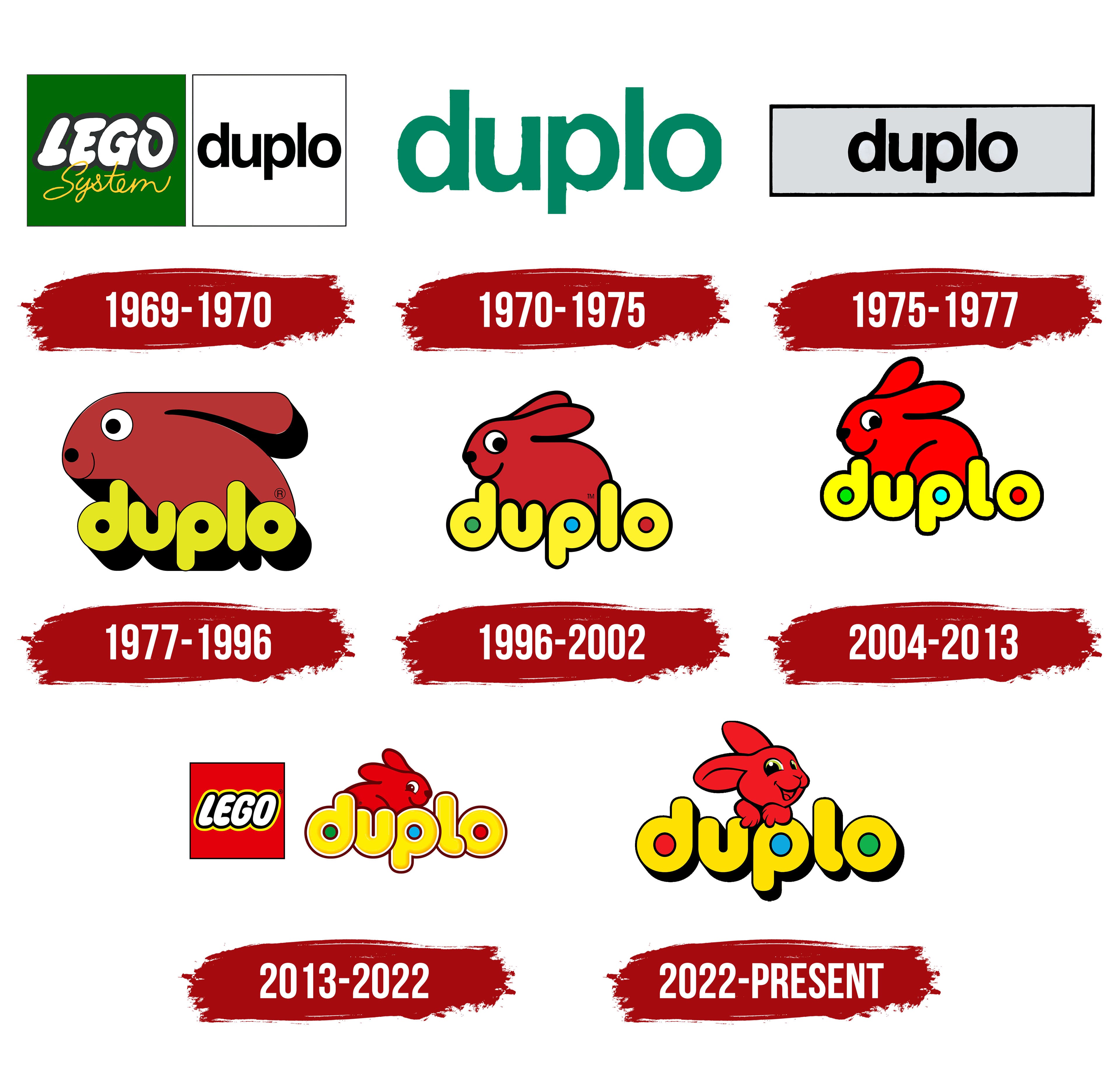
Duplo is one of the most popular designer lines from the world-famous toy manufacturer. Its main feature is the increased size of the components compared with other cube series. The parameters of Duplo elements, including width, length, and height, are twice as large. This is done to minimize the chance of swallowing toys. But this characteristic does not affect compatibility with traditional LEGO options.
Another feature of the series is an expressive visual concept. In the early years of the brand’s existence, it had a simpler, more concise look, but over time it evolved into a bright, cheerful corporate identity. Since 1977, the line has been produced under a colorful logo featuring a smiling rabbit and a stylish, flowing font. The chosen solution perfectly captures the essence of the product. The design emphasizes the children’s orientation and positive and pleasant emotions.
What is Duplo?
Lego Duplo is one of the legendary brand’s most popular toy series. It features multi-colored bricks that are 2x wider and taller than traditional elements from other LEGO lines. They are compatible with each other and can also be combined with classic cubes. This is confirmed by the name Duplo itself, which means “double” in translation. The assortment includes a variety of figures that are produced at a factory in Hungary.
1969 – 1970
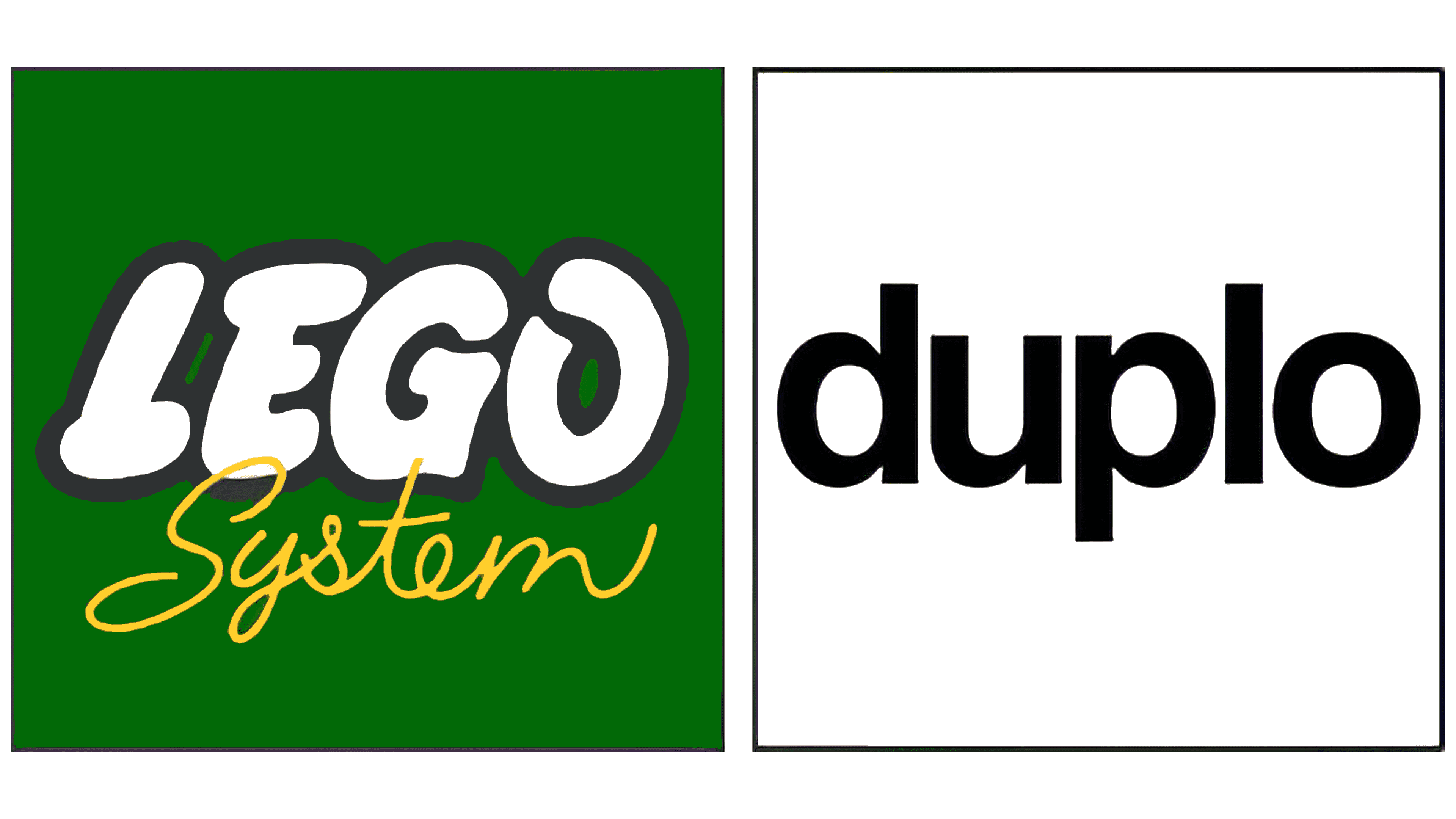
In 1969, the first Lego Duplo set with enlarged bricks was introduced. The packages featured a logo consisting of two squares. The quad on the left was dark green and featured the white word “LEGO” in bubble font, outlined in gray. A little lower was the yellow handwritten inscription “System.” The right square was white and served as a background for the black word “duplo.” The designers designed the brand name in bold lowercase sans-serif letters. This font was reminiscent of Manfred Klein’s Kyrilla Sans Serif Bold.
1970 – 1975

After a long search for the optimal cube size for small children, the management decided to create a line of cubes twice as large. The new series was released in 1969 and marked the beginning of another successful line of business for the Lego Group. Lego Duplo’s corporate identity at the time was a simple, unremarkable badge. It had only the company’s name in a soft, flowing sans-serif.
He demonstrated comfort, reliability, and high quality. These are the characteristics of Duplo children’s products. The new blocks for children aged 1.5 to 5 were wider and larger, eliminating any play-related risks. A turquoise hue was chosen for the logo, which was closer to light green. It symbolizes naturalness, health, and generosity.
1975 – 1977

Since 1975, the series has been produced under an updated logo. It was radically different from its predecessor. The changes affected the color scheme, the general concept, and the font. Instead of a greenish color, the designers used an achromatic palette consisting of black and gray. The latter was used for the background. It favorably emphasized the emblem’s main element- the constructor line’s name.
The inscription itself was made in classic black. It is a symbol of prestige, rigor, and special value. With a light shade, the black color becomes more expressive, and the logo more recognizable. An additional feature is a thin black frame that encloses the inscription.
1977 – 1996
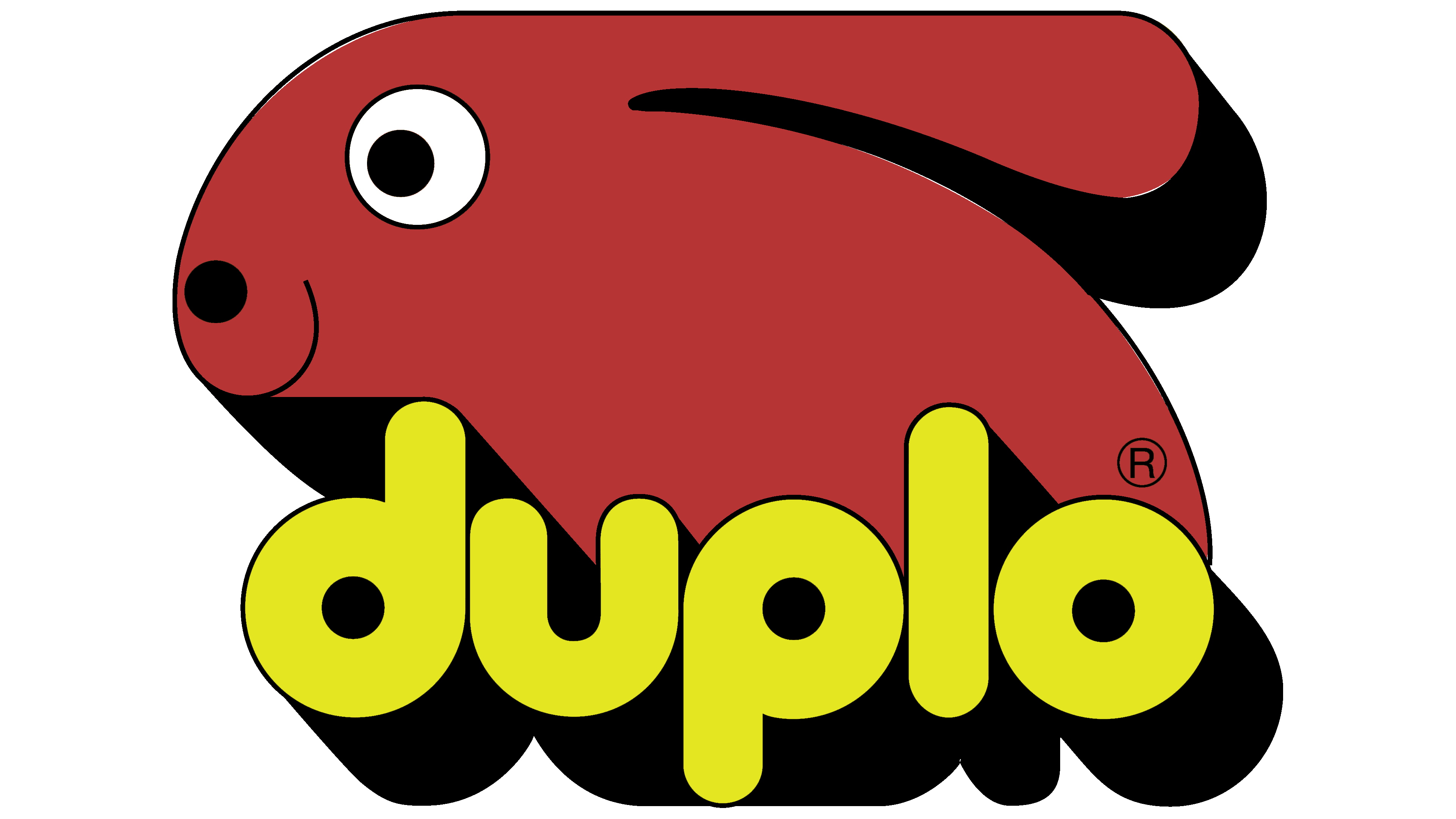
In 1977, the iconic Lego Duplo emblem was created, the prototype of the modern badge. It consisted of a large image of an animal (rabbit) and the name of the construction line. Both elements were made in a single three-dimensional format. This effect was achieved by creating shadows that complemented the animal’s form and figure.
The colors of the logo have also changed dramatically. Instead of a dull achromatic palette, bright colors were chosen. The series title was colored yellow and black, while the rabbit was colored red. Contrasting shades made the emblem bright and memorable, evoking associations with fun, joy, and children’s toys.
1996 – 2002
In 1996, the brand management decided on another redesign. As a result of the changes, the designers’ line received a new, more sophisticated logo. It retained the main elements: the rabbit and the series’ name. They remained in their original places – the rabbit was located above the inscription. But in the new concept, bright colors were added, and the shadows that create the sense of volume were completely removed.
This format made the brand icon fresher, cheerier, and brighter. This was achieved by adding green, blue, and red splashes in the title. The font type has not changed much. The friendly logo existed until 2002, when the line merged with Lego Explore.
2004 – 2013

In 2004, the line loved by many children returned to the market. In the windows, you could see toys with a logo that has not changed much since 2002. The only expressive innovation was a brighter color palette.
The shades became more saturated, which made the logo more memorable and attractive. Thicker contours are another feature of the new emblem. The chosen design has become a symbol of positive changes in toy production. Also, the LEGO Duplo corporate logo demonstrated the product’s success and demand.
2013 – 2022
Over the years, the toy line has become increasingly popular, so the management decided to change the emblem again. The new version was more modern and stylish. An unusual gradient appeared, refreshing the brand icon, and the rabbit completely turned around.
The picture also includes an additional graphic element: a square with the brand name “Lego”. It was painted in bright red, harmonizing with other components and symbolizing energy. The inscription was designed in neutral white, showing balance and reliability.
2022 – today

Another redesign also happened in 2022. The result was an updated, beautiful emblem that combined the best features of all its predecessors. Small shadows are visible here, creating the effect of a three-dimensional font, stylish, bright colors, and a rabbit image. But unlike in the previous images, the animal’s figure is shown in a different form.
The rabbit looks directly at the customers and smiles, raising their spirits. The new design conveys cheerfulness, carefree spirit, and fun. At the same time, a soft, expressive font symbolizes comfort, calmness, coziness, and reliability.
Font and Colors

The Lego Duplo children’s designer is easily recognizable by the bright, eye-catching icon. It consists of colorful, massive letters and a bright image of a rabbit. The wordmark is set in a thick font, with a 3-D effect created by shadows.
The letters have no serifs, which adds softness to the logo as a whole. The palette includes several colors: yellow, black, red, blue, and green. All of them are in harmony with one another and emphasize the series’ main goal: joy and fun for children.