


 DuPont Logo PNG
Although the DuPont logo is bright, it is also austere. This aura is created by the laconic design, which uses the fewest elements. The elements are harmoniously incorporated, forming a balanced mark without feeling eclectic.
DuPont began after the du Pont family left revolutionary France for the United States. Éleuthère Irénée du Pont knew of gunpowder production in France and saw an opportunity in the poor quality of American powder. In 1801, E.I. du Pont de Nemours & Co. was formed in Paris, and in 1802, it was registered in the U.S. near Wilmington, Delaware. Its Eleutherian Mills plant made its first sale on May 16, 1804.
By 1811, DuPont was the largest gunpowder maker in the United States. The War of 1812 increased demand, while a deadly 1818 explosion became an early test for the family business. In 1857, DuPont produced an industrial explosive for mining, and in 1880, it entered the nitroglycerin and dynamite markets. In 1902, Coleman, Pierre, and Alfred du Pont reorganized the company and opened Eastern Laboratory.
By 1905, DuPont controlled 75% of the U.S. powder market, leading to an antitrust case. In 1912, parts of the business were split into Hercules Powder and Atlas Powder. DuPont then moved into plastics, dyes, paints, acids, and automotive materials. During World War I, it supplied 40% of Allied explosives and later built a 25% stake in General Motors.
In the 20th century, DuPont became known for neoprene, nylon, Teflon, Mylar, Dacron, Orlon, Lycra, and Kevlar, while BASF remained a major rival. In 2015, DuPont announced a merger with Dow Chemical. DowDuPont was formed in 2017 and split in 2019 into Dow Inc., DuPont de Nemours, and Corteva.
Meaning and History
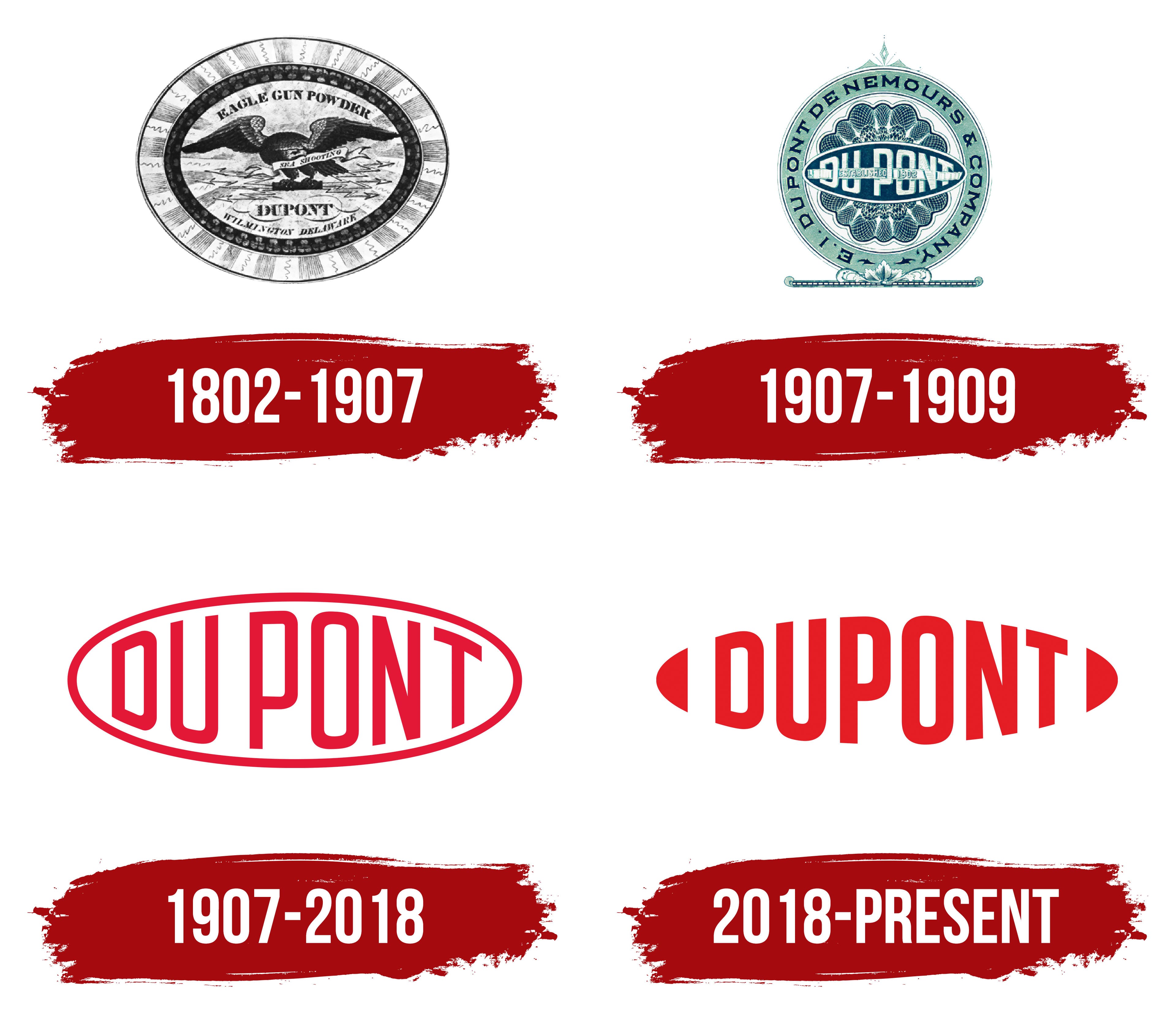
DuPont is one of the oldest brands with a long history. It started with a narrow specialization that eventually expanded and was supplemented by new directions. Ongoing development has enabled the company to reach an international level and become one of the most well-known in its industry. Today, research and development continue, allowing us to achieve even greater results.
DuPont’s modern visual identity reflects years of work by experienced designers. Moreover, the first logos were radically different from those that appeared after 1900. They featured completely different concepts, colors, and content. Early on, the company used strict, multi-component emblems with classic colors. Later, they replaced this with bright colors and a simplified design.
What is DuPont?
DuPont is a large chemical company. It was founded in the USA and later expanded internationally. It conducts extensive research and develops specialized products. It developed a wide range of chemical materials, including Tyvek, neoprene, Mylar, and Kevlar.
1802 – 1907
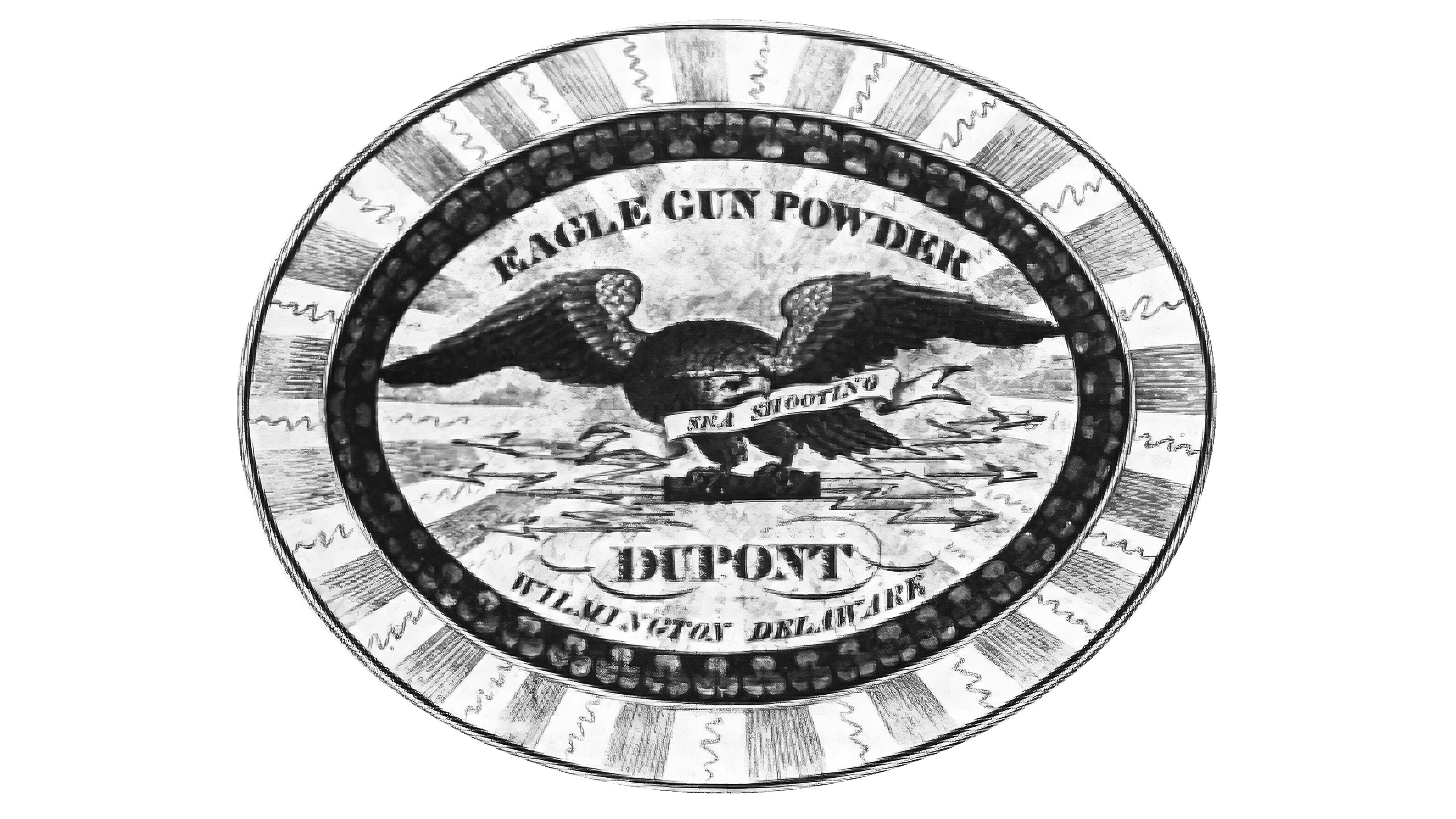
The brand’s first logo was created when it was founded in 1802. The company was founded by two people: Éleuthère Irénée and DuPont de Nemours. The company itself was named after one of them. Its trademark was a rounded sign featuring an eagle, several inscriptions, and stylized arrows. The color scheme included dark blue and muted blue hues. The background was light gray.
These tones harmonized perfectly, making the emblem seem serious and courageous. An additional symbol of the strict style was the eagle. It sat with spread wings in a straight pose, giving the logo a sense of brutality. The main inscription, “Eagle Gun Powder,” denoted the field of activity (gunpowder production at the time). The classic serif font ExtraBold was chosen for its design. Below was also the DuPont brand name, rendered in a similar style.
1907 – 1909
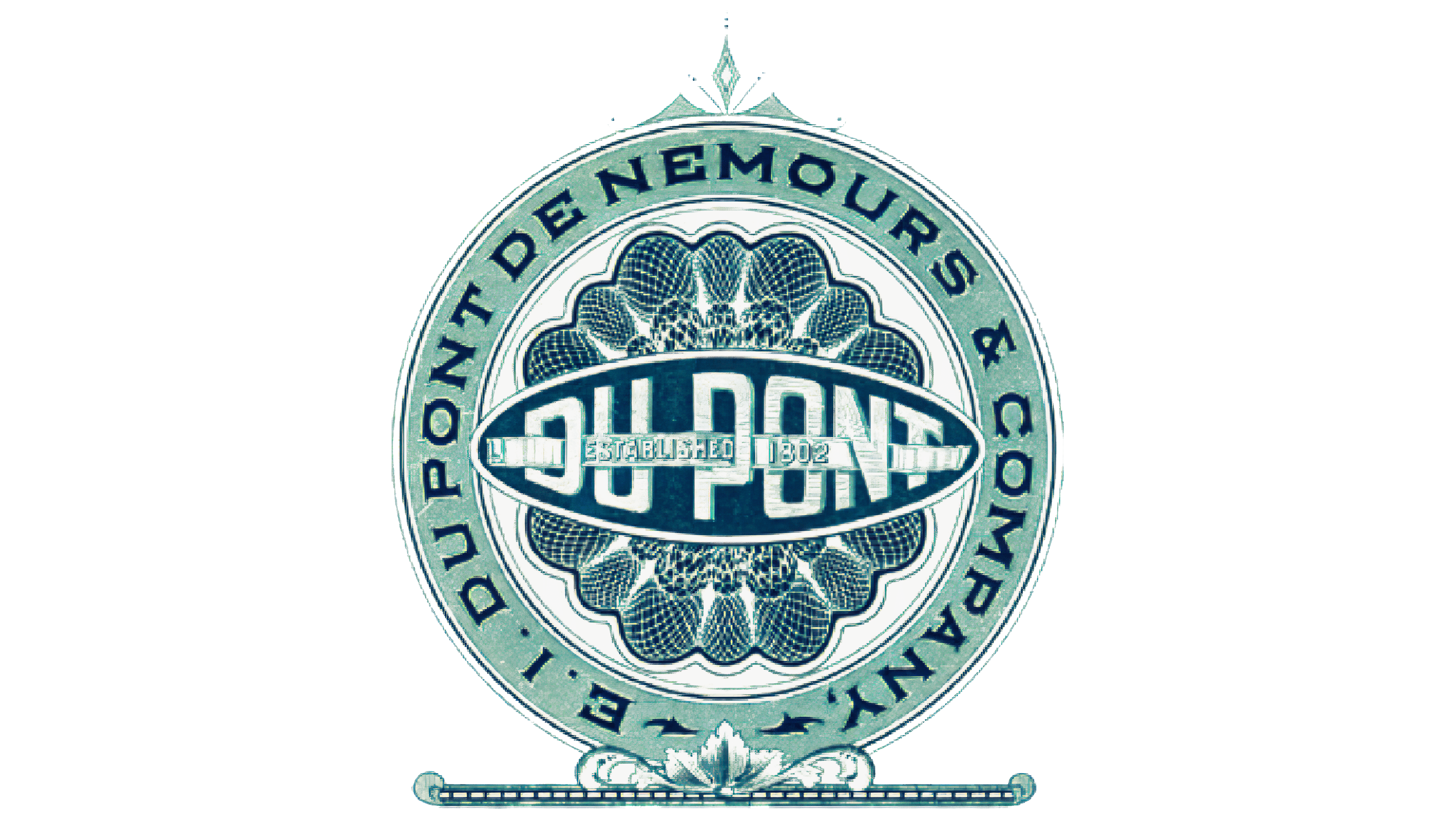
The first logo existed until 1907. Afterward, it was replaced with a more modern, lightweight sign. In the previous version, the designers left the colors and brand names unchanged. The remaining emblems were significantly different. The new logo was a beautifully designed circle with a thin, patterned line beneath it. Inside, the company name appeared in large letters, along with two additional inscriptions.
One of them indicated the date of foundation and was made in small white sans-serif type, and the second was a reference to the founder. The inscription used a direct, strict dark-blue font. The color scheme included several shades of blue, which favorably emphasized the graphic elements. In general, the palette symbolizes reliability, professionalism, and stability.
1907 – 2018
In 1909, DuPont radically changed its visual concept. Instead of complex images with inscriptions in different fonts and graphic symbols, it began using a simple, concise emblem. It was more modern and also had a powerful message. The inscription’s clear geometric lines and the oval frame symbolized the brand’s success and self-confidence.
DuPont’s name used the original long, thin sans-serif typeface. The edges were smoothed into an oval, making the logo distinctive. The new format added bright red on a white background. This combination demonstrated success, progressiveness, and energy.
2018 – today
In 2018, the modern version of the DuPont emblem was formed. It differs from the previous logo while better aligning with current brand design trends. The updated logo retains the oval shape. But it is achieved through the original letter cuts, not a geometric frame.
Unusual elements were added to the sides to visually complete the oval. Inside, the brand name remained, set in large letters. The new design looked lighter, more modern, and stylish, symbolizing the brand’s commitment to improvement.
Font and Colors
The DuPont logo looks stylish and powerful. This effect was achieved using the original sans-serif font and an expressive two-shade color scheme. The central element (company name) is decorated in rich red, symbolizing courage and a progressive approach.
Two graphic elements are rendered in the same color, complementing the logo’s oval shape. They sit some distance from the inscription’s first and last letters, making it more expressive. This choice demonstrates the brand’s confidence and high status. The white background unites all the components into a single whole and emphasizes its association with honesty.
Complete harmony is achieved through a flowing Roman type with thicker lines. The letters have the same shape and placement order as in the previous logo. This symbolizes sustainable development. The updated logo is a visual tribute to the past and a nod to innovation in production.