


 Enkei Logo PNG
The Enkei logo depicts the road, rims, and wheels, directly indicating the company’s direction. The emblem’s elements reflect long-term market presence and continuous improvement.
Enkei began operations on October 5, 1950, in Hamamatsu, Shizuoka Prefecture, as Enshu Keigokin Co., Ltd., a small factory specializing in light alloys. It took its name from the first syllables of Enshu Keigokin. In postwar Japan, the company first produced aluminum aircraft parts and then expanded into motorcycle, boat, machinery, and hardware components.
In 1959, Enkei moved to a new plant in Hamamatsu’s Aoi district. The key shift came in 1967, when it became one of the first Japanese companies to mass-produce aluminum wheels domestically. This reduced reliance on imported parts and helped Enkei enter Japanese automakers’ supplier networks. Around the same period, it began exporting to the United States.
In 1985, Enkei opened Enkei America Inc. in Indiana and began producing aluminum wheels locally. The company entered a market where BBS from Germany and OZ Racing from Italy already held strong positions in the performance wheel market. In 1986, Enkei entered Formula 1, becoming the first Japanese wheel maker to supply wheels at that level. In 1995, it became an official supplier to McLaren, providing lightweight magnesium wheels until 2021.
Enkei also developed MAT, a production method combining Durville casting with spinning. The process supported lighter, stronger wheels at a lower cost than forged products. It became closely linked to the RPF1 model, which is popular in tuning, time attack, and club racing. Today, Enkei operates 19 production sites across nine countries and produces about 25 million wheels annually, supplying major Japanese automakers and General Motors.
Meaning and History
The manufacturer produces sophisticated, high-tech racing wheels for various motorsports, including rally, drift, sports car racing, and single-seat racing, and supplies lightweight magnesium Formula 1 racing wheels to the McLaren Honda team. Enkei has been the official supplier of the McLaren F1 team since 1995. Enkei has also participated in the world’s leading competitions for more than three decades. Enkei is now a large, recognizable corporation with a wide range of premium quality products.
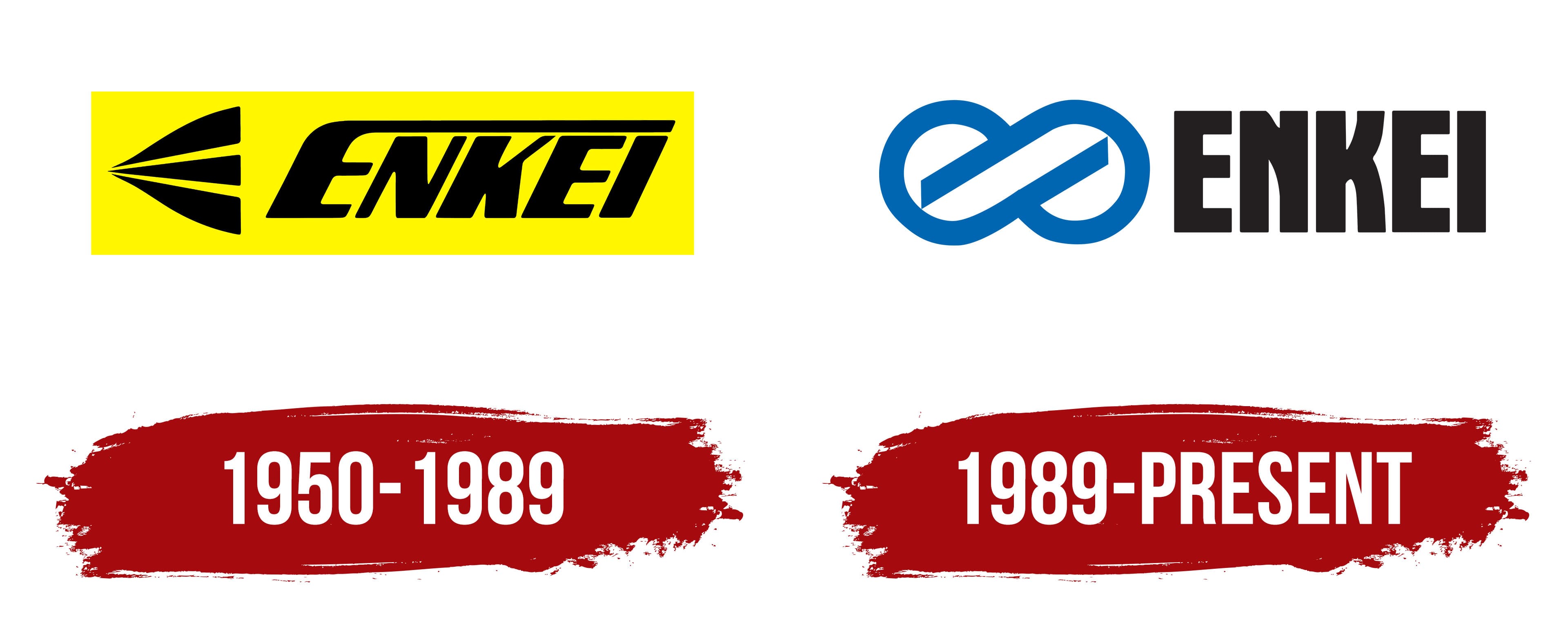
Throughout the company’s existence, the identity has changed twice. One of the brand’s main ideas is movement. The identity supports the brand’s idea.
1950 – 1989
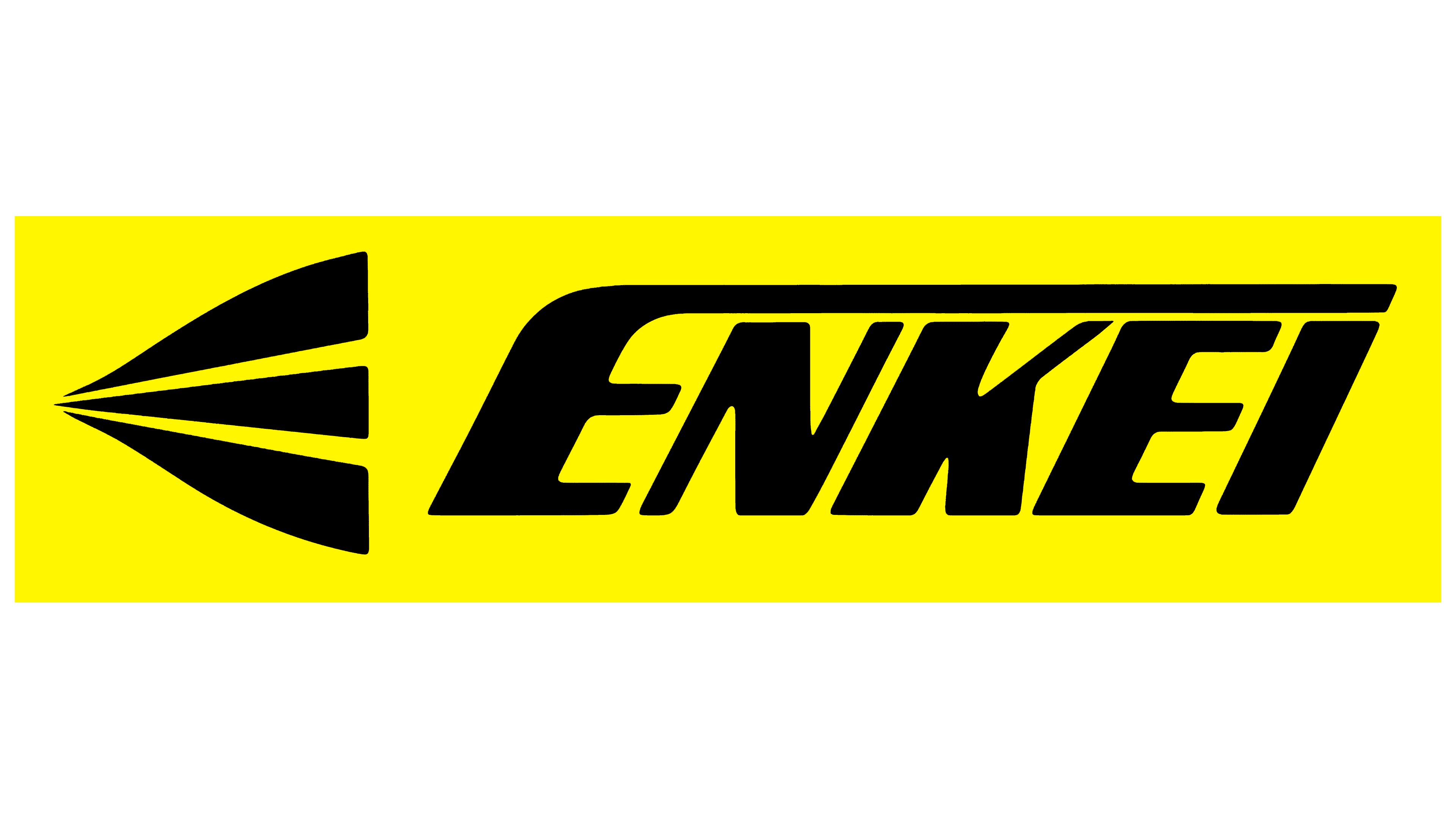
The logo combines the style, with the brand name positioned to the right of the stylized element. The logo’s emblem depicted a three-lane road that expanded to the right. It also resembled the letter “E.”
The initial letter “E” was especially characteristic; its upper part stretched over all other letters and symbolized the road. The lettering may have used a modified Kiez sans-serif font.
As mentioned above, the brand positions itself as a dynamically developing company, and the main idea is movement; therefore, the pin uses italics. A logo using coursework styles will immediately convey a sense of movement. It reflects speed and sharpness. This inscription expresses unstoppable strength, speed, and movement. Among other things, the rightward tilt symbolizes positive direction.
The color scale is black/yellow. The black color in the logo conveys authority, the color of restrained, hidden power, the color of successful, serious people. The yellow backing gives the logo the motivation to act.
1989 – today
The logo’s style also remained consistent; it combines a brand name and a pin-style element. The brand’s infinity emblem, which forms the race track, symbolizes continuous movement. It also symbolically depicts wheels.
Font and Colors

The emblem’s smooth, solid forms complement the clear lettering. The designer most likely used a modified Robuck typeface. This is a sans-serif typeface; the letters are massive and heavy, but they do not compete with the logo icon. The letters have a clean geometric shape, with even lines and right angles, without extensions at the ends of the strokes.
To set the accents, the logo image is blue, and the font is black. Using shades of this color in the brand identity makes the company appear reliable and stable to customers. The blue logo helps earn consumer trust.
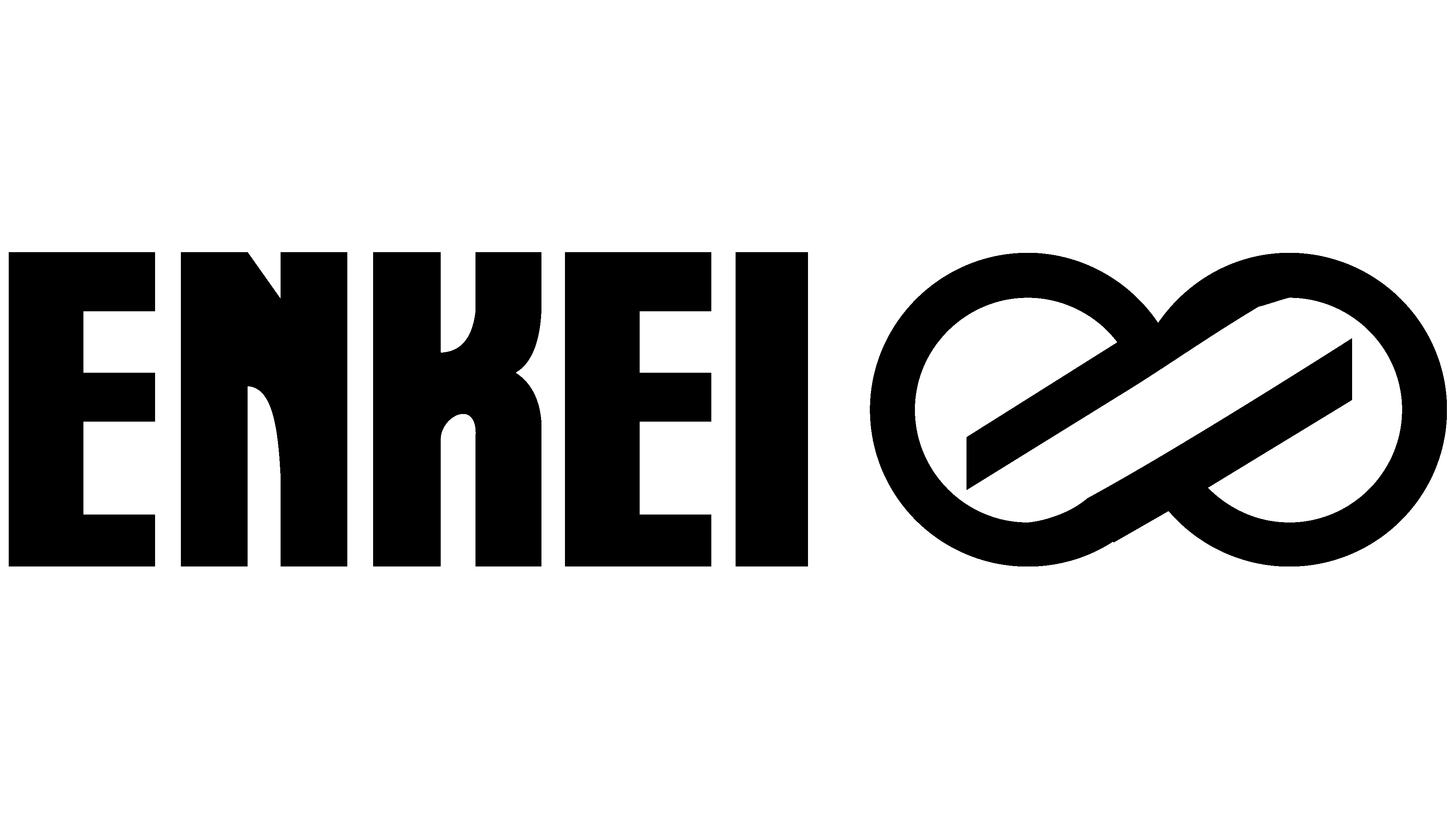
Today, the brand identity is quite recognizable, as are competitors’. The logo looks impressive on various surfaces and also adorns any facades.