


 Ericsson Logo PNG
Designers created an abstract Ericsson logo that hints at the company’s field of activity rather than depicting it directly. It symbolizes innovation and a business approach, as the telecommunications equipment manufacturer uses progressive technologies.
Ericsson traces back to Lars Magnus Ericsson, born in 1846 in Värmland. After early work as a laborer, he moved to Stockholm in 1867 and joined Öllers & Co. Between 1872 and 1875, he trained abroad, including at Siemens & Halske.
In April 1876, he opened a small repair workshop with 1000 kronor. As telephones spread in Sweden, he began repairing devices, often reworking Bell models, and later moved to his own designs. By 1878, he introduced original telephones, later known as the “Swedish pattern.”
By 1896, the company had about 500 employees and produced over 100,000 units, most of which were exported. In 1901, Ericsson left management. The firm focused on manual switchboards and entered automatic telephony late, releasing its first dial phone in 1921.
World War I, the Great Depression, and the loss of Russian assets after 1917 slowed growth in 1925. Control passed to Karl Fredrik Wincrantz.
After World War II, Ericsson rebuilt operations. In 1956, it introduced a car mobile telephone. During the 1970s shift to digital systems, it operated alongside key players such as Nokia.
In 2000, the Wireless Strategic Initiative united Ericsson, Nokia, Alcatel, and Siemens. The dot-com crash led to layoffs and a $3 billion capital raise. In 2002, Ericsson sold its microelectronics unit to Infineon Technologies.
In 2001, the handset division merged with Sony to form Sony Ericsson. In 2012, Sony took full control. In 2009, Ericsson and TeliaSonera launched the first commercial 4G LTE network, and in 2013, Ericsson acquired Microsoft’s Mediaroom unit.
Meaning and History
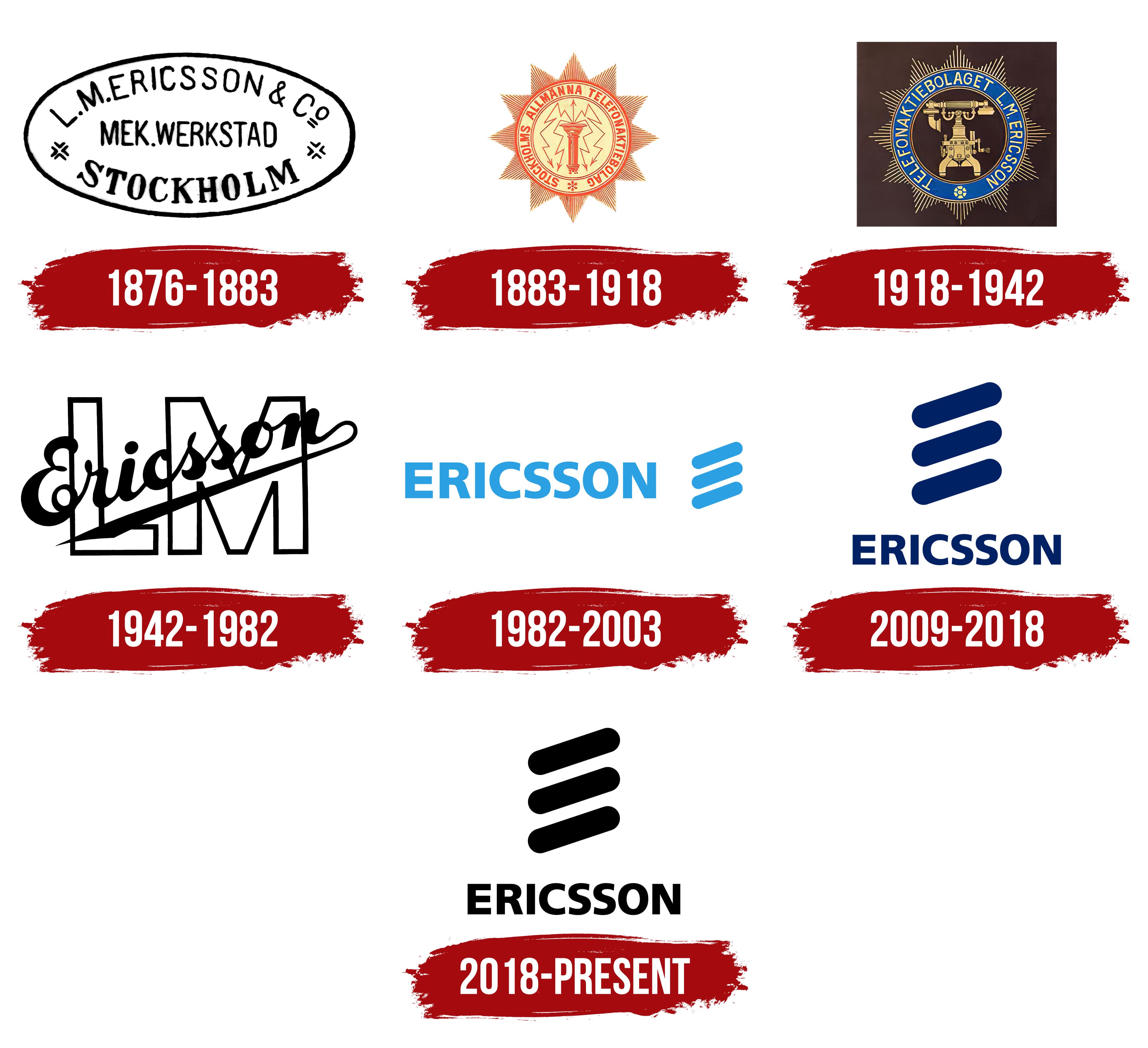
The company’s trademark was approved in 1894 after official registration. Throughout its existence, it has undergone several redesigns.
What is Ericsson?
Ericsson is one of the world’s largest suppliers of network technologies. This Swedish company launched the first commercial 2G network and continues to work on 5G. Its primary task is developing network infrastructure and technologies for wireless communications and the Internet of Things. The company supplies equipment to many cellular operators, such as T-Mobile, Verizon, and AT&T.
1876 - 1883
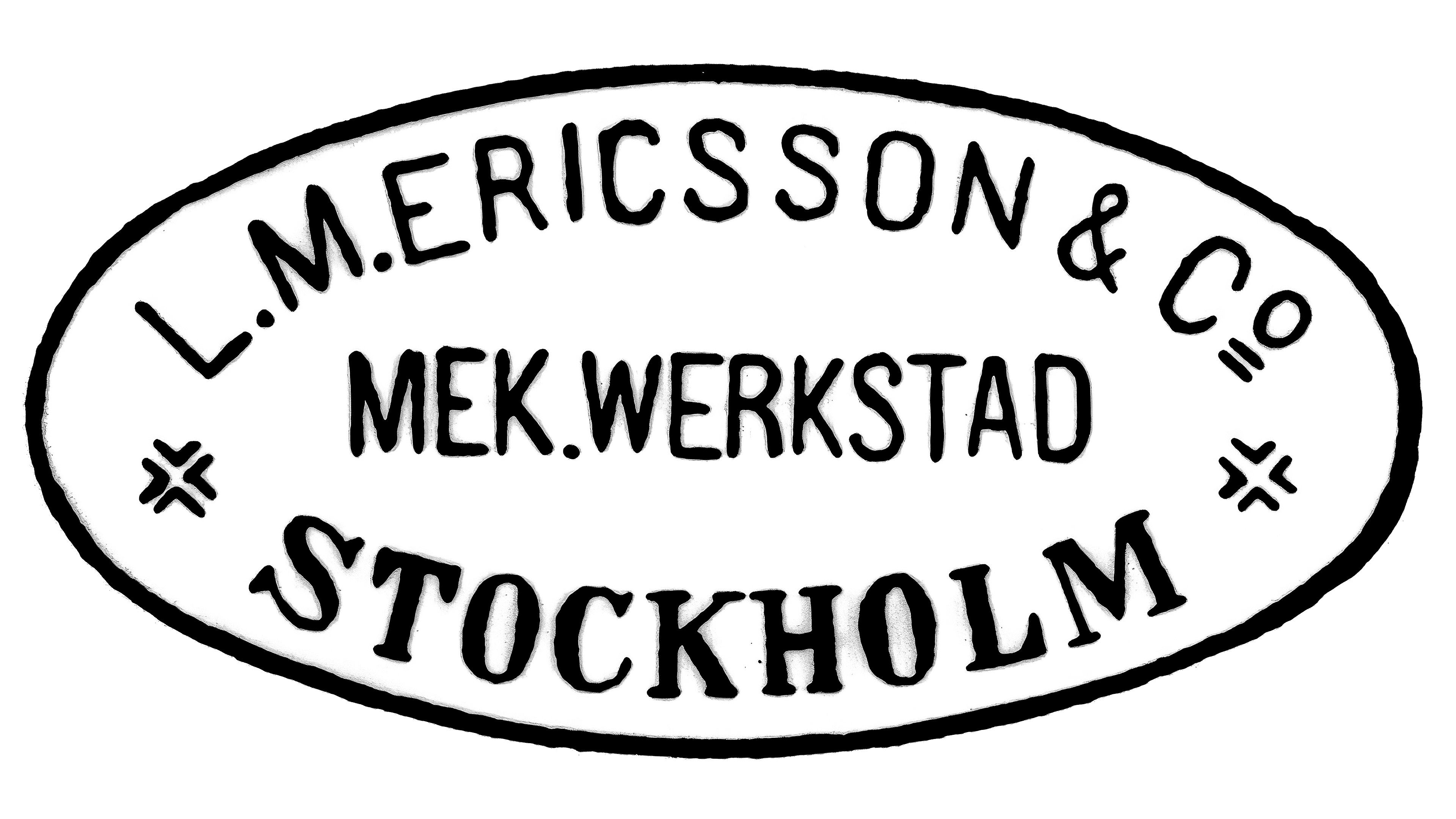
After its founding, the company used an oval mark that contained vital information: the name, location, and address.
1883 – 1918
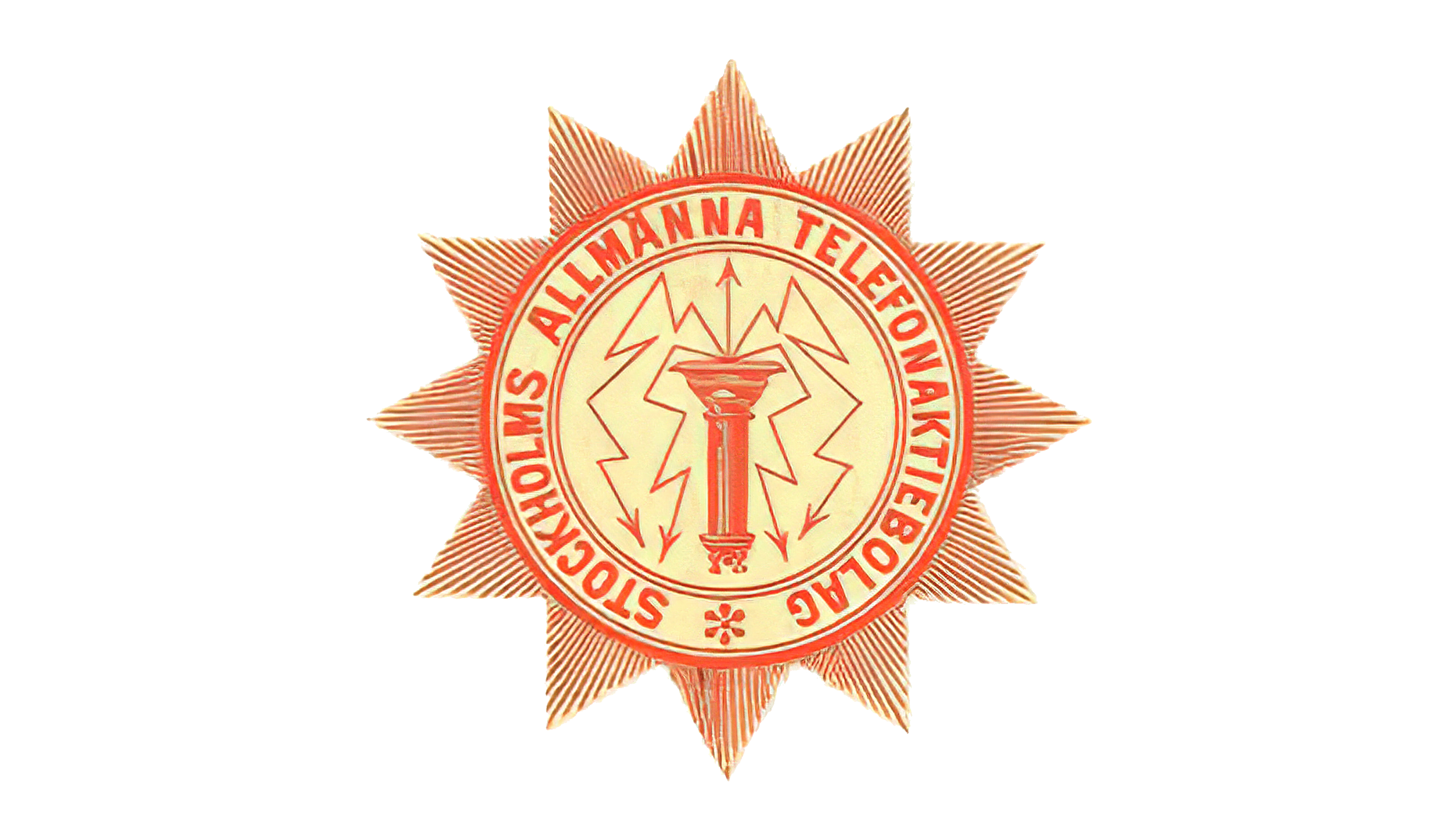
Then, a circular logo appeared as a sun with triangular rays. Thin lines inside it indicate the company’s field of activity. The primary colors are beige and red.
1918 – 1942
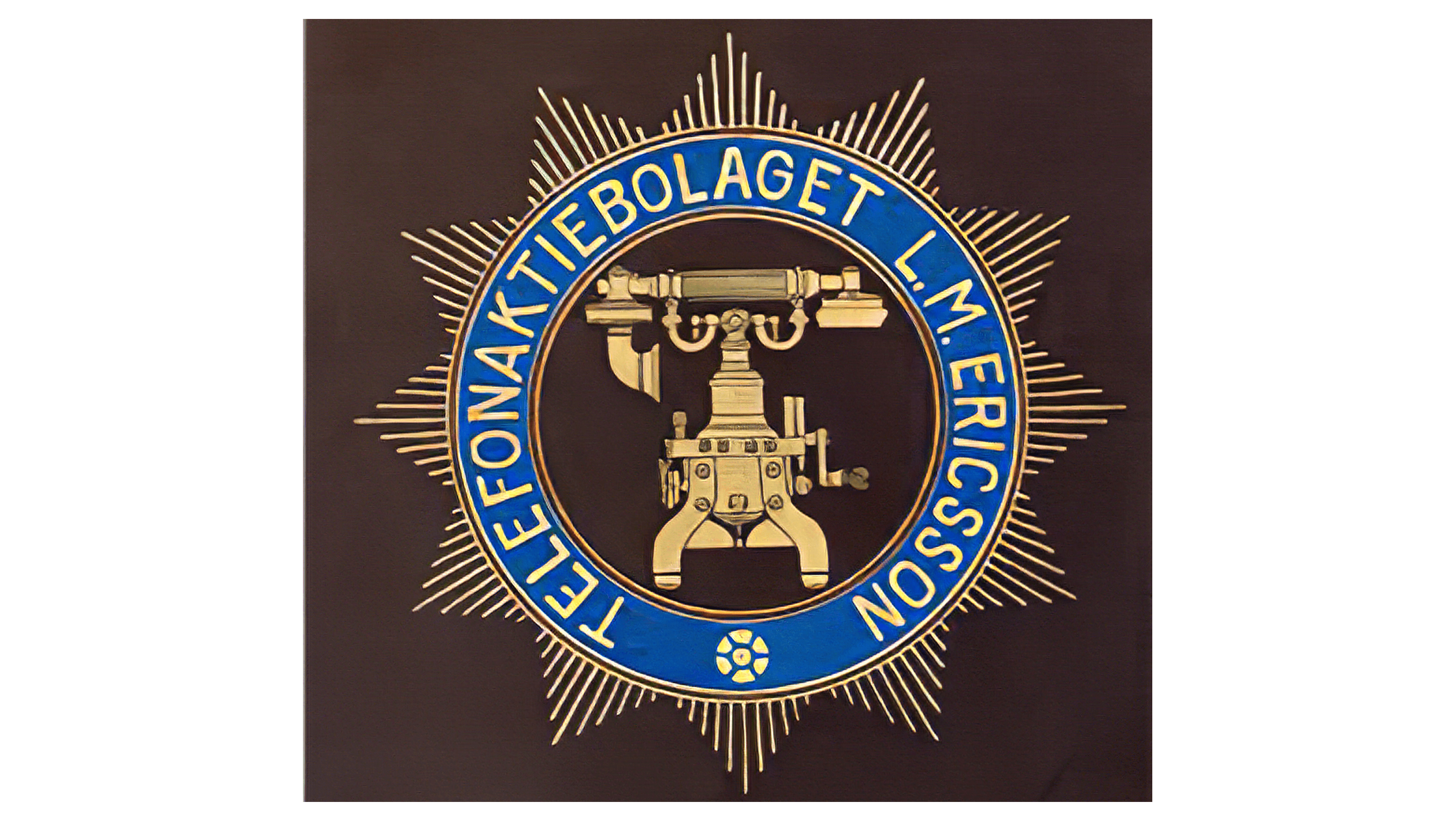
That year, designers placed a retro telephone in the circle’s center and surrounded it with a dark blue band with the company’s name.
1942 – 1982
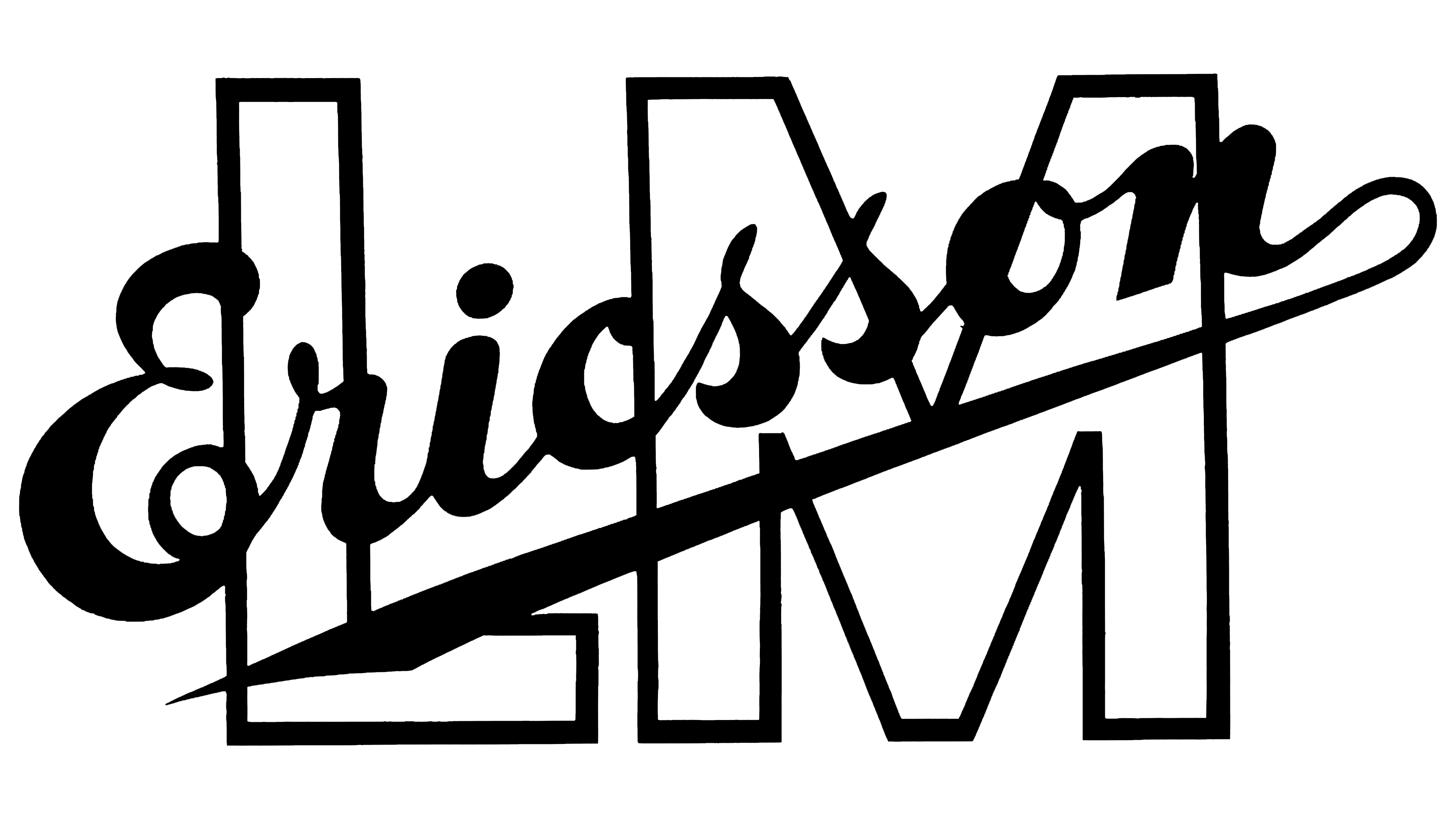
The emblem became monochromatic. Large letters “LM” (short for Lars Magnus) formed the background, and the founder’s surname (Ericsson) was placed diagonally at the top in italics.
1982 – 2009

This year, the logo adopted a modern style: the company’s name in uppercase with three perpendicular lines.
2009 – 2018
The three diagonal lines were moved onto the word “Ericsson.”
2018 – today
After several years of uniformity, the company decided to change the logo to a more modern one. This event is dated to 1982. Before that, the company used variants such as seals, badges, initials, and the founder’s signature. The current version marks the debut of the brand’s first visual identity. The administration entrusted the logo work to Terry Moore at AID and then involved the Stockholm design lab.
The team based the design on the word “Ericsson” and the letter “E.” For this, the developers chose a sans-serif font and stylized the capital letter. They cut off the connecting leg, leaving only three protruding lines. Then, the designers rotated them 18,435 degrees to make the logo easier to pixelate. These strokes are colloquially called “three sausages.”
Font and Colors
The modern version features the word in uppercase sans-serif letters and a graphic symbol of three broad, short lines. The monochromatic design embodies practicality, authority, power, and security.
Over time, the logo has used several font styles. One of the most recognizable sans-serif fonts is Frutiger Black, created by Adrian Frutiger. The company received its font from the Stockholm design lab. It was named Ericsson Hilda and is based on Latin, Greek, and Cyrillic characters. The design update received two Red Dot Awards.
The color palette is uniform, consisting of cornflower blue and white: blue letters on a white background, or white letters on a blue background.