


 Fa Logo PNG
The Fa logo contains only the brand name, yet the designers conveyed deep meaning in two letters. Smooth lines and rounded corners convey tenderness, whether in the pleasant texture of soaps and shower gels or in the skin’s softness after use. Blue traditionally symbolizes reliability and confidence.
The history of Fa began in 1954 in Krefeld, Germany, where Dreiring-Werke, a Henkel subsidiary, introduced a new type of toilet soap. Unlike standard products of that period, it used high-grade plant oils and animal fats to achieve a creamy texture. The brand targeted women and focused on skin care, an uncommon positioning in the postwar mass market.
The name Fa carried a dual reference. It derives from “fabelhafte” and “Fadenseife”, an old German term for soap with a fine, fibrous texture that produces a silky foam and a marbled appearance. This combination linked product quality with a specific material characteristic.
By 1968, Fa updated its product. The soap changed shape, added new fragrances, and introduced yellow and green tones in its packaging and logo. The brand’s visual identity became more recognizable, reflecting consumer trends in Western Europe.
Since 1970, the range has expanded to include deodorants, shower gels, and bath foams. In 1975, Fa launched its first shower gel, which later became a core product. By that time, the brand was present in 46 countries. Competition intensified, particularly from Dove under Unilever and Nivea owned by Beiersdorf.
Fa also entered the Soviet market through “Beryozka” stores, where goods were sold for foreign currency, and access remained limited. For most consumers, the brand represented an inaccessible Western product.
In the early 1990s, Fa introduced Fa MEN to address a growing male audience in the personal care market. By 2007, according to TNS Gallup Media, Fa held nearly 5% of Russia’s liquid soap market. Over time, the brand expanded to more than 120 countries, evolving from a single soap product into a broad personal care line.
Meaning and History
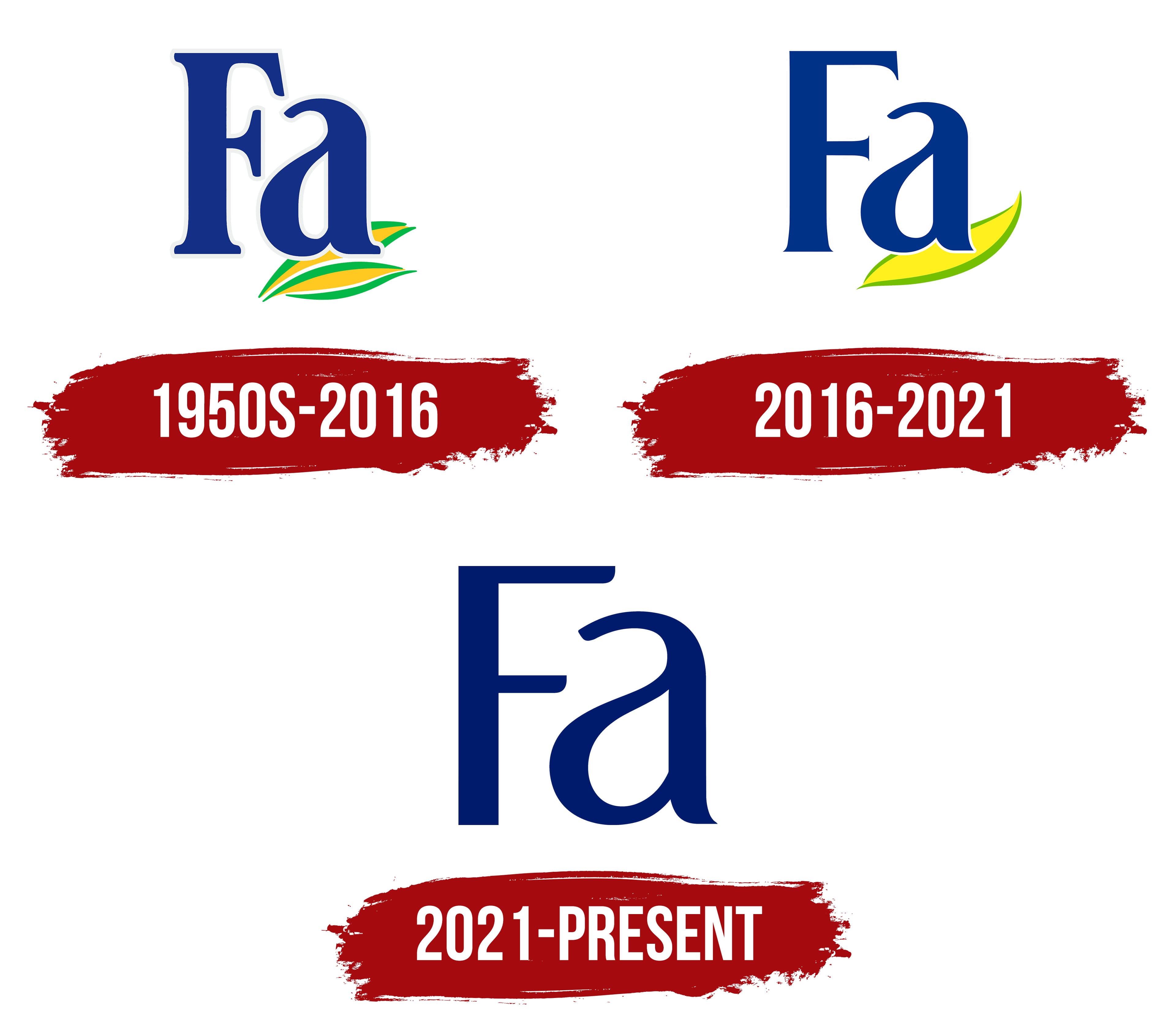
In its early years, the Fa line offered talc and bar soaps, but in 1975 it rebranded and expanded its range significantly. Naturally, the changes affected every aspect of the brand, not just its products. The logo was also corrected, so the brand now has two versions.
What is Fa?
Fa is a German brand of personal care and hygiene products. It was established in 1954 and is owned by the international corporation Henkel. Initially, the company was called Dreiring KG, but after launching a unique soap product, it changed its name to Fa. This is an abbreviation of the German words “fabelhafte” (fabulous) and “fadenseife” (thread soap), both of which refer to the product’s innovative nature.
the 1950s – 2016
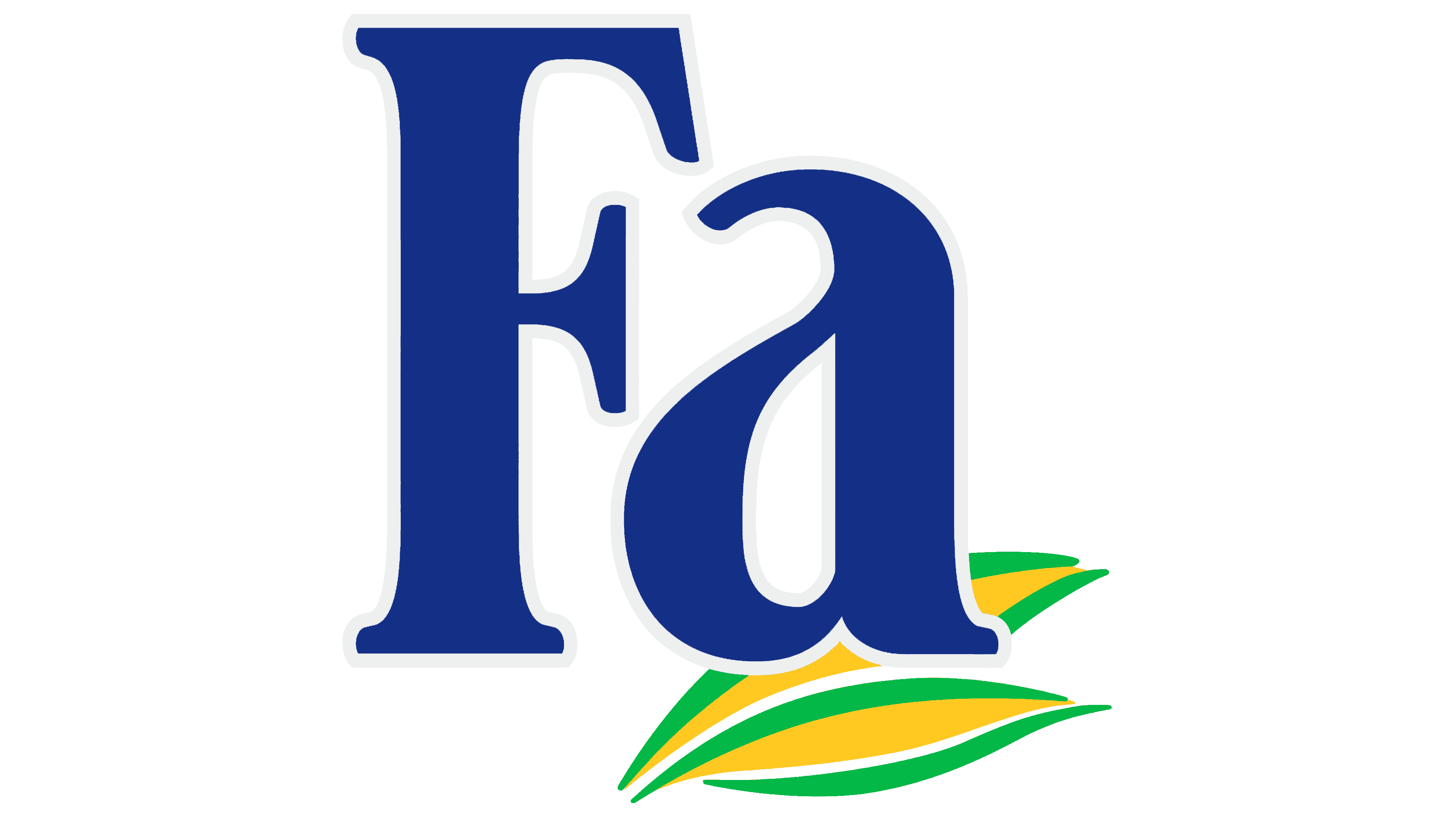
The debut emblem consists of the company’s abbreviated name and two leaves. They confirm that the bottle labeled with this name contains only herbal ingredients. One letter is uppercase; the other is lowercase. Both are outlined with a thin, light gray line. The “a” sign is on the top sheet, while the other goes along its bottom border. The leaves are elongated and have a green edging.
2016 – 2021
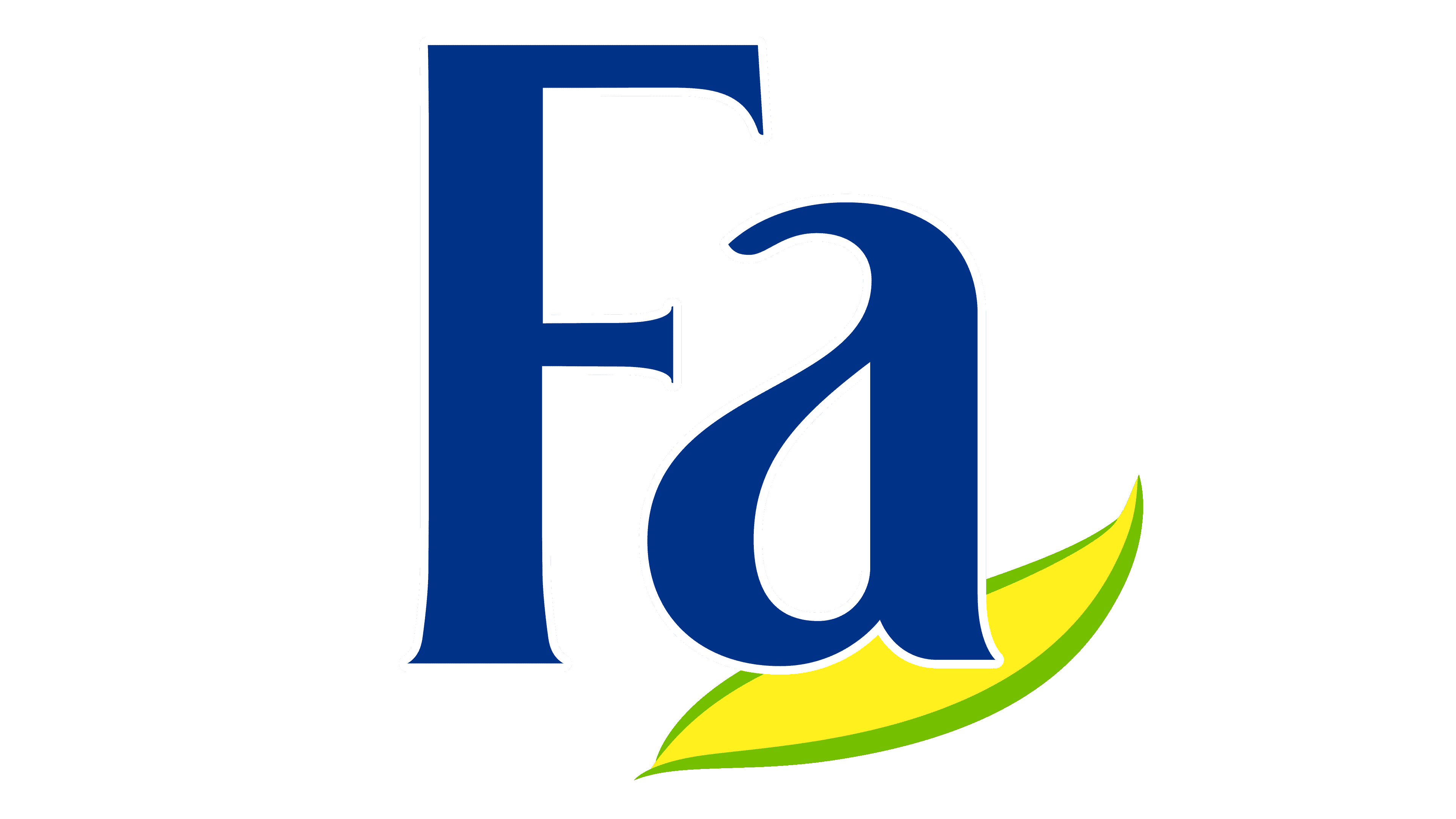
The current version resulted from a redesign and closely mirrored the previous version. The differences are small, mostly in minor details. For example, the developers removed the edging and the second sheet and turned the remaining upside down. At “F,” they removed all serifs, keeping only the miniature protrusions; the letter “a” was shortened.
The Fa logo contains a short word from the stems of two German words: the first is “fabelhafte,” the second is “fadenseife.” It also contains a vegetation symbol, a leaf, as a sign that natural extracts are included in the products.
The opening emblem has expressive letters with large serifs. In the current version, they are even and smooth. The palette was bright at first, now muted. The logo’s main colors are blue, yellow, olive, and white.
2021 – today

Modernization with shortening serifs continued. Gradually, they became so short that they disappeared altogether. The curvatures took their place at the ends of the letters. Only the tail of the lowercase “a” remained sharp. Now the word looks a little taller and more elegant. In addition, the designers removed the serif, making the inscription more versatile, as it is now easier to mark products of any shape, from narrow tubes to wide jars.
Font and Colors
With the disappearance of serifs, the letter “F” seems to have adopted a different typeface, but not only its style has changed. The font remained the same; just a different version was chosen. The color is the most stable; it is the same in all variants of the emblem. It is a cornflower blue.
