


 Finlandia Logo PNG
A special vodka recipe originated in the north, where deer live, and there are few warm days a year. The Finlandia logo tells the story of the drink’s birthplace. The emblematic elements create a sense of coolness and clarity, emphasizing the use of glacial waters in the composition.
Meaning and History
Although Finlandia’s official founding year is 1970, its distillery dates back to 1888. Entrepreneur Wilhelm Juslin opened it in the village of Koskenkorva in the Ilmajoki parish. However, after the alcohol prohibition law passed in 1920, the state bought the plant and shifted production to pharmaceutical goods and other non-alcoholic beverages.
After lifting the ban, the northern state government, represented by Alko, took full control of vodka production. Intensified production led to the launch of the Finlandia brand in 1970. A year later, an alcoholic drink was already supplied to the US market. Five years later, a new vodka bottling plant opened in the village of Rajamäki, but the alcohol distillation process remained in Koskenkorva.
At the beginning of the millennium, the American corporation Brown-Forman bought a 45% stake in Finlandia Vodka Worldwide from Altia Group (the successor to Alko). She gradually bought up shares until she took full control of the alcohol company. Now she is the majority owner. In 2016, information about the trademark sale surfaced, but it remained only rumors.
For years, Finnish vodka has been associated with ice. This is visible both on the label and on the branded bottle, the first sample presented in 1970. Sculptor Tapio Wirkkala created its design, Frozen Ice. The product looked like an ice-cold drink from the Arctic North.
Later, other design options appeared. These include Hammered Ice by Hansen Design of Philadelphia (1998) and Glacial Ice by Harri Koskinen, Finlandia Global, and Wallace Church & Co. (2003). They developed another version of the bottle, called Melting Ice, in 2011. Finn Harri Koskinen and American Kenneth Hirst created it.
What is Finlandia?
This premium vodka brand, owned by Brown-Forman, embodies the essence of Finnish nature through a unique production process using six-row barley and pure glacial spring water. Beyond classic vodka, the brand offers flavored options such as cranberry, grapefruit, and raspberry. This vodka stands out for its blend of natural ingredients and meticulous distillation. It gives the drink a crisp, clean taste with soft notes of wild berries and a light sweetness.
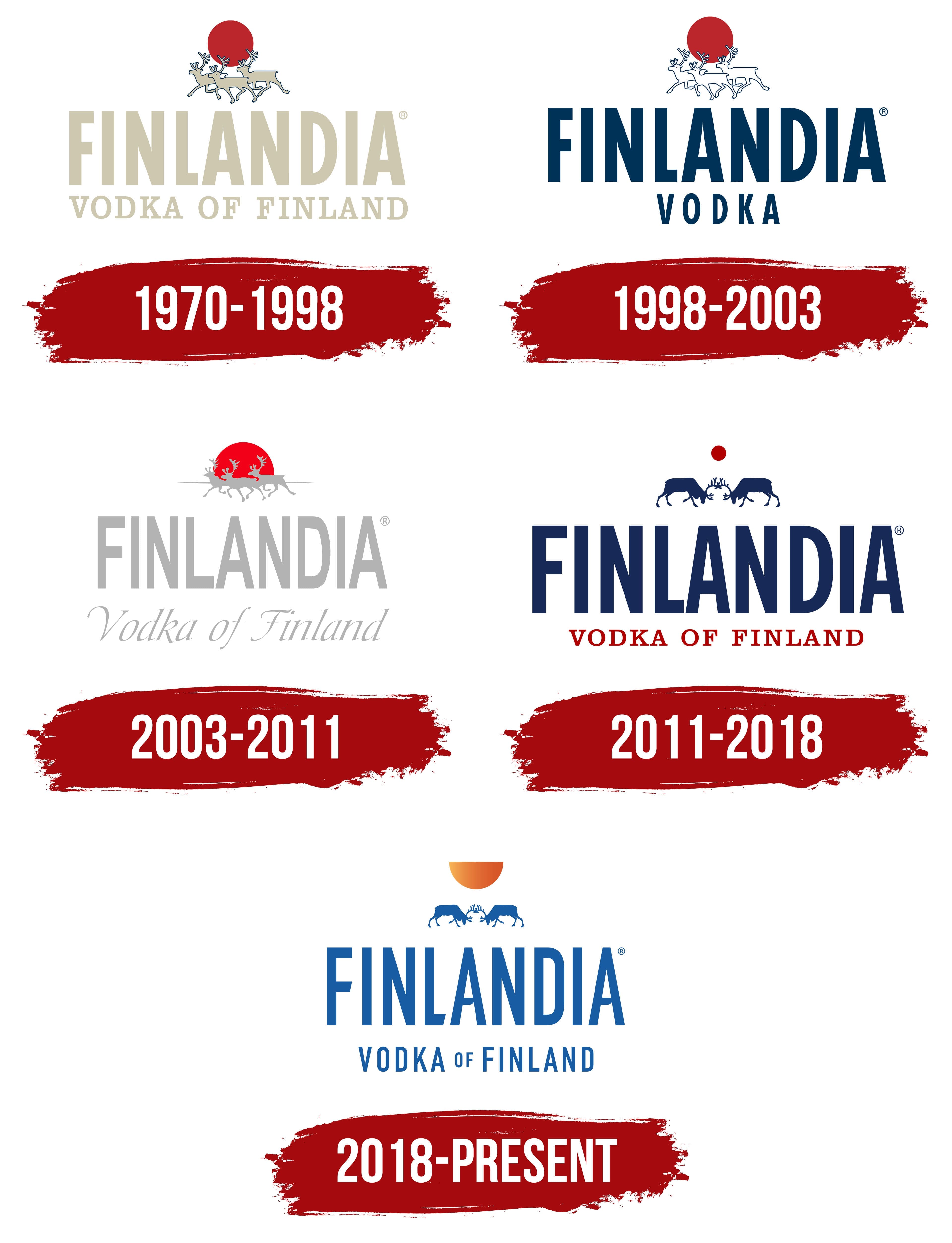
1970 – 1998

In the first year, the black logo depicted three snow-white reindeer against a rising-sun backdrop. It looks like a large red ball, with the horns of proudly running animals standing out clearly. The black-and-white contrast emphasizes the bottle’s iciness and its contents, making the vodka look frosty. The brand’s name is also written in white, indicating the vodka’s place of production. The letters are elongated, with miniature points at the top.
1998 – 2003
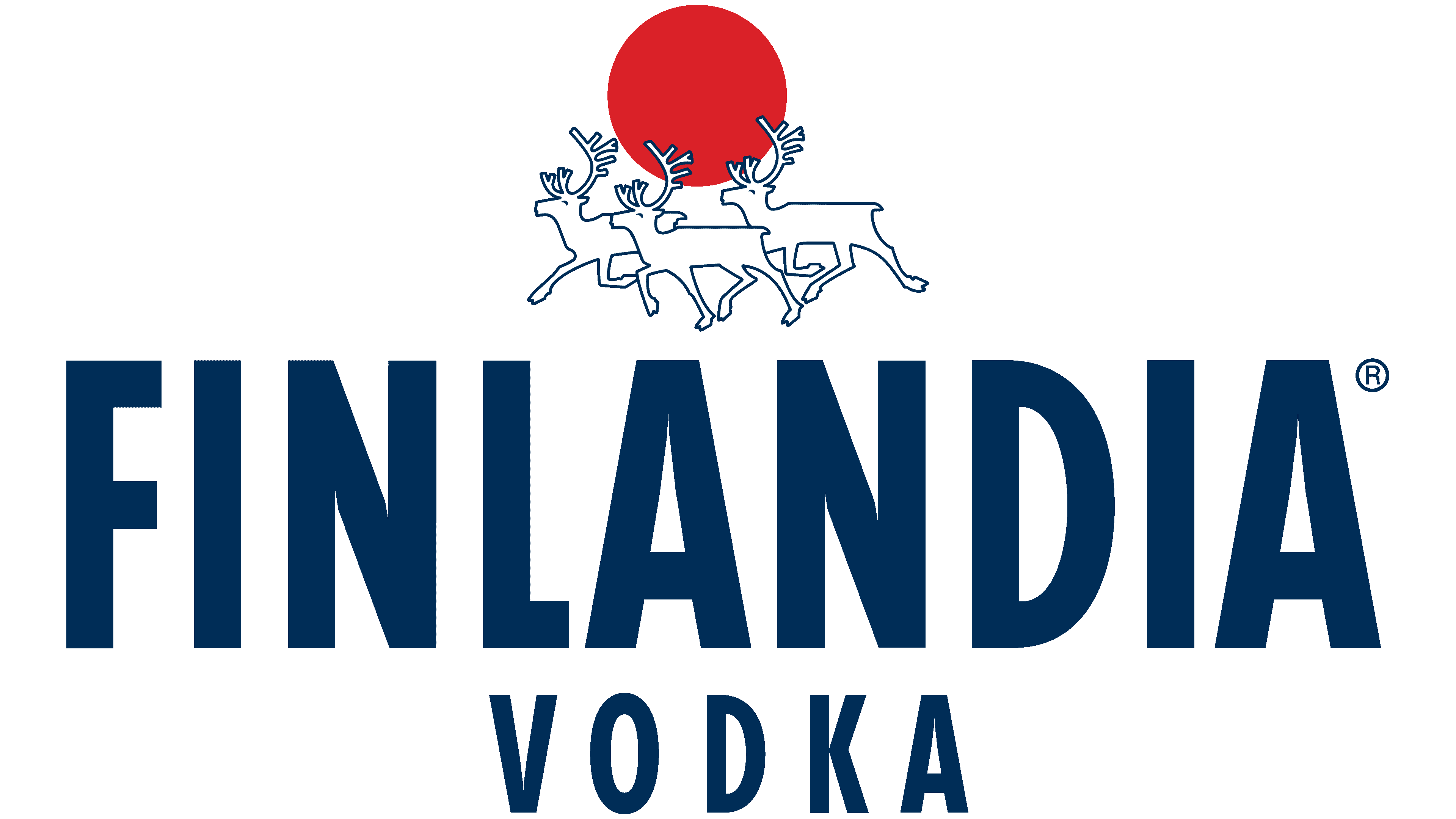
The next-generation logo shows the same three deer, but in a flat projection, emphasizing a dark-blue outline and a white center. In this version, the animals have a miniature stroke denoting the eye. The horns are highlighted and also circled in blue. The inscription is made in a perfectly even font, as if it were fragments of melting ice. The letters are capital, geometric, with sharp points at the inner corners of the “N,” “A,” and “V.” The second line is half the size of the first, both in character size and length.
2003 – 2011
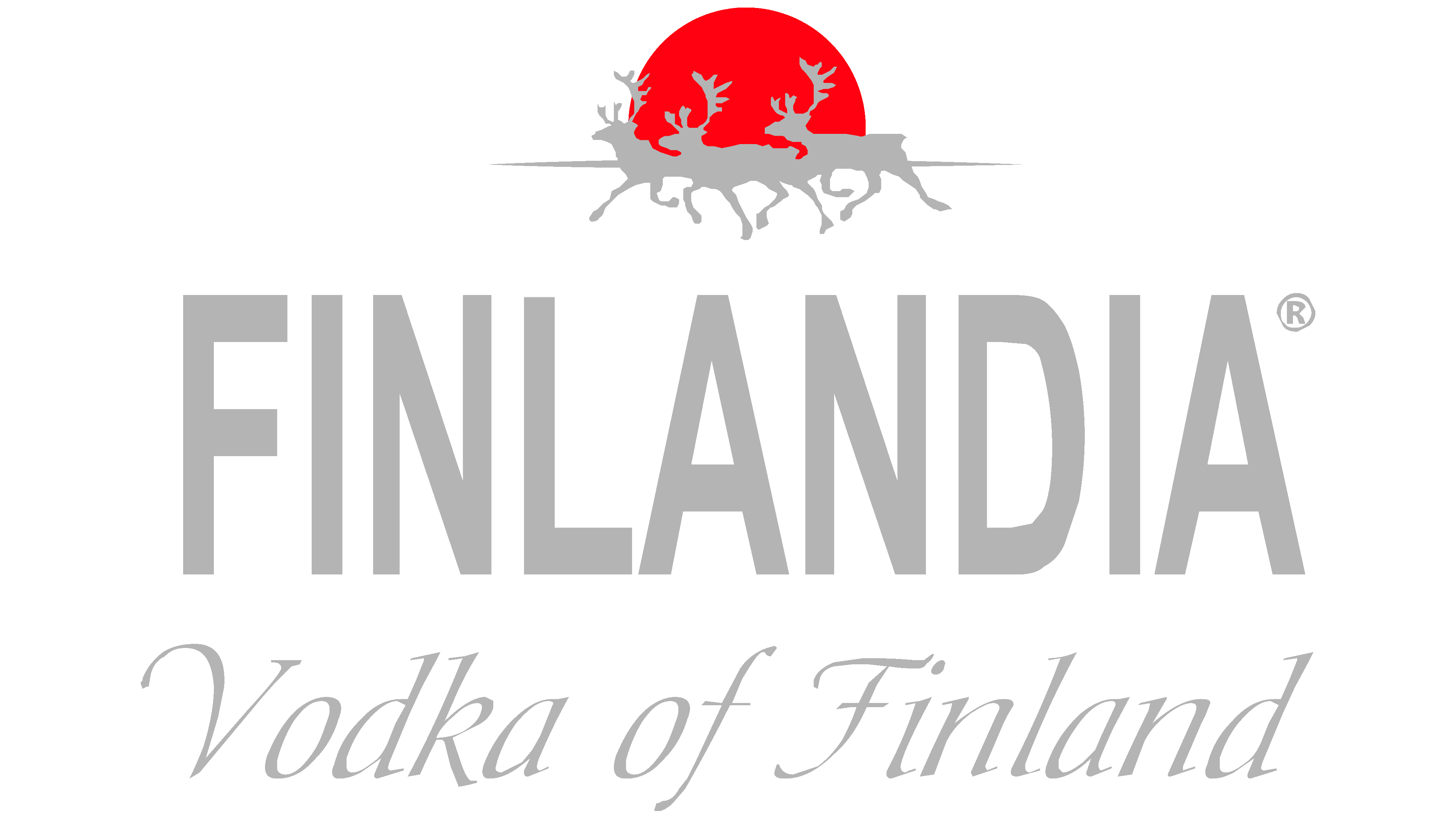
After the redesign, the bottle received a melting-ice texture and a corresponding logo. It complements the glass container’s original design, so the white elements on it have a silver tint. The designers typed the drink’s name in thinner letters and added the italic inscription “Vodka of Finland.” In addition, a light horizon appears, so the red semicircle of the sun rises.
2011 – 2018
A dark blue color dominates this emblem. The deer are depicted fighting: their antlers are linked, their heads are lowered, and their front legs are raised. Above them is a red dot representing the sun. Below are the inscriptions: the vodka’s name and the country of production. They use different fonts: the first part is in grotesque, and the second in Antiqua.
2018 – today
In the modern logo, the developers changed the inscription: “A” has rounded corners on the crossbar ends, and “F” has a diagonally cut central element. The deer are completely preserved:
- They still have the tops of the horns linked.
- Their heads are tilted.
- One leg is raised.
Above them hangs a red sun, depicted as a semicircle after the authors removed the upper half, in aged white on an ultra-blue background.
Font and Colors
Almost every logo redesign is associated with a bottle update. This approach allows the luxury vodka producer to maintain a harmonious relationship between the glass container and the label. Moreover, each sample has a specific name: Frozen Ice, Hammered Ice, Glacial Ice, and Melting Ice. The drink’s icy coolness and Arctic origin are conveyed by the emblem’s main element: the reindeer, which lives in the Arctic North.
The Finlandia logo uses several variations of the News Gothic Bold Condensed typeface. Typographer Morris Fuller Benton designed this sleek sans-serif typeface. The Finnish brand’s corporate palette comprises four colors. These include blue (background, letters, contours), white (deer), red (sun), and silver (inscriptions and animals).