


 Fitbit Logo PNG
The Fitbit logo embodies style and harmony, and care through control. Human health can be measured. This includes many parameters, and the company knows them all. The emblem’s individual symbols create the overall picture, like the numbers on Fitbit monitors.
James Park was born in 1977 in Cleveland to South Korean immigrant parents who ran small retail businesses. As a child, he worked in family shops and gained basic business experience. After entering Harvard to study computer science, he left in his third year to launch a startup, following a path similar to Bill Gates and Mark Zuckerberg.
His first venture, Epesi Technologies, collapsed during the 2000 dot-com crash. There, he met Eric Friedman, who would later become his long-term partner. Both worked as engineers at Dun & Bradstreet, then co-founded Wind-Up Labs, a photo-sharing service that CNET Networks acquired in 2005. In early 2007, they explored wearable sensors inspired by motion tracking in the Nintendo Wii. On March 26, 2007, they registered Healthy Metrics Research in San Francisco, later renamed Fitbit. The launch relied on $400,000 from friends and family, and early investor pitches used unfinished hardware samples.
Fitbit appeared at TechCrunch 50 in September 2008 with a mockup and secured over 2,000 preorders. The first product, the Fitbit Tracker, launched in 2009 with step counting, sleep tracking, and wireless sync. Distribution through Best Buy scaled from a few stores to hundreds nationwide. By 2014, the company held 67% of the US fitness tracker market.
Fitbit went public on June 18, 2015, raising $732 million and valuing the company at nearly $10 billion. In 2016, shipments exceeded 22 million devices, but competition from the Apple Watch shifted demand toward multifunctional devices. Fitbit acquired Pebble assets in 2016, Vector Watch in 2017, and earlier added FitStar.
On November 1, 2019, Google announced a $2.1 billion acquisition that closed on January 14, 2021, after regulatory review. Fitbit joined Google’s hardware division alongside the Pixel Watch. In January 2024, Park and Friedman left the company. By August 2024, Fitbit discontinued its smartwatches, while trackers and the app remained. Total sales exceeded 120 million devices worldwide.
Meaning and History
The company’s founders, James Park and Eric Friedman, serve as CEO and CTO, respectively. The company was first named Healthy Metrics Research, Inc., before adopting its current name. The product range has also changed: until 2016, the company specialized in consumer electronics, but later shifted to digital devices for health monitoring.
Gradually, the company started producing its products in collaboration with well-known brands. Moreover, Fitbit’s history is a series of acquisitions of specialized enterprises. The startup has several such deals, the very first and most important of which occurred in 2015. The company itself is being acquired: Google announced in 2019 that it intends to buy it for $2.1 billion. It is assumed that the trademark will pass to him at the end of 2020.
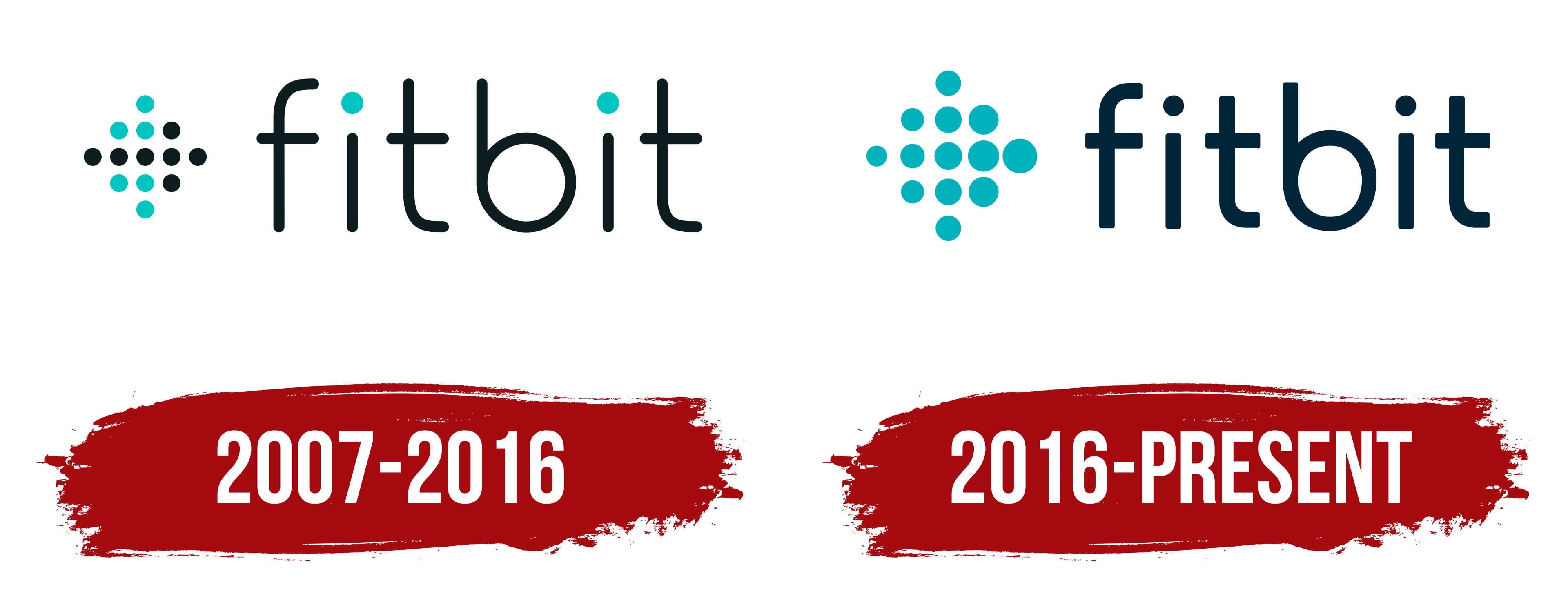
Naturally, key milestones in the brand’s history are reflected in its symbolism. This first happened in 2015. Another redesign is already expected after the alleged transition under Google’s leadership. In the meantime, the brand has two logos today. The second one, though redesigned, still retained the original composition and mood.
What is Fitbit?
Fitbit is an American manufacturer of fitness trackers, pedometers, smartwatches, and other devices designed to monitor physical activity. These multifunctional devices allow users to track their health, monitor sleep quality, and count calories burned. The company was founded in 2007 and was formerly known as Healthy Metrics Research, Inc. Google LLC has owned it since 2021.
2007 – 2016

The debut emblem consists of two parts: graphic and text. The first is a rhombus made of 13 equal-sized dots in different colors. It is mainly black and turquoise, forming a right-pointing arrow with the company name.
The lettering is in thin, rounded characters with wide spacing. The characters are in lowercase and highly legible. Moreover, both “t” and “f” are identical: they look the same upright and inverted. The dots above the “i” are unique, turquoise-blue, echoing the graphic element.
2016 – today
After switching to digital health monitoring devices, the company changed its image and adopted a new logo. It is based on the previous version and has no striking differences, as the adjustments are minimal. The designers changed the color of the black dots on the left and enlarged them, and they painted the letters completely dark. They also tweaked the font by thickening the lines and shortening the “t” leg, so it doesn’t look like an inverted “f.” Also changed the color: it now uses dark turquoise instead of black.
Font and Colors
The transformation of the individual brand symbols reflects the company’s transitional stages; in 2015, the company decided to update the assortment, which it subsequently did. The original logo was composed of different components and tones: light turquoise combined with black, and geometric elements with a streamlined feel. Some of these features have disappeared in the current version; for example, there is no black, only turquoise.
The developers offered a special typeface for Fitbit, an individual spectrum. It is called Seville and is used in all lettering, not just in the emblem. It belongs to the Sans Serif category because it is smooth and chopped. Moreover, the letters have a streamlined shape.
The color palette is pastel; there are no bright colors. Muted tones look restrained and strict. The scheme includes two shades of turquoise: Tiffany Blue (#00B0B9) and Maastricht Blue (#002A3A), which can appear blue depending on the environment.