


 GE (General Electric) Logo PNG
The emblem’s elegant artistic elements reflect its role as a trendsetter in industrial design. The GE logo symbolizes General Electric’s contributions to technological advancements that have moved the world forward and advanced humanity.
In the late 1880s, Thomas Edison grouped his electrical businesses under Edison General Electric Company. By then, he had opened the Pearl Street power station in New York in 1882 and built a commercial market for incandescent lamps. Its main rival was the Thomson-Houston Electric Company, which held strong patents and a stronger management structure. Legal battles between the two companies slowed the industry.
On April 15, 1892, with backing from J. P. Morgan and Drexel, Morgan & Co., Edison General Electric merged with Thomson-Houston to form General Electric Company. Charles Coffin became the first president. Edison joined the board but attended only one meeting and sold all his shares in 1894. In 1896, GE entered the Dow Jones Industrial Average.
In 1900, GE opened the first corporate research laboratory in the United States. Its engineers worked on X-ray tubes, motors, turbines, radio devices, and, later, television technology. In 1919, GE helped found RCA. By the 1930s, it was producing household appliances, while Westinghouse remained its key competitor. In 1942, GE built the first American jet engine, the I-A. In the 1950s, nuclear power became a major direction.
Jack Welch became CEO in 1981 and reshaped GE through restructuring and around 600 acquisitions, including RCA and NBC in 1986. GE Capital later became a major profit driver. The 2008 crisis exposed the risk of that financial model. GE sold assets, including its stake in NBCUniversal, to Comcast and, in 2015, bought Alstom. Under Larry Culp, GE moved toward a breakup. GE HealthCare separated in 2023, GE Vernova followed in 2024, and the old conglomerate became GE Aerospace.
Meaning and History
The company was founded in 1892, when Thomas Edison merged his corporation with the Thomson-Houston Electric Company. He created the General Electric brand because his inventions anticipated the world’s needs. Today, General Electric is a diversified conglomerate that produces a wide range of equipment, from nuclear warheads and locomotives to dishwashers and air conditioners.
But GE’s history isn’t so simple. The company’s reputation was once tarnished by controversy over who designed its famous monogram. Everything seemed fine, but opponents accused each other of lying and published stories about the emblem’s origin. So many theories emerged that lawyer Neil Reynolds advised General Electric to stop the spread of unwanted rumors and take no position. He also recommended against further research because the monogram had been used long before it became a trademark.
Controversy over the origin of the GE symbol arose when Arthur L. Rich announced that he had invented the lettering emblem. Out of boredom, he worked in the catalog department and often wrote the company’s initials, circled them, and decorated the ring with ornaments. Rich boasted that his monogram formed the basis of the company’s identity and was first introduced in 1899 on a catalog cover.
People believed this story. Major magazines published it numerous times without question until a critical editor at the Schenectady GE News wrote a rebuttal. In 1977, an article argued that no evidence showed Arthur L. Rich created the GE logo. According to journalist Bruce Barton of the advertising agency George Batten Company, the company was more responsible because it refined the monogram concept in its marketing materials.
In 1944, J. A. McManus (a former GE employee) stated that draftsman Sven Stalberg allegedly created the logo. Stalberg, in turn, argued that he did not create a symbol from scratch but used a ready-made design. McManus considered this version, too. He found an old drawing of a fan that showed a hub with the same monogram used today. Charles Kelley, a subordinate of Stalberg, made the drawing.
Two more versions of the logo’s origin exist. R. T. Kahn reported that it was invented for a General Electric competition. Rumors also suggest that J. Ellis Glen designed it. Allegedly, B. A. Garrett ordered an emblem with the company’s initials inside the ring, and Glen added only curls.
Regardless of who created the monogram, it remains GE’s flagship symbol and is associated with honesty and trust. Moreover, all its changes were minor: the developers only slightly corrected the lines while preserving the classic structure.
What is GE?
GE is the abbreviation for General Electric Company. This American conglomerate comprises numerous business divisions engaged in software development, engine manufacturing, medical equipment production, and industrial automation systems. Additionally, GE provides financial services, produces electricity, and conducts scientific research. The company was founded in 1892 and is based in Boston.
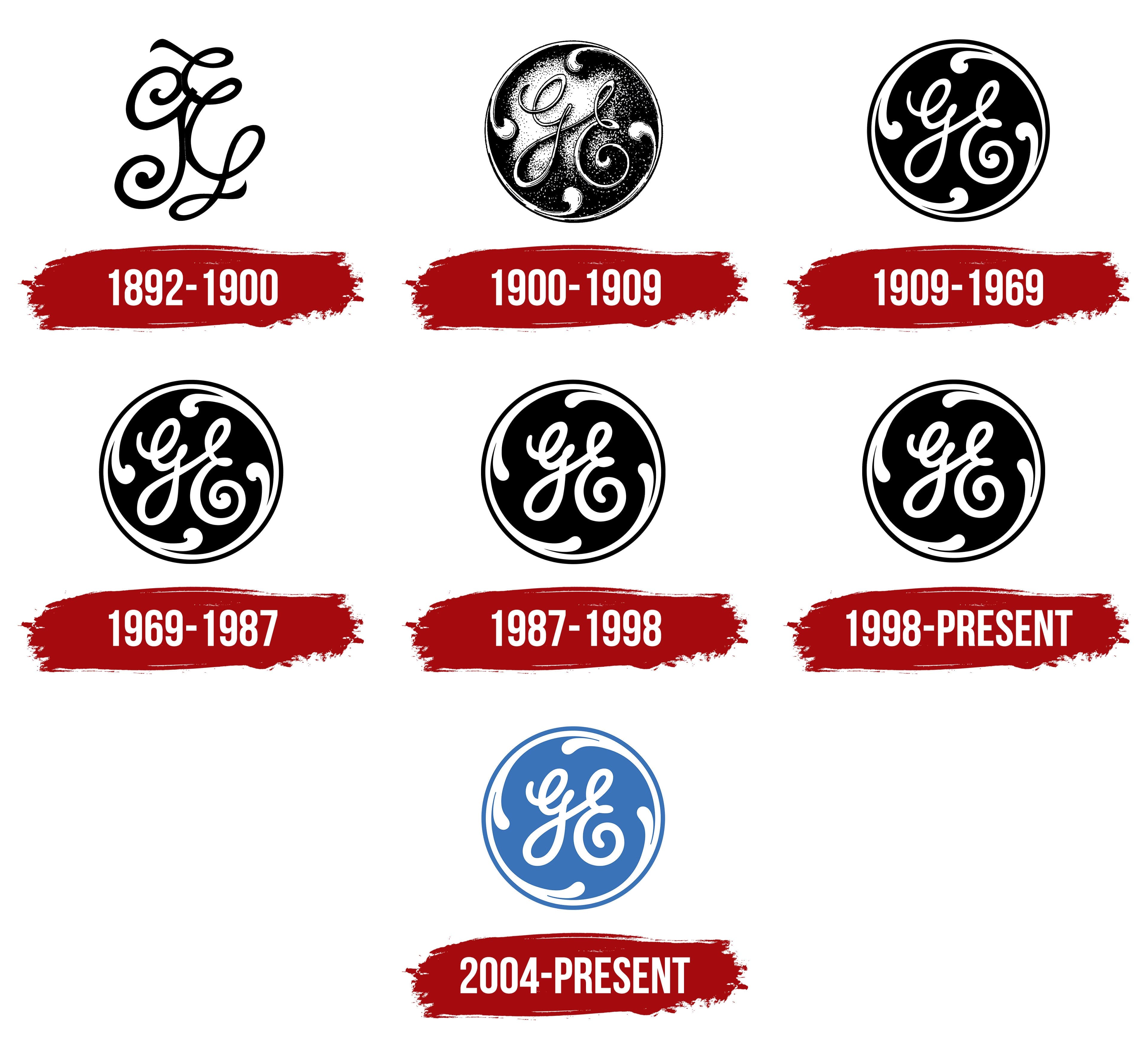
1892 – 1900
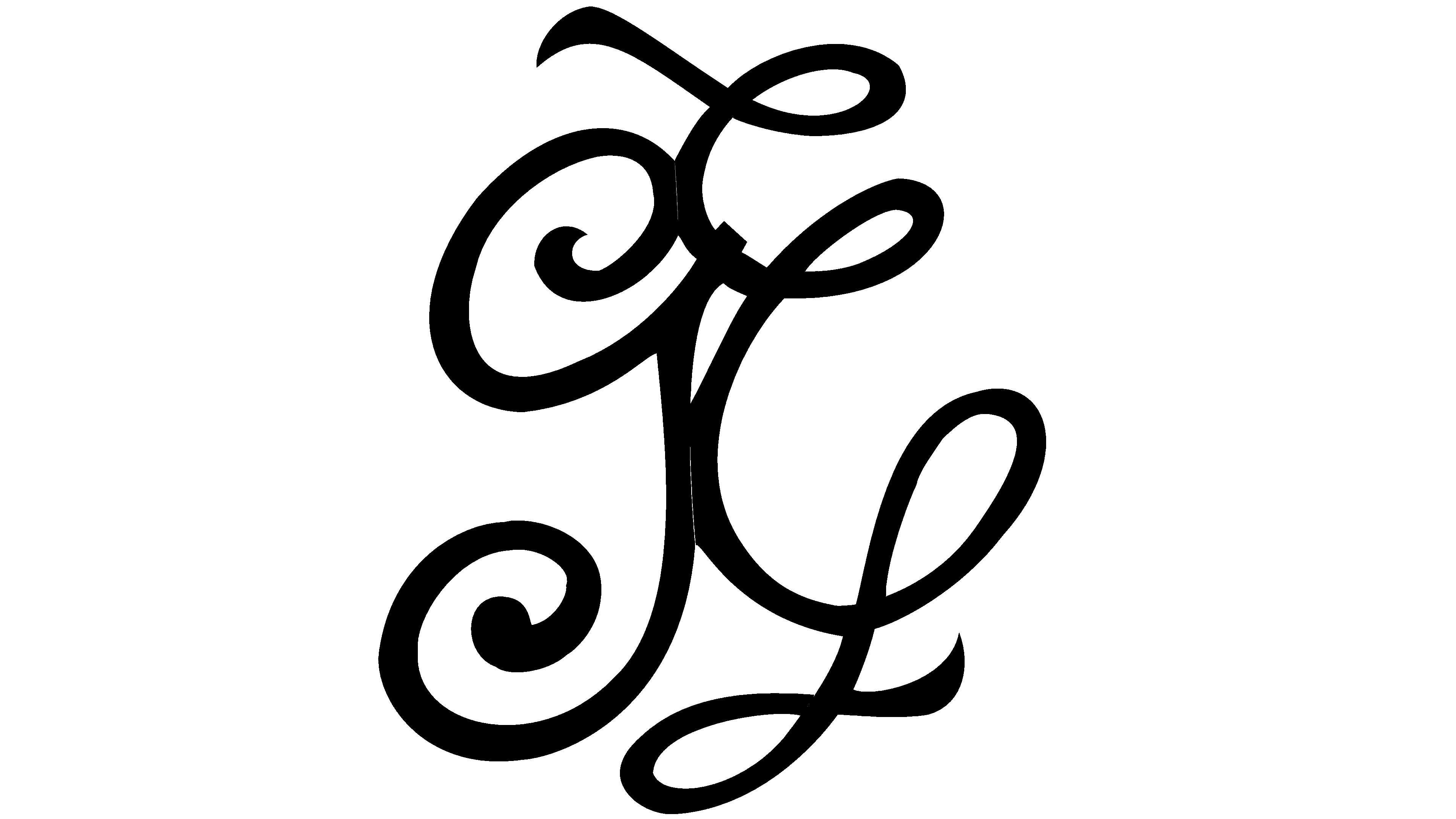
Historical records show that the General Electric Company logo first appeared in 1898. Designers used it to decorate the ceiling fan cord. The badge contained the unusually stylized letters “G” and “E. “G” looked lowercase and consisted of two spiral elements connected. The “E” was capitalized and resembled an unwound spring. Who created this emblem and when is unknown.
1900 – 1909

The monogram became thinner and slightly changed shape. The lower spiral of the letter “G” has become a standard loop, like the lowercase handwritten “g.” Instead, a spiraling element appeared at the bottom of the “E.” A swirl ring surrounded the logo.
1909 – 1969
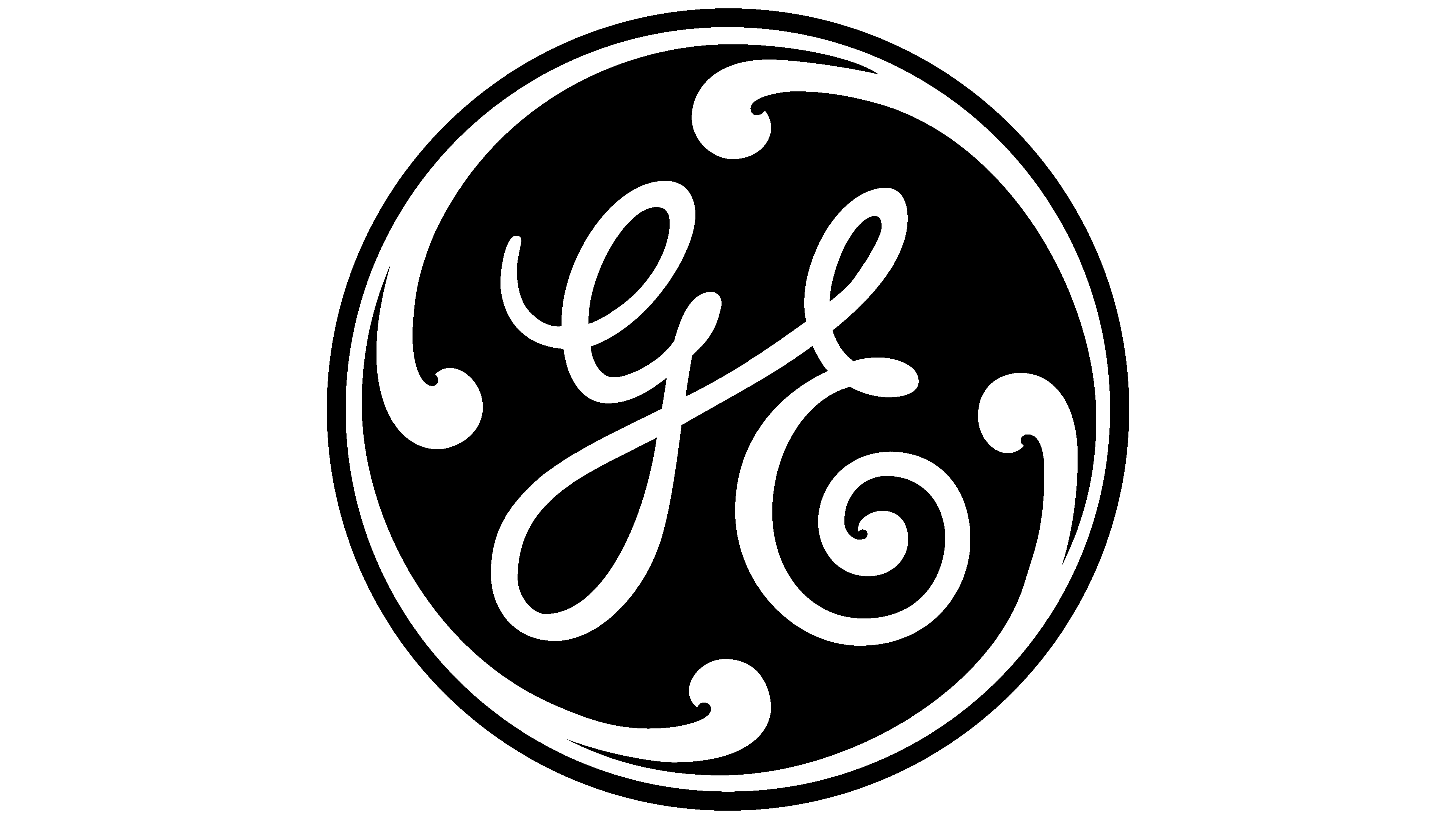
The letters became bolder after being reworked. The monogram and decorative frame were painted white, and the background circle was painted black.
1969 – 1987
In the late 1960s, the designers thickened and enlarged the letters while slightly widening the ring’s lines.
1987 – 1998
In 1987, GE approached Landor Associates to make minor adjustments to the logo. The specialists reduced the monogram and turned the curling decorative elements into drops.
1998 – today
After another modification, the letters changed shape slightly. Some lines are slightly thicker, while others are slightly narrower. This version is still used alongside the next.
2004 – today
The new CEO decided to change the company’s identity and asked Wolff Olins for help. The studio employees suggested an improved version of the GE logo: a white monogram in a blue circle.
Font and Colors
Two theories explain the emblem’s meaning. Some people think it’s simply the company’s initials in the Art Nouveau style popular at the turn of the 19th and 20th centuries. Designs of that era featured flowing lines that resembled floral ornaments. Its influence is noticeable in the ring’s swirling letters and protruding elements. According to another version, the monogram was based on the shape of the GE furnace burner.

The logo’s font is stylized, with hand-drawn letters decorated with decorative curls. Numerous curves make the image appear to move and evoke the Art Nouveau style. In addition to the standard black-and-white version, there is a sign with a blue circle. This color was chosen for its symbolism: it represents excellence, trust, and honesty.