


 Glamour Logo PNG
The Glamour logo is soft and elegant. It is an elegant publication that understands modern women well. The emblem reflects the diversity of content and the light, pleasant style of articles.
Condé Nast launched Glamour in April 1939 under the title Glamour of Hollywood. The magazine addressed young working women interested in fashion, beauty, and the lifestyle of Hollywood stars. Its editorial direction differed from Vogue, another Condé Nast title, which focused on wealthier readers and high fashion. Glamour presented style through clothes and beauty choices that a real reader could buy, wear, and adapt.
By 1941, the name had been shortened to Glamour. During the 1940s, the war shaped its editorial agenda. Articles explained how women could maintain elegance under rationing, limited fabrics, and reduced access to familiar cosmetics. The magazine also printed career advice for women entering factories and offices while men were away in military service, a rare focus for women’s media of that period.
After World War II, Glamour kept a balance between beauty coverage and practical life issues. In the 1950s, it competed with Mademoiselle, another Condé Nast magazine aimed at young women, with a stronger literary and intellectual profile. In 1959, Glamour became the first major American women’s magazine to put Black model Lorraine Day on its cover. In the 1960s and 1970s, its pages added careers, independence, sexual health, and women’s rights.
Ruth Whitney became editor-in-chief in 1971 and led Glamour until 1998. Under her editorship, the magazine covered domestic violence, eating disorders, and workplace discrimination. At the same time, circulation exceeded 2 million copies a month in the 1980s. In 2001, Glamour launched the Women of the Year Awards. In January 2019, Condé Nast ended the U.S. print edition after the final December 2018 issue, moving American Glamour fully online.
Meaning and History
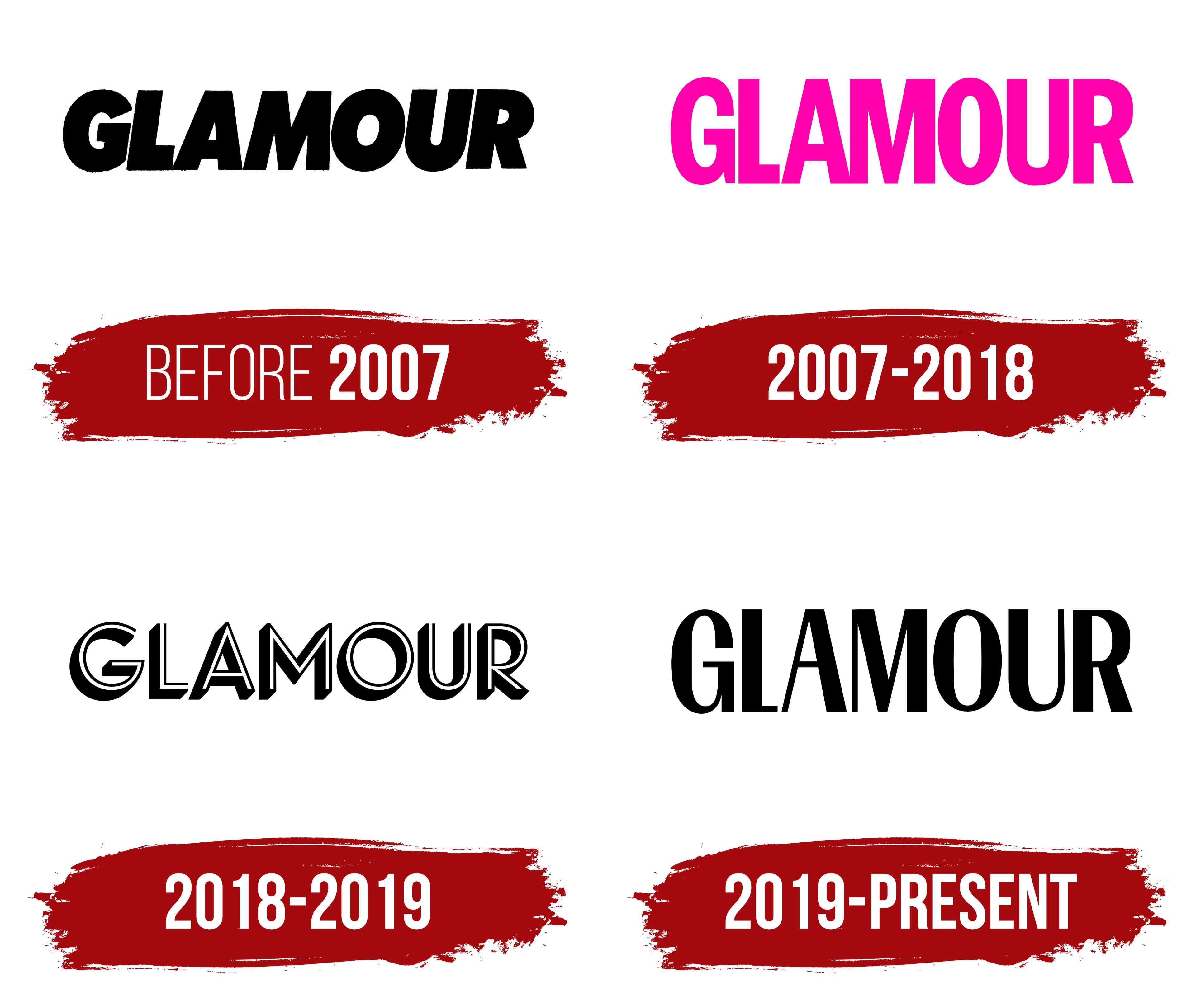
The main sign of Glamour is its name. A word emblem is characteristic of most print publications, as their main force is the word. But the emblem, like the faces of the young women it represents, could not remain static. Rebrandings reflected the media’s “character” maturing alongside its audience and their interests. At different periods in history, the logo appeared bold and confident, then flirty and elegant, like the diverse images of a young woman she adopts according to her mood.
What is Glamour?
It’s a magazine with the latest news on the glamorous life. Articles about celebrities, fashion trends, product reviews, makeup, and health provide useful and fascinating information for young women. Globally, the publication was subscribed to and bought in boutiques and kiosks by 12 million readers. With the transition to online, the number of visits remains at 11-12 million per month, and the number of followers on social media remains the same.
before 2007

The first logo was bold black capital letters with a slight forward tilt. The magazine’s name was chosen deliberately. Its pages were planned to be filled with news about movie and pop stars, covering their lifestyles, fashion, secrets of success, and careers. Hence, the monthly magazine’s first name was Glamour of Hollywood.
The massive letters promised rich reports and information about the best and most famous. The size of the glyphs hinted at the young team’s ambition to become the number one fashion magazine.
Due to the war, aristocratic flair went out of fashion. So, in 1943, the focus shifted from celebrities to the promising audience of young women entering the workforce. The word “Hollywood” was removed, and Glamour added the subtitle “the girl with the job.” The round glyphs of the logo conveyed the fullness of life, the ability to balance family, child-rearing, and career achievements.
Only 20 years after its founding, the magazine’s name was shortened to Glamour, reflecting its shift to publications for young women of various social statuses.
2007 – 2018

In the 2000s, Glamour publishers expanded into other countries. The international magazine’s style was revised. To attract readers, a bright pink color was added to the logo, which is most associated with a young female audience.
The letters of the emblem are slim and suggest a healthy lifestyle, a topic that was actively discussed in the media at the time and was very popular among women.
Each letter of the name seems to stretch upwards to success, development, and self-improvement.
The visual sign of that decade’s glamour seems to announce useful, expert articles written with a full understanding of the needs and features of the female audience. The magazine’s materials teach you to be bright, attractive, stylish, and feminine. At the same time, it doesn’t forget about career, business, and personal brand-building tips.
2018 – 2019

At the beginning of 2018, the publication got a new editor, stylish and ambitious reporter and producer Samantha Barry. With her arrival, the magazine renewed its identity for the first time in the last 10 years.
The new logo consisted of 3D letters. The combination of clear elements and halftones revived the title, showing maximum proximity to readers and understanding their joys and worries. The voluminous letters conveyed the publication’s vibrant, lively adherence to modern style and its participation in the flow of real events.
The black-and-white symbols hint at the light and dark stripes that make life interesting and full. White is the color of news and sensations, and black is the shade of articles about celebrities who have reached the pinnacle.
2019 – today (only internet magazine)
In January 2019, the last print edition of Glamour saw the light of day. The monthly magazine ended its long history of print editions and switched to online-only releases. The magazine is geared towards young women. Therefore, it restructured to fit its lifestyle and is now actively developing its social media accounts and website.
For the internet publication’s logo, the editorial team chose an elegant capital-letter inscription. A distinctive feature of the sign is the varied thickness of the elements. This feature symbolizes the diversity of content that caters to the interests of businesswomen, housewives, young mothers, students, and single women.
The slim glyphs speak to readers’ slimness and youthfulness, with an average age of 33 years. The full, rounded elements reflect a desire to uncover the facets of modern life and to highlight bright, interesting details.
The elegant letters demonstrate the journalists’ skill in catching attention and engaging with their materials.
Font and Colors
Black is the primary color for Glamour signs. The choice demonstrates the publication’s neutrality, which helped attract a broader audience with diverse interests and views. Black also speaks of confidence and dominance in the market. In terms of audience reach, the magazine has far outpaced most American fashion media.
The style of the inscription echoes several popular fonts, like Romely Bold and Tonus Contrast Black, but does not have exact counterparts. The pleasant roundness of the glyphs speaks of easy, engaging reading, a clever combination of entertaining and useful content. And the sharp elements showcase accurate, catchy headlines and comments.