


 Google Pay Logo PNG
The Google Pay logo is dynamic and highly recognizable. It is based on the strong reputation of its parent company, Google, which grants it global trust and recognition. The symbol’s design emphasizes the service’s global accessibility, highlighting its use worldwide. The emblem also conveys a sense of smooth movement, as if demonstrating seamless usage and fast connections across distances. The app’s ease and convenience are embedded in its visual design, symbolizing the simplicity and speed of financial transactions.
The payment service began in 2011 with Google Wallet, a mobile platform for storing card details and making contactless purchases through NFC. Early adoption remained limited because many banks and mobile operators did not support it. In 2013, Checkout added online payments through Google accounts, although both products continued to operate separately.
A major shift came in 2015 with Android Pay, designed for closer integration with the mobile operating system and wider acceptance among banks and retailers. Wallet then moved toward person-to-person transfers. In 2017, the company announced plans to combine its payment products into one platform.
The unified service launched in January 2018, joining transfers, contactless purchases, in-app payments, and Checkout transactions. During the same year, it entered markets across Europe, Asia, and Latin America while adding support from banks and payment networks. In 2019, users could store event tickets and boarding passes, along with closer links to Assistant and Maps.
A 2020 update introduced personalized retail offers, finance management tools, and access to bank accounts through selected partners in the United States and India. In 2021, parking and public transport payments became available in several US cities. Further updates followed in 2022, and by 2023 the platform operated across multiple countries with broad support from financial institutions and payment systems.
Meaning and History
What is Google Pay?
This is a flexible digital payment network created by the internet giant Google to streamline financial transactions in the digital age. Users can easily make payments through their PCs, tablets, or mobile phones using this online payment system and mobile wallet. The platform supports money transfers, in-app purchases, and contactless payments in physical stores, integrating with users’ bank accounts and credit cards. The network’s strength lies in its broad ecosystem, including an extensive partner network and integration with other Google services. Additional features include transit payments and loyalty program integration. The platform emphasizes security, using tokenization and biometric authentication methods to ensure the safety and convenience of digital transactions.
2017 – 2018

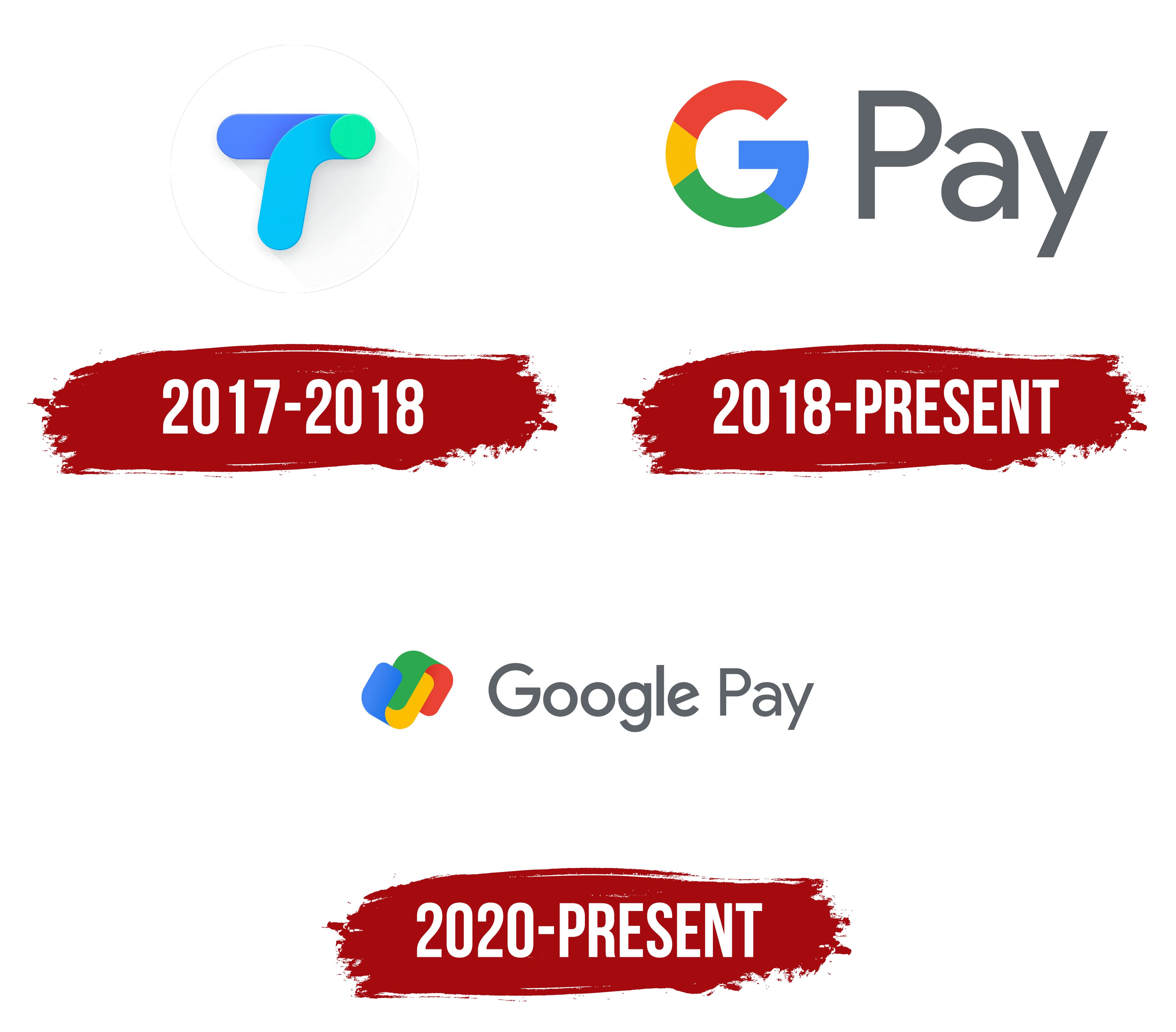
The app’s logo, originally called Android Pay, is presented in a minimalist style with bright, modern colors. The design is abstract yet dynamic, resembling either the letter “T” or a bird schematic. The symbols appear smooth and streamlined, perfectly conveying the app’s simplicity and ease of use.
The primary blue color is associated with technology, trust, and stability, while the green dot likely symbolizes the transfer of funds to the recipient. The logo’s lines resemble overlapping tracks, guiding the financial pulse toward its goal and emphasizing the speed and reliability of the transaction.
This visual symbol continues the concept of the previous Google Wallet logo, which was based on Android Pay. Thus, the emblem reflects the system’s primary objective: to provide users with a fast, convenient way to make payments and conduct financial transactions.
2018 – today

Following the name change, the updated Google Pay logo connected the brand to Google by incorporating its signature colors and symbols. This step made the app part of the tech giant’s product portfolio, elevating its status and reinforcing the trust associated with the global search engine. This visual element reinforced users’ perception of reliability.
Adding the word “Pay” indicates the service’s financial focus. The bold black font symbolizes stability and confidence, key qualities when managing money.
The emblem has changed from 2020 to the present, reflecting the merger of two streams in Google’s signature shades. This visualizes the breadth of the service’s capabilities and highlights its global adoption across a range of purchase types. The new version of the visual mark lacks text, as the brand relies on recognition of the color palette. The minimalist design conveys simplicity, speed, and ease of use, aligning perfectly with the app’s objectives.
2020 – today
The Google Pay logo, featuring two interlocking shapes, symbolizes a wallet, a key detail that underscores the app’s goal of replacing traditional physical wallets. These shapes evoke something familiar and intuitive but in a digital format, embodying the essence of Google Pay as a modern payment solution.
Each shape is colored in one of the brand’s core colors: blue, green, yellow, and red. This emphasizes brand recognition and identification with Google’s product ecosystem, helping users understand that this app belongs to Google. The colors are arranged smoothly and harmoniously, creating a sense of continuity, as if the logo elements interact. This reflects how the service integrates with other Google services, ensuring convenience and ease of use.
The form of the two interlocking shapes suggests a wallet and symbolizes interaction, movement, and exchange. This can be interpreted as exchanging money, which is becoming increasingly simple and quick thanks to digital technologies. The shapes have no sharp corners; their edges are smooth and rounded, giving the emblem a sense of friendliness and security. This is an important aspect of a financial app, where users want to be confident that their data and money are safe.
The text uses a simple, elegant font in a classic sans-serif style, making it easy to read. The dark gray text adds a sense of seriousness and professionalism, balancing the brighter, more colorful icon on the left. This underscores that, despite its innovation and ease of use, Google Pay remains a reliable and robust tool for managing money.
The word “Google” is associated with one of the world’s largest and most influential companies, which inspires trust in the service. Meanwhile, the word “Pay” immediately signals the app’s primary purpose: payments and financial transactions. Combining these two words conveys a clear message to users: this is a convenient and secure way to make payments using Google technology.
Although the icon’s distinctive colors and shape may not immediately be associated with a payment app, it conveys a digital wallet concept while remaining abstract enough to spark curiosity among first-time users. Once the user understands the concept, the icon becomes clear and recognizable, reflecting the brand’s essence as a convenient payment tool.