


 Intel Inside Logo PNG
The Intel Inside logo represents the modern technologies and capabilities of the company’s processors for consumers. The emblem signifies continuous improvement and growth, ensuring optimal device performance.
Before its iconic “Intel Inside” campaign took off in 1991, Intel Corporation, a prominent semiconductor manufacturer based in California, was hardly a name the general public would recognize. The company’s main business was with Original Equipment Manufacturers (OEMs), which made it relatively obscure to the average consumer. Yet booming interest in personal computers in the late ’80s woke Intel up and prompted it to connect more directly with end users.
The launch of the “Intel Inside” campaign became a groundbreaking moment in what’s known as “ingredient branding.” This marketing strategy aimed to elevate Intel from an anonymous tech entity to a brand as recognizable as any household name. It also let OEMs implicitly advertise product quality by attaching Intel’s newly famous label.
One brilliant tactic was Intel’s decision to partially fund advertisements for computer manufacturers, contingent on those ads prominently featuring the “Intel Inside” tagline. This clever move accelerated how quickly consumers became familiar with the Intel brand.
The outcomes were nothing short of transformative. The campaign catapulted Intel into domestic familiarity and made it synonymous with quality and innovation in computing. The “Intel Inside” campaign therefore stands as a monumental chapter in Intel’s corporate narrative, turning a once-indistinct tech supplier into a universally recognized brand name.
Meaning and History
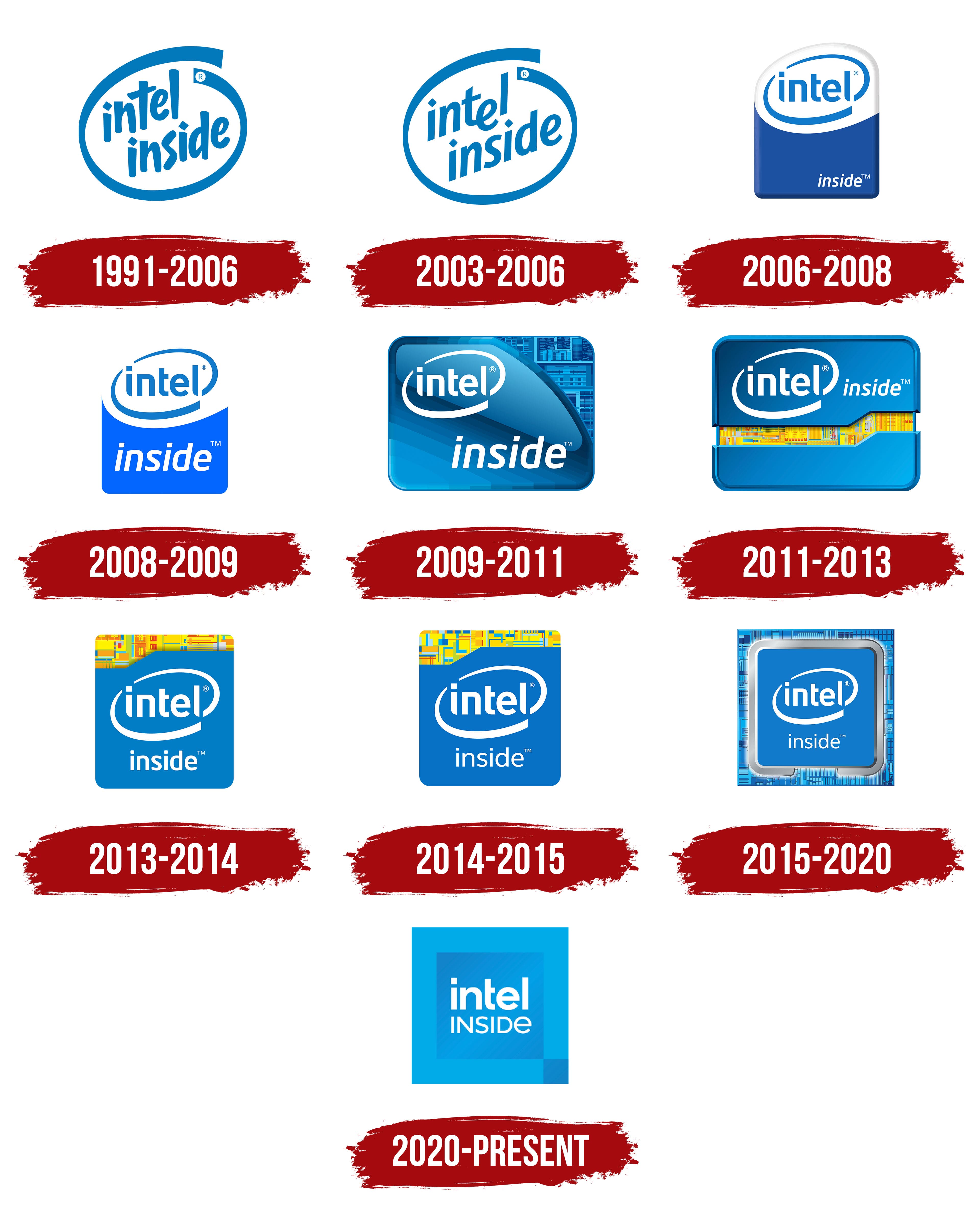
The Intel Inside campaign didn’t emerge overnight. Before its launch, Intel tested a version called Red X, which began in 1989. The market initially responded skeptically to attempts to advertise internal components and technologies. After studying Teflon and Dolby, Intel eventually found the right levers. In 1990, Intel launched the slogan “The Computer Inside,” later shortened to “Intel Inside.” Working closely with computer manufacturers, Intel gained press and television exposure. From then on, consumers became aware of the brand and its advanced technologies. All logos feature images of Intel components with the slogan “Intel Inside” printed on them. Despite numerous rebrandings, the logo’s general form and inscription have remained constant for the last 30 years.
What is Intel Inside?
It’s an advertising campaign that introduced consumers to the processor brand of their computers. A device sticker ensures advanced technologies, high performance, smooth operation, and manufacturer support through available drivers and updates.
1991 – 2006

The first logo consisted of the inscription Intel Inside. The words were slanted and arranged on two levels. The slant indicated continuous development and improvement, as well as the use of advanced technologies.
Intel is an abbreviation for Integrated Electronics. The name replaced the original NM Electronics, which was named after the company’s founders, Noyce and Moore. Adding “Inside” indicated the processor’s location within a computer component; advertisements aimed to instill in consumers the understanding that having an Intel processor indicates PC quality.
The inscription was encircled by an ellipse, symbolizing motion and activity. It spoke to the processors’ speed, information exchange, and computational processes.
2003 – 2006

The inscription’s font changed to match the company’s Intel logo, in use since 1969. The main feature was the lowered ‘E,’ dividing the word into two parts: Int (from Integrated) and el (from Electronics). The emphasis on the letter ‘e’ connected the logo with:
- Einstein’s formula,
- The mathematical constant Euler’s number, the base of natural logarithms,
- Electrons.
The first two analogies discussed scientific data, calculations, and precise equations, emphasizing the processor’s capabilities and operation. The connection to electrons highlighted the working principle of semiconductors, the foundation of transistor and, subsequently, processor creation.
Unlike the original emblem, the Intel Inside inscription features smoother, more pleasant contours to emphasize the smooth operation of the brand’s processors.
2006 – 2008
In 2006, Intel underwent rebranding, dividing the company into departments based on consumer groups. The corporate logo was also updated as part of a project by the agency FutureBrand.
Intel Inside underwent an emblem transformation to align with the main brand. Inside the ellipse, only the word Intel appeared. Straight, even characters indicated reliability and stability. The inscription font changed to a transformed Neo Sans. The first and last letters had pointed ends.
The composition was placed on a white, elliptical base, combined with a blue rectangle representing a processor. The word “Inside” was written in small letters at the bottom of the blue section. For the first time, the brand name and the additional word were separated to focus consumer attention on the brand.
The white part of the image symbolizes the platform the company offers consumers. Under the new positioning, Intel is not just a processor but a complete solution, software and hardware, for a specific group of users.
2008 – 2009

In 2008, the emblem’s color scheme and style were slightly updated. The symbol became lighter and airier. The word Inside expanded and tilted slightly, indicating technological advancement.
2009 – 2011
The 2009 emblem became rectangular, matching some processor designs. A smooth line divided the image in two. The second half revealed the processor’s intricate internal components, silicon crystals, literally reflecting the Intel Inside expression.
The emblem was used across the company’s range of dual-core processors. The logo highlighted high-tech features invisible to consumers but worth knowing.
2011 – 2013

The 2011 changes made the emblem very stylish. A rectangular blue chip case, on which the Intel Inside slogan was written, was slightly opened in the middle, revealing the interior of its yellow silicon crystal transistors. The blue-to-light-blue gradient and the contrast between blue and yellow enlivened the image, giving it a friendly appearance. This composition was used for the new Sandy Bridge processors.
2013 – 2014

The campaign returned to the emblem’s square, harmonious form, which matched the look of most processors. The chip’s internal components shifted to the upper part of the image.
2014 – 2015

In 2014, minor changes were made to the logo. The word “Inside” became smaller and thinner, while the internal “filling” took on a more yellow hue, without the red elements associated with overheating or malfunction. The agency Red Peak Branding worked on the font and overall design.
2015 – 2020
In 2015, the emblem became closer and more accurate, almost mirroring a processor. The chip was placed over a square area that resembled silicon crystals or a motherboard. This visual approach emphasized the chip’s internal structure and position. Expanding beyond the square boundary indicated improved performance and power for the components. The steel outline conveyed reliability and protection.
2020 – today

The modern symbol transformed into a more veiled, schematic version of the processor. Sharp corners replaced the rounded ones to emphasize technological advancement. These changes suited the name of the Tiger Lake processor series for which the logo was designed.
Font and Colors
Blue and light blue are the primary colors in Intel’s Inside emblems. These colors are associated with high technology, manufacturing, engineering, and computers, which fits the logo concept.
The unique font used is Intel Clear. Developed for the company in 2014 by the Dalton Maag font studio and modified by Andrew Mirakian in 2020. The soft, rounded lines convey vitality and openness. The letters are easy to read on gadget screens, a primary objective during their creation.