


 Jet Set Radio Logo PNG
The Jet Set Radio logo captures creativity and freedom, blending street art, graffiti, and the metropolis’s rhythm. With its unique style and dynamic gameplay, the game continues to inspire fans, offering a world of self-expression and adrenaline.
Jet Set Radio, a distinguished action game launched in 2000 and known in North America as Jet Grind Radio, remains a paragon of innovative artistic style, transformative gameplay, and a captivating soundtrack. Developed by Smilebit and published by Sega for Dreamcast, this game has secured its place in the annals of classic gaming.
Debuting on June 29, 2000, Jet Set Radio marked a transformative moment in Sega Dreamcast’s history. Developed by Smilebit, a Sega division, the game pioneered cel-shaded graphics and captured the gaming community’s imagination. With its trailblazing gameplay, distinctive art style, and pulsating soundtrack, Jet Set Radio quickly became a hit and still enchants gaming enthusiasts today.
In Jet Set Radio’s adrenaline-pumping universe, players assume the role of the defiant GGs, a street gang determined to immortalize their legacy in a Tokyo-inspired futuristic metropolis. Skating through the city, players must outsmart pursuing police and rival gangs while artistically plastering colorful graffiti tags on iconic landmarks. The Dreamcast controller’s innovative control scheme lets players pull off audacious stunts and maneuvers throughout their city escapades.
Jet Set Radio’s iconic soundtrack holds legendary status in the gaming community. Its unique fusion of Japanese and Western music, composed by esteemed artists such as Hideki Naganuma and Jurassic 5, sets it apart. Often celebrated as one of the most memorable video game soundtracks ever, it has retained its charm and appeal.
After its Dreamcast debut, Jet Set Radio quickly became a cult classic and influenced a new wave of games such as Sunset Overdrive and Hover: Revolt of Gamers. Since then, the game has appeared on various platforms, including Xbox and PlayStation 3, making its unique mix of graffiti tagging and roller-skating action accessible to a broader audience.
Meaning and History

What is Jet Set Radio?
This action video game stands out for its unique style, engaging gameplay, and dynamic atmosphere. Players can explore a virtual city, complete missions, battle opponents, create graffiti, and perform tricks on rollerblades. The project is known for its vibrant visuals, creative soundtrack, and freedom of action, making it a cult favorite among genre fans.
2000 – today
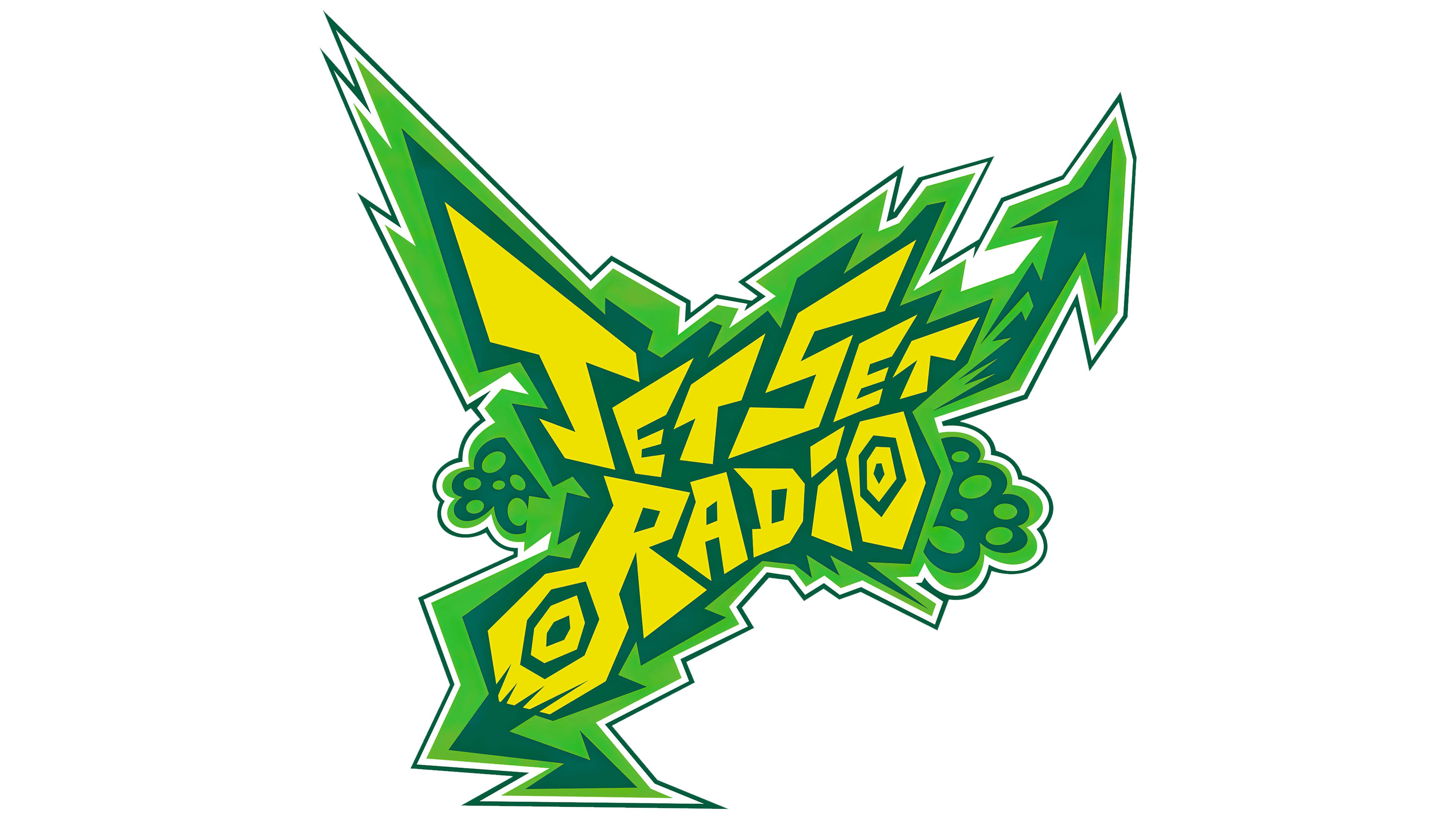
Jet Set Radio blends urban style, music, and graffiti into a vivid kaleidoscope of emotions and rhythms. The brand’s logo is designed to convey the atmosphere of the streets, freedom of expression, and youth culture.
The graphics are built on a combination of green tones and vibrant yellow. The logo’s composition resembles street graffiti, bold, chaotic, and free from rules and conventions. The design’s center appears to explode outward, with yellow letters bursting outward and reflecting the game’s boldness and energy.
The letters are intentionally rough, with sharp angles and asymmetrical lines, evoking a spontaneous sketch on city walls. Special details are highlighted in the letters “R” and “O, “decorated with concentric rings and geometric cutouts, visually resembling speaker vibrations. This reflects the brand’s musical nature, emphasizing how deeply the game is rooted in sound and rhythm.
Green lightning bolts scattered around the main text add motion and energy, as if the graffiti were created to the rhythm of dance or a powerful beat. An additional white outline enhances contrast, highlighting the letters’ brightness and depth against the lightning and a stylized cloud resembling the swirling smoke of spray paint.
The name Jet Set Radio carries a double meaning: “Jet Set” evokes a high-speed, adrenaline-fueled, dynamic urban lifestyle, while “Radio” directly references the game’s musical context, where soundtracks and rhythms play a central role. The logo’s visual style fully aligns with the brand’s concept: a fusion of music and motion, freedom and street creativity.
The logo design is shaped as a visual protest: loud, layered, and detailed. It directly references street subculture, where graffiti serves as self-expression and rebellion against conformity and the dullness of urban life. The color palette and illustrative style highlight the brand’s youth audience, those who love music, rhythm, and street culture, and choose freedom over formality.