


 Kenworth Logo PNG
The Kenworth logo is harmonious and bright. Represents an award-winning and customer-recognized industry leader. The logo’s encrypted roads, trucking, and prediction signal a successful path to the future.
Kenworth traces its roots to 1914, when Gerlinger Motor Car Company in Portland began building trucks with six-cylinder engines. After the company moved to Seattle in 1916-1917, it went bankrupt. Edgar K. Worthington and Captain Frederick Kent bought its assets and renamed the business Gersix Motor Company. In 1919, Kent retired, and his son Harry W. Kent joined the partnership.
In January 1923, the company became Kenworth Motor Truck Company, named after Kent and Worthington. Its Seattle plant produced 78 trucks in its first year, mainly for the Pacific Northwest logging industry. During the Great Depression, Kenworth survived by building custom fire trucks and continuing technical development. In 1933, it became the first U.S. truck maker to offer a diesel engine as standard equipment, and it introduced an early sleeper cab.
New U.S. weight and size rules in 1935 pushed Kenworth toward aluminum body parts, lighter suspensions, and hydraulic brakes. In 1936, the company launched its first cab-over-engine truck, known as “Bubble Nose.” During World War II, Kenworth built M-1 6×6 recovery vehicles and produced parts for Boeing B-17 Flying Fortress and B-29 Superfortress bombers.
In 1945, Pacific Car and Foundry (later PACCAR) acquired Kenworth. After the war, the brand expanded and introduced the 500 “Bull-Nose” series in 1948. Later milestones included the Chillicothe plant in 1974, the AERODYNE sleeper in 1976, the aerodynamic T600A in 1985, the T800 in 1986, the W900L in 1990, and the T680 in 2012. By its 2023 centennial, Kenworth reported having built more than 1.3 million trucks.
Meaning and History
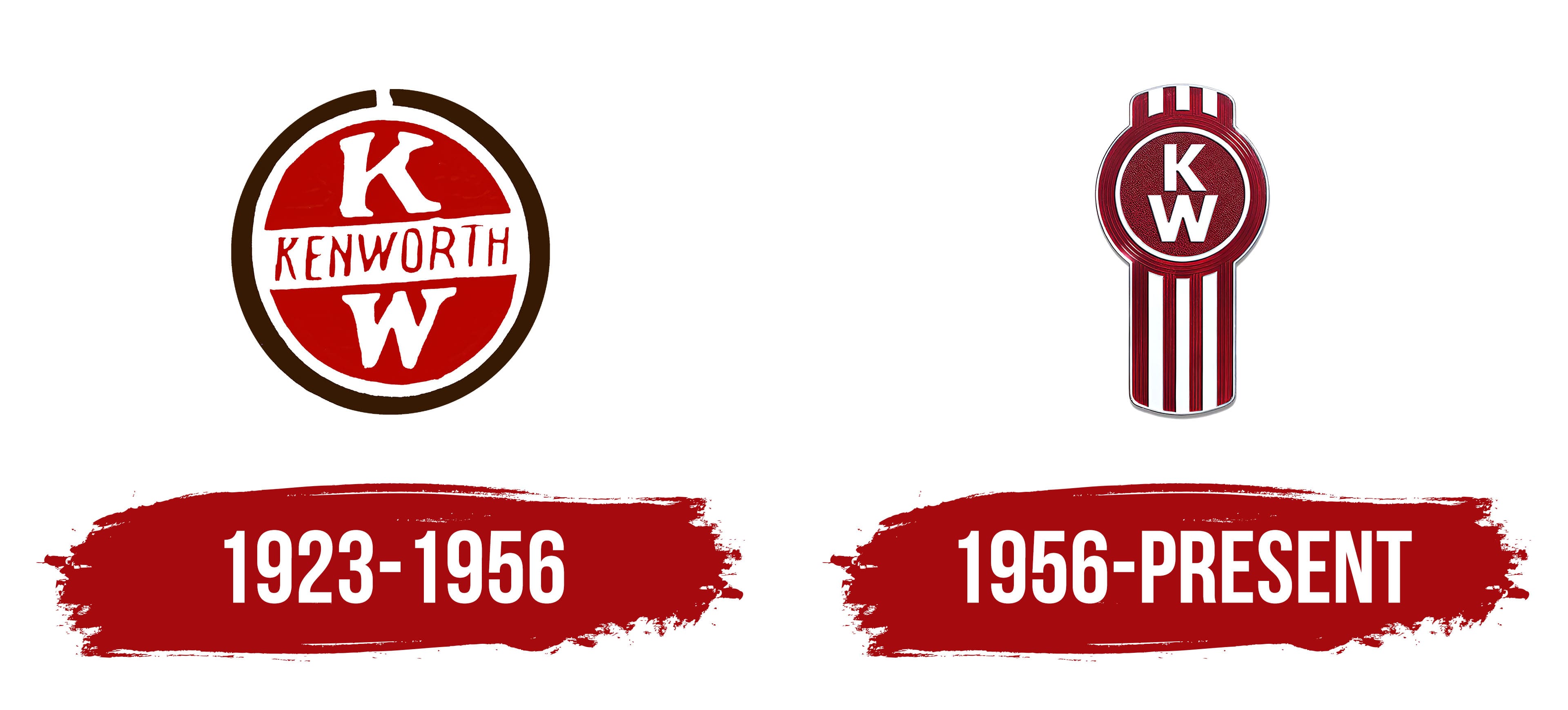
The company logo symbolizes a successful partnership that has shaped the history of machines for decades. Despite some transformations, the emblem retains the memory of the brand’s creators and the best lines. The badge speaks of a champion company that has delivered successful solutions under the most difficult conditions across various industries.
What is Kenworth?
This prestigious American truck manufacturer, part of the PACCAR group, is often referred to by trucking enthusiasts as “The World’s Best.” Based in Kirkland, Washington, the company is one of North America’s leading heavy-duty truck manufacturers. It produces durable, custom-built trucks known for their recognizable chrome grilles and aerodynamic design, which have become iconic on continental highways. Models like the W900 have become symbols of American trucking culture, and the brand’s high build quality, driver comfort, and reliability have made its trucks popular with owner-operators and large fleets alike.
1923 – 1956
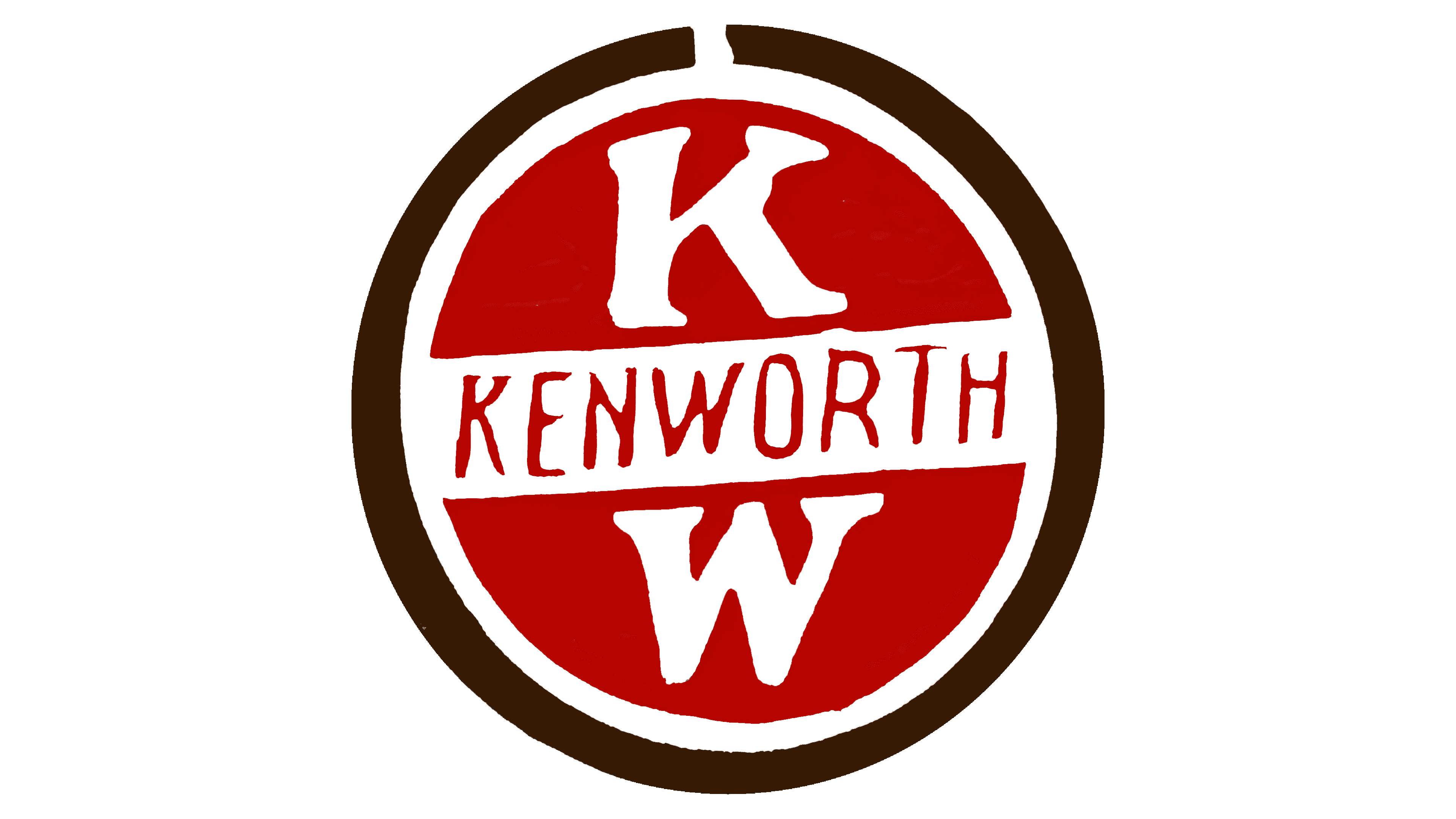
The first logo had a round shape reminiscent of:
- Seal of quality. Confirmation that machines complied with all requirements and standards. For example, in 1935, the manufacturer undertook a massive reorganization to comply with the Motor Carriers Act.
- Wheel. Symbol of vehicles and roads.
- Steering wheel. The personification of leadership, travel, and transportation, for which the machines were created. A wide white strip across the circle enhanced the resemblance to a steering wheel.
- Road sign. The logo’s red background, white border, and stripe in the circle resemble a road sign. Indicating that only driving in a Kenworth car is safe. The brand lets you reach your destination without hindrance. Here, the white stripe matches the roadway, and the brand’s name matches the car.
Double black-and-white edging signaled greater security: a reinforced truck body and the ability to transport goods without damage.
The sign shows the company name in thin red lines. The letters K and W sit inside the circle, one above and one below. The name appeared after partners Worthington and Kent bought the bankrupt initial company, Gerlinger Motors, in 1917.
They decided to continue producing Gersix trucks. The model was in great demand, so over time, the partners moved their headquarters to Seattle, and the brand was named after the first syllables of their surnames. The letters in the sign indicate two owners with equal shares.
The red background symbolizes progress and strong demand for the product.
1956 – today
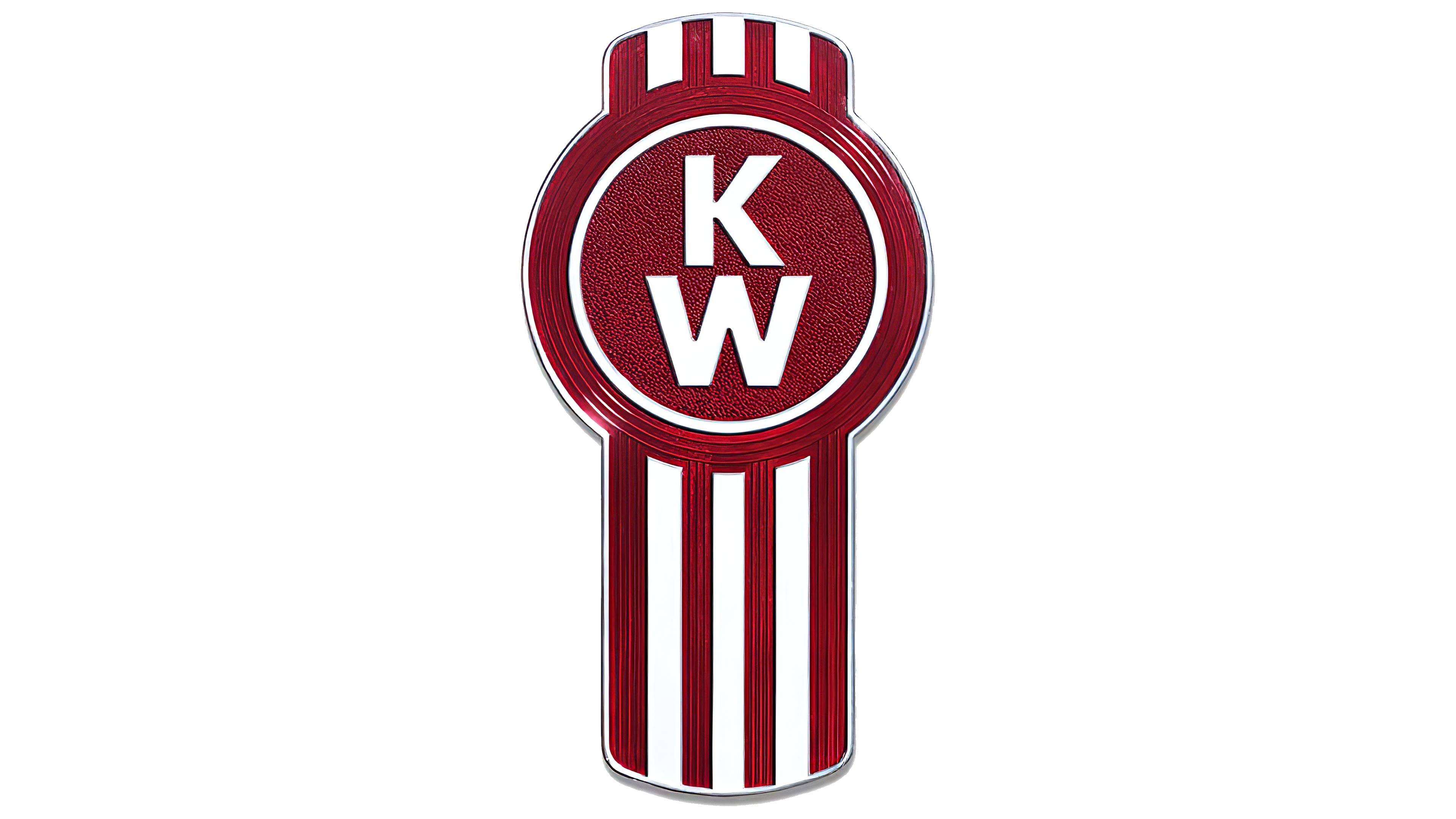
After the founders’ deaths and the rightful owners’ refusal to deal with management, the company was acquired by the Pacific Car and Foundry Company. She made Kenworth a subsidiary and, since 1956, her division. A major owner’s participation allowed the company to expand production and sell cars in 30 countries across the Middle East, Mexico, Canada, and Europe. However, the lines were now limited to trucks.
The new Kenworth logo resembled an award medal, featuring a striped ribbon and a round medallion at the top. Inside a white-edged circle, the letters K and W are stacked. The company name itself was no longer used, as the new owners did not want to emphasize it.
The founders’ initials now appeared on truck lines such as W900 and K100.
Font and Colors
Red and white are the company’s main colors in its visual signs.
- Red is the leader’s color. Many of Kenworth’s technical solutions were copied by other manufacturers. The hue conveys focus and dedication. The company remained consistently true to its truck theme. Each model became a hit, then was improved and refined many times. For example, the W900 became the W900A and then the W900B.
- White conveys the theme of research, design, and development. The company changed locations, setting up new plants from scratch, as the white color suggests. Starting with a move from Portland to Seattle, the firm moved to a larger factory in the city, then temporarily to Yakima, then to the Fisher Body factory, added production in Chillicothe, and expanded into other countries.
The logo letters are massive and simple. They correspond to large appliances designed for functionality.