


 KitchenAid Logo PNG
The KitchenAid logo is bright and festive, as the company’s products are a gift to every woman, making kitchen work easier. The emblem uses a color palette and distinctive letter shapes to emphasize the product’s uniqueness.
Originating in 1919 under the auspices of The Hobart Manufacturing Company, KitchenAid initially entered the market with a single focus: producing stand mixers. Their inaugural offering was a model named “H-5,” marking the brand’s first foray into the appliance market.
In the 1930s, KitchenAid took a major leap forward in design. Working with designer Egmont Arens, they unveiled the “Model K” stand mixer, which would define the signature look of KitchenAid mixers, largely unchanged to this day. This aesthetically pleasing and functional design helped cement the brand’s reputation for quality and durability.
However, the company didn’t rest on its laurels; in 1949, it diversified its product line by entering the dishwasher market. Its brand presence received a significant boost in the late 1980s thanks to an aggressive advertising strategy that doubled public awareness within three years.
Ownership of KitchenAid shifted in 1986 when Whirlpool Corporation took the reins. This acquisition paved the way for the brand’s expansion into a range of large and small kitchen appliances. Yet despite its wide range of offerings, KitchenAid’s identity remains intrinsically tied to its stand mixers, which have maintained a consistent design language since the 1930s.
Today, KitchenAid is a preeminent name in the kitchen appliance sector, offering a comprehensive suite of products. But it’s clear that the brand’s initial breakthrough product, the iconic stand mixer, still encapsulates what KitchenAid represents: quality, durability, and timeless design.
Meaning and History
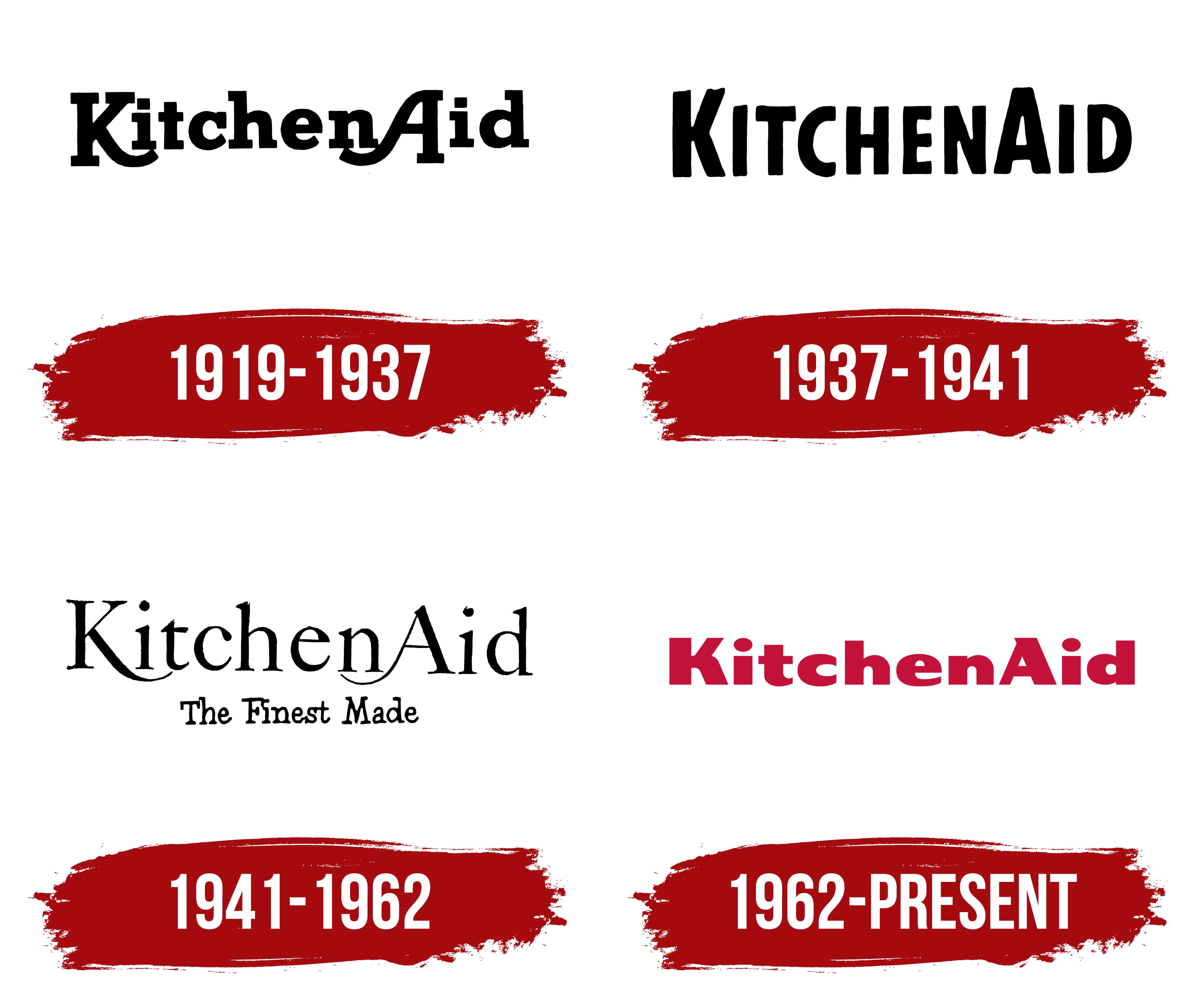
KitchenAid is one of the older brands, dating back over 100 years to the dawn of the 20th century. Its logo has not been updated for a long time, remaining a standard of beauty and consistency. The first emblem appeared in 1919 when the Hobart Corporation established the brand for making mixers. The latest logo was introduced in 1966. Even the change of millennia and the 100th anniversary did not prompt new owners to alter the visual identity. The emblem doesn’t need it, having achieved perfection through three rebrandings.
What is KitchenAid?
The company introduced the stand mixer to women. The first appliance was launched in 1919. The modern brand produces kitchen machines, coffee grinders, ovens, dishwashers, and microwaves. Yet mixers remain the central product.
1919 – 1937

The first logo consisted of the brand name, rendered in black, with large serifs. A standout feature of the inscription was the enlarged legs of the letters K and A, which seemed to hug the adjacent letters.
This design element conveyed care and support, resonating with the brand name formed by fusing two words: “Kitchen” and “Aid.” The company took its name from the wife of one of Hobart’s executives, who, after testing the mixer, said it didn’t matter what the product was called, as it was the best kitchen helper she had ever encountered.
The letter swirls resembled bowls mixing containers that came with the mixers. Initially, these were shallow vessels for stirring eggs.
Interestingly, the letters underlined spelled out “Kin A,” portraying mixers as “relative number 1,” a close helper, and a friend.
The logo, name, and design formed a unified tandem, promoting the product by appealing to women’s emotions. The main message of the emblem aligns perfectly with product advertising, which promises to save time and energy while guaranteeing better quality and a wider variety of dishes.
1937 – 1941

In 1936, Egmont Arens, a marketing legend and editor of two iconic fashion, design, and style magazines, joined the exterior design development. He designed the look of the famous K model. The mixer’s silhouette is still visible in KitchenAid products today.
The updated logo matched the new products. Simple, slightly uneven letters lost their pretentiousness. They now pointed to equipment for regular home kitchen work. As if hand-drawn by a layperson, the glyphs emphasized the relief of routine labor. The inscription conveyed that KitchenAid products were for everyone.
1941 – 1962

In 1941, another model by Egmont Arens was introduced, the K5A. Elegant curves, soft shapes, and the mixers’ streamlined design called for a return to the previous swirls in the emblem.
The letters of the inscription were given a more refined font, matching the beauty of the products. The brand name was supplemented with the inscription “The Finest Made,” executed in a “handmade” style. The signature highlighted the iconic designs by Arens, which had received numerous awards.
1962 – today

By the 1960s, the company was famous not just for mixers. The first dishwashers and other appliances had been added to its inventory. This expansion was followed by a revamp of the marketing strategy and logo.
The emblem was given a red hue to emphasize the brand’s unique feature, using a broad color palette for its appliances. For instance, in 1955, mixers came in four bright shades. Dishwashers were offered in pink and white. These various colors became a hallmark feature of KitchenAid, and the bright logo highlighted this innovation.
Font and Colors
Red is the primary color of the emblem and is dominant in the design of tabletop appliances. This shade evokes a sense of festivity and lifts the mood. Subconsciously, the color conveys a message about the products’ performance, speed, and power.
As a bright focal point in the interior, the company’s mixer draws attention. A red logo serves a similar purpose: it stands out and attracts female shoppers.
Designed for a female audience, the brand uses color to evoke associations with roses, love, passion, and a femme fatale, thereby subconsciously driving purchases.
The font of the inscription is unique. Broad glyphs, tapering at the ends, mimic the shape of the mixer, which had thin beaters attached.