 Kleenex Logo PNG
The Kleenex logo elements suggest thorough cleaning. The emblem cleans the surface it sits on, showing the harmony, order, and purity that remain after using brand products.
Kleenex is a consumer brand of Kimberly-Clark, focused on disposable tissues and related hygiene goods. Its history began in 1924, when Kimberly-Clark introduced facial tissues as a makeup remover. The material was derived from paper developed as a replacement for cotton in gas mask filters during World War I.
Between 1925 and 1926, customers began reporting a different use. Letters to the company described tissues used as disposable handkerchiefs. This feedback led to a shift in positioning. In 1929, the campaign “Don’t Put a Cold in Your Pocket” reframed the product as an everyday hygiene product.
During the 1930s, the brand gained wider recognition. Improvements in production and quality supported the brand’s growth, and the name Kleenex became closely associated with paper tissues. Both military and civilian consumption increased, and post-war sales continued to grow.
The 1950s and 1960s marked a period of product expansion. Kimberly-Clark introduced pocket packs and multiple tissue formats to adapt to different usage scenarios. In the 1970s, the company entered international markets, expanding distribution beyond the United States and building a global presence.
Throughout the 1980s and 1990s, the company updated manufacturing processes and packaging, while new product variations emerged to address changing consumer habits. From 2000 to 2010, the focus shifted toward diversifying and modernizing production technologies. Between 2010 and 2023, the brand continued its global expansion. It made incremental updates to packaging and manufacturing systems, maintaining its position in the mass tissue market.
Meaning and History
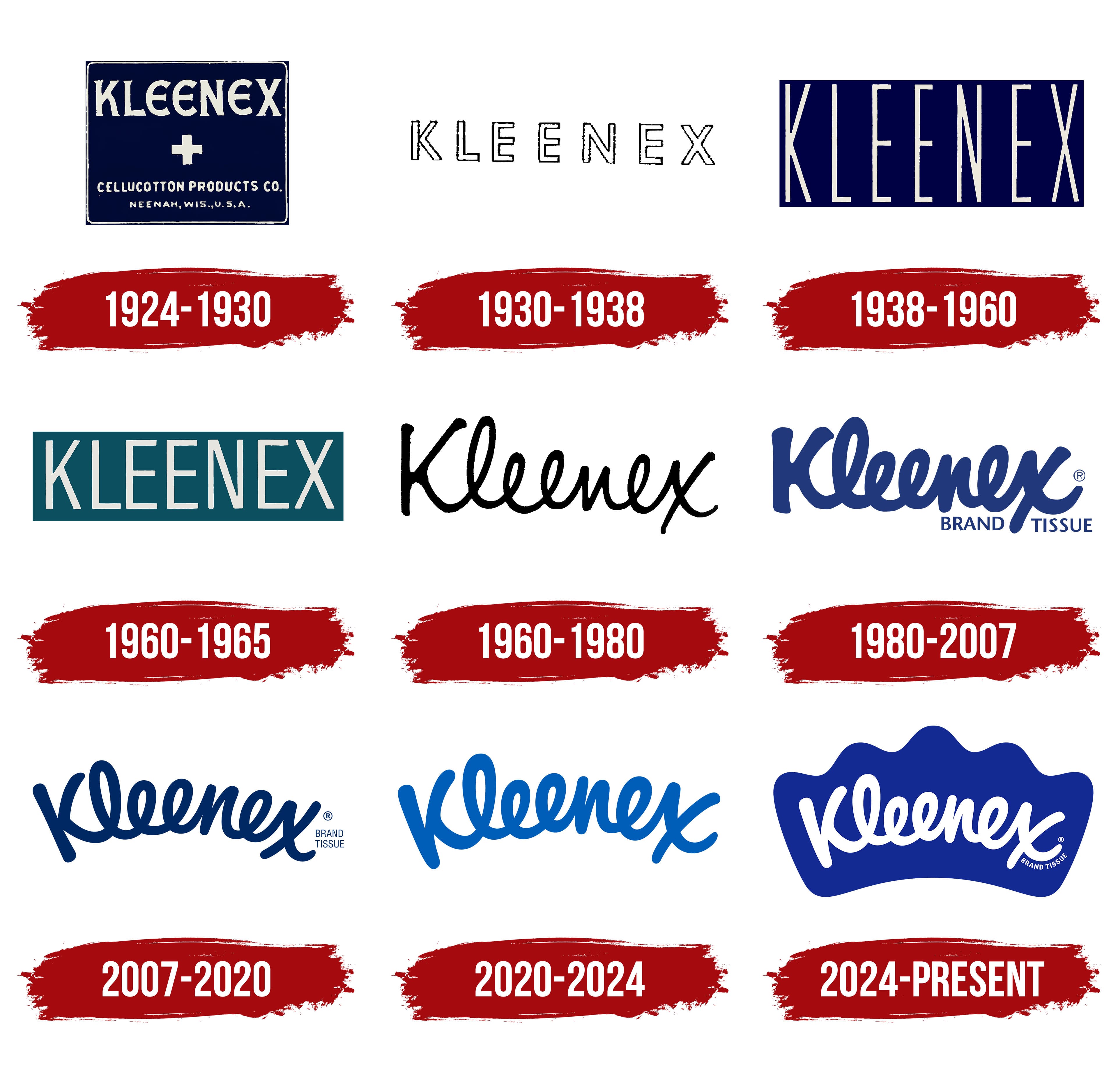
The brand’s logo appeared immediately upon the product line’s debut. It is associated with its name. Therefore, it consists of a single word, ranging from a clear geometric shape to a free-rounded inscription. In total, the brand has seven logo options. All variants of a trademark’s visual identity are associated with its name.
What is Kleenex?
This Kimberly-Clark brand has become so synonymous with facial tissues that its name is often used as a generic term for the category. The company offers a variety of products from ultra-soft tissues with lotion for sensitive skin to antiviral tissues that help prevent the spread of germs. The range includes pocket packs, decorative boxes that blend easily into home decor, and specialty options, such as vitamin E- or aloe vera-infused tissues, meeting a wide range of consumer needs.
1924 – 1930
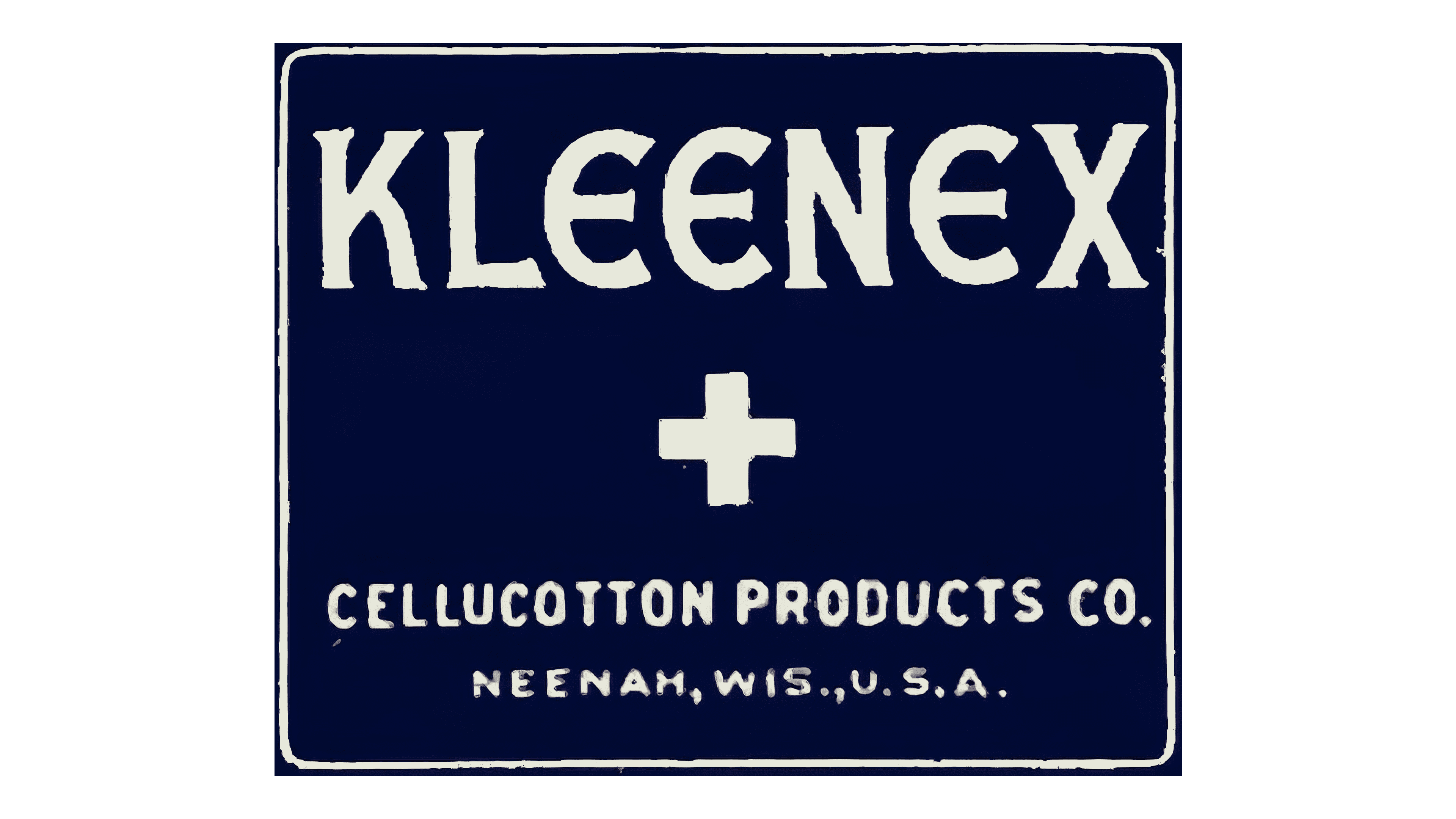
The original Kleenex logo, used during the brand’s early years, is characterized by its simplicity and bold typography. The letters are wide, with pronounced, heavy lines that make the text sturdy and easy to read. The “E” letters stand out, with more space between their lines, emphasizing the design’s uniqueness.
The logo’s background is rendered in deep dark blue tones, highlighting solidity and reliability. At the center is a white cross, evoking medical associations, as the brand was initially positioned primarily for hygienic purposes.
The lower part of the logo includes the inscription “Cellucotton Products Co.” and a reference to the brand’s origins, Neenah, Wisconsin, U.S.A. These details underscore the company’s industrial roots and American heritage.
This simple yet impactful logo design was a practical choice for its time, reflecting the product’s utility.
1930 – 1938

The word “Kleenex” has become hollow inside. Each mark is outlined in thin black.
1938 – 1960

The designers changed the lettering style to elongated, threadlike letters.
1960 – 1965

The navy blue was replaced with turquoise, significantly refreshing the Kleenex logo. The base became narrower, and the letters shrank with it. They remain vertically elongated but are less filiform than in the previous wordmark. The sans-serif font is roughly similar to Sign Stickers JNL Frontfill by Jeff Levine Fonts.
1960 – 1980

This period was pivotal for the visual identity of the Kleenex brand, as it was during this time that the iconic “Kleenex” wordmark, resembling handwritten text, was developed. The logo gained a sense of softness and friendliness through the smooth curves of the letters, emphasizing the comfort and ease of use. This style became the foundation for all future brand logos.
The lettering was crafted with meticulous attention to detail. The typeface appears hand-drawn, featuring thin lines and elegant transitions between elements. The smooth letters were deliberately designed to symbolize the product’s softness and quality. No sharp angles appear; everything is rounded and harmonious.
An interesting feature of the typeface is the seamless integration of the initial and final letters, giving the logo a sense of unity and completeness. The “K” is particularly noteworthy, as it effortlessly sets the tone for the entire composition, flowing gracefully into the subsequent letters. Each letter balances space and line.
This visual emblem represented Kleenex’s core values: softness, care, and reliability. The design’s simplicity and clarity highlighted the product’s universality, making it instantly recognizable and beloved by consumers worldwide.
1980 – 2007
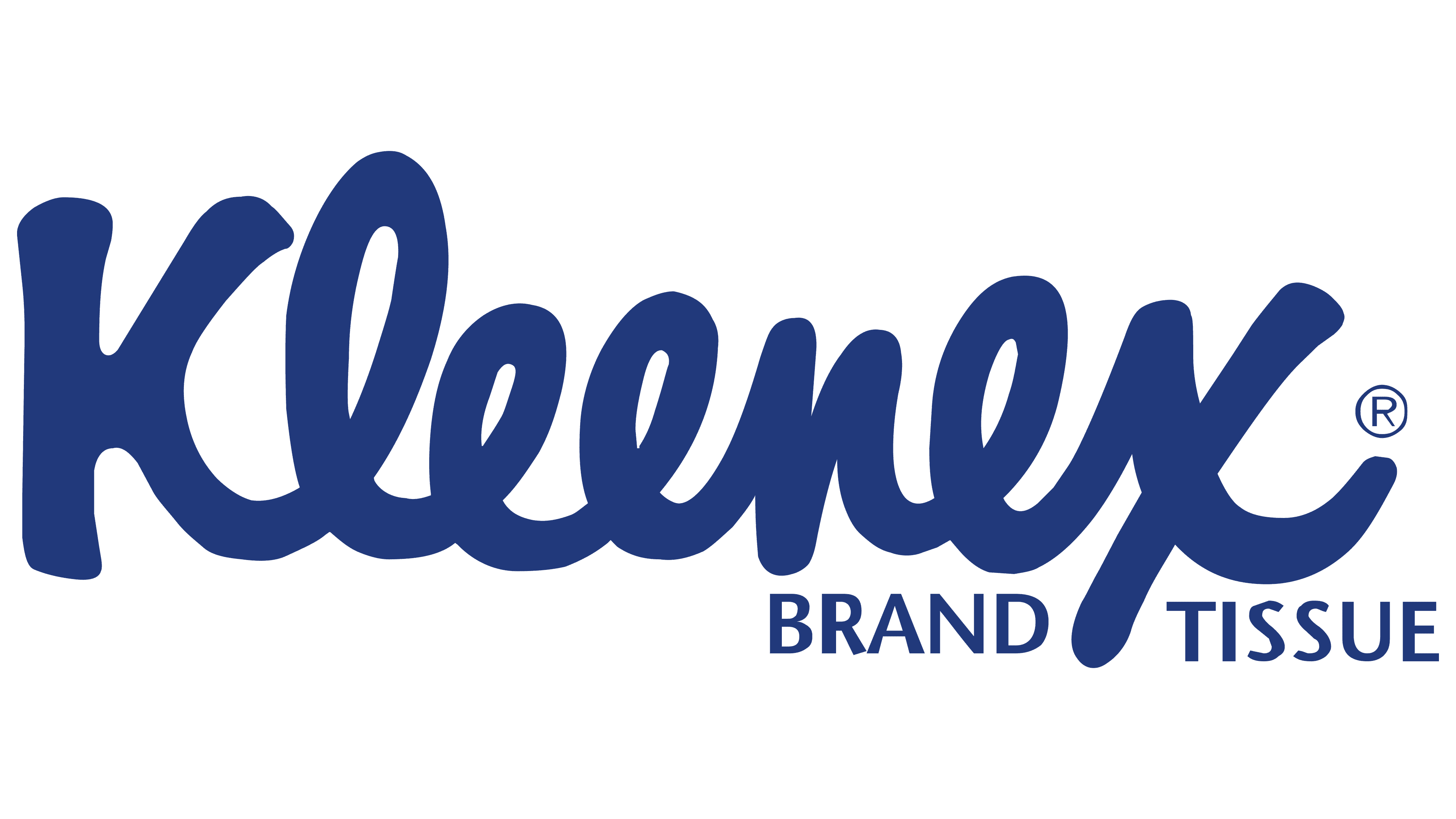
Management immediately changed the writing style, choosing bold letters and adding the phrase “Brand Tissue.”
In 1992, the brand name was placed in a blue oval.
2007 – 2020

The current logo has handwritten text arranged in an arch.
2020 – 2024

The 2020 redesign hasn’t gone unnoticed, even though the wording of “Kleenex” hasn’t changed. Designers worked with color, using deep azure instead of dark blue. They also removed the registered trademark sign and the phrase “BRAND TISSUE” on the right in two lines. The brand name appears on one unbroken line. It looks like a long, twisted ribbon because all the “l” and “e” form loops.
2024 – today
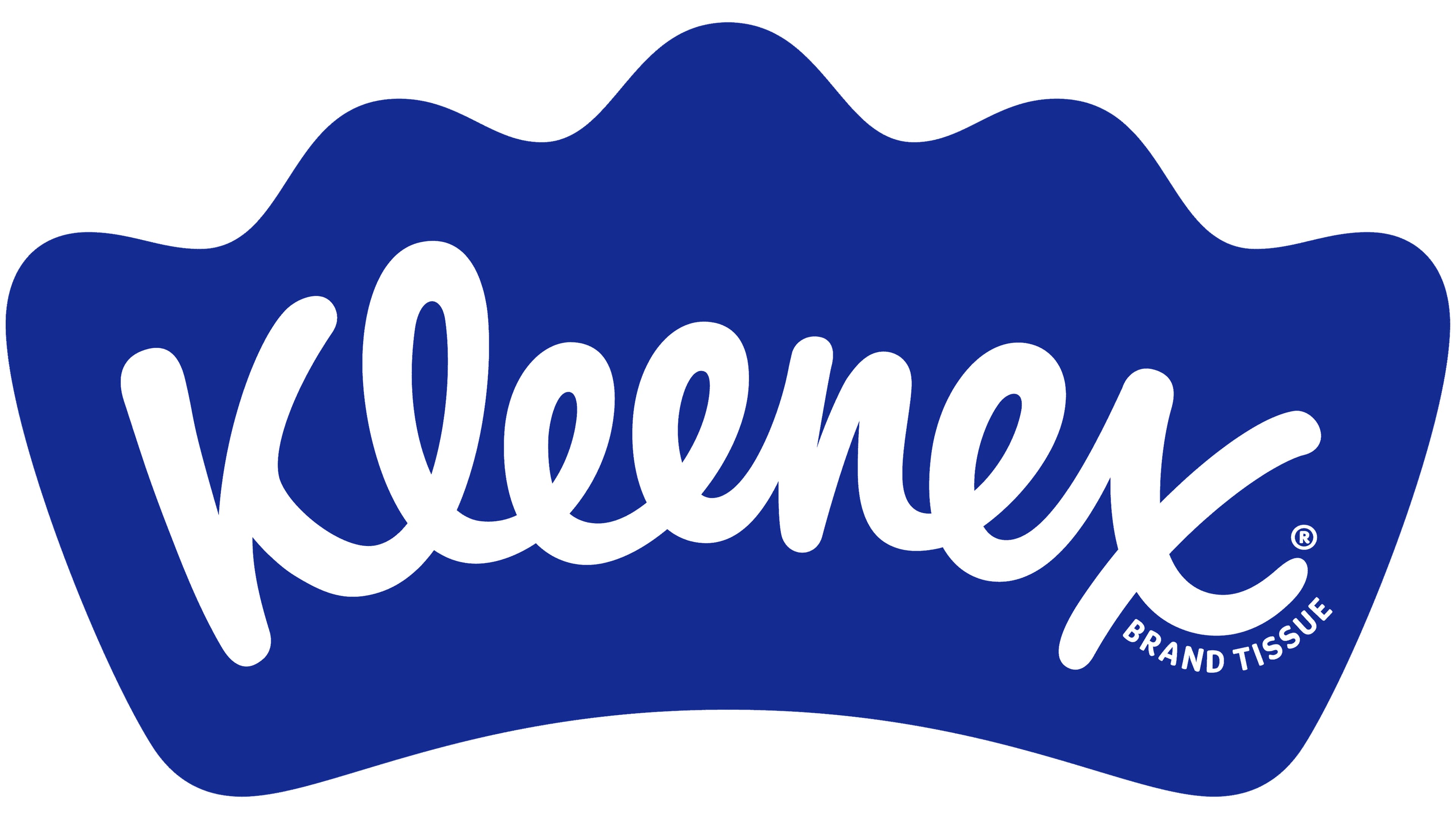
The new Kleenex logo keeps its iconic handwritten script as the centerpiece, symbolizing the brand’s friendliness and accessibility. The font looks relaxed and modern, with refined soft curves and smooth lines that emphasize the ease and comfort associated with the product.
One key change is the wave-like background, reminiscent of a tissue fold. This addition makes the logo visually engaging and adds depth. The background’s shape subtly hints at a crown, highlighting the brand’s leadership in its category. This blend of simplicity and symbolism sets Kleenex apart from its competitors.
The updated shade of blue is more vibrant. Blue is associated with cleanliness, freshness, and reliability, qualities the brand is celebrated for. The contrast between the white lettering and the deep blue background enhances readability and makes the emblem more striking.
An additional “Brand Tissue” tagline in the lower corner, tilted slightly and rendered in a minimalist style, emphasizes the brand’s connection to the tissue segment. This tagline’s placement creates balance in the overall composition.
Font and Colors
At first, the founding company chose a strict, classic font for the logo, with angular characters. Then, it switched to a free cursive style that imitates curved handwriting. The emblem’s color scheme is simple: white, blue, and black.