


 Lauda Air Logo PNG
The Lauda Air logo is a symbol of optimism. It embodies the belief that, despite obstacles, the company is ready to soar and deliver high-quality airline services. The emblem reflects a commitment to dynamic movement for a flawless and comfortable journey.
Formula 1 driver Niki Lauda founded Lauda Air as Lauda Air Luftfahrt AG. The company first focused on charter flights and air taxi services, using Lauda’s personal interest in flying as the basis for a separate aviation business. In 1985, the airline received a license for scheduled flights, which allowed it to move beyond private and charter operations.
In 1986, Lauda Air began regular passenger service, mainly from Vienna to Mediterranean holiday destinations. Niki Lauda remained closely involved in shaping the service concept, which helped the airline stand apart on leisure routes. In 1987, the company entered long-haul flying with its first Boeing 767-300ER, opening routes to Southeast Asia and Australia.
In 1990, Lauda Air expanded again by launching transatlantic flights to Miami, Florida. On May 26, 1991, Flight 004 from Bangkok to Vienna crashed in Thailand, killing all 223 people on board. It was the only crash in the airline’s history, and Niki Lauda personally took part in the investigation. From 1992 to 1995, the carrier continued to grow its fleet with Boeing 767 and Boeing 737 aircraft for long-haul and short-haul services.
In 1997, Austrian Airlines acquired a 36% stake in Lauda Air, creating a partnership between the two Austrian carriers. By 2000, Austrian Airlines had raised its stake to 99.9%, while the Lauda Air brand remained within the Austrian Airlines Group. In 2003, the airline shifted toward charter and holiday routes, and Niki Lauda left the CEO post in 2004. The brand was gradually phased out of scheduled flights starting in 2007, became a charter division in 2009, and was fully integrated into Austrian Airlines on July 1, 2013.
Meaning and History
What is Lauda Air?
Lauda Air Luftfahrt GmbH, known as Lauda Air, is an Austrian airline with a proud heritage based at Vienna Schwechat International Airport. An important transformation took place on April 6, 2013, when the airline ceased operations under its former name and came under the new Austrian brand myHoliday.
1985 – 2003
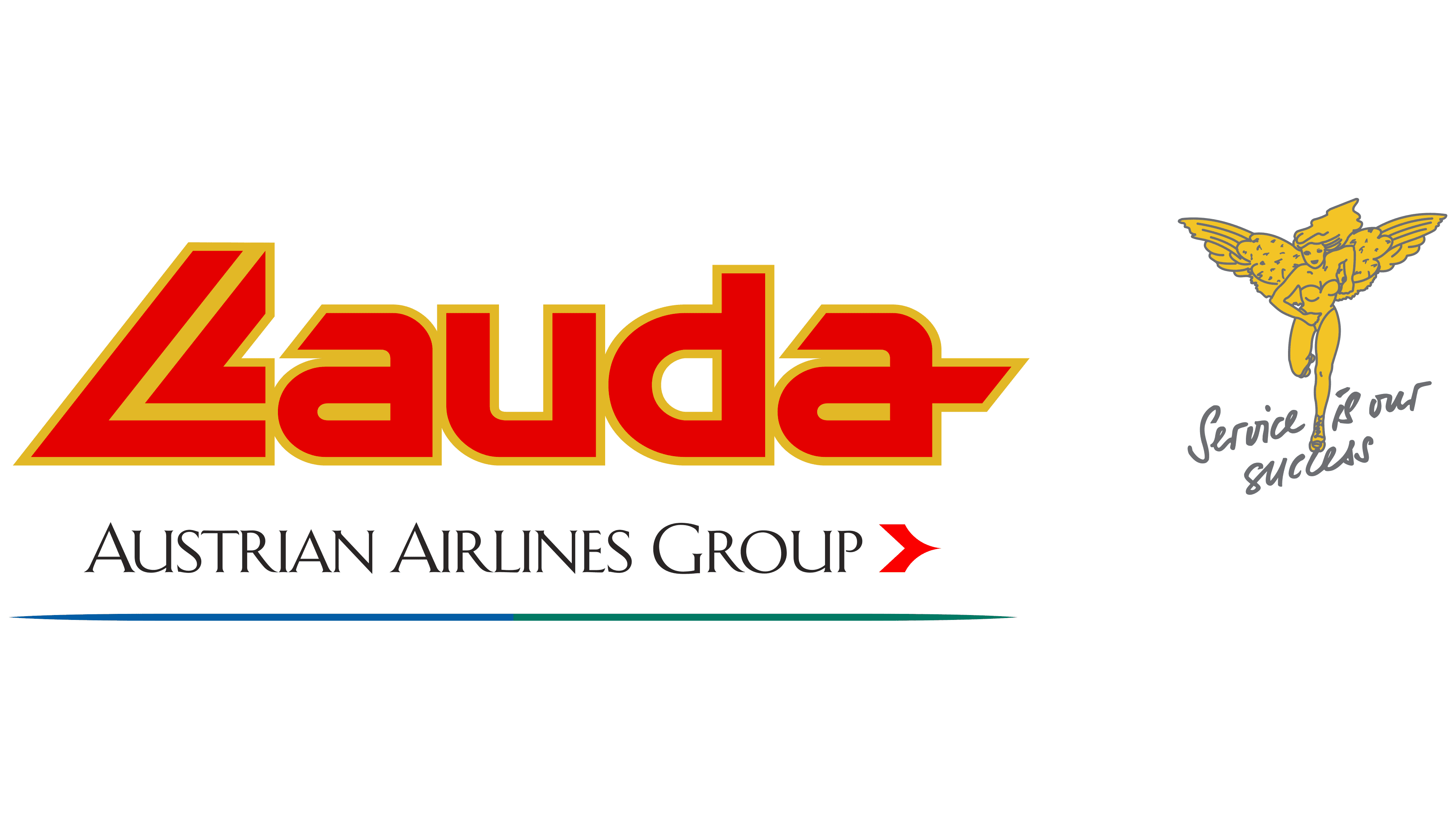
The logo is crafted uniquely and reflects the powerful energy of the company and its founder, a famous racing driver. His last name stands prominently on the emblem, conveying the brand’s internal dynamism and unstoppable drive for high speeds.
- The unconventional font resembles sharp turns on roads.
- Bright colors inspire optimism and a positive attitude.
- The border resembles the layout of racing tracks.
- The sharp curves evoke a sense of increased speed.
- The wide glyphs look like ancient Greek symbols.
The lettering style is antique, as if the letters are not modern but symbols carved in stone. This association intentionally gives the impression that the logo belongs to an airline with a long history dating back to ancient times. This is evident from the letters’ width and shape, as well as the golden outline.
The font is uppercase and massive, with large, monolithic characters. It symbolizes the brand’s leading position in the charter airline market and its importance to clients. This identity echoes the character of the famous racing driver, who is accustomed to achieving excellent results despite obstacles. The emblem demonstrates the company’s intention to move forward and soar high regardless of difficulties.
Supporting this concept, a young woman with wings is depicted next to the name. She is skating forward swiftly, easily, and joyfully on roller skates. This image enhances the logo’s thematic integrity, presenting the airline as accessible to all clients. The emblem shows that the company quickly transports passengers and cargo to their destinations. The slogan “Service is our success” nearby reinforces this intent.
The Lauda Air logo palette is life-affirming. Orange and yellow set a positive tone, reflecting the joy of the services. Only the text at the bottom is in black, but the letters are thin, so they do not leave a negative impression. The presence of a miniature red airplane encourages and motivates ticket purchases.
2003 – 2013
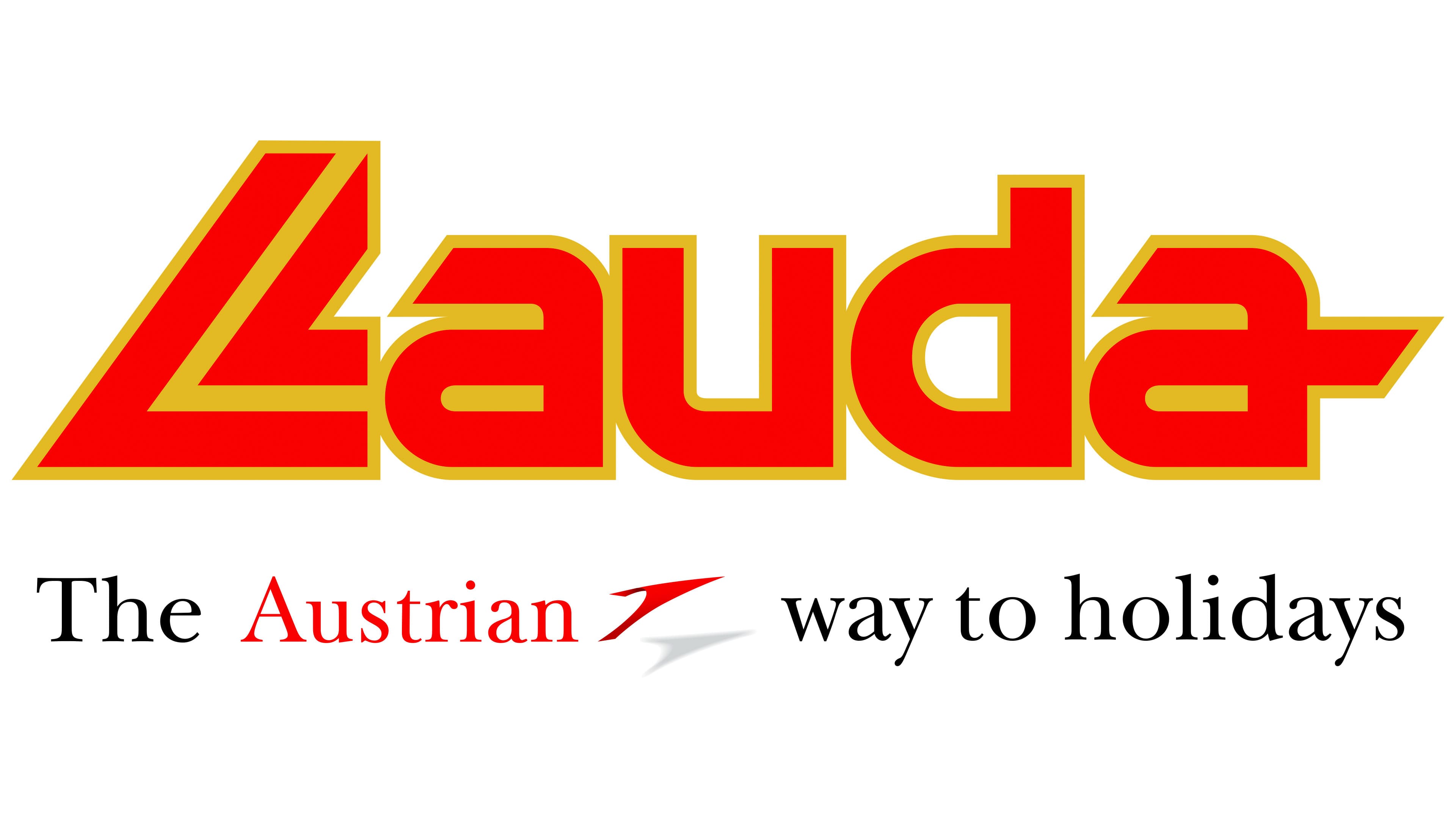
The “Lauda” logo features bold red letters with gold outlines, creating a striking look. The unique font style adds character: the “a” has an elongated horizontal stripe, and the “L” has a split structure. This bright color palette and unconventional design give the logo a vibrant feel. Below “Lauda,” the phrase “The Austrian way to holidays” is written, with “Austrian” in red and the rest in black. A small stylized plane sits between “Austrian” and “way,” with a subtle gray shadow.
The bold red letters emphasize the brand’s energetic nature, while gold outlines suggest luxury and quality. The distinctive font makes the logo easily recognizable. The phrase “The Austrian way to holidays” highlights the focus on enjoyable travel experiences, and the different colors add visual interest. The small airplane reinforces the brand’s connection to travel.
The Lauda logo conveys passion and energy through its bold red color. Gold lettering adds elegance, suggesting high-quality services. The unique font design ensures the logo stands out and is memorable. The phrase “The Austrian way to holidays” communicates the brand’s offering and ties it to Austrian hospitality. The color contrast highlights “Austrian,” reinforcing national pride. The airplane icon subtly alludes to the brand’s aviation roots, adding a playful touch and enhancing visual appeal.