


 Linkin Park Logo PNG
The color scheme, sign, and text in the American rock band’s emblem symbolize its connection to underground culture. Japanese motifs and graphics on the Linkin Park logo visually reflect the brand’s style and spirit, as well as its performance features.
Linkin Park formed in 1996 in Agoura Hills, California, when Mike Shinoda and Brad Delson started a band with Rob Bourdon, Joe Hahn, Dave Farrell, and Mark Wakefield. They made early recordings in Shinoda’s bedroom as Xero.
In 1997, Xero released a demo and played at Whisky a Go Go alongside System of a Down. Labels rejected the project, and Wakefield left in 1998. The group searched for a new vocalist.
In March 1999, Chester Bennington joined after sending a demo. The band became Hybrid Theory and released an independent EP online. A naming conflict with Hybrid led them to choose Linkin Park. In 1999, they signed with Warner Bros. Records.
Don Gilmore produced their debut album, Hybrid Theory (2000), as nu metal rose with acts like Korn and Limp Bizkit. It sold 523,000 copies in its first week and later reached diamond status. “Crawling” won a Grammy in 2002.
Meteora (2003) topped the Billboard 200. In 2007, Rick Rubin produced Minutes to Midnight, which shifted the sound toward alternative rock. Later releases included A Thousand Suns (2010), Living Things (2012), The Hunting Party (2014), and One More Light (2017).
Bennington died on July 20, 2017, at 41. The band paused activity for several years. In 2024, Linkin Park returned with Emily Armstrong and Colin Brittain. They released the album From Zero on November 15, 2024.
Meaning and History
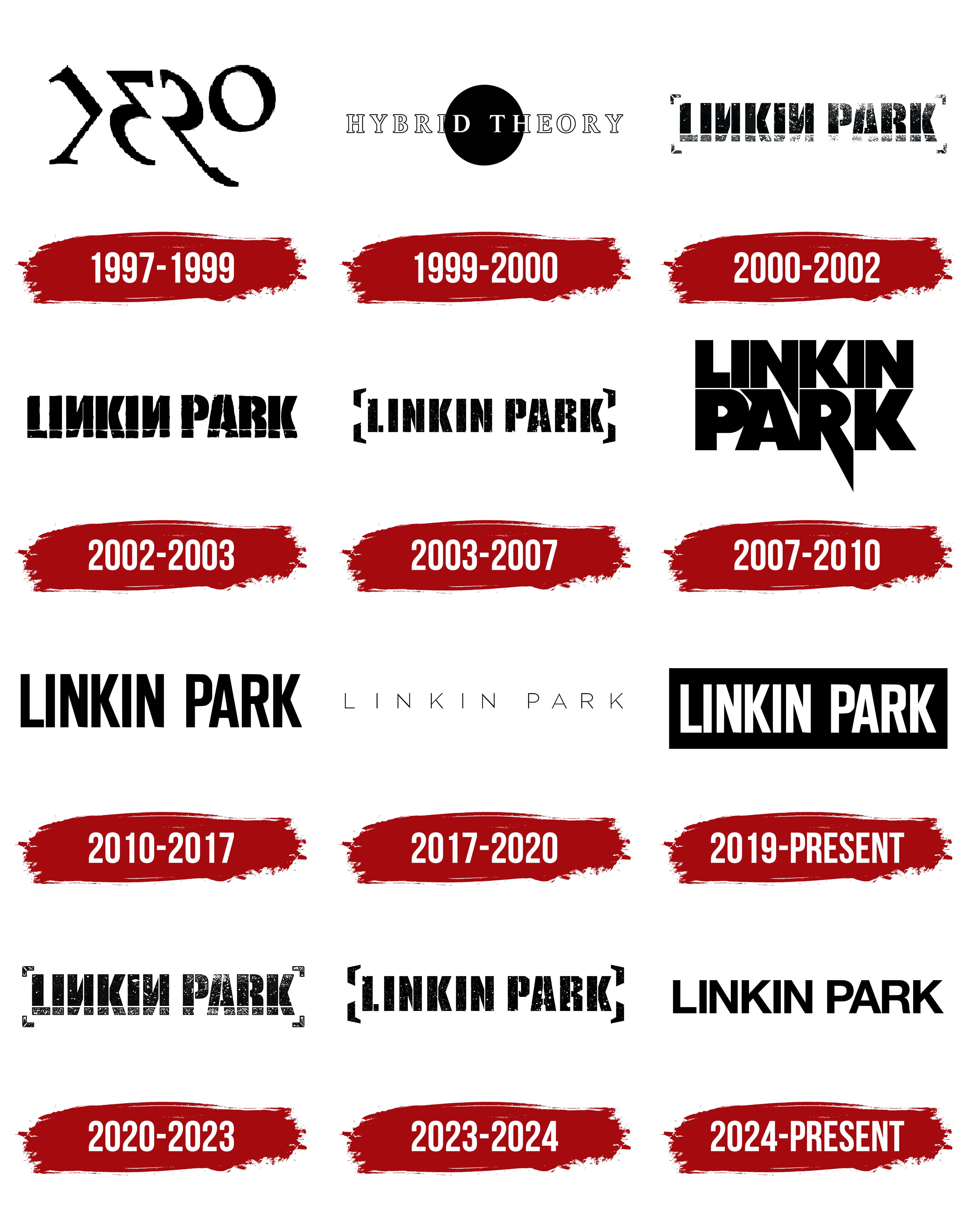
Until 2000, the rockers went by a different name. They later adopted the name Linkin Park, which brought them more success than their first album. It all started with a four-track tape, recorded by three school friends.
What is Linkin Park?
Linkin Park is a rock band from the USA, which was formed in 1996 in Agoura Hills, California. Mike Shinoda (vocalist, guitarist/keyboardist), Rob Bourdon (drummer), Joe Hahn (DJ), Dave Farrell (bassist), and Brad Delson (guitarist) founded the band. The musicians play heavy metal, hip-hop, pop, electronic, and several rock styles.
1997 – 1999

Linkin Park’s story began in 1996 in Agoura Hills, California, where Mike Shinoda, Brad Delson, and Rob Bourdon formed Xero. Joe Hahn, Dave Farrell, and vocalist Mark Wakefield joined them. The musicians made their first recordings in Shinoda’s home studio, and the name Xero became the basis for the band’s early logo. The group later changed its name to Hybrid Theory and then to Linkin Park. In the years that followed, the band often updated its visual identity with each album release.
On the band’s 1997 demo recordings, the Xero name appeared in 4 differently shaped letters. Black ink, angular strokes, and uneven edges gave them a unified, hand-drawn appearance. Their curves recalled ancient Greek lettering, with arcs and sharp diagonals giving the Latin letters unusual forms.
Parts of the strokes in the “X” and “R” appeared cut away. The “X,” open on the right, resembled a jagged geometric shape, while the long leg of the “R” extended down and to the right, below the baseline. Between them sat an “E” resembling a backward numeral “3.” A small, rounded “O,” shaped like a degree symbol, completed the name. Differences in letter size, curvature, and stroke length gave the early Xero logo a handwritten look.
1999 – 2000
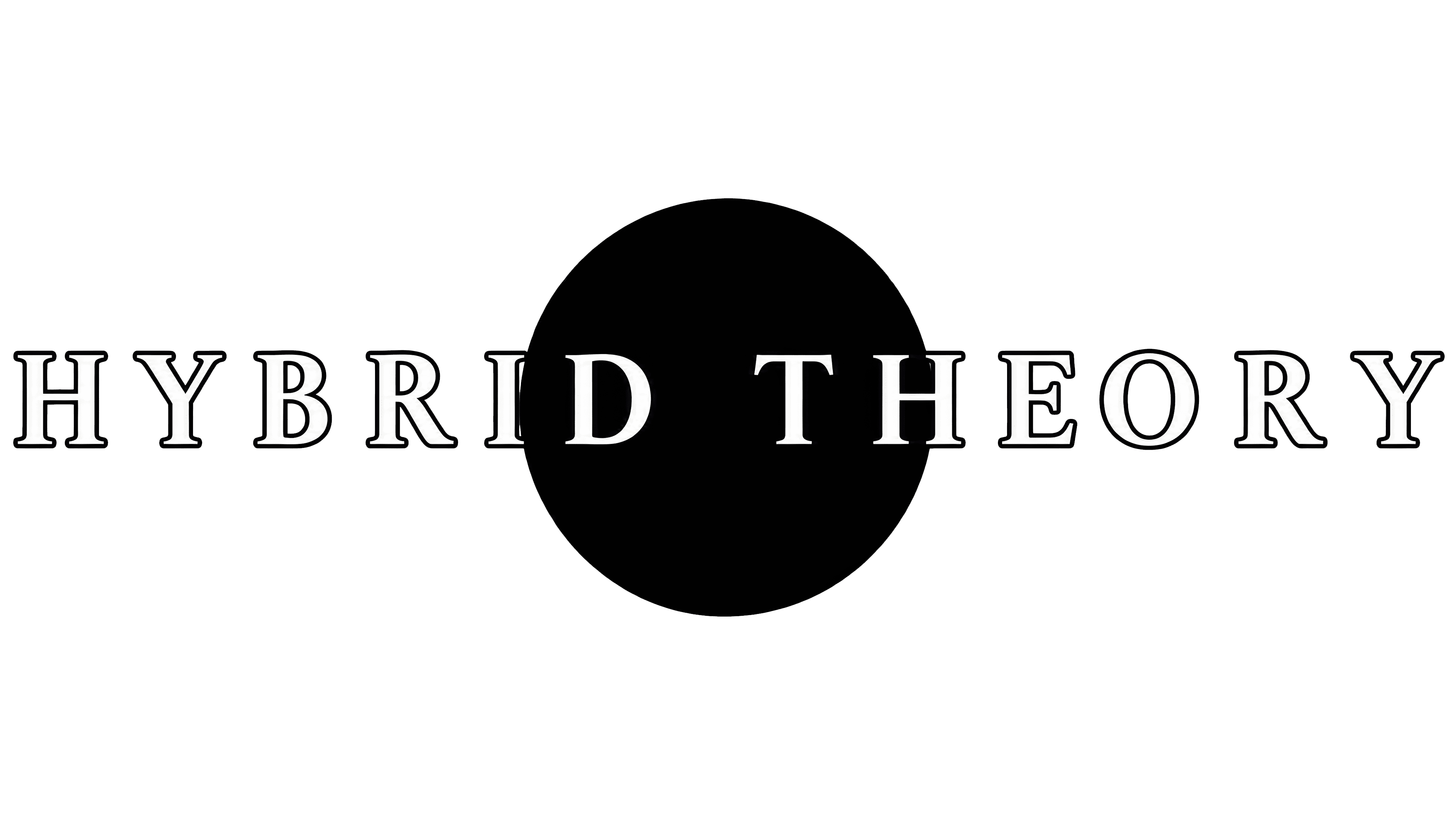
When Chester Bennington joined in 1999, the band changed its name to Hybrid Theory. The name expressed the idea of blending musical genres. That year, the group released the Hybrid Theory EP, whose artwork featured a long wordmark running across a black circle.
The name was set in thin uppercase serif letters. It crossed the circle near its midpoint and extended beyond both sides. The letters changed with the background. Outside the circle, they appeared as white outlines; inside, they were filled in white. The typeface remained consistent throughout.
The band later released its debut album, Hybrid Theory.
2000 – 2002

Changing the name from Hybrid Theory to Linkin Park gave the band room to experiment with genres without tying its name to a blend of musical styles. Chester Bennington suggested naming the group after Lincoln Park in Santa Monica. To secure an available domain name, the band changed the spelling of “Lincoln” to “Linkin.” The pronunciation preserved the connection to the park, while the spelling set the band’s name apart from the place that inspired it.
For the 2000 release of the debut album Hybrid Theory, the band’s name received a heavy stencil treatment. Frank Maddocks, Mike Shinoda, and Joe Hahn worked on the artwork for the release. Maddocks cut the LINKIN PARK stencil by hand, letting scuffs, breaks, and paint marks emerge naturally. The technique connected the album’s artwork to the band members’ interest in street art.
The dense black capital letters were surrounded by 4 corner marks. Paired on either side of the name, they resembled square brackets. Both “N” letters had reversed diagonals, making them look like the Cyrillic letter “I.” The wordmark therefore read as LINKIN PARK with backward “N” letters. Scuffs and breaks covered both the lettering and the frame, tying them together.
The album artwork also featured an “L” and “P” monogram. The bold sans-serif letters intertwined to form an abbreviated Linkin Park logo.
2002 – 2003

For Reanimation, Linkin Park’s 2002 remix album, the band reworked the music from its debut and updated the logo. The artwork maintained a connection between the releases. The heavy, distressed letters remained, while the corner frame was removed.
The letters were placed closer together, and some strokes were bent. An uneven light-colored line ran through the lower portion of the wordmark. It divided the letters into large upper sections and short bases, adding a continuous horizontal break to the distressed surface.
2003 – 2007

The 4-corner frame returned for Linkin Park’s second album, Meteora, released in 2003. The bracket ends were enlarged and given angled edges. The lettering retained stencil breaks and a grainy texture.
The letterforms changed as well. Both “N” diagonals returned to their conventional Latin orientation, replacing the forms that had resembled the Cyrillic letter “I.”
Frank Maddocks handled the Meteora artwork. The lettering reflected the band’s interest in drawing, paint, and graffiti. The album revisited themes from the previous record, while its artwork continued the visual traditions of the band’s early releases.
2007 – 2010

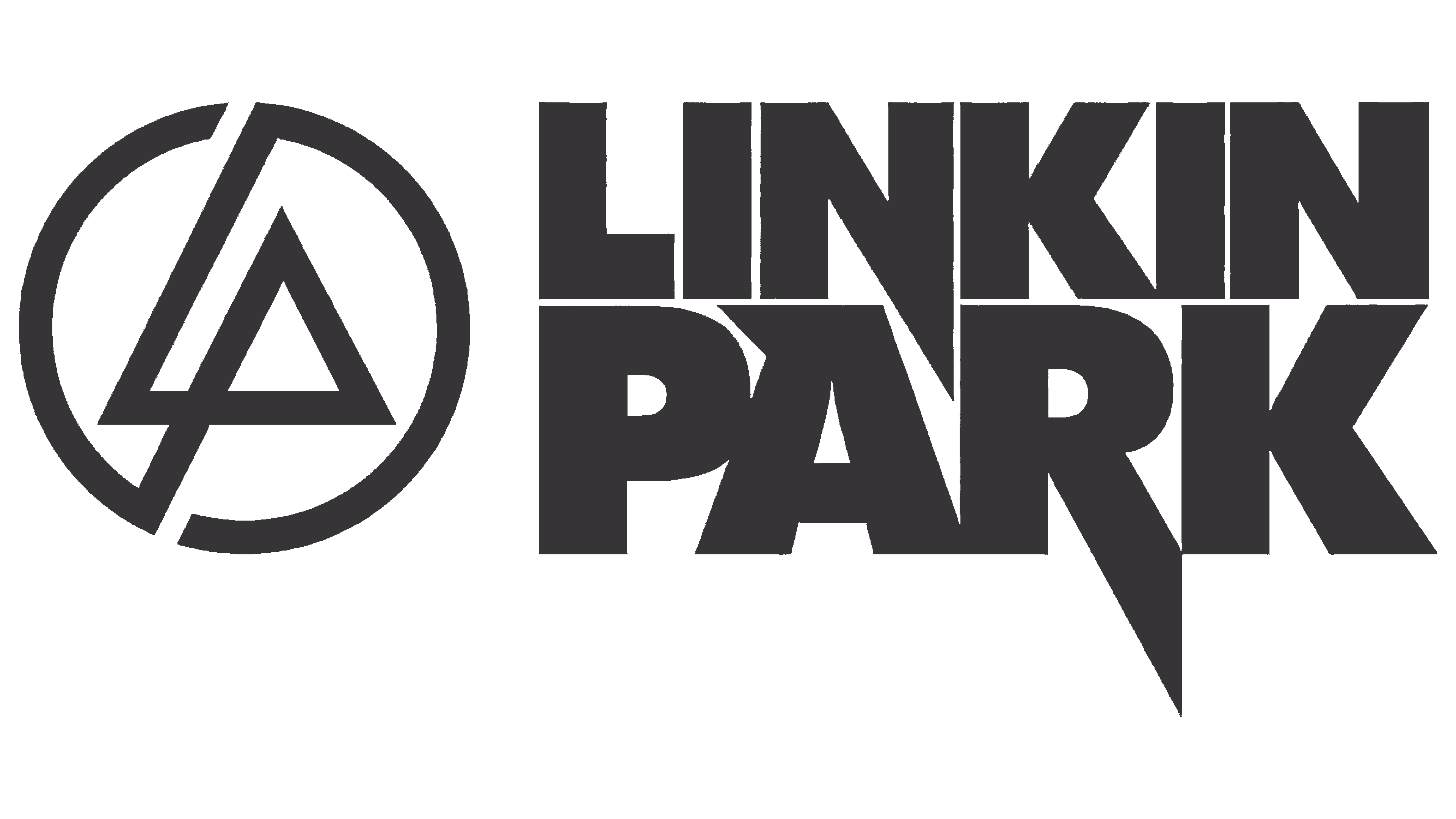
For its third album, Minutes to Midnight, in 2007, Linkin Park introduced an LP monogram inside a circle and a new treatment of its full name. Frank Maddocks again oversaw the release’s creative direction and artwork. The emblem developed during this period became the foundation for the band’s later symbols.
The musicians wanted a symbol that fans could draw by hand and associate with the band. Maddocks drew on punk iconography, building the monogram from a few basic lines. Slanted “L” and “P” letters joined inside a circular frame, with their extended strokes crossing its boundary. The band used the initials alongside its full name.
On the Minutes to Midnight cover, the name appeared in large capital letters, with LINKIN stacked above PARK. The 2 lines formed a compact rectangular block. Solid black surfaces replaced the distressed texture. The angular letters either touched or were separated by narrow white gaps. The “N,” “A,” and “R” had pointed terminals, and the “R” diagonal leg extended well below the baseline.
2010 – 2017

With the release of A Thousand Suns in 2010, Linkin Park returned to a single-line name. Tall, narrow capitals with smooth edges and heavy vertical strokes formed an elongated wordmark. A reversed version placed white lettering on a black rectangle, preserving the letter proportions. Frank Maddocks worked on the album’s artwork, with illustrations by Josh Vanover.
The wordmark appeared on the band’s releases through The Hunting Party in 2014, including its cover. During this period, the LP monogram changed. The surrounding circle was removed, leaving the joined letters.
For One More Light in 2017, the monogram was enclosed in a hexagon. The full name was set in thin uppercase letters with increased spacing. The previously compact wordmark became more open. Maddocks directed the album’s artwork.
The 2010 wordmark continued to appear beyond album covers. It remained on the band’s official website until the 2019 redesign. The band brought it back after the update and removed it in 2024. The Linkin Park Underground fan club used the logo until 2020.
2017 – 2020

The 2017 One More Light artwork featured the full Linkin Park name in thin, sans-serif letters. Generous spacing gave the wordmark an airy quality that echoed the album’s title.
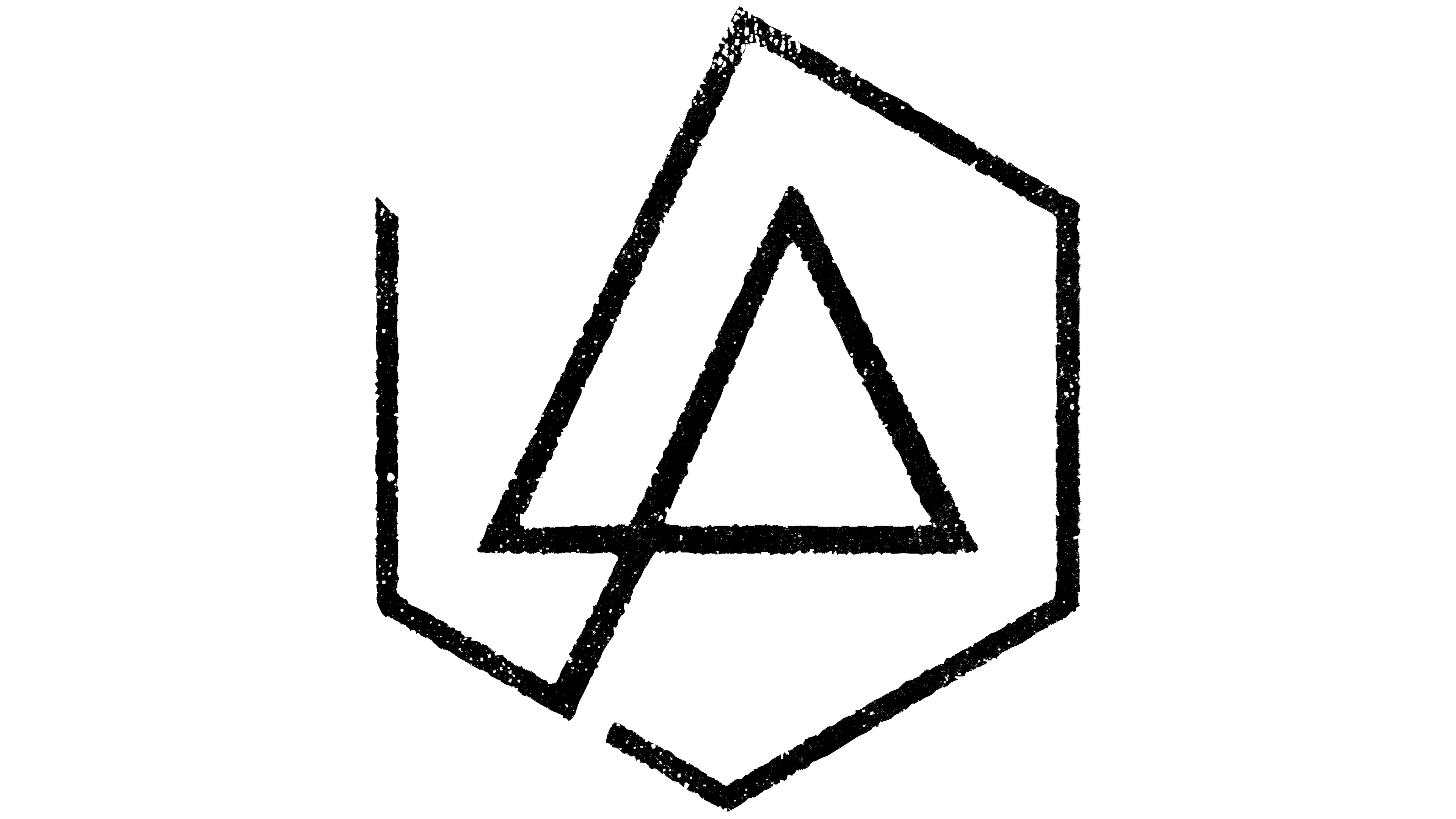
Following Chester Bennington’s death in July 2017, a memorial version of the band’s monogram appeared. Mike Shinoda shared the LP emblem inside a hexagon with one side removed. The gap in the frame served as a tribute to the late band member. The initials remained inside the open outline. The memorial version was used during the One More Light era and remained on the band’s merchandise store website until 2023.
2019 – today (Website only)
The website uses a reversed version of the 2010-2017 logo. The letterforms remain unchanged, while the light and dark areas switch places.
2020 – 2023
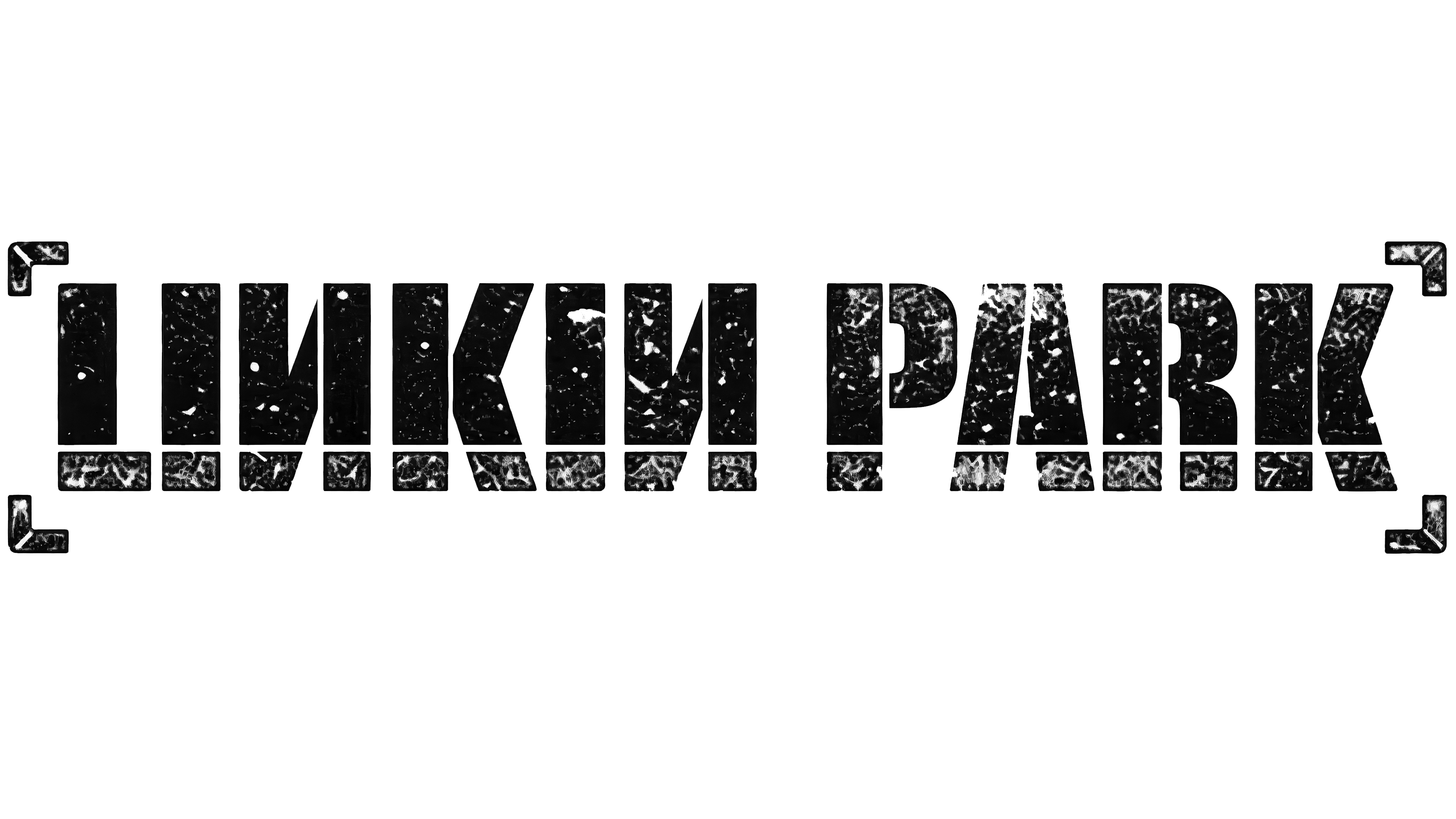
Linkin Park’s anniversary reissues brought back early logos from Hybrid Theory and Meteora. In August 2020, the distressed stencil wordmark and corner marks returned to the cover for the 20th-anniversary edition of the debut album, Hybrid Theory. The Meteora anniversary prompted another return to earlier artwork in 2023. For that release, the version with the heavy, angled bracket ends was restored.
Maddocks worked on the artwork for both projects. The early emblems linked the anniversary editions to the original releases and the periods in the band’s history. They appeared on the album reissues, while other Linkin Park wordmarks remained in use alongside them.
2023 – 2024
For Papercuts, a compilation bringing together singles from different years, the 2023 wordmark differed from those on Linkin Park’s anniversary reissues. The band’s name appeared in uppercase letters on a single, even line. Open letter proportions were paired with moderately thick strokes. Smooth outlines replaced the stencil distressing and corner frames.
An earlier emblem returned for a separate project drawn from the band’s musical archives. In February 2023, it was restored for an album’s 20th-anniversary reissue. The singles compilation and the anniversary release used different versions of the band’s name.
2024 – today
Linkin Park’s path to From Zero began in 2024 with the release of a song recorded by its previous lineup. “Friendly Fire,” created during the One More Light sessions, was released as a single on February 22. It appeared on Papercuts (Singles Collection 2000-2023), released on April 12. That fall, the band introduced a new lineup and the artwork for its next studio release.
On September 5, Linkin Park returned from a hiatus that had begun in 2017. Emily Armstrong of Dead Sara shared vocal duties with Mike Shinoda, replacing Chester Bennington, who died in July 2017. Colin Brittain took over on drums after Rob Bourdon’s departure. On their return, the band released “The Emptiness Machine,” the first single from its eighth studio album, From Zero. The album arrived on November 15. Its title combined a reference to the band’s early name, Xero, with the idea of a fresh start.
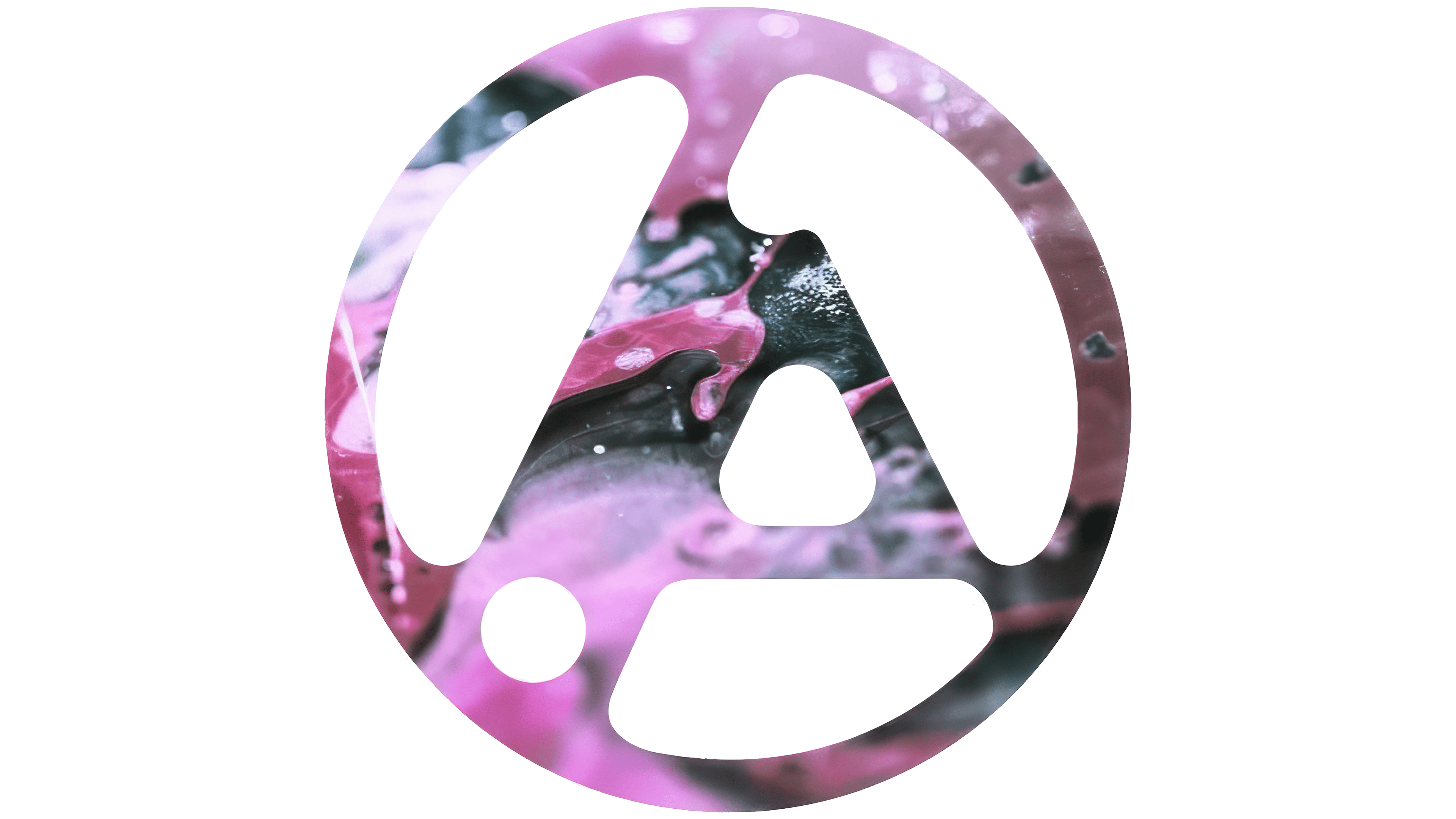
Maddocks, Shinoda, and Hahn created the From Zero artwork, unveiled in September alongside the band’s return. The LP monogram remained the emblem’s basis, surrounded by a rounded frame with distorted outlines and varying thickness. Working with physical materials gave the monogram blurred edges, color streaks, and three-dimensional distortions. The team made physical objects, submerged them in liquids, and photographed them. Artist Josh Foster created chemical textures, while photographer Brian Ziff captured the resulting forms and surfaces.
Font and Colors
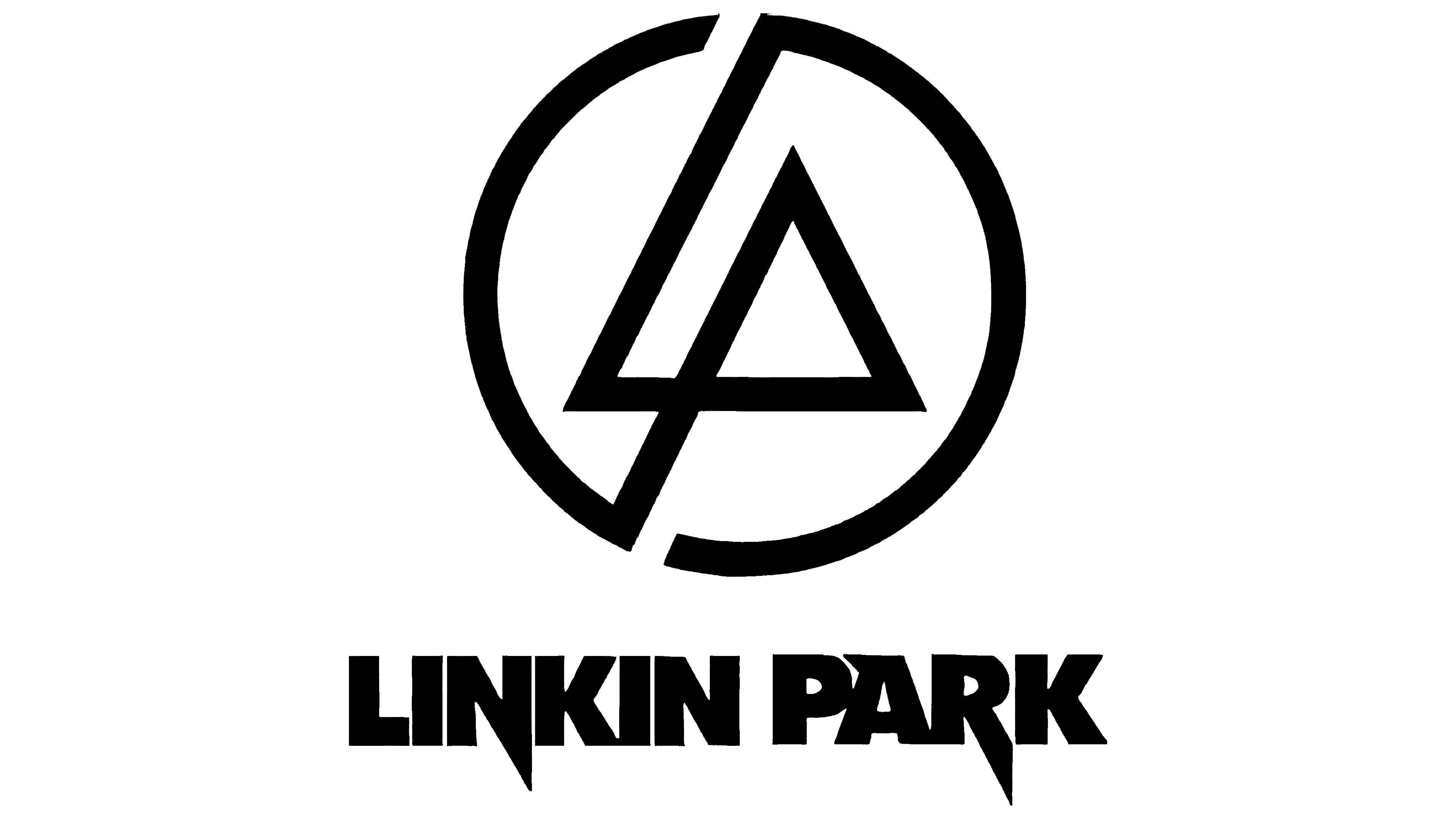
Unlike the text, the logo’s graphic component has almost always looked the same. The rockers settled on a monogram made up of Linkin Park caps. The “L” and “P” connect in sharp-cornered triangles and zigzags, and their elongated legs form an open ring.
The fonts used for music album titles often match the content so that the letters can feel hard and rigid or translucent and airy. Simple, smooth, sans-serif symbols are preferred.
The emblem palette is monochrome, dominated by black and white. According to the musicians, a bright spectrum sits between these two colors. Also, black reflects its connection to the underground.