


 Lotus Logo PNG
The Lotus logo is part of a line of unusual cars that stand out from the crowd. Just as a pick lets you get the perfect sound from the strings, the manufacturer’s assembly line produces the perfect racing cars.
Meaning and History
The company originated as Lotus Engineering Ltd. Although Colin Chapman is believed to be its founder, two founders opened the company: Colin Dare and Colin Chapman. Both graduated from University College London. The company’s official year of appearance was 1952, but unofficially, it was 1948, when Chapman assembled his first racing car in the garage.
The production site was located in the Hornsey district of North London, in the old stables behind the Railway Hotel. In 1954, the plant was divided into Lotus Engineering and Team Lotus. Then, five years later, a group of the same name was formed, represented by Lotus Cars Limited and Lotus Components Limited. They manufactured several types of cars. In 1971, Lotus Components Limited received a new name (Lotus Racing Limited), after which it ceased operations.
The second plant was moved to Cheshunt in 1959, and from 1966, it occupied a modernized site with a test center in Hethel. It was a converted World War II airfield, and its runway served as a test track. After founder Colin Chapman died in 1982, the company entered a period of financial instability. General Motors Corporation then purchased the plant, later selling it to Romano Artioli and DRB-HICOM. The international organization Geely is from China, and its shareholder is Etika Automotive, which owns the brand.
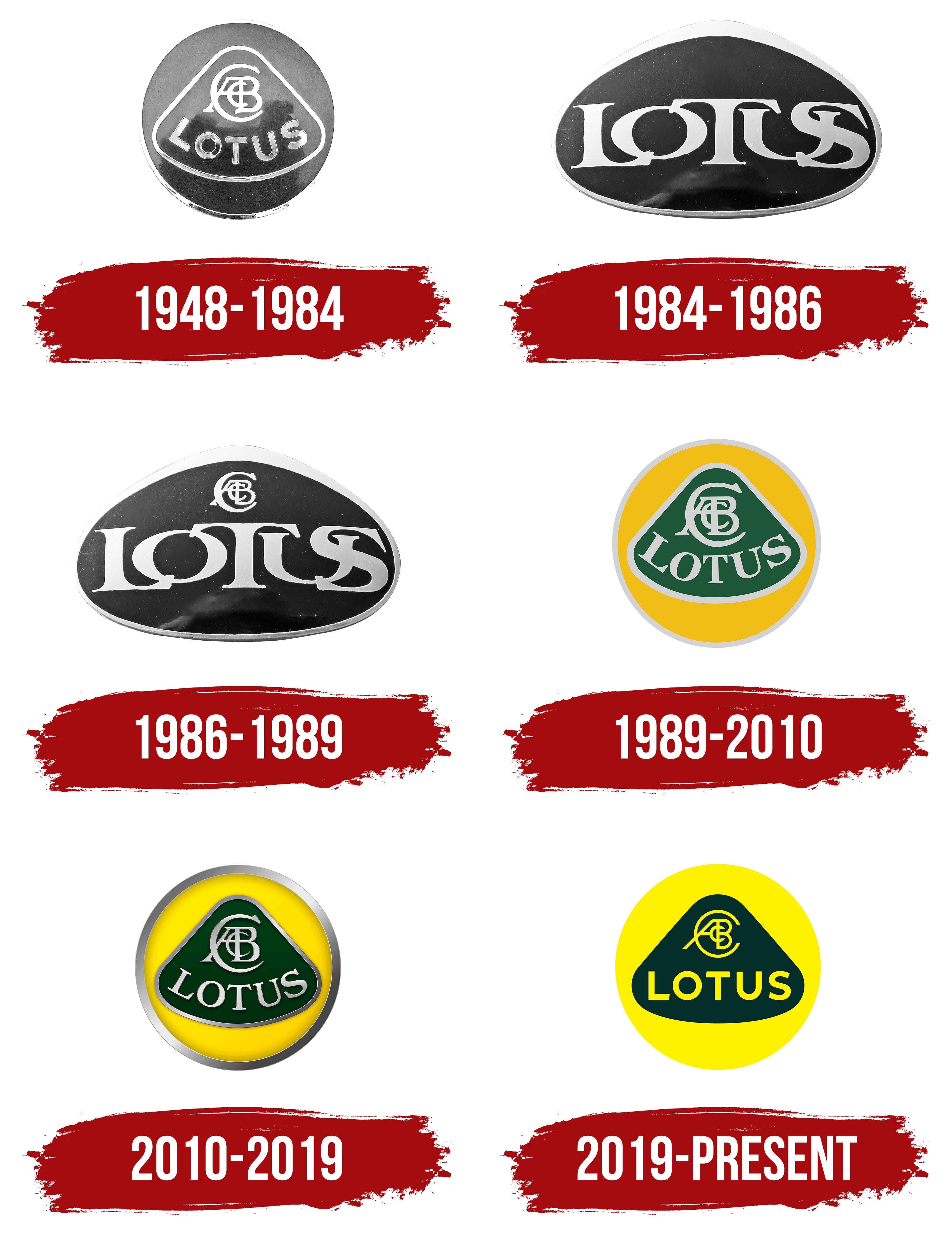
Throughout its existence, the trademark has had only one logo, but it has undergone several modifications. It has hardly changed since its inception, retaining its original elements, color, and shape. Six variations of the emblem are known.
What is Lotus?
Lotus is a British land transport manufacturer officially called Lotus Cars Limited. It specializes in racing cars and sports cars of various models, including the Evora, Exige, and Elise. Its vehicles are known for high speed and maneuverability, achieved through well-thought-out aerodynamics, innovative technologies, and lightweight but strong materials.
1948 – 1984
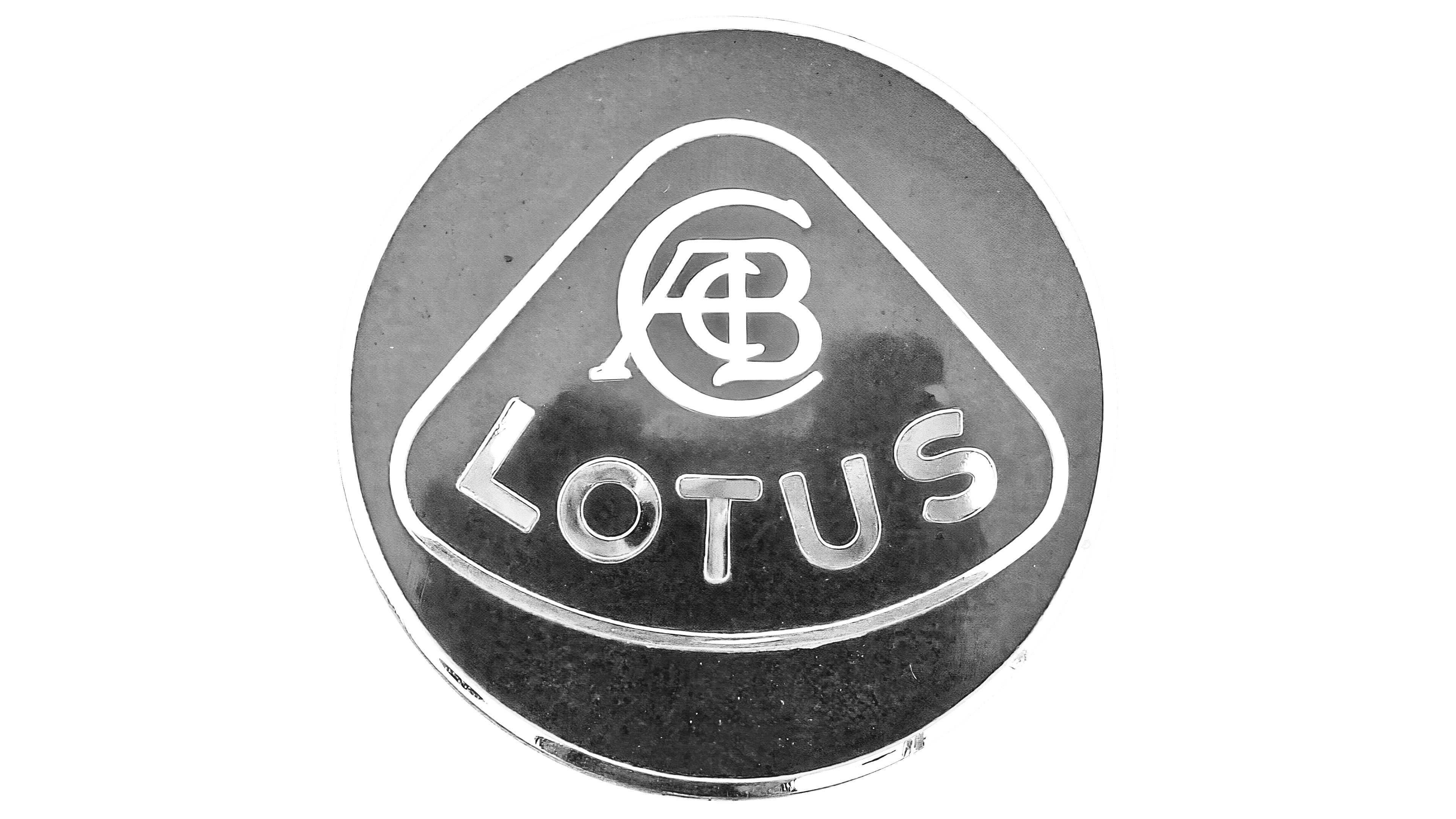
The debut logo looked like a round badge with a silver line along the edge. Inside was an abstract lotus flower, a monogram, and the brand name in uppercase letters. The strokes were neat and subtle. The triangle had rounded corners and a curved bottom.
1984 – 1986
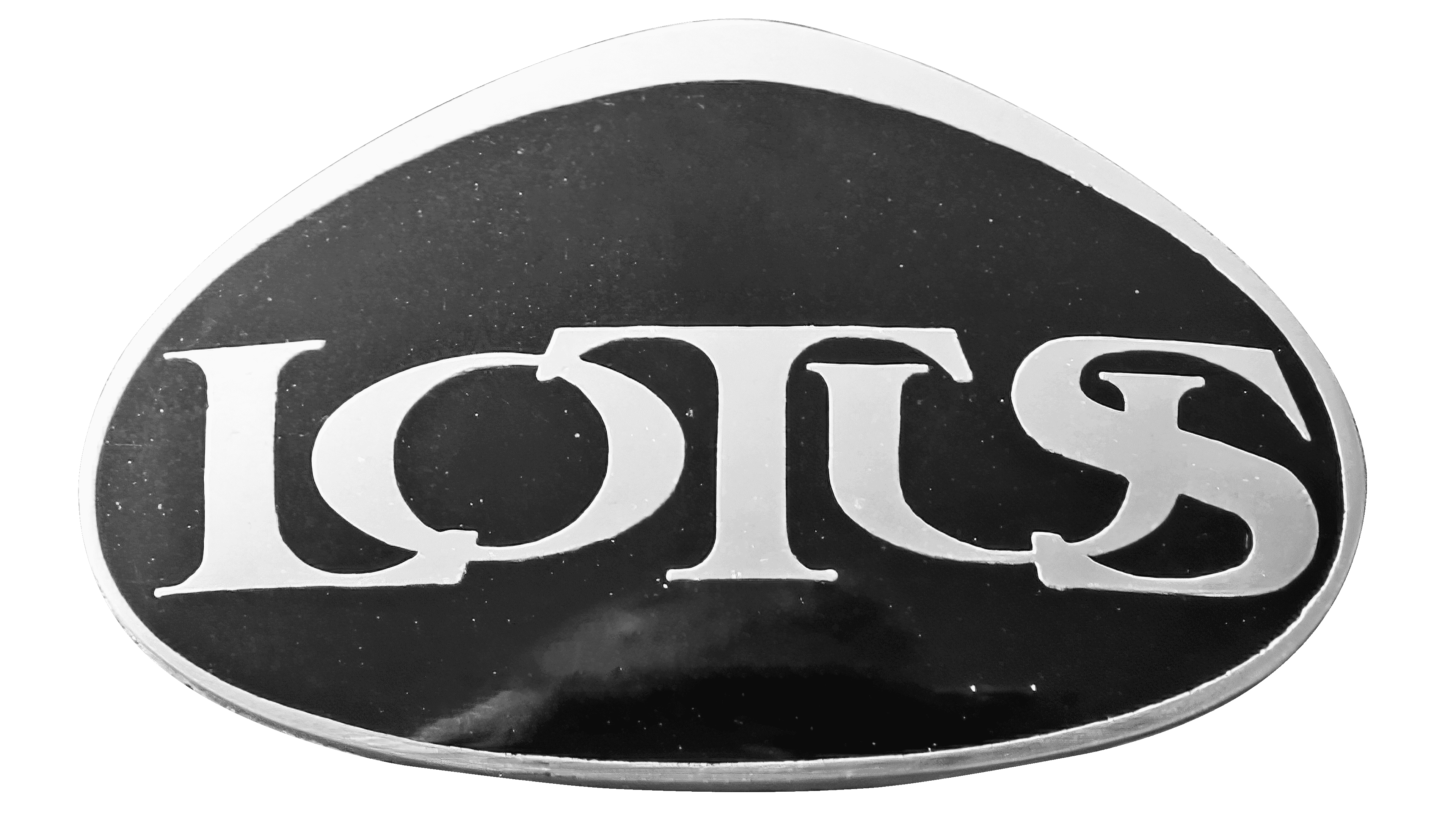
After the first redesign of the emblem, the monogram and circle disappeared; only a schematic triangle remained, which looked more like an oval because it was stretched horizontally. The shape is filled green, and the letters and borders are gold. The title was written in a serif typeface, with each character stacked on the other. This technique was likely used due to space constraints in the logo.
1986 – 1989
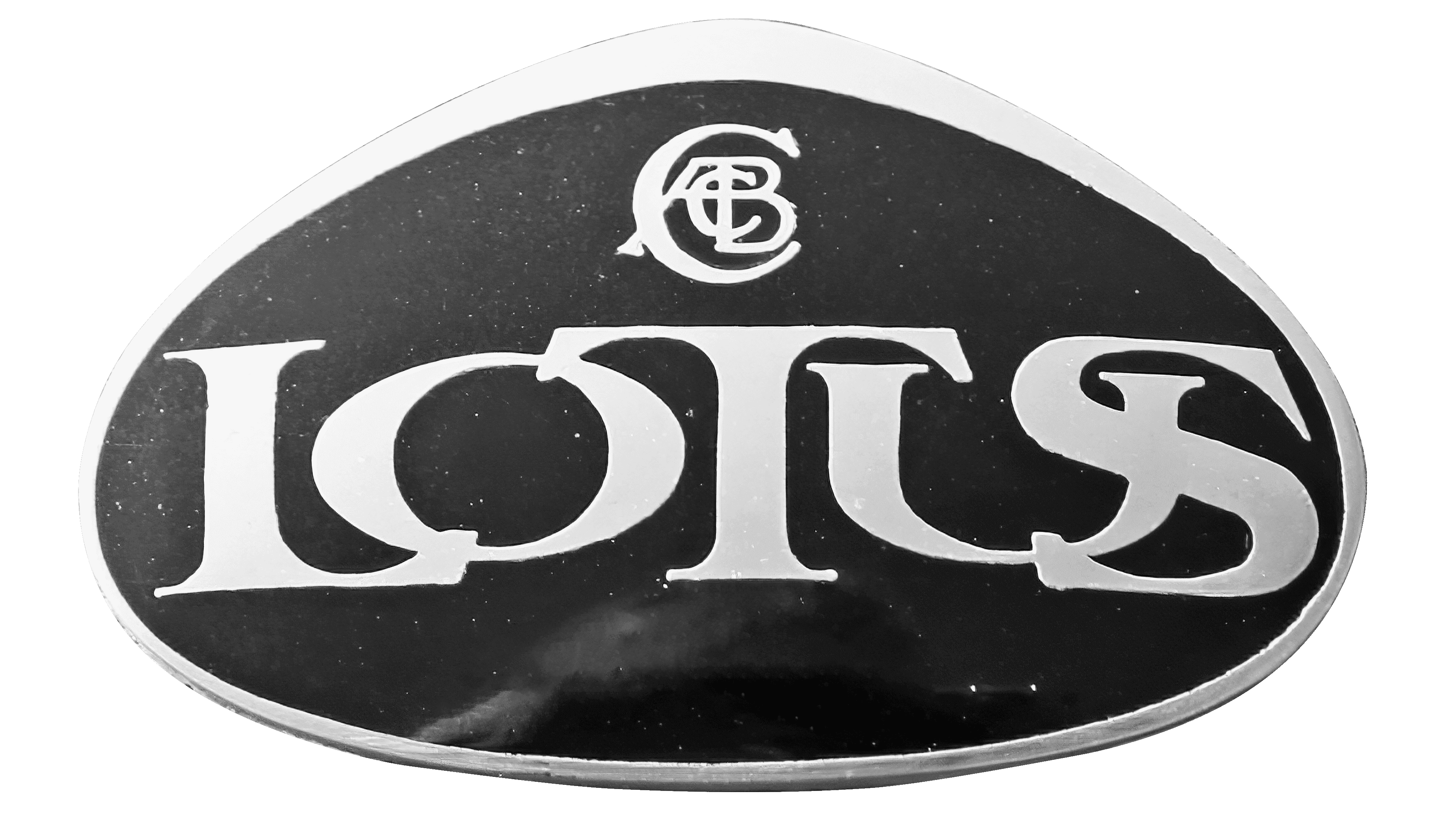
In 1986, the developers restored the monogram from the first version.
1989 – 2010

The debut version was chosen as the logo during this period, but with a slightly changed color scheme. Black and silver are from the past, so the symbol became much more colorful. The developers painted the inscription and the letter pattern above it in white, the triangle in green, the circle in yellow, and the frame in gray. They also changed the title’s style to a thin serif font.
2010 – 2019
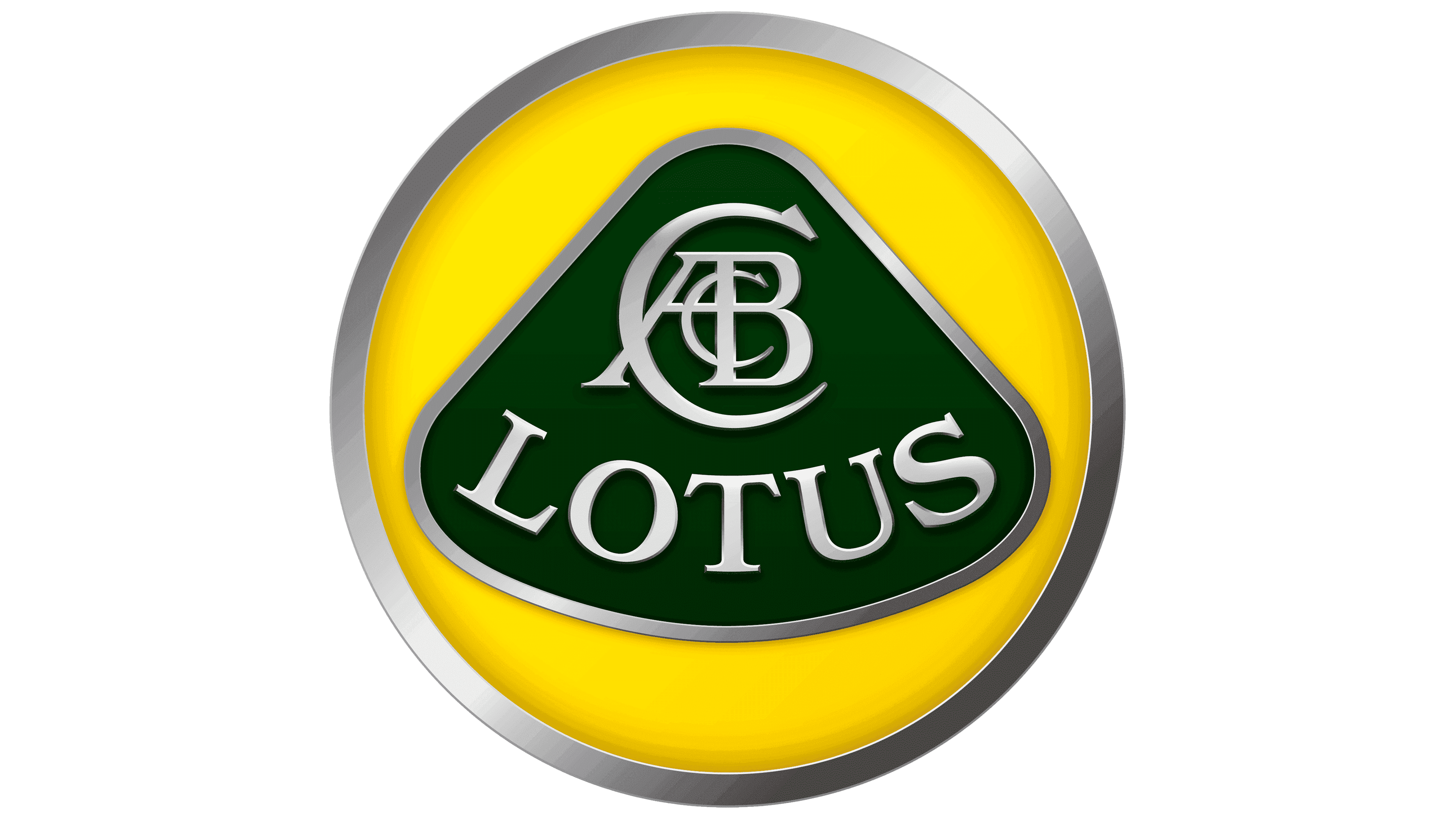
The logo has acquired three dimensions. To raise the sides of the circle, the designers widened the edging strip, deepened the gray, and added highlights. They also darkened the edge of the yellow circle, making it visually lower than the frame. The rounded-corner triangle in the center, which personifies the lotus flower, is outlined with a thin silver line, and the letters are thinned.
2019 – today
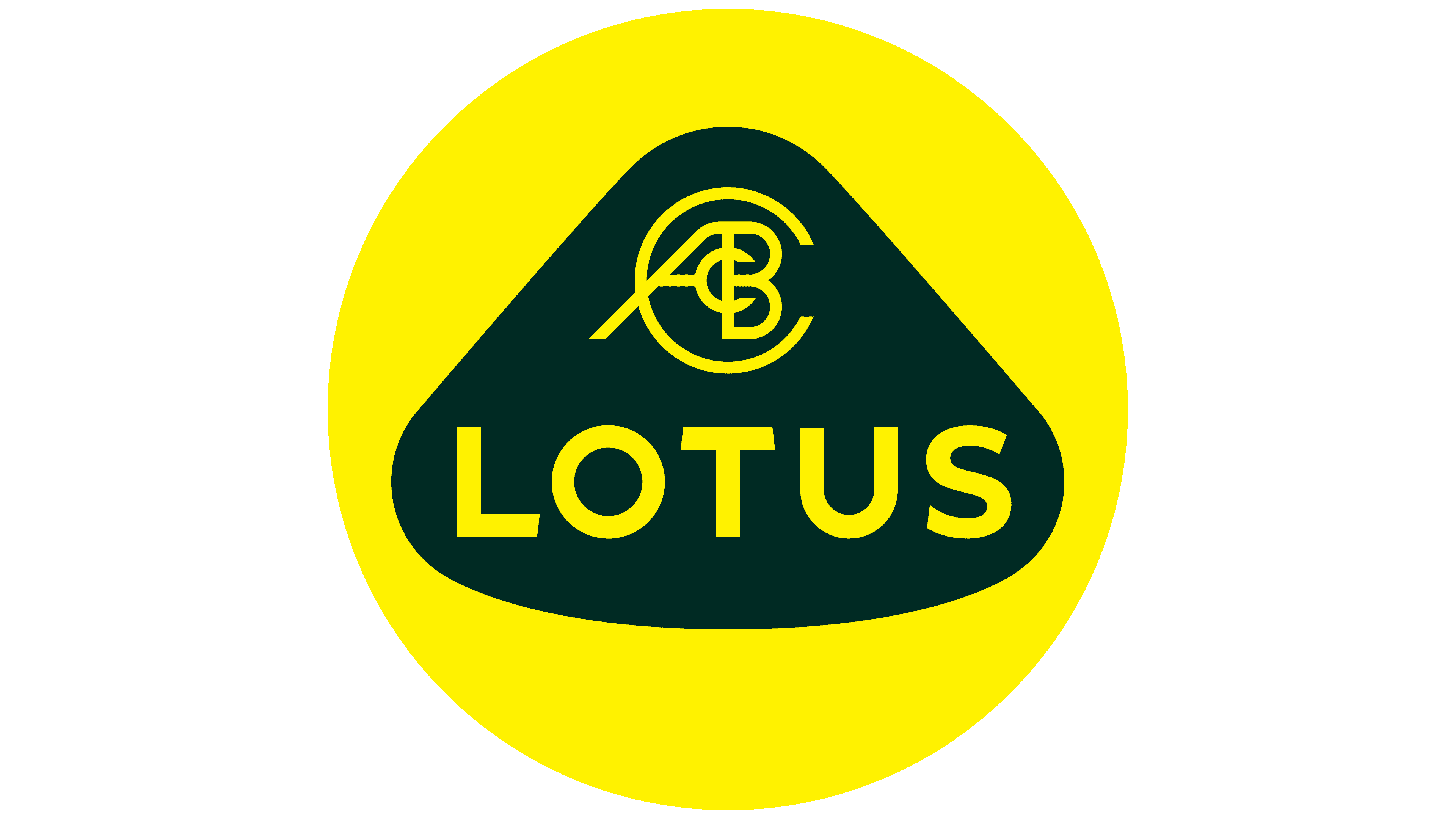
With the advent of the simple, flat identity trend, the company approved a concise version of the logo. There are no bulges, edging stripes, frames, or white light. Yellow and green predominate. The first is the circle and all the inscriptions; the second is the lotus symbol. In addition, the typeface has been replaced in both the monogram and the brand name. It has become stricter, wider, and sans-serif.
Font and Colors
The logo’s monogram appeared immediately. It consists of the first letters of the automobile company’s founder’s first and last name, “ACBC.” The abbreviation stands for “Anthony Colin Bruce Chapman.” But his original partners (the Allen brothers) were convinced the monogram combined the main founder’s initials with their first and last names. They believed it abbreviated “Michael Allen, Nigel Allen, Colin Chapman.”
Earlier versions of the logo used a serif typeface. In the updated version, the word “Lotus” is written in a hard, bold, grotesque type, close to Wardrum Bold or Lucifer Sans SemiExpanded Bold. The difference is in the oblique cuts at “L” and “T.” The first has an obliquely cut leg; the second has an upper transverse line.
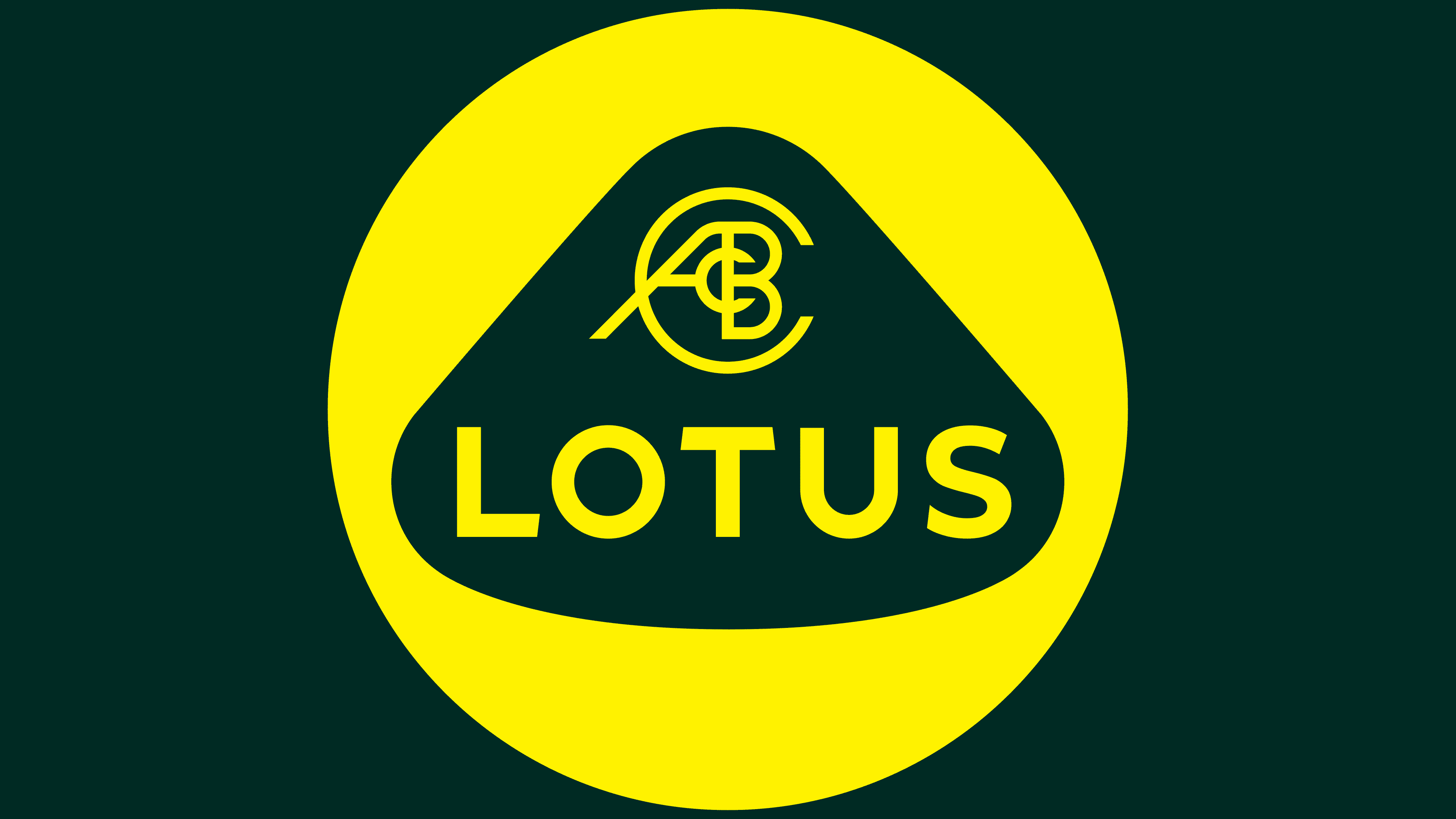
The brand has used different color schemes over time. If the earlier palette was meager and monotonous (black, white, silver), the current one is bright and catchy (yellow, green, white). The current combination reflects the company’s drive toward optimism, growth, and development.