


 Mazda Logo PNG
This automotive company’s emblem conveys a vision of new horizons. As a result, the Mazda logo carries deep meaning while remaining concise. Its style precisely matches the characteristics of the company’s vehicles: quality, reliability, and a forward-looking approach.
Mazda’s history began in 1920, when Jujiro Matsuda founded Toyo Cork Kogyo in Hiroshima to produce cork products. As demand declined, the company shifted to tools and metal products and became Toyo Kogyo in the early 1920s.
In 1931, the firm released the three-wheeled Mazda-Go, a compact cargo vehicle suited for narrow urban streets. The name Mazda, a reference to Ahura Mazda, echoed Matsuda’s surname. These vehicles formed the company’s core business for two decades.
After the destruction of Hiroshima in 1945, the plant survived partially and supported recovery efforts. Production resumed under severe constraints, and Mazda vehicles transported goods across the damaged city.
In 1960, Mazda introduced its first passenger car, the R360 Coupe. Around the same time, it secured a license from NSU Motorenwerke to develop the Wankel rotary engine, which Mercedes-Benz was also exploring.
In 1967, the Cosmo Sport 110S became the first mass-produced dual-rotor car. Despite technical advantages, high fuel consumption became a problem during the 1973 oil crisis, prompting competitors like Toyota and Nissan to focus on efficiency.
Between 1974 and 1979, Mazda restructured and returned to conventional engines. Ford Motor Company acquired a 25 percent stake in 1979, marking the start of long-term cooperation.
In 1984, the company adopted the name Mazda Motor Corporation. The rotary engine evolved further, leading to the RX-7 and the 1991 Le Mans victory with the 787B.
In 1989, Mazda launched the MX-5 Miata, which became the best-selling two-seat roadster. By 1996, Ford increased its stake to 33.4 percent and assumed operational control.
Meaning and History
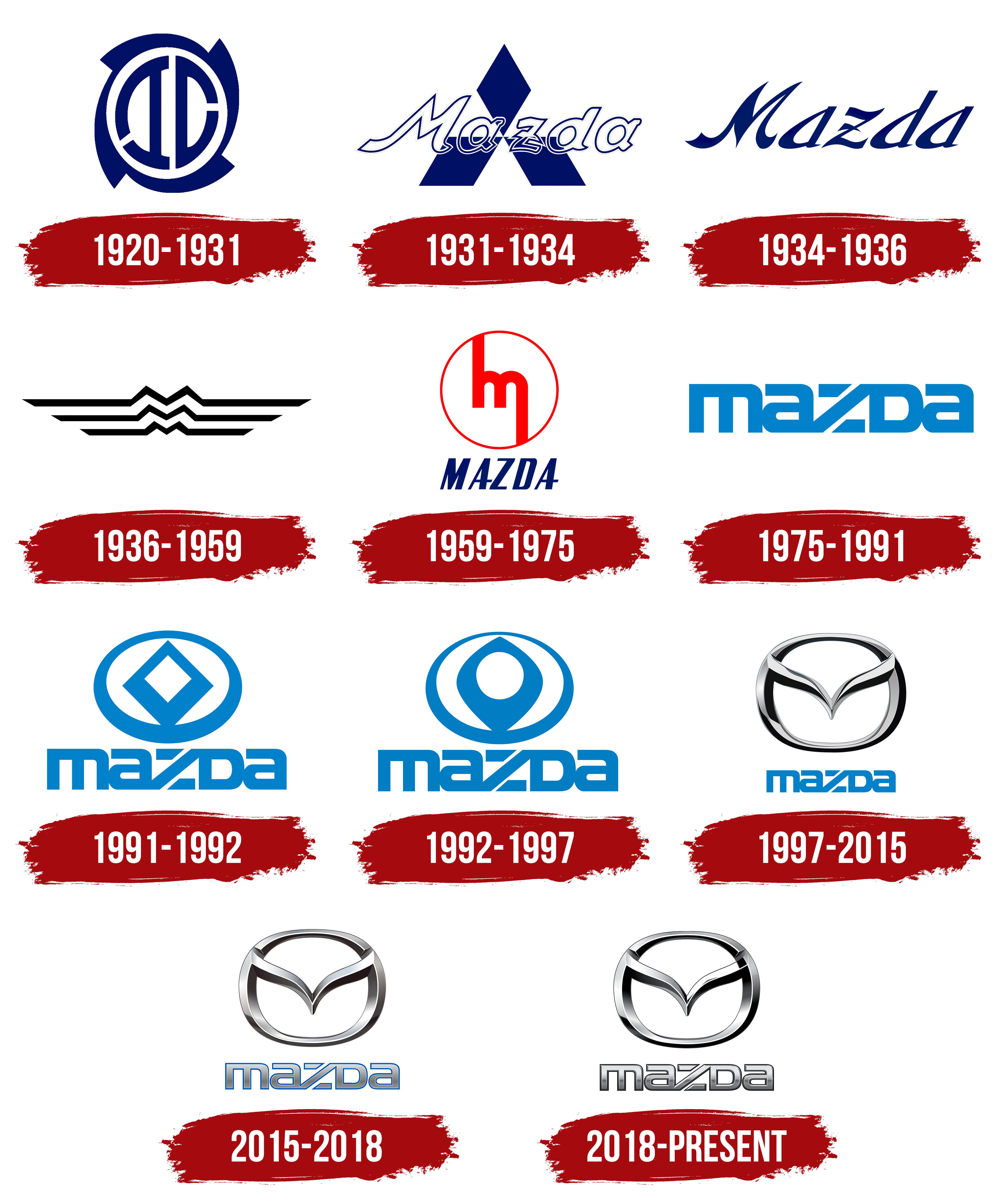
The company was founded in 1920 in Futo, a suburb of Hiroshima. Its founder, Jujiro Matsuda, the son of a simple fisherman, bought a factory to produce construction materials but decided to manufacture products for building traditional Japanese houses and for engineering equipment. During this period, the factory produced several motorcycles, one of which won local races in 1930. In 1931, the first Mazda truck appeared on the streets of Hiroshima.
The word Mazda has a dual meaning. It’s how Americans pronounced Matsuda’s surname, from whom he learned automotive engineering. It’s also the name of Ahura Mazda, a deity of wisdom, harmony, and light, who is highly revered in Japan.
What is Mazda?
Mazda Motor Corporation is one of the largest car manufacturers, named after the Zoroastrian deity Ahura Mazda. This Japanese company emerged in 1920 and initially produced corks. Eleven years later, it started producing autorickshaws, and in the 1960s, it began developing the Wankel engine. The company then faced financial difficulties, which led to a partnership with Ford.
1920 – 1931

In the early years, when the plant produced only machine equipment, its emblem was a stylized milling cutter and machine parts.
1931 – 1934
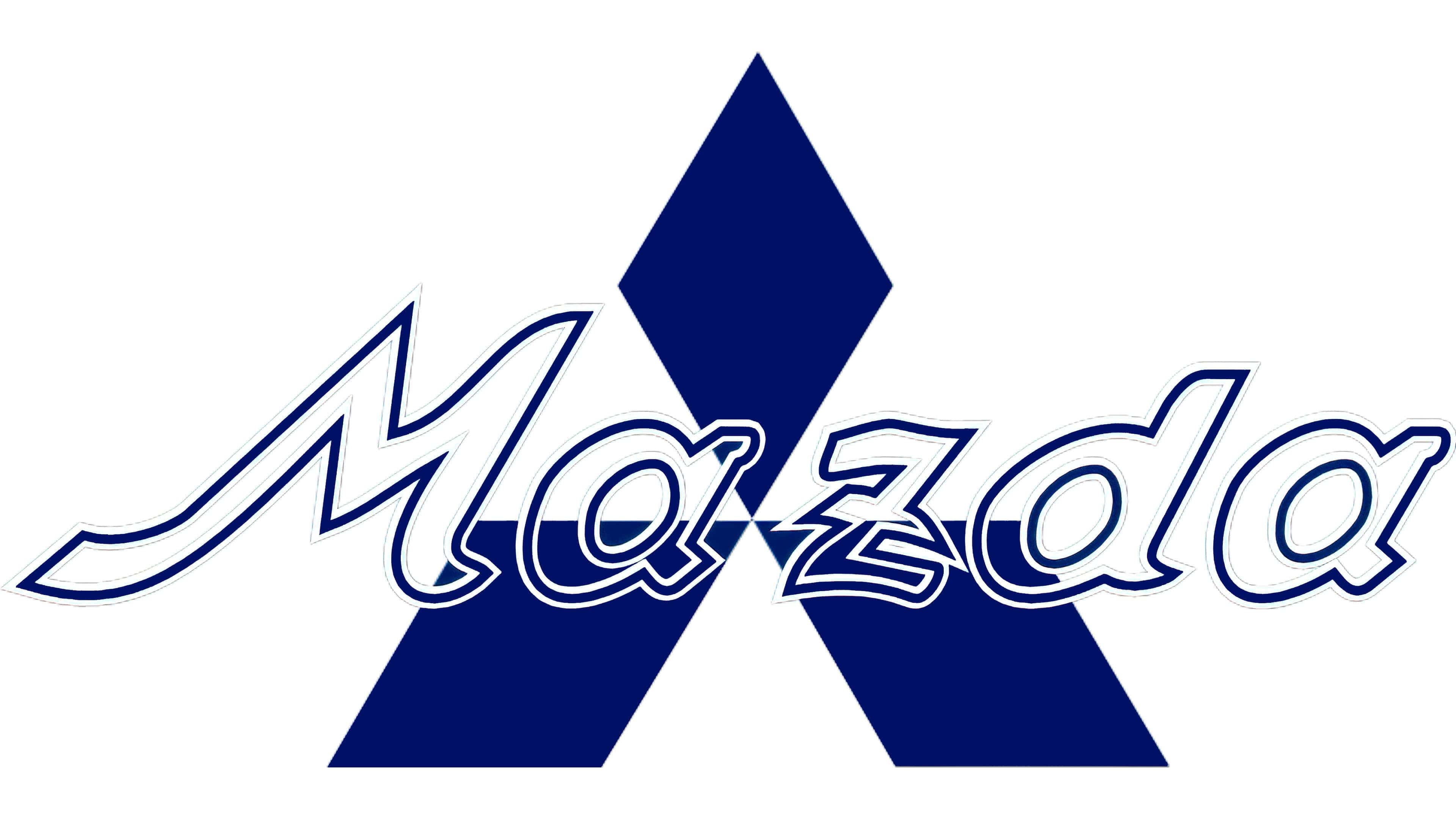
Then, in 1931, it was replaced by the well-known triangle with white and blue sectors, visually forming a star with three rays. The company’s name was written in italic script with transparent letters consisting only of a frame.
The first logo of a full-fledged automotive plant appeared in 1934.
1934 – 1936

The first emblem on a car’s front radiator was only the company’s name, written in elegant Japanese-style italic calligraphy with thick letters, pointed edges, and small serifs, in dark blue.
1936 – 1959

The emblem created in 1936 underwent significant changes because it was based on the Hiroshima symbol, which resembles the river of the same name within the city. Designers took three parallel lines, with the bends forming the letter “M,” and named the new company “Mazda Motor.” Visually, this logo resembled an aviation sign of that time.
1959 – 1975

The logo underwent radical changes again. 1959 was a landmark year for the company; Mazda released its first passenger car. The emblem was a white circle in a thin red frame. In the center was a handwritten lowercase “m” with stretched sides: the left upward, the right downward. The bright red letter attracted attention with its soft, soothing lines and unusual presentation. Below the circle was the name MAZDA, written in capital letters but at an angle. The inscription was blue.
1975 – 1991

In 1975, the company’s owners returned to a simpler, more spacious logo: only the company name, set in an original, minimalist, stylish font. It was custom-designed and had no analogs. This font was named “Mazda” and is still used today. Its features are:
- The low capital letters.
- The first letter, “m,” is lowercase.
- The letter “z” has white diagonal stripes.
The color was light blue.
1991 – 1992

The company’s name was complemented with a symbolic badge. Initially, it was executed as a diamond inside an oval.
1992 – 1997

In 1992, the symbol’s strict geometric shapes softened, and the lines became smoother.
1997 – 2015
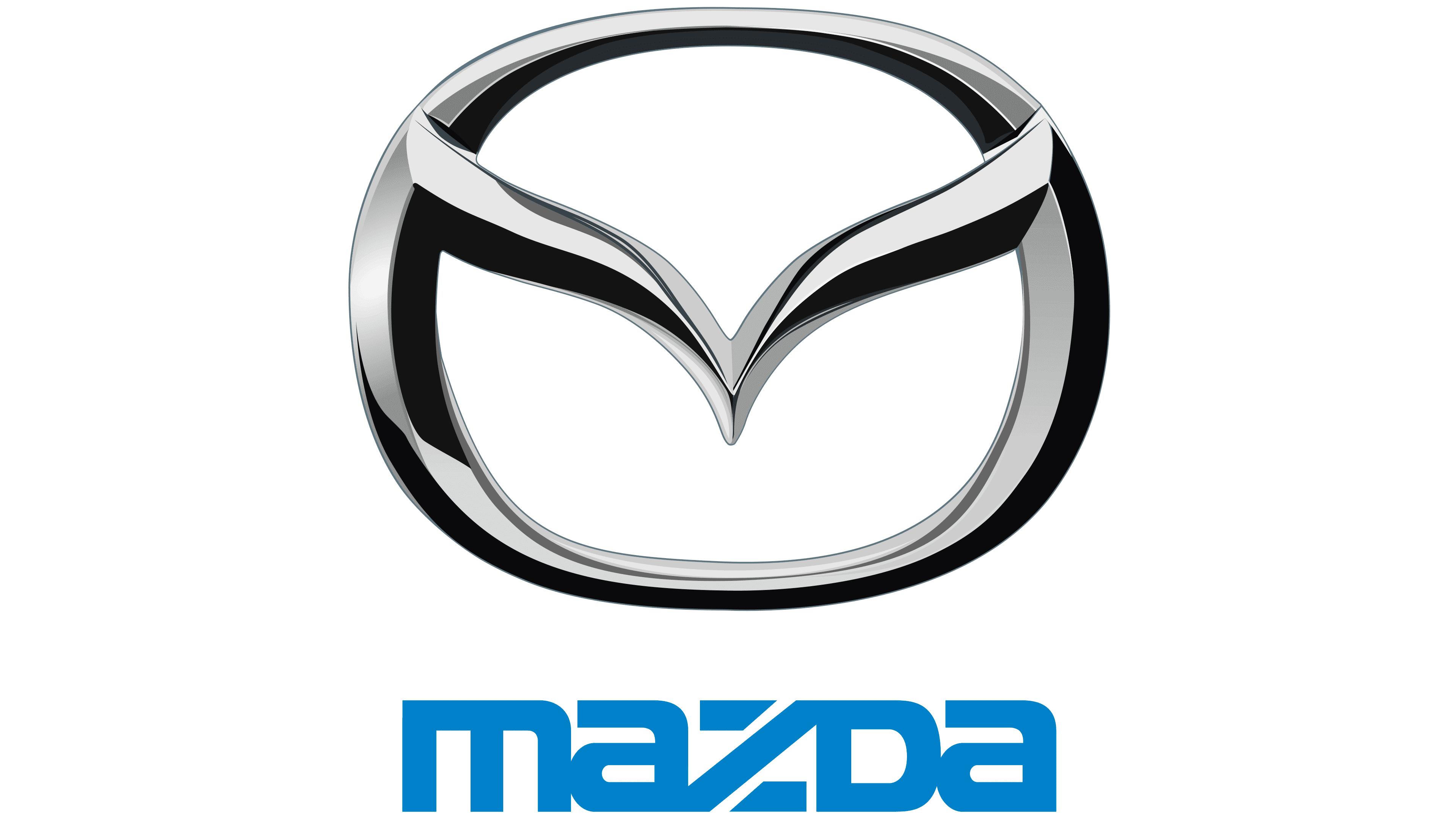
During this period, the current brand symbol was created, which is used today. The diamond-shaped sign was replaced with the English letter V (a symbol of victory), whose descending wings, together with the oval frame, form an M (the symbol of Mazda). This badge seems to fly into the future. The badge was gray metallic with white accents, executed using 3D technology for a three-dimensional look. Below it was the name Mazda in blue.
2015 – 2018
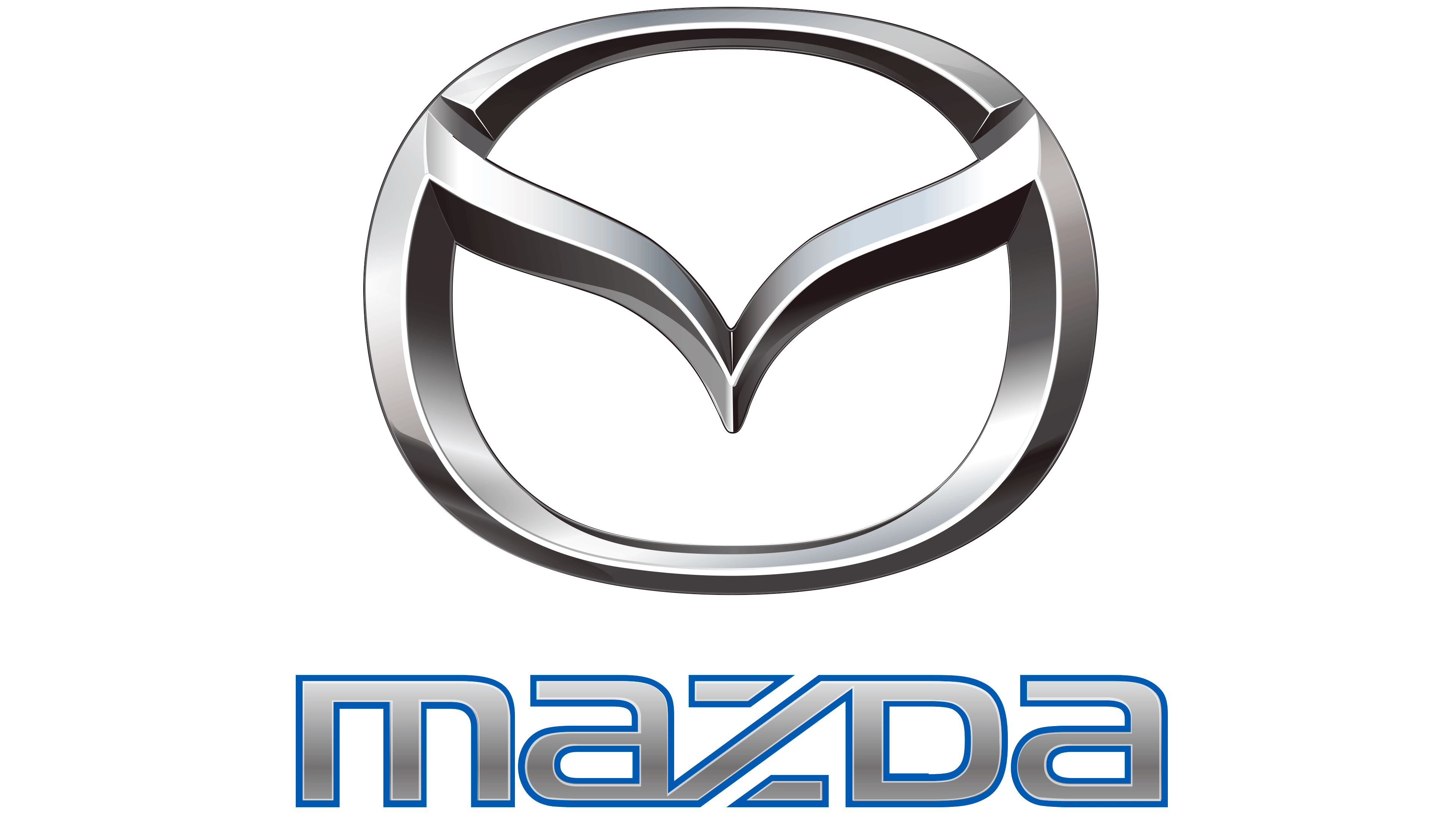
The logo underwent minor changes: the badge remained the same, but the name became larger and a darker shade of gray, with emphasis on the upper part.
2018 – today

Changes again affected only the company name at the bottom of the logo: it was made the same color and 3D-rendered as the badge, elevating the brand name.
Experts recognize the modern emblem as flawless in design and one of the best in automotive symbolism.
Font and Colors

The modern version of the logo consists of two main parts. The first is the letter “V,” a victory sign; the stylized letter “M,” which conveys the name of the auto giant; and a symbol of the Hiroshima River, on which the eponymous city is located. This element was borrowed from the 1936 emblem. The second fragment is the oval, which appeared in 1991. Together, they created the automotive industry’s most recognizable and successful emblem.
The emblem’s design emphasizes Mazda’s transportation identity: its metallic sheen makes it appear three-dimensional. Shadows in the lower part of the letter “M” enhance the 3D effect, and its legs fit harmoniously into the circle.

In the early logos, the company’s name was written in an oblique style, with letters resembling handwriting. In 1975, the word “Mazda” took on a stricter form; it became thicker and squatter. Since 2018, the company has used a corporate font based on the classic Optima font.
The emblem’s color has never been bright: it includes dark blue, light blue, gray, black, and silver. They emphasize the products’ strictness, restraint, and “metallic” character. A unique mix of light and dark gray shades creates a three-dimensional effect.
FAQ
What does the Mazda logo mean?
The Mazda logo has several meanings and looks like a serrated circle with two connecting lines inside. First, its elements resemble the letter M, the first letter of the brand’s name. Secondly, the central bands mimic a bird’s wings. They symbolize freedom, speed, and ascension to new peaks.
Why did Mazda change its logo?
In 2018, the automotive company changed not the entire logo but only part of it, the word “Mazda”, so that it matched the design of the round sign. As a result, the inscription became the same silver color and received similar dark outlines.